





In a crowded digital landscape, generic marketing is no longer effective. Consumers are inundated with messages, making their attention a scarce resource. To cut through the noise, brands must deliver experiences that are relevant, timely, and tailored to the individual. Content personalization platforms provide the tools to achieve this, empowering marketers to move beyond broad assumptions and engage with customers on a one-to-one basis. By leveraging data and technology, businesses can create more meaningful interactions with their audience, leading to deeper engagement, stronger loyalty, and significant growth.
This comprehensive guide will walk you through everything you need to know about content personalization. We will explore what these platforms are, how they work, and the tangible benefits they offer. We’ll examine the different types of tools available, provide a curated list of top solutions, and offer a step-by-step framework for choosing and implementing the right platform for your needs. Whether you’re just starting your personalization journey or looking to refine an existing strategy, this guide will provide the actionable insights you need to succeed.

Content personalization is the strategic process of tailoring content—including text, images, offers, and recommendations—to individual users based on their characteristics and behaviors. It is about delivering the right message to the right person at the right time, through the right channel. This practice transforms a static user experience into a dynamic, responsive conversation that adapts in real-time to a user’s needs and interests. The core principle is to make every interaction feel uniquely relevant and valuable to the individual, fostering a sense of being understood by the brand.
For decades, marketing operated on a broadcast model: create one message and send it to everyone. A generic billboard on a highway speaks to thousands of people but resonates deeply with very few. Digital marketing initially followed this path with static websites and email blasts. However, this approach leads to low engagement, high bounce rates, and a disconnected customer experience. Customers now expect brands to know who they are, what they’ve done, and what they might want next.
Content personalization marks a fundamental shift from this one-to-many approach to a one-to-one dialogue. Instead of showing every visitor the same homepage banner, a personalized website might show a new visitor an introductory offer, a returning customer a message about new arrivals in their favorite category, and a loyal member an exclusive perk. This level of relevance is no longer a luxury; it is an expectation. Failing to personalize is like ignoring a customer who has just told you exactly what they are looking for.
A well-executed personalization strategy leads to a significantly improved customer experience (CX). When content aligns with a user’s journey and intent, it removes friction, builds trust, and makes them feel valued. This positive experience has a direct and measurable impact on key business metrics and return on investment (ROI). A better CX leads to visitors staying on your site longer, exploring more pages, and engaging more deeply with your content.
This increased engagement translates directly to higher conversion rates. For an e-commerce site, personalized product recommendations can increase average order value. For a B2B company, recommending the right whitepaper or case study can accelerate a lead’s journey through the sales funnel. Furthermore, by consistently delivering value, personalization builds strong brand loyalty and increases customer lifetime value. Customers are more likely to return to a brand that understands them and less likely to churn. This powerful combination of improved engagement, conversion, and retention makes content personalization one of the highest-impact initiatives a marketing team can undertake.

Content personalization platforms are sophisticated systems that automate the complex process of collecting data, deriving insights, and delivering tailored experiences in real time. These platforms act as the central intelligence for a company’s personalization strategy, orchestrating interactions across various touchpoints. Their inner workings reveal a powerful combination of data management, artificial intelligence, and dynamic delivery technology.
The foundation of any personalization engine is data. Platforms collect a vast array of information from multiple sources to build a comprehensive, 360-degree view of each user. This data typically falls into several categories:
Once collected, the platform unifies this data, connecting anonymous visitor activity with known customer profiles to create a persistent and evolving understanding of each individual.
Simply collecting data is not enough. The real power of modern personalization platforms lies in their use of artificial intelligence (AI) and machine learning to analyze this data at scale. AI algorithms can identify patterns and make predictions that would be impossible for a human analyst to uncover. For example, machine learning models can perform advanced user segmentation automatically, grouping users with similar behaviors or predictive characteristics. They can power sophisticated recommendation engines, suggesting products or content a user is likely to be interested in based on their behavior and the behavior of similar users (a technique known as collaborative filtering). Predictive analytics, another AI application, can forecast future actions, such as a customer’s likelihood to churn, allowing marketers to intervene proactively.
Once the platform understands the user, its final job is to deliver the personalized experience. This is achieved through dynamic content delivery. Instead of serving a hard-coded, static webpage, the platform modifies elements of the page in real time based on the user’s profile and segment. When a user loads a page, the personalization engine makes a split-second decision about which content variation to show. This could be as simple as changing a headline or a call-to-action button, or as complex as reordering the page layout and populating product carousels with AI-driven recommendations. This delivery happens seamlessly across channels, ensuring a consistent, personalized experience on the website, in an email, or within a mobile app.
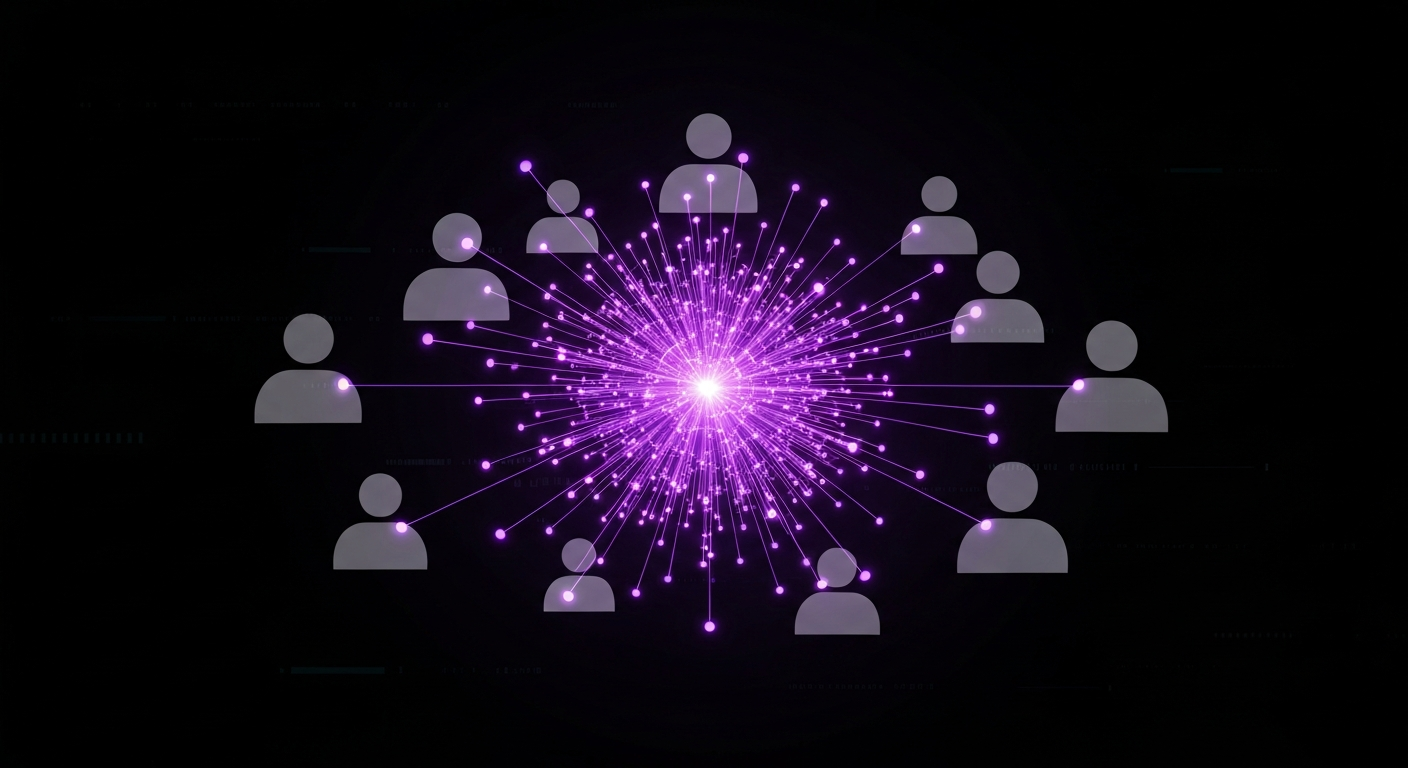
Adopting a content personalization strategy powered by a dedicated platform is more than a marketing trend; it’s a fundamental business driver that delivers tangible and compounding benefits. By shifting from a generic to a tailored approach, companies can transform their customer relationships and unlock significant growth across the entire marketing funnel.
Personalization makes users feel seen and understood, which is a powerful driver of engagement. When a website or email presents content that is directly relevant to a user’s interests or needs, they are far more likely to pay attention. This leads to measurable improvements in engagement metrics such as lower bounce rates, longer session durations, and higher click-through rates. By consistently providing value and relevance, personalization strengthens the customer’s relationship with the brand. This enhanced connection fosters loyalty and significantly boosts customer retention, as users have less reason to look for alternatives when their needs are anticipated and met.
Personalization has a direct and celebrated impact on conversion rate optimization (CRO). By tailoring the user journey, businesses can remove friction and guide customers more effectively toward a conversion goal. For instance, an e-commerce site can use behavioral targeting to show a user products related to their recent browsing history, dramatically increasing the likelihood of a purchase. A B2B platform can personalize a call-to-action to match a visitor’s industry or company size, leading to more qualified leads. Techniques like personalized offers and abandoned cart reminders with tailored product suggestions are proven methods for lifting conversion rates and driving revenue growth.
Trust is the cornerstone of any lasting customer relationship. Personalization, when done ethically and transparently, is a powerful tool for building that trust. By using data to provide helpful recommendations and relevant content, a brand demonstrates that it is listening to its customers and is committed to serving their needs. This consistent delivery of value creates a positive feedback loop. Customers feel the brand understands them, which deepens their loyalty and makes them more likely to become brand advocates. In an era of endless consumer choice, a trusted, personalized relationship is a formidable competitive advantage.

The market for personalization technology is diverse, with different platforms designed to solve specific challenges and integrate with various parts of the marketing technology stack. Understanding the primary categories of these tools can help you identify which type of solution best aligns with your business needs and existing infrastructure.
These platforms specialize in personalizing the experience on a company’s website or online store. Their features are built around optimizing the on-site journey. Common capabilities include A/B testing of content variations, dynamic banners and pop-ups tailored to visitor segments, and personalized product recommendations. For e-commerce, these tools are essential for suggesting related items, displaying recently viewed products, and creating urgency with targeted offers. They are excellent for businesses whose primary goal is conversion rate optimization and improving the on-site customer experience.
While most modern email service providers offer basic personalization like using a subscriber’s first name, dedicated email personalization engines take this much further. These tools integrate deeply with user behavior data to create highly dynamic email content. Instead of a static newsletter, they can populate emails with product recommendations based on a user’s browsing history, articles related to topics they’ve read, or offers triggered by specific actions. They are a core component of advanced marketing automation, enabling behavior-driven campaigns that feel like a one-to-one conversation.
Customers interact with a brand across multiple channels, moving seamlessly between a website, a mobile app, email, and social media. Cross-channel and omnichannel platforms are designed to create a unified and consistent personalized experience across all these touchpoints. These powerful solutions consolidate user data from various sources to ensure that the personalization logic follows the customer wherever they go. For example, a product viewed on a mobile app could trigger a targeted ad on social media and a follow-up email with a special offer. This omnichannel marketing approach is crucial for creating a cohesive, customer-centric journey.
A Customer Data Platform (CDP) is a system designed to be the single source of truth for all customer data. Its primary function is to collect data from all sources, unify it into single customer profiles, and then make that data available to other systems. Many modern CDPs have evolved to include their own built-in personalization and activation features. By using a CDP with a native personalization engine, businesses can ensure their marketing actions are based on the most complete and up-to-date customer data available. This tight integration between the data foundation and the execution layer makes for an incredibly powerful and responsive personalization strategy.

Choosing a personalization platform is a significant decision. The right tool can unlock massive growth, while the wrong one can lead to frustration and wasted resources. The market includes a wide range of solutions catering to different business sizes, industries, and technical capabilities. Below is a comparison of some of the leading platforms, categorized by their typical target market.
Designed for large corporations with complex needs and dedicated technical teams, enterprise platforms offer the highest degree of power, flexibility, and scalability. These tools provide extensive capabilities for A/B testing, multivariate testing, AI-powered personalization, and omnichannel campaign orchestration. They are built to handle massive volumes of traffic and data and offer deep integration with other enterprise-level systems like CRMs and analytics suites. While they represent a significant investment, they provide unparalleled control for sophisticated, large-scale personalization strategies.
Platforms in this category offer a balance of powerful features and user-friendliness, making them accessible to small and mid-sized businesses that may not have a large, dedicated optimization team. Many of these tools, like HubSpot’s Marketing Hub, integrate personalization features into a broader marketing automation suite, allowing businesses to manage email, landing pages, and website content from a single platform. Others, like VWO (Visual Website Optimizer), focus specifically on testing and personalization with an intuitive visual editor that requires minimal coding. These solutions provide a strong foundation for a personalization program without the enterprise-level complexity or price tag.
This category of platforms is purpose-built for the unique challenges of online retail. Their feature sets are laser-focused on driving e-commerce KPIs like average order value, conversion rate, and customer lifetime value. They excel at AI-driven product recommendations, personalized search results, category merchandising, and triggered pop-ups for cart abandonment and promotions. These tools often offer plug-and-play integrations with major e-commerce platforms like Shopify, BigCommerce, and Magento, enabling retailers to get a sophisticated personalization program up and running relatively quickly.
| Platform Category | Example Tools | Best For | Key Strengths | Considerations |
|---|---|---|---|---|
| Enterprise | Adobe Target, Optimizely, Sitecore Personalize | Large corporations with dedicated teams and complex, omnichannel needs. | Unmatched power, scalability, AI-driven automation, deep integrations. | High cost, steep learning curve, requires significant technical resources. |
| Mid-Market / SMB | HubSpot, VWO, Instapage | Growing businesses looking for a balance of power and ease of use. | Often part of an all-in-one suite, user-friendly interfaces, good value. | May lack the deep customization of enterprise tools. |
| E-commerce Focused | Nosto, Dynamic Yield, Personyze | Online retailers of all sizes seeking to optimize the shopping experience. | Specialized e-commerce features, AI product recommendations, easy integration. | Features may be less applicable to non-retail businesses. |

Selecting the ideal content personalization platform requires a thoughtful evaluation of your organization’s specific needs, goals, and resources. It’s not about finding the ‘best’ platform, but the best fit for your unique context. A structured approach will help you navigate the options and make a confident decision.
Before looking at a single demo, start with your ‘why’. What are you trying to achieve with personalization? Are you focused on lead generation, increasing e-commerce sales, reducing customer churn, or improving content engagement? Define clear, measurable Key Performance Indicators (KPIs) for your goals. For example, a goal might be to ‘Increase Average Order Value by 15% within 6 months’ or ‘Improve marketing-qualified lead conversion rate by 20%’. Having these goals defined upfront will provide a critical lens through which to evaluate each platform’s features.
A personalization platform does not exist in isolation; it must be a well-integrated part of your marketing technology stack. Poor data flow between systems is a major point of failure for many personalization projects. Create a list of your mission-critical tools, such as your Customer Relationship Management (CRM) system, Content Management System (CMS), analytics platform, and email service provider. When evaluating platforms, scrutinize their ability to integrate seamlessly with your stack. Look for native, pre-built integrations (CRM integration is especially crucial) and robust APIs for any custom connections you might need. A tool that cannot easily access your core customer data will be severely limited.
There is often a trade-off between a platform’s ease of use and its customization power. Some platforms offer intuitive, visual, drag-and-drop editors that empower marketers to launch campaigns without writing any code. These are excellent for teams that need to move quickly and lack dedicated developer resources. Other platforms are more of a ‘developer’s toolkit,’ offering immense power and flexibility through APIs and SDKs but requiring significant technical expertise. Be realistic about your team’s skills and available resources. Choose a platform that aligns with your team’s capabilities to ensure it will be adopted and used effectively.
Personalization platform pricing can vary significantly. Common models include pricing based on monthly website traffic, the number of features used, or a flat subscription fee. It’s crucial to understand how the cost will evolve as your business grows. Ask potential vendors how their pricing scales. Will your costs skyrocket if a successful campaign doubles your traffic? Choose a platform with a predictable pricing model that can grow with you. Ensure the platform’s architecture can handle your future needs in terms of traffic, data processing, and campaign complexity.

Purchasing a platform is just the first step. The success of your personalization efforts hinges on a well-planned and executed implementation strategy. By following a structured process, you can build a strong foundation for continuous improvement and long-term success.
Effective personalization is impossible without clean, unified, and accessible data. The first and most critical step is to consolidate your customer data from various silos—your CRM, e-commerce platform, analytics tools, and support desk—into a single, coherent view of the customer. This is where a Customer Data Platform (CDP) can be invaluable. Ensure that you are tracking key behavioral events on your website and app. The goal is to create a reliable data foundation that your personalization engine can use to make intelligent decisions.
With your data in place, the next step is to group your audience into meaningful segments. User segmentation allows you to move beyond one-to-one personalization (which can be complex to start with) and target groups of users with shared characteristics. Start with broad, high-impact segments and get more granular over time. Common starting segments include:
Now it’s time to map your content to your segments. For each segment you’ve defined, brainstorm what content or offer would be most relevant and valuable to them. This involves creating variations of your existing content—different headlines, images, product recommendations, and calls-to-action. Then, within your personalization platform, you’ll build the rules or ‘campaign logic’ that dictates which content is shown to which segment. For example: ‘IF a user is in the ‘Cart Abandoners’ segment AND is on the homepage, THEN show them a banner with a 10% off coupon to complete their purchase.’
Personalization is not a one-time project; it’s an ongoing process of optimization. Never assume that your initial ideas are the best ones. Use A/B testing to rigorously test your personalization campaigns against a control group (a generic experience). This allows you to scientifically prove the impact of your efforts. Continuously monitor your key performance indicators for each campaign. Analyze the results to understand what’s working and what isn’t. Use these insights to refine your segments, develop new content variations, and launch new tests. This iterative cycle of testing, measuring, and learning is the engine of a successful long-term personalization strategy.

Implementing a personalization platform is a powerful step, but technology alone doesn’t guarantee success. Adhering to best practices will help you create experiences that are genuinely helpful and engaging, rather than intrusive or ineffective. By focusing on strategy and the customer experience, you can maximize the return on your investment.

While the benefits of personalization are clear, the path to implementation is not without its challenges. Being aware of these common hurdles and planning for them proactively can be the difference between a successful program and a stalled initiative. From data privacy to content creation, here’s how to navigate the most frequent obstacles.
The collection and use of user data are at the heart of personalization, which places it directly under the scrutiny of privacy regulations like GDPR and CCPA. Mishandling data can lead to hefty fines and a severe loss of customer trust. To overcome this, adopt a ‘privacy-by-design’ approach. Choose a personalization platform with robust consent management features. Be transparent with users about what data you collect and why, and always provide clear opt-out mechanisms. Anonymize data where possible and ensure your data practices are fully compliant with all relevant regulations. Privacy and personalization are not mutually exclusive; they must be pursued together.
There is a fine line between personalization that is helpful and personalization that feels invasive. Using too much personal information too overtly can make users uncomfortable. For example, greeting a first-time anonymous visitor by name is often perceived as intrusive. The key to avoiding this is to focus on context and value. The personalization should feel natural and helpful. Instead of showcasing that you know a user’s every move, use that knowledge subtly to improve their experience—by showing them more relevant products, for instance. Always ask: ‘Does this personalization genuinely help the user, or does it just show off that we have their data?’
A common bottleneck in personalization is the ‘content crunch.’ As you create more audience segments, the demand for unique content variations for each can quickly overwhelm your team. The solution lies in a modular approach. Instead of creating full pages, create reusable content blocks or components (e.g., headlines, hero images, testimonials, CTAs) that can be dynamically assembled by the personalization platform. Use templates and leverage AI-powered content generation tools to help create variations more efficiently. This strategy allows you to scale your personalization efforts without a proportional increase in content production resources.

The field of content personalization is constantly evolving, driven by advancements in artificial intelligence and data processing. The future points toward a reality where customer experiences are not just tailored to broad segments but are uniquely crafted for each individual in real time. This next frontier is often referred to as hyper-personalization, and it promises to create even more seamless and intuitive customer journeys.
Hyper-personalization moves beyond segment-based rules to true one-to-one engagement. It leverages AI to analyze a continuous stream of behavioral and contextual data to adapt the entire customer experience—from website layout to the specific content of an email—for a single user at a specific moment. This means that no two users will have the exact same experience, as it will be dynamically generated based on their unique, evolving profile.
Fueling this future is the increasing sophistication of predictive analytics. Instead of just reacting to a user’s past behavior, platforms will be able to accurately predict future needs and intentions. A personalization engine might predict that a customer is at risk of churning and proactively present a loyalty offer, or anticipate that a user is researching a specific solution and dynamically surface the most relevant case study before they even search for it. As AI and machine learning models become more powerful, the ability to move from reactive personalization to proactive, predictive engagement will become the new standard for world-class customer experiences.

Personalization and customization both aim to create a more relevant user experience, but they differ in who is doing the work. Customization is driven by the user. For example, when you set your preferences on a news website to see only sports and technology articles, you are customizing your experience. Personalization, on the other hand, is driven by the system. The platform uses data (like your browsing behavior) to automatically tailor the experience for you. A personalized news site would learn that you prefer sports and tech articles and show you more of them automatically.
Measuring the ROI of personalization involves tracking its impact on your key business metrics. The most effective method is A/B testing, where you compare the performance of a personalized experience against a generic, non-personalized control version. You can then measure the lift in specific KPIs, such as conversion rate, average order value, or lead submission rate. By attributing the uplift in these metrics to your personalization efforts, you can calculate the direct revenue impact and compare it against the cost of the platform and resources.
Absolutely. While enterprise-level platforms can be complex and expensive, a growing number of user-friendly and affordable tools are designed for small and medium-sized businesses (SMBs). Many all-in-one marketing platforms, like HubSpot, include powerful personalization features that are accessible to smaller teams. The key for SMBs is to start simple. Focus on high-impact areas like personalizing a key landing page or creating a welcome email series for new subscribers. Even small, strategic personalization efforts can yield significant results.
Successful personalization relies on a variety of data types. At a minimum, you need behavioral data, which includes a user’s actions on your site (pages viewed, clicks, time on page). To make personalization more powerful, you can add demographic data (location, company size), contextual data (device type, traffic source), and transactional data (past purchases). The richest personalization comes from unifying these data sources into a single customer profile, which provides a holistic view of the user’s relationship with your brand.
Many well-known brands provide excellent examples. Amazon’s product recommendation engine (‘Customers who bought this also bought…’) is a classic example of personalization driving sales. Netflix personalizes its entire user interface, including the artwork shown for movies and shows, based on a user’s viewing history to encourage clicks. Spotify creates personalized playlists like ‘Discover Weekly’ based on a user’s listening habits. In B2B, a software company might personalize its homepage to show case studies relevant to a visitor’s industry, which it can infer from their IP address or previous behavior.
Reputable personalization platforms take privacy and security very seriously and are designed to comply with major regulations like GDPR and CCPA. Key features include robust consent management tools to honor user opt-ins and opt-outs, data encryption, and features for data anonymization. They also provide mechanisms for businesses to handle data subject requests, such as a user’s request to access or delete their personal data. When choosing a platform, it is crucial to vet its security certifications and privacy features to ensure it aligns with your company’s compliance requirements.