





In the pursuit of business growth, the spotlight often focuses on customer acquisition through ad campaigns, lead generation funnels, and sales tactics. But what happens after the first sale? Frequently, the focus shifts to the next new customer, while existing customers—the foundation of any sustainable business—are overlooked. This is where a powerful, often underestimated, strategy comes into play: retention marketing.
Retention marketing is the method of keeping current customers engaged, satisfied, and returning for more. It involves shifting focus from one-time transactions to long-term relationships. In a competitive market with rising Customer Acquisition Costs (CAC), mastering customer retention is an economic imperative. This guide will explain how to build a robust retention marketing strategy that keeps customers happy, maximizes their Customer Lifetime Value (CLV), and strengthens your business.

Retention marketing encompasses all activities a business uses to encourage existing customers to continue purchasing and engaging with the brand. Unlike acquisition marketing, which targets the top of the sales funnel, retention marketing focuses on customers who have already converted. The primary goal is to foster loyalty, increase the frequency and value of repeat purchases, and turn satisfied customers into brand advocates.
The strategic importance of retention is significant. While acquiring new customers is essential for expansion, retaining them is key to profitability and long-term stability. A business that constantly replaces its customer base is like trying to fill a leaky bucket—an exhausting and expensive endeavor. By focusing on retention, you address customer churn, build a solid foundation of loyal customers, and create a more predictable revenue stream.
The financial argument for retention marketing is compelling. Studies consistently show that retaining an existing customer is significantly cheaper than acquiring a new one. Depending on the industry, acquiring a new customer can cost five to 25 times more than keeping a current one. This cost includes advertising spend, sales team salaries, and marketing campaigns aimed at convincing a stranger to make a purchase.
In contrast, your existing customers already know your brand and have an established level of trust. Marketing to them requires less persuasion and more nurturing. Furthermore, existing customers are more likely to convert; the probability of selling to an existing customer is 60-70%, while the probability of selling to a new prospect is only 5-20%. As research by Bain & Company found, increasing customer retention rates by just 5% can increase profits by 25% to 95%.
Beyond immediate cost savings, a focus on retention builds a more resilient and sustainable business. Loyal, long-term customers form the bedrock of predictable revenue. Their repeat purchases create a stable cash flow that allows for better financial planning, investment in innovation, and the ability to weather economic downturns. This stability contrasts with the volatile model of relying solely on a constant influx of new customers.
Moreover, retained customers often become your most effective marketing channel. Happy customers are more likely to refer friends and family, write positive reviews, and generate positive word-of-mouth. This organic marketing is not only free but also incredibly powerful, as recommendations from trusted sources are more convincing than traditional advertising. By investing in retention, you create a virtuous cycle: satisfied customers stay longer, spend more, and bring in new customers, fueling sustainable growth.

To manage your retention strategy effectively, you must measure it. Tracking the right key performance indicators (KPIs) provides insight into what’s working, where you need to improve, and the overall health of your customer relationships. These metrics transform retention from a concept into a data-driven business function.
Customer Lifetime Value (CLV) is the most important metric for understanding the long-term worth of a customer. It represents the total revenue a business can reasonably expect from a single customer throughout their relationship with the company. A high CLV indicates that you are successfully retaining high-value customers who make frequent, significant purchases. Focusing on increasing CLV shifts your marketing perspective from short-term gains to long-term relationship building. A simple way to calculate CLV is: (Average Purchase Value) x (Average Purchase Frequency) x (Average Customer Lifespan).
Customer Churn Rate, or attrition, is the percentage of customers who stop doing business with your company over a given period. It is the inverse of your retention rate. A high churn rate is a critical red flag, indicating dissatisfaction with your product, service, or overall customer experience. Monitoring your churn rate helps you identify problems before they escalate and allows you to proactively address why customers are leaving. To calculate it, divide the number of customers lost during a period by the number of customers you had at the start of that period, then multiply by 100.
Repeat Purchase Rate measures the percentage of your customers who have made more than one purchase. This metric is a direct indicator of customer loyalty and satisfaction. A strong RPR suggests that customers were happy with their initial experience and see ongoing value in your offerings. It is a fundamental measure of your ability to turn one-time buyers into loyal patrons. To calculate RPR, divide the number of customers who have purchased more than once by the total number of customers during a specific period.
While the previous metrics focus on financial outcomes, NPS and CSAT measure customer sentiment. These qualitative metrics are crucial for understanding the ‘why’ behind customer behavior.

A successful retention marketing strategy requires a structured, data-driven approach rather than a random implementation of tactics. By following a clear framework, you can ensure your efforts are targeted, measurable, and aligned with your overall business objectives. This five-step process provides a roadmap for building a strategy from the ground up.
A uniform approach to retention is ineffective because customers have diverse needs, behaviors, and motivations. Customer segmentation is the process of dividing your customer base into distinct groups based on shared characteristics. This allows you to tailor your messaging and offers for maximum relevance and impact. Common segmentation criteria include:
By segmenting your audience, you can send a personalized welcome series to new customers, a re-engagement campaign to at-risk customers, and exclusive offers to your most loyal VIPs.
Customer journey mapping is the process of visualizing every interaction a customer has with your brand, from initial awareness to post-purchase support. This exercise helps you gain an empathetic understanding of the customer experience. By mapping this journey, you can identify critical touchpoints where you can strengthen the relationship or where friction might be causing customers to disengage. Key touchpoints to analyze include the initial purchase, product onboarding, customer support interactions, and follow-up communications. Identifying these moments allows you to proactively create positive experiences that foster loyalty.
Before launching any campaigns, you need to define what success looks like. Your retention goals should be specific, measurable, achievable, relevant, and time-bound (SMART). Vague goals like “improve customer loyalty” are not actionable. Instead, set concrete targets such as:
These specific goals will guide your strategy and provide clear benchmarks for measuring performance.
With your goals defined and your audience segmented, you can select the appropriate tactics and channels to achieve your objectives. The right choice depends on your industry, customer segments, and their communication preferences. For example, a B2B software company might focus on educational webinars and dedicated account managers, while an e-commerce fashion brand might use personalized email marketing, social media, and a tiered loyalty program. The key is to meet your customers where they are with messages and offers that provide genuine value.
Retention marketing is not a “set it and forget it” strategy; it is an ongoing cycle of implementation, measurement, and optimization. Once you launch your campaigns, diligently track your KPIs. Analyze the data to understand what’s working and what isn’t. Are your personalized emails driving repeat purchases? Is your loyalty program reducing churn? Use A/B testing to experiment with different offers, messages, and channels. Customer preferences and market dynamics change, so your retention strategy must be agile. Continuously learn from your data and iterate on your approach to achieve sustained improvement.

Once your foundational strategy is in place, it’s time to execute. These eight proven retention marketing strategies are powerful tools for building lasting customer relationships and driving repeat business. Start with the ones that best align with your goals and customer base.
Customer loyalty programs are a foundational retention tactic due to their proven effectiveness. By rewarding customers for their repeat business, you incentivize them to stay with your brand. A tiered program is particularly effective as it gamifies the experience. Customers start at a base level and unlock greater rewards and exclusivity as they spend more. This encourages higher spending and creates a sense of achievement and belonging. Tiers can offer perks like free shipping, early access to new products, exclusive discounts, or a dedicated support line.
Email remains one of the most effective channels for nurturing customer relationships. However, generic email blasts are no longer sufficient; personalization is key. Use the data you’ve collected to send highly targeted and relevant emails. This can include:
Asking for customer feedback demonstrates that you value their opinion and are committed to improving their experience. More importantly, it provides invaluable insights into your performance. Use tools like NPS and CSAT surveys, but also send post-purchase surveys, conduct user interviews, and monitor social media. The crucial second step is to close the loop: acknowledge the feedback, communicate the changes you’re making based on it, and follow up with customers who provided negative feedback to resolve their issues.
Customer service is a critical component of retention. A single negative support experience can erase significant goodwill. Strive to offer service that is proactive and exceptional. This means being available on the channels your customers prefer (phone, email, live chat, social media) and providing a seamless, consistent experience across all of them. Empower your support team with the tools and authority to solve problems quickly and effectively. Excellent service can turn a frustrated customer into a lifelong advocate.
Provide value beyond your products by creating content that helps customers get more out of their purchases and solves their broader problems. This positions your brand as a trusted expert, not just a vendor. Content could include a blog with industry insights, a library of video tutorials, in-depth user guides, or exclusive webinars for customers. By educating and empowering your customers, you build a deeper, more meaningful relationship that is not purely transactional.
Retargeting is often seen as an acquisition tool, but it is also powerful for retention. Instead of targeting new prospects, create ad campaigns specifically for your existing customer segments. You can use retargeting to announce new products that complement past purchases, remind customers of an upcoming subscription renewal, or promote exclusive offers. It is a cost-effective way to stay top-of-mind and encourage the next purchase.
Sometimes the most memorable customer experiences are the unexpected ones. The “surprise and delight” strategy involves giving customers unforeseen rewards or gestures of appreciation. This could be a handwritten thank-you note, a small free gift with an order, an unannounced upgrade to express shipping, or a personal shout-out on social media. These small, thoughtful acts create powerful emotional connections and generate positive buzz.
Building a community around your brand transforms the customer relationship from a one-to-one interaction into a many-to-many network of like-minded individuals. This creates a powerful competitive advantage. A community can take many forms: a private Facebook group, a dedicated forum on your website, or local meetups and events. In this space, customers can connect with each other, share tips, and feel like part of something bigger than just a transaction.

Throughout these strategies, one common thread emerges: personalization. In today’s crowded marketplace, a generic customer experience is a forgettable one. Personalization is the engine that drives modern retention marketing. It is about making every customer feel seen, understood, and valued as an individual. When done correctly, it transforms your marketing from intrusive noise into a welcome service.
Effective personalization goes beyond using a customer’s first name in an email. It leverages customer data—purchase history, browsing behavior, and demographic information—to tailor every touchpoint. This means recommending products they will love, sending relevant offers, and communicating on their preferred channels at the right time. This level of customized attention demonstrates a deep understanding of the customer, fostering trust and rapport that is difficult for competitors to replicate. It’s the difference between a customer feeling like a number on a spreadsheet and feeling like a valued member of your brand’s community.
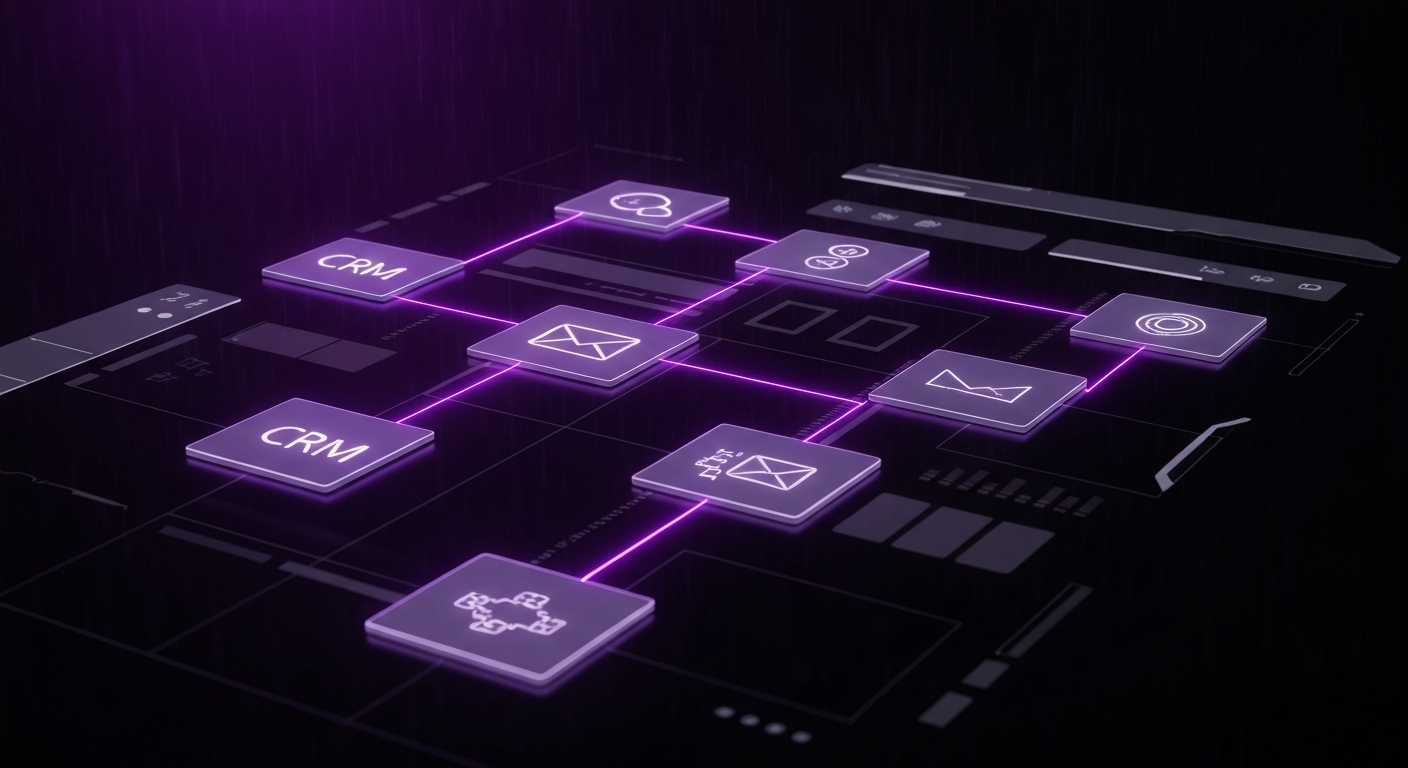
Executing a sophisticated retention marketing strategy at scale is nearly impossible without the right technology. Your “retention stack” is the collection of software that enables you to collect data, segment your audience, automate communication, and measure results. While specific tools will vary by business needs, several categories are fundamental.
A CRM is the heart of your retention efforts. It serves as a centralized database for all customer information, including contact details, purchase history, and support interactions. This 360-degree view of the customer is essential for effective segmentation and personalization. Leading CRM platforms include Salesforce, HubSpot, and Zoho CRM.
These platforms are crucial for executing personalized communication at scale. They allow you to build automated email workflows (like welcome series or abandoned cart reminders), segment your email lists, and A/B test your campaigns to optimize performance. Look for tools that offer robust automation and personalization features. Popular options include Mailchimp, Klaviyo, and ActiveCampaign.
To gather crucial sentiment data like NPS and CSAT, you need dedicated feedback tools. These platforms make it easy to create and distribute surveys, collect responses, and analyze the results, helping you systematically listen to the voice of the customer. Examples include SurveyMonkey, Typeform, and Delighted.
If you plan to implement a loyalty program, specialized software can save you significant time and effort. These tools handle everything from tracking points and rewards to managing tiered statuses and providing customers with a dashboard to view their progress. Platforms like Smile.io, Yotpo, and LoyaltyLion are designed to integrate seamlessly with e-commerce platforms.
| Tool Category | Primary Function | Popular Examples |
|---|---|---|
| CRM | Centralize all customer data and interactions. | Salesforce, HubSpot, Zoho |
| Email & Automation | Automate and personalize customer communication. | Klaviyo, Mailchimp, ActiveCampaign |
| Feedback & Surveys | Collect and analyze customer sentiment (NPS, CSAT). | SurveyMonkey, Delighted, Typeform |
| Loyalty Programs | Manage points, tiers, and rewards for repeat customers. | Smile.io, Yotpo, LoyaltyLion |

Theory is one thing, but seeing retention marketing in action brings its power to life. Some of the world’s most successful brands have built their empires on the foundation of customer loyalty.
Amazon Prime is a masterclass in retention. For a flat annual fee, customers get a suite of benefits so valuable that shopping elsewhere feels inconvenient. It began with free two-day shipping and has expanded to include streaming video, music, photo storage, and exclusive deals. This ecosystem creates incredibly high switching costs, as leaving Prime means giving up numerous conveniences. As a result, Prime members spend significantly more on Amazon than non-members, demonstrating the power of a value-packed loyalty program.
The Starbucks Rewards app is a prime example of using gamification and personalization to drive repeat business. Customers earn “Stars” for every purchase, which they can redeem for free items. The app creates a compelling loop of earning and redeeming that encourages frequent visits. Furthermore, Starbucks uses the app to send personalized offers, challenges, and recommendations based on a user’s order history, making each customer feel uniquely catered to.
Sephora’s Beauty Insider program is more than a points system; it’s a community for beauty enthusiasts. The program is tiered (Insider, VIB, Rouge), creating aspirational goals for customers. Members get access to exclusive products, birthday gifts, and a community forum where they can share tips, ask questions, and connect with fellow makeup lovers. By fostering this sense of community, Sephora turns transactions into relationships and customers into passionate brand advocates.

While the benefits are clear, implementing a retention strategy has its hurdles. One of the biggest challenges is data silos, where customer data is spread across different systems (e.g., e-commerce platform, CRM, support desk), making it difficult to get a unified customer view. The solution is to invest in data integration, either through a customer data platform (CDP) or by ensuring your core systems can communicate. Another common challenge is a lack of resources or buy-in from leadership, who may be focused on short-term acquisition metrics. To overcome this, build a strong business case for retention using industry data and your own metrics (like CLV and churn costs) to demonstrate the financial impact of even small improvements.

The future of retention marketing is being shaped by technology. Artificial intelligence (AI) and machine learning are poised to revolutionize how brands interact with their customers. AI can analyze vast amounts of customer data to predict churn risk, allowing businesses to intervene proactively before a customer leaves. It can also power hyper-personalization, creating one-to-one experiences by dynamically adjusting website content, product recommendations, and email offers in real-time for each user. As technology evolves, the focus will shift from broad segments to the “segment of one,” where every customer journey is unique and tailored to their preferences.

The breadth of retention marketing can seem daunting, but getting started is manageable. You don’t need to launch a complex, multi-channel strategy overnight. Start small and build momentum. Your first step is to track fundamental metrics: calculate your current churn rate, repeat purchase rate, and a baseline CLV. This data will be your benchmark. Next, pick one or two simple strategies to implement. A great starting point is a basic post-purchase email series. Create a sequence of 2-3 automated emails that thank the customer, offer tips for using their new product, and ask for a review. This is a low-effort, high-impact tactic that begins the process of building a relationship beyond the initial sale. From there, you can gradually layer in more sophisticated strategies as you gather more data and resources.