




In a digital world saturated with generic marketing messages, brands that connect with customers on a personal level are the ones that succeed. The era of the one-size-fits-all email blast is over; success in the inbox now depends on delivering the right message to the right person at the right time. This is the power of personalized email marketing, a strategy that has evolved from a competitive advantage to a fundamental business requirement.
This comprehensive guide will walk you through building a sophisticated, automated, and highly effective personalized email marketing strategy. We will move beyond the basics of using a subscriber’s first name and dive into the techniques that foster genuine customer relationships and drive measurable results. You will learn how to leverage data, master segmentation, build intelligent automations, and create content that resonates on an individual level, transforming your email list into a powerful engine for revenue and loyalty.
Personalized email marketing is the practice of using subscriber data to deliver highly relevant, targeted communications. Instead of sending a single, generic message to an entire audience, personalization allows you to tailor content, product recommendations, offers, and timing based on an individual’s attributes, behaviors, and preferences. The goal is to create a one-to-one conversation at scale, making each subscriber feel like you’re speaking directly to them.
In today’s market, consumers don’t just appreciate personalization; they expect it. Generic messages are often ignored or marked as spam. When a brand demonstrates an understanding of a customer’s needs and interests, it builds trust and fosters a stronger connection, which is essential for long-term loyalty.
The most basic form of personalization is using a merge tag to insert a subscriber’s first name. While this is a good starting point, true personalization goes much deeper. It involves using a rich tapestry of data to customize the entire email experience, creating the difference between a form letter and a personal note.
Advanced personalization includes:
The effort invested in personalization yields significant returns. Relevant emails are more likely to be opened, clicked, and acted upon, which directly translates to higher engagement, better conversion rates, and increased revenue. Industry studies consistently show that personalized emails can deliver significantly higher transaction rates than non-personalized campaigns.
Beyond immediate financial gains, personalization is a cornerstone of customer loyalty. By consistently providing value and demonstrating that you understand their needs, you build a relationship that transcends transactions. Customers who feel valued are more likely to become repeat buyers, spend more over their lifetime (higher Customer Lifetime Value or CLV), and become advocates for your brand. This loyalty creates a durable competitive advantage that is difficult for competitors to replicate.
These three terms are often used interchangeably, but they represent distinct, interconnected components of a modern email marketing strategy. Understanding their differences is key to implementing them effectively.
Segmentation is the process of dividing your email list into smaller groups based on shared characteristics. Personalization is the use of individual subscriber data to tailor content for people within those segments. Automation is the technology that sends these personalized messages at the right time, triggered by user actions or specific data points.
| Concept | Definition | Example |
|---|---|---|
| Segmentation | Grouping subscribers based on shared traits. | Creating a segment of all customers who live in Canada and have purchased in the last 60 days. |
| Personalization | Tailoring the message for an individual within a segment. | Sending an email to that Canadian segment with a dynamic content block showing products they previously browsed. |
| Automation | The system that sends the message based on a trigger. | An automated workflow sends a post-purchase follow-up email 3 days after a customer’s order is delivered. |
Effective personalization is impossible without data. It is the fuel that powers every segment, automation, and dynamic content block. Building a solid foundation starts with collecting the right data ethically and ensuring it remains clean, accurate, and accessible across your marketing technology stack.
The goal is to collect data that allows you to create a more relevant experience for your customers, and it is crucial to be transparent about what you are collecting and why. The most valuable data can be categorized into two types:
Always prioritize ethical data collection. Comply with regulations like GDPR and CCPA, provide clear privacy policies, and make it easy for users to manage their data and preferences.
Your data often resides in different systems. To achieve a holistic view of your customer, these systems must communicate effectively. The three core components of a marketing tech stack are the CRM, e-commerce platform, and ESP.
Integration allows data to flow freely between these platforms. For instance, when a customer makes a purchase on your Shopify store, that data should automatically sync to your ESP, enabling you to trigger a post-purchase automation and update the customer’s profile for future segmentation.
Data quality degrades over time as people change email addresses, lose interest, or provide incorrect information. Poor data hygiene leads to failed deliveries, inaccurate personalization, and a skewed understanding of your audience. Maintaining clean data is an ongoing process.
Key data hygiene practices include:
Once you have reliable data, the next step is to use it to segment your audience. Segmentation allows you to move away from generic messaging and speak more directly to the specific needs and interests of different groups. It is the bridge between data collection and true personalization.
These are some of the most straightforward ways to segment your list, relying on basic information about who your subscribers are and where they are located.
Behavioral segmentation is where personalization becomes truly powerful. It groups people based on their actions, not just their identities. This type of segmentation is highly effective because it is based on demonstrated interest and intent.
These advanced strategies focus on a customer’s internal motivations and their overall relationship with your brand.
Marketing automation is the engine that brings your personalization and segmentation strategy to life. Automated workflows are pre-built journeys triggered by a specific user action, date, or event. They allow you to send timely, relevant messages to individuals at scale without manual intervention.
Your welcome series is your first impression and one of the most opened email types you will send. It’s a critical opportunity to engage new subscribers, set expectations, and guide them toward their first purchase.
These are two of the highest-ROI automations for any e-commerce business. They target users with high purchase intent and can recover potentially lost revenue.
Your relationship with a customer doesn’t end at checkout. Post-purchase and re-engagement workflows are essential for fostering loyalty and maximizing customer lifetime value.
With your data, segments, and automations in place, it’s time to focus on the message itself. Personalized content makes the subscriber feel understood. This goes far beyond just their name; it involves tailoring every element of the email to be as relevant as possible.
Dynamic content allows you to show different versions of a content block within a single email template to different segments. This is an incredibly efficient way to personalize at scale without creating dozens of separate email campaigns.
For example, a university could send a newsletter to its alumni database. Using dynamic content, they could display:
This ensures that even in a mass send, the most prominent content is highly relevant to each recipient.
The subject line is your first—and sometimes only—chance to capture a subscriber’s attention in a crowded inbox. Personalization here can dramatically increase open rates. Go beyond the first name and incorporate other data points to create intrigue and relevance.
Examples of personalized subject lines:
The preheader, the short snippet of text that appears after the subject line in most email clients, is equally important. Use it to provide additional context and support the personalized hook of your subject line.
The call-to-action (CTA) tells the reader what to do next. While a generic “Shop Now” button can work, you can drive better results by customizing your CTAs for different audience segments. The CTA should align with the subscriber’s context and stage in the customer journey.
| Segment | Generic CTA | Personalized CTA |
|---|---|---|
| New Subscriber | Shop Now | Claim Your 15% Welcome Discount |
| VIP Customer | See What’s New | Shop Your Exclusive VIP Collection |
| Recent Purchaser | Keep Shopping | Find Accessories for Your New [Product] |
| Lapsed Customer | Visit Our Site | Come Back & See What You’ve Missed |

Building a personalized email campaign is an iterative process. It’s not about achieving perfection on the first try but about launching, measuring, and continuously optimizing based on performance data. A disciplined approach to testing is what separates good email marketers from great ones.
Before you activate any new automation or send a campaign, run through a thorough pre-launch checklist to catch potential errors that could undermine your efforts.
A/B testing, or split testing, is the process of sending two variations of a campaign to a small portion of your audience to see which one performs better. The winning version is then sent to the rest of the list. This data-driven approach removes guesswork from your optimization process.
Elements you can A/B test include:
The golden rule of A/B testing is to only test one variable at a time. If you change both the subject line and the CTA button, you won’t know which change was responsible for the difference in performance.
When analyzing your A/B test results, look for statistical significance. Most email platforms will indicate when a winner has been determined with a certain level of confidence. Look beyond a single metric like open rate. A subject line might get more opens, but the other version might result in a higher click-through and conversion rate, making it the true winner. Use the insights from each test to form a new hypothesis for your next test, creating a cycle of continuous improvement.
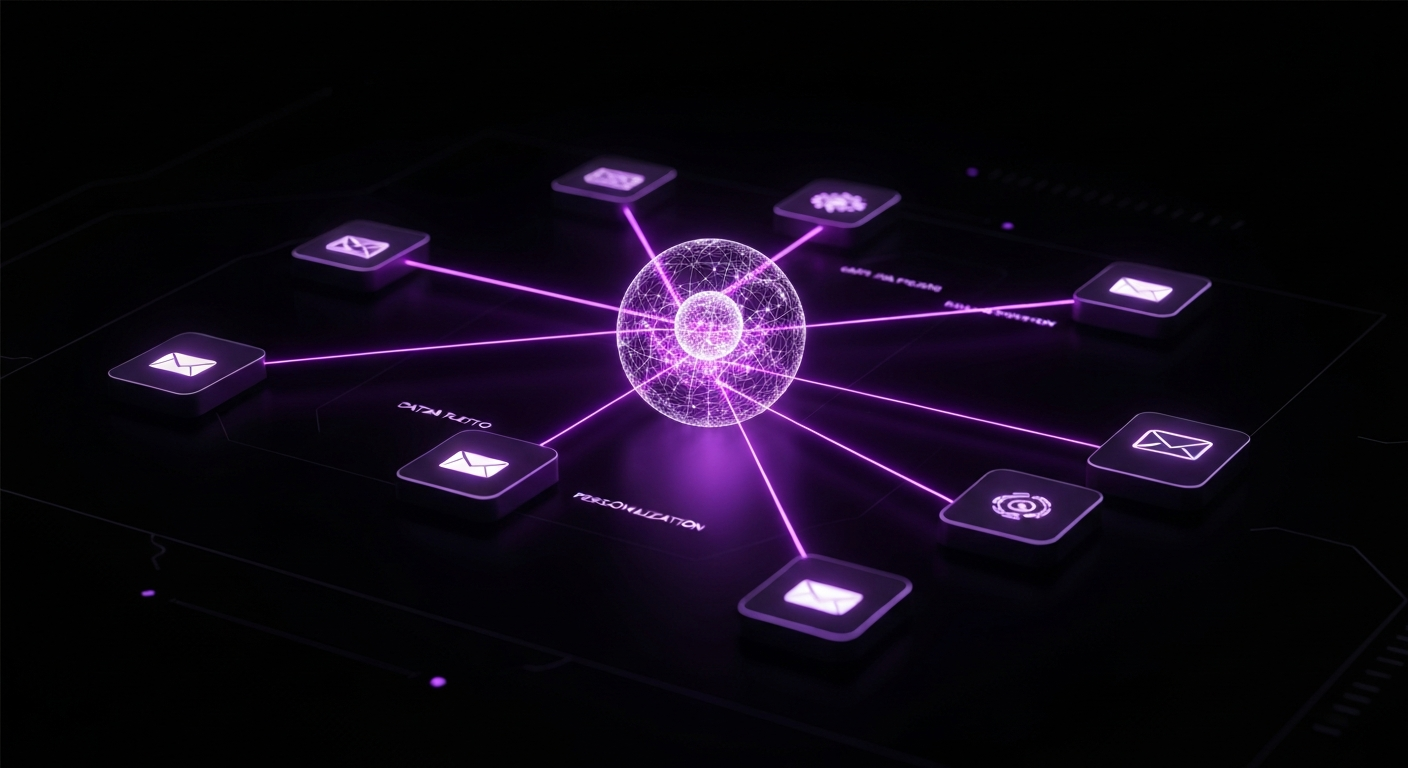
The right technology is crucial for executing a sophisticated email marketing strategy. The market is filled with excellent platforms, each with its own strengths. The best choice depends on your business model, technical expertise, and budget.
These platforms are known for their user-friendly interfaces, affordable pricing, and solid core features for getting started with personalization and automation.
These platforms offer deep integrations, advanced analytics, and the power to manage complex, multi-channel personalization strategies.
When evaluating platforms, consider which features are most critical for your strategy.
| Feature | Why It’s Important | Good For |
|---|---|---|
| Visual Automation Builder | Allows you to easily map out and build complex customer journeys with conditional logic (if/then branches). | All users, from beginner to advanced. |
| Advanced Segmentation | The ability to combine multiple rules (e.g., demographic AND behavioral data) to create hyper-targeted segments. | Businesses with rich customer data. |
| Dynamic Content | Lets you personalize specific sections of an email for different segments without creating multiple campaigns. | E-commerce, publishers, any business with a diverse audience. |
| A/B Testing | Provides the tools to systematically test and optimize every part of your email campaigns. | All users focused on performance and CRO. |
| Integrations | Seamlessly connects with your other tools (e-commerce platform, CRM, analytics) to ensure data flows freely. | E-commerce and businesses with a complex tech stack. |
To justify the investment in personalization, you need to track its impact. By monitoring the right metrics, you can understand what’s working, identify areas for improvement, and demonstrate the ROI of your efforts.
These are the foundational metrics for any email campaign. When viewed through the lens of personalization, they tell a powerful story.
The key is not just to look at these metrics for a campaign as a whole, but to analyze their performance for each specific segment you targeted.
A healthy, engaged email list is your most valuable marketing asset. Personalization should have a positive impact on list health metrics.
Ultimately, business leaders want to know the return on investment (ROI). While it can be complex to attribute every sale, you can get a clear picture by tracking revenue from your email campaigns.
A simple formula to calculate ROI is:
ROI = [ (Revenue Generated from Campaign – Campaign Cost) / Campaign Cost ] * 100
The “Campaign Cost” should include a portion of your ESP subscription fee and the time or resources spent creating the campaign. Most advanced email platforms have built-in revenue attribution that tracks which sales originated from a click in a specific email, making this calculation much easier.
Once you’ve mastered the fundamentals of segmentation and automation, you can explore more advanced techniques to create truly one-to-one marketing experiences at scale.
Artificial intelligence is transforming email marketing. AI-powered tools can analyze vast amounts of customer data to predict future behavior, allowing you to be proactive rather than reactive.
Applications of AI in email marketing include:
Hyper-personalization uses real-time data to tailor messages for each individual, moving beyond segments to true one-to-one communication. This often involves combining behavioral data with contextual data like the user’s current location or the local weather.
For example, an airline could send an email to a user who just searched for flights from New York to London. The email could be triggered instantly and include real-time pricing for those exact dates, along with dynamic content blocks showing hotel deals and weather forecasts for London.
The customer journey is not limited to email. A truly seamless experience requires that your personalization strategy extends across all touchpoints, including your website, mobile app, SMS messages, and digital ads. For example, if a customer browses a product on your website, that same product can appear in a personalized email, a retargeting ad on social media, and as a recommended item when they next open your mobile app. This creates a cohesive and consistent experience that reinforces your message and drives conversions.