




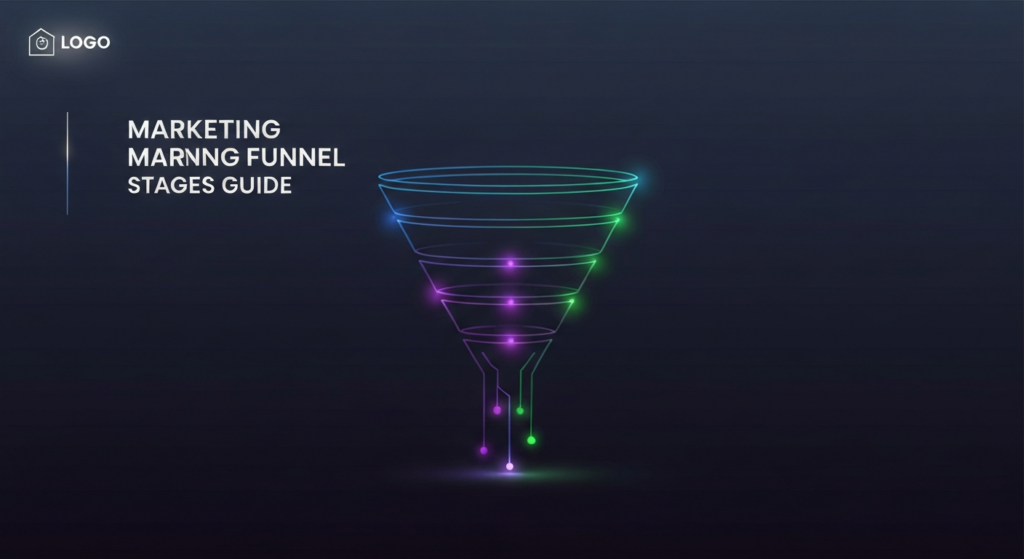


In digital marketing, understanding how a stranger becomes a loyal customer is essential. This process is best visualized through a marketing funnel, a strategic model that maps the ideal path a potential customer takes from their first brand interaction to purchase and beyond. It functions as a roadmap for the customer journey, guiding individuals toward a specific action.
The concept is straightforward: a large audience enters at the top, and as individuals progress through various stages, the group narrows. Some will inevitably drop off, leaving a smaller, more qualified group of paying customers at the bottom. This framework is a practical tool for structuring, measuring, and optimizing an entire marketing strategy. Without a well-defined funnel, marketing efforts can lack direction, making it difficult to diagnose issues or capitalize on growth opportunities.
A marketing funnel is fundamentally a representation of the customer journey, which includes every touchpoint a person has with a brand. This journey starts with awareness of a problem, progresses through research and evaluation of solutions, and extends to the purchase decision and post-purchase experience. Each funnel stage corresponds to a phase in this journey, reflecting the customer’s mindset and needs. Understanding this progression allows a business to deliver the right message through the right channel at the right time, creating a persuasive experience that builds trust and moves customers to the next stage.
Implementing a structured marketing funnel offers numerous tangible benefits for any business, regardless of size or industry. A well-defined funnel allows you to:

Before diving into the multi-stage funnels used today, it is essential to understand their conceptual foundation: the AIDA model. Developed in the late 19th century, AIDA is a timeless marketing framework that outlines the four cognitive phases a person goes through when deciding to purchase a product or service. Its simplicity and effectiveness have made it an enduring pillar of advertising and marketing strategy, and it maps directly onto the modern marketing funnel.
AIDA stands for Awareness, Interest, Desire, and Action. These four stages represent a sequential process of persuasion. Desire for a product cannot be created before a consumer is interested, and interest cannot be built until they are aware it exists. Understanding this psychological progression is key to crafting effective marketing messages that resonate with your audience at every step of their journey.
This is the top of the funnel, where the primary goal is to cut through the noise and make potential customers aware of your brand, product, or service. At this stage, the audience may not even be conscious of a specific problem, so marketing efforts must be broad and attention-grabbing. This can involve compelling advertisements, viral social media content, search-engine-optimized blog posts that answer broad questions, or public relations campaigns. The key is to introduce your brand and its purpose to a wide audience.
Once you have their attention, the next step is to maintain it and build genuine interest. In this phase, potential customers are actively seeking more information. They are aware of a problem or need and are beginning to research solutions. Your content should shift from being purely attention-grabbing to being educational and engaging. Here, you can provide more detail about your product’s features and benefits, share compelling stories, or offer valuable insights related to their problem. The goal is to position your brand as a helpful, credible resource.
In the Desire stage, you transition from building general interest to cultivating a specific want for your product. The customer has conducted their research and is now comparing different options. Your job is to convince them that your solution is the best choice. This involves highlighting your unique selling proposition, showcasing social proof like testimonials and case studies, and appealing to their emotions. The objective is to transform their thinking from “This is a good solution” to “I need *this* solution.”
The final stage is Action. After building awareness, interest, and desire, you must prompt the customer to take the final step. This is where a clear and compelling Call to Action (CTA) is crucial. Whether it’s “Buy Now,” “Sign Up for a Free Trial,” or “Request a Demo,” the CTA should be direct, easy to follow, and create a sense of urgency. The entire user experience, from landing page to checkout, must be frictionless to prevent last-minute abandonment.

The Top of the Funnel (TOFU) is the widest part of your marketing funnel. It represents your first point of contact with potential customers, many of whom may have never heard of your brand. The audience at this stage is very broad and is typically experiencing a problem or has a question, but they are not yet looking for a specific product to buy. They are in the discovery and research phase, seeking information and education.
The primary objective at the TOFU stage is not to sell but to attract and engage. Your goal is to provide value, answer their questions, and establish your brand as a helpful authority in your industry. By offering free, high-quality content, you build initial trust and make a positive first impression, drawing a large volume of traffic into your marketing ecosystem. This is the foundation upon which all subsequent stages are built; without a steady flow of new prospects at the top, the rest of the funnel will be ineffective.
The main goal of TOFU marketing is to cast a wide net to capture the attention of anyone who might be a good fit for your product or service. This means focusing on content and channels that have a broad reach. You are targeting users based on their problems and interests, not their intent to purchase. Success at this stage is defined by your ability to generate traffic, increase brand visibility, and become a go-to resource for your target audience’s initial queries.
Content at the TOFU stage should be easily digestible, shareable, and optimized for discovery. It must be educational or entertaining, not promotional. Effective formats include:
To measure success at the TOFU stage, focus on Key Performance Indicators (KPIs) that reflect audience growth and engagement rather than sales. Key metrics include:

Once you’ve captured attention at the top of the funnel, the next step is to move prospects into the Middle of the Funnel (MOFU). This is the consideration and evaluation stage. The audience here is no longer just browsing; they have identified a specific problem and are actively researching and comparing potential solutions. They have moved from being casual visitors to engaged prospects, and your goal is to transform them into qualified leads.
The MOFU is a critical bridge between initial awareness and the final purchase decision. At this point, you have an opportunity to build a deeper relationship, demonstrate your expertise, and show why your solution is a viable option. The key is to offer more substantial, in-depth content in exchange for their contact information, typically an email address. This exchange marks the transition from an anonymous visitor to a known lead, allowing you to begin a more direct and personalized lead nurturing process.
The primary objective of the MOFU stage is lead generation. You want to persuade your engaged audience to take the next step and provide their contact details. This allows you to move the conversation to a more personal channel like email, where you can nurture their interest over time. Nurturing involves providing a sequence of targeted content that addresses their specific pain points, answers deeper questions, and guides them toward your solution without being overtly promotional. The goal is to build trust and keep your brand top-of-mind as they evaluate their options.
MOFU content needs to be more detailed and valuable than TOFU content to justify the request for contact information. This content is often “gated,” meaning users must fill out a form to access it. Effective formats include:
Metrics at the MOFU stage shift from broad reach to lead generation and engagement. Key KPIs to track include:
The Bottom of the Funnel (BOFU) is the final and narrowest stage of the pre-purchase journey. Prospects who reach this point are highly qualified and on the verge of making a decision. They have completed their research, evaluated their options, and are now looking for the final piece of evidence or the right offer to convince them to choose your solution over competitors. Your marketing efforts here must be direct, persuasive, and focused on conversion.
At the BOFU stage, the conversation shifts from education to validation and sales. The goal is to remove any final barriers to purchase and make it as easy as possible for the lead to become a customer. The content and interactions should be highly personalized and product-focused, directly addressing their specific needs and demonstrating the tangible value your offering provides. This is where marketing and sales teams often work most closely to close the deal.
The singular goal of the BOFU stage is conversion. Every piece of content, every Call to Action (CTA), and every interaction is designed to persuade the lead to take the final step and make a purchase. This involves building a strong case for your product, handling objections, building trust through transparency, and creating a sense of urgency. You need to clearly articulate why your solution is the best possible choice for their specific situation.
BOFU content is designed to let the product or service speak for itself and to provide the final push of confidence a lead needs. Effective formats include:
At the bottom of the funnel, your KPIs are directly tied to sales and revenue. The most important metrics to track are:
Many traditional marketing funnel models end at the purchase, but this is a critical mistake in today’s competitive landscape. The journey doesn’t stop once a lead becomes a customer; in many ways, it’s just beginning. The post-purchase stage is dedicated to retaining customers and turning them into loyal, repeat buyers. It is significantly more cost-effective to retain an existing customer than to acquire a new one, making this stage crucial for long-term, sustainable growth.
This phase focuses on the customer experience after the sale. It involves ensuring they are successful with your product, providing excellent support, and continuing to deliver value. A positive post-purchase experience not only prevents churn but also lays the groundwork for future sales, upsells, and cross-sells. Neglecting this stage means leaving significant revenue on the table and missing the opportunity to build a stable base of loyal customers.
The transaction is an event, but the customer relationship is an ongoing process. A customer’s first experience with your product sets the tone for their entire relationship with your brand. If they struggle to get started, don’t see the value they were promised, or receive poor support, they are likely to churn and may even share their negative experience with others. Conversely, a smooth, supportive, and successful experience solidifies their decision, builds trust, and makes them more receptive to future offers.
A strong post-purchase strategy is built on effective onboarding and a commitment to customer success. Key strategies include:
Success in the post-purchase stage is measured by metrics that reflect customer satisfaction and long-term value. Important KPIs include:
The final and most powerful stage of the modern marketing funnel is Advocacy. This is where you transform happy, loyal customers into an active, voluntary marketing force for your brand. A brand advocate, or evangelist, is a customer who is so satisfied with your product and experience that they proactively recommend you to their network. This is the pinnacle of customer relationship marketing.
The Advocacy Loop creates a self-perpetuating growth engine. When advocates promote your brand, they feed new, highly trusted prospects into the top of your funnel. These leads often have a much shorter sales cycle because they arrive with a built-in layer of trust. This word-of-mouth marketing is incredibly effective and has a much higher ROI than traditional advertising. Fostering advocacy should be an intentional part of your marketing strategy, not something left to chance.
The foundation of advocacy is a great product and exceptional customer service. You cannot create advocates out of dissatisfied customers. Once you have a base of happy customers, you can actively encourage them to become promoters. This involves identifying your most satisfied users—often through surveys or usage data—and making it easy and rewarding for them to share their positive experiences. The key is to ask at the right time, such as after a positive support interaction or when they achieve a key milestone with your product.
Formalizing your advocacy efforts can significantly amplify their impact. Two of the most effective strategies are:
The Net Promoter Score (NPS) is the gold-standard metric for measuring customer loyalty and the likelihood of advocacy. It is based on a single, simple question: “On a scale of 0-10, how likely are you to recommend our brand/product to a friend or colleague?”
Your NPS is calculated by subtracting the percentage of Detractors from the percentage of Promoters. Regularly tracking your NPS allows you to gauge customer sentiment, identify your most loyal customers to engage for advocacy, and address issues with detractors before they churn.

Building an effective marketing funnel requires more than just understanding the theoretical stages; it requires a deep, empathetic understanding of your specific customers. Mapping their unique journey onto the funnel framework is a critical exercise that ensures your marketing efforts are relevant, timely, and effective. This process involves translating abstract stages into concrete touchpoints, content, and channels that align with your customer’s needs and behaviors.
The goal of journey mapping is to see the funnel from your customer’s perspective. What questions are they asking at the awareness stage? Where do they go to find answers? What information do they need to move from consideration to decision? Answering these questions allows you to build a cohesive and customer-centric strategy that guides them smoothly from one stage to the next.
The first step is to know who you are talking to. A customer persona is a semi-fictional representation of your ideal customer based on market research and real data about your existing customers. A strong persona goes beyond basic demographics to include details about their goals, challenges, pain points, motivations, and daily routines. For example, a B2B software company might have a persona like “Marketing Mary,” a 35-year-old marketing manager at a mid-sized tech company who is struggling to prove ROI on her campaigns. By creating 2-3 detailed personas, you can tailor your messaging and content to resonate with their specific needs.
With your personas in mind, the next step is to identify all the potential places where they might interact with your brand—these are your touchpoints. Think through the entire journey for each persona. Where would Marketing Mary first look for information about marketing ROI? Probably on Google, LinkedIn, or industry blogs. These are your TOFU channels. What would convince her to provide her email? A detailed whitepaper on measuring ROI. That’s a MOFU touchpoint. What would make her request a demo? A compelling case study featuring a similar company. That’s a BOFU touchpoint. Map these interactions across channels like your website, social media, email, paid ads, and third-party review sites.
Finally, you must align your content with the user’s intent at each stage of the funnel. User intent is the primary goal a user has when they perform an action, like a search query. By matching your content to their intent, you provide maximum value and build trust.
| Funnel Stage | User Intent | Example Persona Question | Content Format |
|---|---|---|---|
| TOFU (Awareness) | Informational (“I have a problem”) | “How can I measure marketing campaign ROI?” | Blog post: “10 Ways to Measure Marketing ROI” |
| MOFU (Consideration) | Investigational (“What are the solutions?”) | “Best marketing analytics software” | Webinar: “A Deep Dive into Choosing Analytics Tools” |
| BOFU (Decision) | Transactional (“I’m ready to choose”) | “[Your Brand] vs. [Competitor Brand] pricing” | Pricing page, free trial, customer testimonials |
By systematically mapping personas, touchpoints, and content intent to each funnel stage, you create a strategic blueprint for your entire content marketing and customer acquisition process.

A well-defined strategy is the blueprint for your marketing funnel, but technology provides the tools to build, automate, and optimize it. The right software stack can streamline your processes, provide critical data insights, and enable personalized communication at scale. Investing in the right tools is essential for executing a modern, data-driven funnel strategy efficiently.
From managing customer relationships to analyzing performance, these platforms work together to create a cohesive system that captures, nurtures, and converts leads. While the specific tools may vary based on your budget and business needs, they generally fall into a few key categories.
A Customer Relationship Management (CRM) platform is the central nervous system of your marketing and sales funnel. It serves as a centralized database for all your contact, lead, and customer information. A CRM tracks every interaction a person has with your brand—from website visits and email opens to sales calls and support tickets. This provides a 360-degree view of the customer journey, enabling personalization and ensuring a smooth handoff between marketing and sales. Platforms like HubSpot and Salesforce are powerful all-in-one solutions that can manage your entire funnel.
Email is the primary channel for lead nurturing in the middle of the funnel. Email marketing automation tools (like Mailchimp, ConvertKit, or the automation features within a CRM like HubSpot) allow you to create sophisticated, automated email sequences. These platforms enable you to send targeted messages to leads based on their behavior, such as downloading a specific e-book or visiting the pricing page. This ensures you are delivering the right message at the right time to move them through the funnel without manual intervention.
You cannot optimize what you do not measure. Analytics tools are crucial for understanding how your funnel is performing and identifying areas for improvement. Google Analytics is the standard for tracking website traffic, user behavior, and conversion goals. For more advanced insights, data visualization tools like Tableau or Google Data Studio can pull data from multiple sources (your CRM, ad platforms, analytics) into interactive dashboards. This allows you to monitor your key KPIs for each funnel stage in one place and spot trends or problems quickly.
Landing pages are purpose-built web pages designed for a single conversion goal, such as downloading a whitepaper or signing up for a webinar. They are a cornerstone of MOFU lead generation. Tools like Unbounce, Leadpages, or the built-in builders in most CRMs make it easy to create, A/B test, and optimize high-converting landing pages without needing a developer. These tools are essential for maximizing your lead conversion rates and ensuring a seamless user experience for your various marketing campaigns.

While the marketing funnel is a powerful framework, it’s not foolproof. Many businesses struggle to implement it effectively, leading to wasted resources and poor results. Being aware of the common pitfalls is the first step toward building a robust and high-performing funnel. Proactively addressing these challenges can mean the difference between a funnel that leaks potential customers and one that efficiently drives growth.
Most issues stem from a lack of data, poor alignment between teams, or a “set it and forget it” mentality. A successful funnel requires constant monitoring, testing, and optimization to adapt to changing customer behaviors and market dynamics.
A “leaky funnel” is one where a significant number of prospects drop off between stages. For example, you might get a lot of traffic to a blog post (TOFU) but very few people click the CTA to download a related e-book (MOFU). This is a leak. To fix it, you must first identify where the leaks are happening using your analytics tools. Look at conversion rates between each stage. Once you’ve identified a drop-off point, investigate the cause. Is the CTA unclear? Is the landing page loading too slowly? Is the offer not compelling enough? Use A/B testing to experiment with different headlines, copy, offers, and page designs to plug the leak and improve your conversion rate.
One of the most common and damaging pitfalls is a disconnect between the marketing and sales departments. Marketing may focus on generating a high volume of leads (MQLs), but sales finds them to be low-quality and unqualified. This creates friction and inefficiency. To solve this, both teams must agree on a unified definition of a qualified lead and establish a Service Level Agreement (SLA). This agreement should outline marketing’s responsibility for delivering a certain number and quality of leads and sales’ responsibility for following up on them promptly. Regular communication and shared goals are essential for a smooth handoff and an effective BOFU stage.
Building a funnel based on assumptions instead of data is a common and costly mistake. Every aspect of your funnel—from ad copy and email subject lines to landing page layouts and CTA buttons—should be tested. A/B testing (or split testing) involves creating two versions of an asset and showing them to different segments of your audience to see which one performs better. Do not assume you know what your audience wants; let the data guide your decisions. Continuously testing and iterating on each element of your funnel is the core principle of Conversion Rate Optimization (CRO) and is essential for maximizing performance over time.
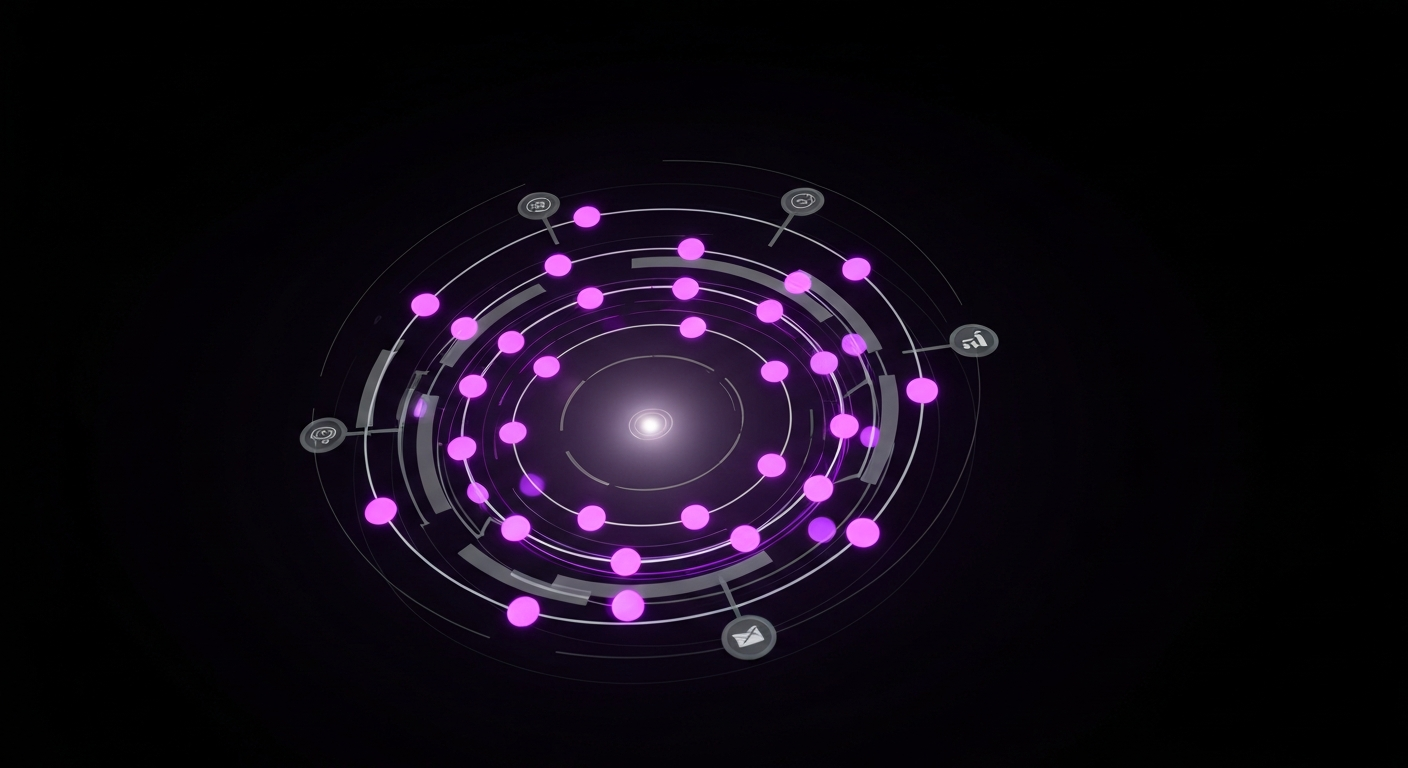
For decades, the funnel has been the dominant metaphor in marketing. However, as business has become more customer-centric, some marketers have begun to favor a new model: the flywheel. Popularized by HubSpot, the flywheel places the customer at the center of the business and uses the momentum of happy customers to drive referrals and repeat sales. It re-imagines the linear funnel as a circular, self-sustaining process.
While the funnel is still an incredibly useful tool for visualizing the customer acquisition process, understanding the flywheel offers a more holistic view of business growth. It emphasizes that the work doesn’t stop at the sale; rather, the post-purchase experience is what fuels future growth. The two models are not mutually exclusive; they can be used together to create a comprehensive growth strategy.
The primary difference between the funnel and the flywheel lies in their structure and how they treat customers. The funnel is a linear model where customers are the output at the end. Once a deal is closed, their energy is lost. The flywheel, in contrast, is a circular model where customers are the central component that keeps the wheel spinning. By delighting customers, you create force that propels the flywheel, making it spin faster and generate more growth with less friction.
| Aspect | Marketing Funnel | Marketing Flywheel |
|---|---|---|
| Structure | Linear, top-down process. | Circular, cyclical process. |
| Customer’s Role | Customers are an output or endpoint. | Customers are the center and the fuel for growth. |
| Energy Flow | Loses momentum at the bottom. | Uses momentum from happy customers to self-sustain. |
| Primary Focus | Customer acquisition. | Customer acquisition, retention, and delight. |
| Team Focus | Can lead to silos between marketing, sales, and service. | Requires seamless integration of all customer-facing teams. |
Applying a flywheel approach means shifting your company’s focus to a three-stage cycle: Attract, Engage, and Delight.
To implement this, you must identify and reduce points of friction in your customer experience across all departments. By investing in customer service, success, and advocacy programs, you turn your customer base into your most effective growth engine.