






In a competitive digital landscape, capturing a lead is only the first step. Most new leads are not immediately ready to make a purchase; they are exploring, researching, and evaluating their options. Lead nurturing is the process of building relationships with these potential customers throughout their journey. The goal is to provide timely, relevant information that guides them from initial awareness to a purchasing decision. Without a deliberate nurturing strategy, valuable leads can go cold, resulting in lost revenue and wasted marketing resources.
Historically, this relationship-building process was manual, time-consuming, and difficult to scale. Today, marketing automation serves as the engine for modern lead nurturing. It allows businesses to execute sophisticated, personalized communication strategies across thousands of leads simultaneously—a scale impossible for any team to manage manually. By automating repetitive tasks like sending emails or updating contact records, marketers can focus on strategy, content creation, and analysis. This shift from manual to automated processes is not just about efficiency, but about overall effectiveness.
Modern lead nurturing is more than a simple sequence of emails; it is a strategic, multi-channel approach designed to respond to a lead’s behavior with relevant, helpful content. The process begins when a person shares their contact information, such as by downloading an ebook or subscribing to a newsletter. From that point, every interaction—or lack thereof—provides data that can be used to tailor the conversation. This dynamic process adapts to the lead’s actions. For example, if a lead visits your pricing page, the nurturing track might shift to deliver a case study. If they become inactive, a re-engagement campaign might be triggered. This approach creates a continuous dialogue, not a one-way monologue.
Personalization is the cornerstone of effective nurturing, and automation is the only way to achieve it at scale. Marketing automation platforms connect user data—such as industry, job title, and on-site behavior—to communication workflows. This enables you to go beyond simply using a lead’s first name, allowing you to deliver different content, offers, and messaging based on their profile and interests. For example, a lead from the healthcare industry can receive case studies specific to healthcare challenges, while a lead from the retail sector receives content tailored to their market. This level of relevance makes leads feel understood, builds trust, and significantly increases engagement and conversion rates. Automation transforms personalization from a “nice-to-have” into a scalable, core component of your marketing strategy.
Implementing an automated lead nurturing system yields significant, measurable benefits across the business. It bridges the gap between marketing’s lead generation efforts and sales’ need for qualified, ready-to-buy prospects.

Before you build a single workflow, you must lay the groundwork. A successful marketing automation strategy is built on a foundation of clean data, clear definitions, and strategic alignment. Skipping these foundational steps is like building a house on sand; the structure may look good initially, but it will eventually falter. Taking the time to prepare your systems and teams ensures that your automated workflows will be effective, efficient, and capable of driving real business results.
A lead scoring model is a system used to rank prospects on a numerical scale to determine their perceived value to the organization. It is the critical mechanism that identifies when a lead is ready for a sales conversation. Points are assigned based on various attributes, including explicit data provided by the lead and implicit data gathered from their behavior. A robust model includes both demographic/firmographic and behavioral criteria.
The goal is to define a threshold score—for instance, 100 points—that automatically qualifies a lead as an MQL and triggers a handoff to the sales team. This model must be developed in collaboration with sales to ensure everyone agrees on what constitutes a qualified lead.
Segmentation is the practice of dividing your contact database into smaller, more targeted groups based on shared characteristics. Sending the same message to every lead is a recipe for low engagement. Segmentation allows you to deliver highly relevant content that resonates with the specific needs and pain points of each subgroup. Effective segmentation is the engine of personalization.
You can segment your audience based on a wide range of criteria:
For example, you could create a nurturing workflow specifically for VPs of Marketing in the SaaS industry who have downloaded your ebook on SEO. The content in this workflow would be far more effective than a generic message sent to your entire database.
The success of any lead nurturing program hinges on the alignment between marketing and sales, often referred to as “Smarketing.” This alignment ensures a seamless transition for leads as they move from marketing-led nurturing to a sales-led conversation. Without it, marketing may generate leads that sales deems unqualified, leading to friction and lost opportunities.
The cornerstone of this alignment is a Service Level Agreement (SLA), a formal document that defines the expectations and commitments each team has to the other. An effective SLA should clearly outline:

At its heart, a nurturing workflow is a series of automated “if/then” statements that guide a lead through a predefined journey. Understanding the core components of these workflows is essential for designing effective sequences in any marketing automation platform. These building blocks—triggers, actions, and logic—are the universal language of automation, allowing you to construct everything from a simple welcome series to a complex, multi-path nurturing campaign.
A trigger, also known as an enrollment criterion, is the event that causes a lead to enter a workflow. It’s the “if” that sets the automation in motion. A well-chosen trigger ensures that the right leads enter the right nurturing path at the right time. Common triggers include:
Once a lead is enrolled by a trigger, the workflow executes a series of actions. These are the “then” steps in the automation. While sending an email is the most common action, modern platforms offer a wide range of possibilities to create a holistic nurturing experience.
Delays and logic are what make a workflow dynamic and human-centric. They control the timing and direction of the nurturing journey, preventing you from overwhelming leads and allowing you to adapt to their behavior.
These core components can be assembled into various types of workflows, each serving a specific strategic purpose.
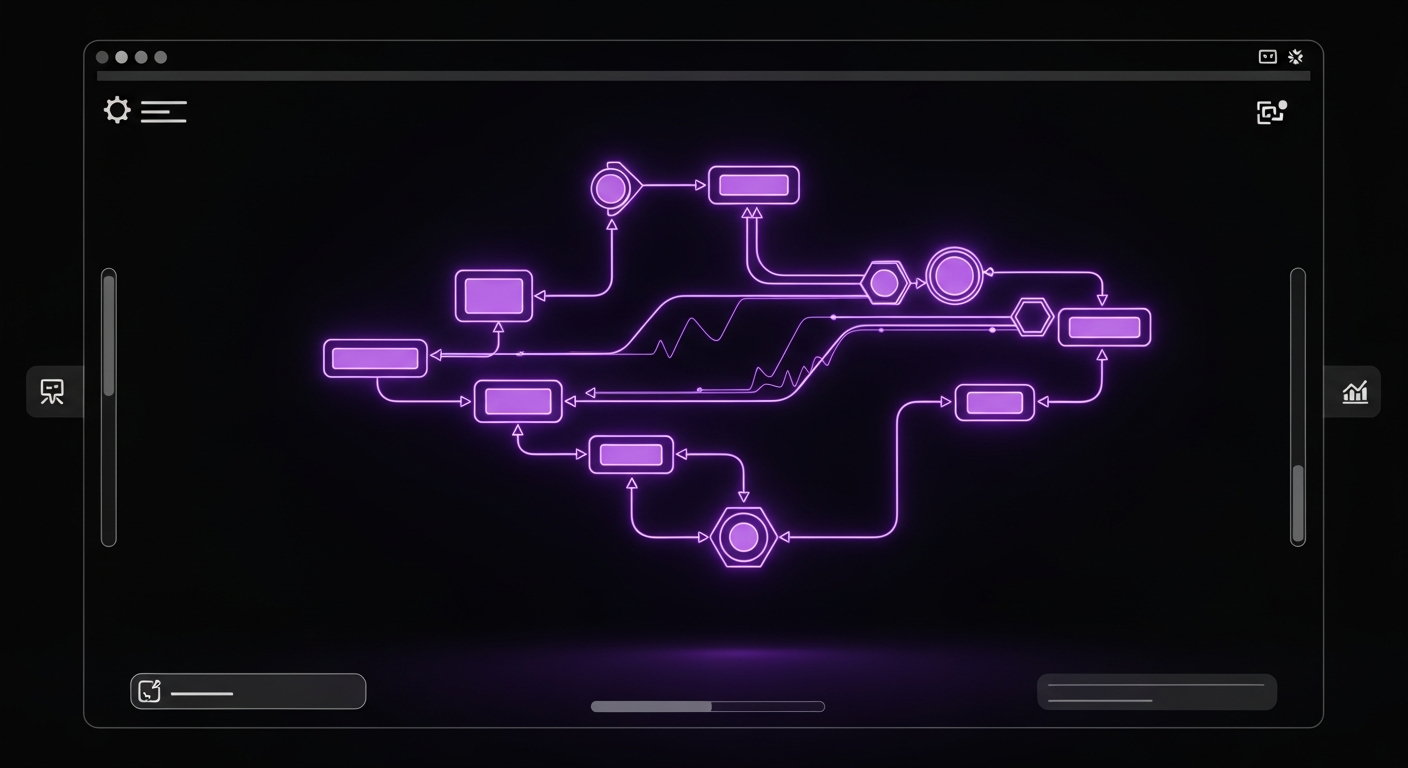
Building an automated workflow can seem daunting, but breaking it down into a systematic process makes it manageable. This structured, four-step approach helps ensure your workflow is goal-oriented, user-centric, and technically sound before activation.
Before designing any part of the workflow, you must define what success looks like. A workflow without a goal is just a series of random actions. Your primary objective should be specific, measurable, achievable, relevant, and time-bound (SMART). Is it to convert new leads into MQLs, re-engage a cold segment of your database, or onboard new customers effectively?
Once the goal is set, define the Key Performance Indicators (KPIs) you will use to measure it. For an MQL-generation workflow, KPIs might include:
Having these metrics defined upfront allows you to objectively evaluate the workflow’s performance and make data-driven optimizations later.
Next, put yourself in your lead’s shoes and map out the ideal path you want them to take. What questions do they have at this stage? What information do they need to move to the next stage? This exercise is about their problems and needs, not your company. For a lead who just downloaded a top-of-funnel ebook, the journey might look like this:
This journey map becomes the blueprint for your workflow’s content and timing.
With your journey mapped out, you can define the technical components. First, select the entry trigger. For our example, the trigger would be “Form Submission on the ebook landing page.”
Next, identify opportunities for branching logic to make the journey more personalized. For instance, in Touchpoint 4, you could add a branch:
This adaptive approach ensures you are responding to the lead’s signals, rather than pushing them down a rigid, one-size-fits-all path.
During the final execution stage, gather all your assets, including email copy, subject lines, images, and landing page links. Then, using your marketing automation platform’s visual editor (such as in HubSpot or Marketo), build the workflow by assembling the triggers, actions, delays, and branches you planned.
Testing is a critical step that must not be skipped. Most platforms allow you to test a workflow using a single contact (like yourself or a colleague). Run through the entire sequence:
Only after you have thoroughly tested every component and path should you activate the workflow for your real leads.

The most sophisticated workflow is useless without compelling content. The content you deliver is the substance of your nurturing efforts. To be effective, it must align with the lead’s stage in the sales funnel. A lead just becoming aware of a problem has very different needs than one actively comparing vendors. Tailoring your content to their mindset at each stage—Top-of-Funnel (ToFU), Middle-of-Funnel (MoFU), and Bottom-of-Funnel (BoFU)—is essential for guiding them effectively.
At the ToFU stage, leads are experiencing symptoms of a problem but may not have a name for it yet. They are looking for information, education, and insight, not a sales pitch. Your goal here is to be a helpful, trusted resource. The content should be brand-agnostic and focused entirely on the lead’s challenges and questions.
Once a lead moves into the MoFU stage, they have clearly defined their problem and are now actively researching potential solutions. They are comparing different approaches, categories, and methodologies. At this stage, you can begin to introduce your solution, but the focus should still be on providing practical value and demonstrating how your approach solves their problem. The content should be more in-depth and specific.
At the BoFU stage, the lead has done their research and is ready to make a purchase decision. They have likely narrowed their options down to a shortlist of vendors. Your content now needs to be highly specific to your product or service and designed to overcome any final barriers to purchase. It should answer the question, “Why should I choose you?”

Once you have mastered the fundamentals of workflow design and funnel-aligned content, you can elevate your nurturing strategy with advanced personalization. This goes far beyond using a contact’s first name. It involves leveraging the rich data in your marketing automation platform and CRM to create a truly one-to-one experience for each lead. The goal is to make every communication feel as if it were crafted specifically for the recipient, which dramatically increases engagement and builds a stronger connection.
Dynamic content is a key technology that enables this level of personalization. It allows you to display different versions of content within a single email or on a single landing page based on the viewer’s data. For example, you can create one email template where the headline, main image, and call-to-action button all change based on the recipient’s industry. A lead in the healthcare industry sees a healthcare-related image and a case study, while a lead in the finance industry sees finance-specific content in the exact same email send.
You can also use behavioral data for even more sophisticated personalization. If a lead has spent significant time on your product pages related to a specific feature, your nurturing workflow can dynamically insert a content block into the next email that highlights that exact feature, perhaps with a link to a short demo video. This demonstrates that you are paying attention to their specific interests and providing information that is directly relevant to their research, making your communication feel less like marketing and more like a helpful, intelligent conversation.
While powerful on its own, a marketing automation platform’s true potential is unlocked when tightly integrated with a Customer Relationship Management (CRM) system. This integration creates a closed-loop system where data flows seamlessly between marketing and sales, providing a complete, 360-degree view of each lead’s journey. This unified view is the foundation of a smooth and effective handoff process, which is critical for converting marketing efforts into revenue.
The integration should be bi-directional. Data from the marketing platform—such as email opens, clicks, page views, and form submissions—should be visible on the contact record within the CRM. This gives the sales representative invaluable context when they make their first call. They can see exactly what content the lead has consumed, what topics they are interested in, and how engaged they have been. This allows for a much warmer, more relevant conversation than a simple cold call.
Conversely, data from the CRM should flow back to the marketing automation platform. When a sales rep updates a lead’s status or disqualifies them, that information can trigger automated actions in the marketing system. For example, if a lead is marked as “Not ready,” they can be automatically placed back into a long-term nurturing workflow. If a deal is closed, the contact can be moved to a customer onboarding workflow. This automated handoff process, triggered by a lead score threshold or a high-intent action like a demo request, ensures that no lead is left behind and that both teams are working in perfect sync from a single source of truth.
A “set it and forget it” approach is a common failure point in marketing automation. Lead nurturing workflows are not static; they are dynamic systems that require continuous monitoring and optimization. To improve their performance, you must measure what matters. Tracking the right metrics allows you to identify what is working, pinpoint areas for improvement, and make data-driven adjustments to maximize your return on investment.
These are the fundamental email engagement metrics that provide a health check for your content and list quality. A high open rate suggests your subject lines are compelling and your brand is recognized. A high click-through rate (CTR) indicates that the content within your email is relevant and valuable to the audience. A rising unsubscribe rate is a red flag, signaling that your content may be irrelevant, your sending frequency is too high, or you are targeting the wrong segment. Analyzing these metrics on a per-email basis within a workflow can help you pinpoint specific messages that need to be rewritten or replaced.
While engagement metrics are important, the ultimate measure of success is revenue. The lead-to-customer conversion rate tracks the percentage of leads who enter a workflow and eventually become paying customers. This is the North Star metric for your nurturing program because it directly ties marketing activity to business outcomes. To measure this accurately, you need a tightly integrated CRM and marketing automation system that can track a lead’s entire lifecycle. A low overall conversion rate might indicate a problem with your lead qualification process, your content strategy, or your sales follow-up process.
Most marketing automation platforms provide a visual representation of your workflow, showing how many contacts are at each step. This allows you to analyze where leads are exiting the workflow or becoming disengaged. Are a large number of contacts getting stuck at a particular delay? Is one specific email causing a spike in unsubscribes? Identifying these drop-off points is crucial for optimization. It might reveal that a delay is too long, causing leads to lose interest, or that a piece of content is misaligned with the audience’s needs at that particular stage. By addressing these bottlenecks, you can improve the flow and effectiveness of the entire sequence.
Marketing automation is a powerful tool, but it is not a magic wand. Without a sound strategy, it can amplify bad practices just as easily as good ones. Many organizations fall into common traps that undermine their lead nurturing efforts, leading to poor engagement, frustrated leads, and a lack of ROI. Awareness of these pitfalls is the first step toward building a program that adds value.
One of the most frequent mistakes is being too sales-focused too early. A lead who has only downloaded an introductory ebook is not ready for a hard pitch or a demo request. Pushing for a sale at this stage feels aggressive and can alienate potential customers. The solution is to meticulously align your content and calls-to-action with the lead’s funnel stage, focusing first on education and building trust.
Another common pitfall is failing to segment the audience, which results in generic, one-size-fits-all messaging that leads to low engagement and high unsubscribe rates. The key is to leverage demographic, firmographic, and behavioral data to create targeted nurturing paths for each segment. Finally, many marketers adopt a “set it and forget it” mindset. A workflow is not a static asset; it must be regularly reviewed using performance metrics and sales team feedback to make iterative improvements. A successful nurturing program is one that is constantly tested, measured, and optimized.
Selecting the right technology is a critical decision that will shape your lead nurturing capabilities for years to come. The market is filled with options, from all-in-one platforms designed for small businesses to enterprise-grade solutions built for complex, global organizations. The best platform for your company depends on your specific needs, budget, technical resources, and scalability requirements.
When evaluating options, consider the core features you need. Does the platform offer a flexible workflow builder with robust branching logic? Does it have native integration with your existing CRM? Does it include tools for creating landing pages and forms? Also, consider ease of use. A powerful platform is useless if your team finds it too complex to operate effectively. Finally, think about scalability. Will the platform be able to grow with you as your database and strategic needs expand?
Here is a comparison of some of the leading platforms in the market:
| Platform | Target Audience | Key Strengths | Considerations |
|---|---|---|---|
| HubSpot | SMBs to Mid-Market | All-in-one platform (Marketing, Sales, Service), user-friendly interface, excellent educational resources. | Can become expensive at higher contact tiers and with more advanced features. |
| Marketo (Adobe) | Enterprise | Extremely powerful and flexible, deep analytics, native integration with Salesforce. | Steep learning curve, requires significant technical expertise and resources to manage. |
| Pardot (Salesforce) | B2B companies using Salesforce | Seamless, best-in-class integration with Salesforce CRM, strong B2B-focused features. | Less intuitive interface compared to some competitors; primarily for Salesforce users. |
| ActiveCampaign | Small Businesses | Strong automation and email marketing capabilities at an affordable price point, built-in CRM. | Less comprehensive feature set for landing pages and social media compared to all-in-one platforms. |
A simple email drip campaign is a linear, static sequence of emails sent on a fixed schedule. Every lead receives the same emails in the same order, regardless of their actions. A lead nurturing workflow is dynamic and behavior-driven. It uses branching logic to alter the path a lead takes based on their engagement, properties, or actions. It is an intelligent, responsive conversation, whereas a drip campaign is a one-way monologue.
The ideal length depends on your sales cycle, the complexity of your product, and the workflow’s goal. A simple workflow for a free trial might be 3-5 emails over a week. A long-term nurture for a top-of-funnel lead with a 6-month sales cycle could be 10-15 emails spaced out over several months. The key is to provide value in every touchpoint, not to hit an arbitrary number of emails. Monitor engagement and stop sending if a lead becomes inactive.
Measuring ROI requires a closed-loop reporting system that connects your marketing automation platform and CRM. The basic formula is: (Revenue Generated from Nurtured Leads – Campaign Costs) / Campaign Costs. To do this, you must be able to track which leads from a specific workflow became customers and the value of their deals. This attributes a specific revenue figure to your nurturing efforts.
Absolutely. This is a primary use case for automation. A re-engagement campaign can be created to target leads who have not opened an email or visited your website in a set period (e.g., 90 days). This workflow typically offers a high-value piece of content, a special offer, or a survey to try and win back their attention. If they still do not engage, a final email can ask if they wish to remain subscribed, which helps clean your database.
A lead should be passed to sales when they demonstrate a combination of the right profile (fit) and high engagement (intent). This is most effectively managed through a lead scoring model. When a lead reaches a predefined score threshold (e.g., 100 points), the workflow should automatically change their lifecycle stage to Marketing Qualified Lead (MQL) and trigger a notification and task for the appropriate sales representative in the CRM.
While email engagement metrics (open rate, CTR) are important for tactical optimization, the most critical metrics are tied to business outcomes. These include the MQL generation rate (how many leads become sales-ready), the lead-to-customer conversion rate (how many leads become customers), the length of the sales cycle (is nurturing shortening it?), and ultimately, the pipeline and revenue generated from nurtured leads.