




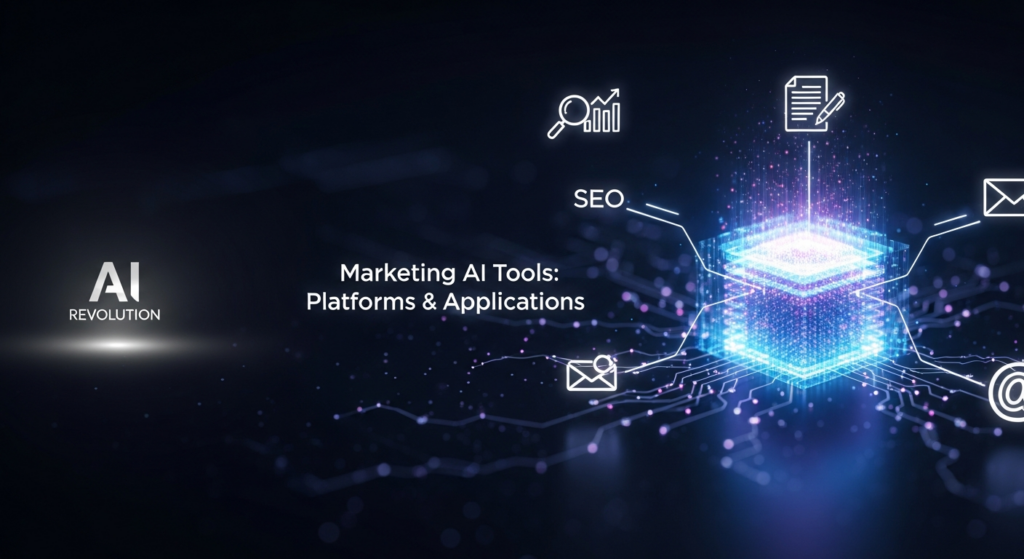


In the evolving landscape of digital marketing, Artificial Intelligence (AI) has shifted from a futuristic concept to an indispensable component of modern strategy. AI marketing tools are software applications that use machine learning, natural language processing, and data analysis to automate tasks, generate insights, and deliver personalized customer experiences at scale. By leveraging these platforms, marketers can make smarter, data-driven decisions, streamline workflows, and achieve a higher return on investment (ROI).
The integration of AI marks a fundamental shift, allowing marketing teams to move beyond manual processes and focus on high-level strategy and creativity. Instead of spending hours sifting through spreadsheets or manually testing campaign variables, marketers can deploy AI to analyze vast datasets in seconds, predict customer behavior, and automate complex initiatives. This transition is not merely about efficiency but effectiveness. AI unlocks a deeper understanding of the customer, enabling brands to deliver the right message to the right person at the right time, through the ideal channel.
To grasp the power of AI marketing tools, it is essential to understand the core technologies that drive them. At its heart, Artificial Intelligence (AI) refers to the simulation of human intelligence in machines programmed to learn, reason, and self-correct. In marketing, this breaks down into several key subsets:
In a marketing context, these technologies are not abstract concepts. They are the engines behind tools that recommend products on Amazon, personalize your Netflix homepage, and power the Google Ads you see every day. They enable a level of precision and personalization that is simply not achievable through manual efforts alone.
The transition from traditional to AI-powered marketing represents a move from broad assumptions to granular, data-backed precision. Traditional marketing often relied on demographic segmentation and historical performance data, leading to broad-stroke campaigns that treated large groups of people as a monolith. For instance, a campaign might target “males aged 25-40 in urban areas.” While somewhat effective, this approach ignores the vast differences in individual preferences, behaviors, and needs within that group.
AI-powered marketing, in contrast, operates at the individual level. It analyzes real-time behavioral data—such as website clicks, content engagement, purchase history, and social media interactions—to build a unique profile for each customer. This enables hyper-personalization at scale. Instead of one generic email blast, AI can orchestrate millions of unique emails, each with a subject line, content, and send time optimized for the recipient. This shift elevates campaign performance by replacing guesswork with predictive analytics, transforming marketing from a reactive discipline to a proactive one that anticipates customer needs.
Incorporating AI tools into your marketing strategy is no longer a luxury reserved for enterprise-level corporations. It offers tangible benefits for businesses of all sizes, driving growth and creating a sustainable competitive advantage.
[[INNER_IMAGE]]
One of the most significant impacts of Artificial Intelligence in marketing has been in the realm of content creation. Generative AI has fundamentally changed how marketers approach the development of written and visual content, accelerating production timelines and opening new avenues for creativity. These tools act as powerful assistants, capable of generating high-quality first drafts, brainstorming ideas, and optimizing existing content for specific audiences and platforms.
From blog posts and social media updates to video scripts and website copy, AI is becoming an integral part of the content lifecycle. It helps overcome writer’s block, ensures brand voice consistency, and allows content teams to produce a higher volume of material without sacrificing quality. The key is to view these tools not as replacements for human creativity but as collaborators that handle the heavy lifting, allowing marketers to focus on strategy, editing, and adding a unique human touch.
Generative AI platforms trained on vast text datasets have become remarkably proficient at producing human-like writing. Tools like OpenAI’s ChatGPT, Jasper, and Copy.ai allow marketers to generate various forms of written content by providing a simple prompt or outline. For example, a marketer could input a prompt like, “Write a 500-word blog post introduction about the benefits of email marketing for small businesses, using an authoritative and educational tone.” Within seconds, the AI will produce a well-structured draft.
The applications are extensive. These tools can be used to brainstorm headlines, create multiple versions of ad copy for A/B testing, draft social media captions, write product descriptions, and even structure long-form articles. While the output requires human review and refinement to ensure accuracy and brand alignment, it drastically reduces the time needed to move from a blank page to a polished piece of content. This efficiency allows marketing teams to scale their content efforts and maintain a consistent publishing schedule.
The creative revolution driven by Generative AI extends far beyond text. A new class of AI tools can now generate stunningly realistic images and professional-quality videos from simple text descriptions. Platforms like Midjourney, DALL-E 3, and Stable Diffusion allow marketers to create custom visuals for social media posts, blog headers, and advertisements without needing a graphic designer. By typing a descriptive prompt, such as “A photorealistic image of a diverse team collaborating in a modern, sunlit office,” a marketer can generate dozens of unique visual options in minutes.
In the video space, tools like Synthesia and HeyGen enable the creation of videos featuring AI-generated avatars. Users can simply type a script, and a lifelike avatar will narrate it, complete with realistic facial expressions and gestures. This technology is transformative for creating training materials, product demonstrations, and marketing videos quickly and cost-effectively. Similarly, platforms like Lumen5 can automatically convert blog posts into engaging summary videos, repurposing written content for video-centric platforms like YouTube and TikTok.
Beyond content generation, AI also plays a crucial role in content optimization. AI-powered writing assistants help ensure that every piece of content is clear, grammatically correct, and aligned with the desired tone of voice. Tools like Grammarly go beyond basic spell-checking to offer suggestions on clarity, conciseness, and tone (e.g., confident, formal, friendly). The Hemingway App analyzes text for readability, highlighting complex sentences and passive voice to help writers create more accessible content.
In the context of SEO, platforms like SurferSEO and Clearscope use AI to analyze top-ranking pages for a target keyword. They then provide data-driven recommendations on how to improve a piece of content, suggesting relevant terms to include, optimal word count, and structural improvements. This helps marketers create content that not only reads well for humans but is also structured to perform well in search engine results.
[[INNER_IMAGE]]
Search Engine Optimization (SEO) has always been a data-intensive discipline, making it a perfect candidate for AI-driven innovation. Artificial Intelligence is transforming every facet of SEO, from keyword research and content creation to technical analysis and strategic forecasting. AI tools allow SEO professionals to move beyond manual data crunching and gain a more sophisticated, predictive understanding of search engine algorithms and user behavior. This enables the development of more effective, resilient, and scalable SEO strategies that drive sustainable organic growth.
By leveraging machine learning and natural language processing, AI-powered SEO platforms can analyze search engine results pages (SERPs) at a massive scale, identify hidden opportunities, and automate complex optimization tasks. This allows SEOs to focus their energy on high-impact strategic initiatives rather than getting bogged down in repetitive analysis. The result is content that better matches user intent, websites that are technically sound, and strategies that can anticipate market shifts.
Traditional keyword research often focuses on individual keywords and their search volume. AI introduces a more advanced approach centered on user intent and topical authority. AI-driven tools like SEMrush’s Topic Research tool or MarketMuse analyze the ecosystem of topics related to a primary keyword. These tools identify subtopics, common questions, and related concepts, allowing marketers to create comprehensive content that covers a subject in depth.
This leads to the practice of topic clustering, where a central “pillar” page on a broad topic is linked to multiple “cluster” pages that delve into specific subtopics. AI tools excel at identifying these cluster opportunities, helping businesses build topical authority in the eyes of search engines like Google. This strategy is far more effective than targeting scattered, unrelated keywords, as it signals to search engines that your website is a comprehensive resource on a particular subject.
Creating great content is only half the battle; it also needs to be optimized for search engines. AI-powered content optimization tools have become indispensable for on-page SEO. Platforms such as SurferSEO, Clearscope, and Frase use NLP to analyze the content of the top-ranking pages for a specific search query. They deconstruct these pages to identify key elements correlated with high rankings, including:
These tools provide a data-driven blueprint for creating content that is highly relevant to a user’s query. Many offer real-time content editors that score your draft as you write, providing live suggestions for improvement. This process removes much of the guesswork from on-page optimization and significantly increases the likelihood of ranking for competitive keywords.
One of the most exciting applications of AI in SEO is predictive analytics. By analyzing historical ranking data, competitor performance, and market trends, machine learning models can forecast future SEO outcomes. These tools can help predict the potential traffic increase from ranking for a specific keyword, estimate the time and resources required to achieve a top position, and even model the impact of potential search engine algorithm updates.
Predictive SEO allows for more strategic resource allocation. For example, an AI tool might identify a set of keywords with high conversion potential and low competition, suggesting that focusing efforts there will yield the best ROI. This forward-looking approach enables businesses to build proactive SEO strategies that anticipate changes and capitalize on emerging opportunities, rather than simply reacting to past performance data.
[[INNER_IMAGE]]
Social media marketing demands a constant stream of engaging content, timely community interaction, and sharp performance analysis. The sheer volume of data and the fast-paced nature of these platforms can be overwhelming. AI marketing tools have emerged as essential allies for social media managers, automating repetitive tasks, providing deep audience insights, and optimizing campaign performance across channels.
By leveraging AI, marketing teams can manage their social media presence more efficiently and effectively. These tools help determine the best content to post and the optimal times to post it, monitor brand conversations across the web, and identify key influencers to amplify their message. This allows for a more strategic, data-informed approach to social media that drives meaningful engagement and measurable business results.
A cornerstone of any social media strategy is a consistent posting schedule. AI-powered social media management platforms like Sprout Social, Buffer, and Later have taken content scheduling to the next level. Instead of relying on generic best practices, their AI algorithms analyze your specific audience’s engagement patterns to recommend the optimal times to post for maximum reach and interaction. Some tools can even automatically populate your content calendar by curating relevant third-party articles or repurposing your own top-performing content.
Beyond scheduling, these platforms provide sophisticated performance tracking. AI helps synthesize vast amounts of data from multiple social channels into clear, actionable reports. Marketers can quickly see which content formats, topics, and posting times resonate most with their audience, enabling them to refine their strategy continuously without spending hours manually compiling and analyzing metrics.
Understanding what people are saying about your brand, competitors, and industry is critical. AI-powered social listening tools like Brandwatch and Talkwalker automate this process on a massive scale. They constantly scan social media platforms, blogs, forums, and news sites for mentions of specific keywords. But they go a step further than simple mention tracking by employing Natural Language Processing (NLP) for sentiment analysis.
Sentiment analysis algorithms can determine the emotional tone behind a piece of text, categorizing it as positive, negative, or neutral. This provides marketers with an at-a-glance understanding of brand health and public perception. It can help identify potential PR crises before they escalate, uncover customer service issues, and pinpoint what customers love most about a product. This qualitative insight is invaluable for informing marketing messaging, product development, and overall business strategy.
Influencer marketing has become a powerful strategy, but finding the right partners can be a challenge. AI-driven influencer discovery platforms like Upfluence and Grin streamline this process. They use AI to sift through millions of creator profiles to identify influencers whose audience demographics, engagement rates, and content style align perfectly with a brand’s target market.
These platforms go beyond simple follower counts, analyzing an influencer’s true reach, audience authenticity (flagging fake followers), and past brand collaborations. Once potential partners are identified, some tools even use AI to suggest personalized outreach messages and track campaign performance, ensuring that influencer marketing investments generate a strong ROI.
[[INNER_IMAGE]]
Email marketing remains one of the highest-ROI marketing channels, and AI is making it even more powerful. Artificial intelligence is transforming email campaigns from static, one-to-many broadcasts into dynamic, one-to-one conversations. By leveraging AI, marketers can achieve unprecedented levels of personalization and automation, ensuring that every email sent is relevant, timely, and engaging for the recipient.
AI tools are being applied across the entire email marketing workflow, from crafting compelling subject lines to segmenting audiences and predicting which leads are most likely to convert. This data-driven approach not only improves key metrics like open rates and click-through rates but also fosters stronger, more loyal customer relationships by delivering consistently valuable content.
The subject line is arguably the most critical element of an email; it’s the gatekeeper to your message. AI tools like Phrasee and the features built into platforms like Mailchimp use generative AI and predictive analytics to craft and test subject lines. These tools are trained on millions of data points from past email campaigns to understand what language, tone, and structure drive opens for different industries and audiences.
Furthermore, AI elevates A/B testing to a new level. Instead of manually testing two or three variations, AI can run sophisticated multivariate tests on subject lines, preview text, sender names, and content simultaneously. It quickly identifies the winning combinations and can even automatically deploy the best-performing version to the remainder of your email list, a process known as automated optimization. This ensures that every campaign is performing at its peak potential.
True personalization goes beyond using a recipient’s first name. AI enables deep personalization at an individual level. AI algorithms analyze each user’s behavior—past purchases, browsed products, email engagement history—to dynamically populate email content. This means two people can receive the same email template but see completely different product recommendations, blog post suggestions, or promotional offers, all tailored to their unique interests.
Send-time optimization is another powerful AI feature. Instead of sending an email blast to everyone at 10 AM on Tuesday, AI tools can determine the optimal send time for each individual subscriber based on when they have historically been most likely to open and engage with emails. Delivering a message at the precise moment a user is active in their inbox can dramatically increase its visibility and impact.
Not all leads are created equal. Predictive lead scoring uses machine learning models to analyze a lead’s demographic data and behavioral signals (e.g., website visits, content downloads, email clicks) to calculate their probability of converting into a paying customer. This allows sales and marketing teams to prioritize their efforts, focusing on the hottest leads while nurturing cooler leads with targeted automated campaigns.
This predictive insight also fuels smarter audience segmentation. Instead of creating static segments based on simple criteria like location or job title, AI can create dynamic segments based on predicted behavior. For example, an AI could automatically create a segment of “users at high risk of churning” or “subscribers likely to purchase in the next 7 days.” Marketers can then create highly targeted email campaigns for these specific segments, delivering proactive retention offers or timely promotional messages to maximize conversions.
[[INNER_IMAGE]]
The world of paid advertising is complex, fast-paced, and highly competitive. Success depends on making split-second decisions about bidding, targeting, and creative. Artificial Intelligence has become the driving force behind modern paid advertising, enabling advertisers to manage campaigns with a level of precision, speed, and efficiency that is impossible to achieve manually. AI algorithms can process billions of data points in real time to optimize every aspect of a campaign, from budget allocation to ad copy.
Platforms like Google Ads and Meta Ads have deeply integrated AI into their core functionalities, while a host of third-party tools offer specialized AI capabilities. By harnessing these technologies, advertisers can improve targeting accuracy, reduce wasted ad spend, and deliver more relevant ad experiences that lead to higher conversion rates and a better overall return on ad spend (ROAS).
Programmatic advertising is the automated buying and selling of digital ad inventory in real time. AI is at the very heart of this process. When a user visits a webpage, an auction takes place in milliseconds to determine which ad will be shown. AI-powered bidding algorithms analyze hundreds of signals about the user (e.g., browsing history, location, device, time of day) and the ad placement to determine the optimal bid price.
This real-time bidding (RTB) ensures that advertisers are paying the right price to reach the right user at the right moment. Platforms like Google’s Performance Max campaigns take this a step further, using AI to automate targeting, bidding, and creative delivery across Google’s entire ad inventory (Search, Display, YouTube, etc.) to achieve a specific conversion goal. This allows advertisers to focus on strategy while the AI handles the complex, moment-to-moment tactical execution.
Developing compelling ad creative is a constant challenge. AI is helping to solve this by automating the generation and testing of ad components. Advertisers can provide a set of assets—headlines, descriptions, images, and videos—and AI platforms will automatically mix and match them to create thousands of ad variations. The system then tests these combinations in real time, learning which ones perform best for different audiences and placements, and automatically allocating more budget to the winners.
Specialized tools like AdCreative.ai focus exclusively on this, using generative AI to produce high-converting ad creative and copy from scratch. By analyzing data from top-performing ads across a given industry, these tools can generate visuals and text that are designed to capture attention and drive clicks. This dramatically speeds up the creative process and helps advertisers combat ad fatigue by constantly introducing fresh variations.
Understanding campaign performance and deciding where to allocate budget is one of the most critical tasks for a paid media manager. AI-powered analytics tools can sift through performance data to uncover deep insights and make intelligent recommendations. They can identify underperforming audience segments, pinpoint the most profitable channels, and forecast future campaign results.
AI also plays a key role in budget optimization. Instead of manually shifting budgets between campaigns, advertisers can use AI to do it automatically. The AI algorithm constantly monitors performance and reallocates funds in real time to the campaigns, ad groups, and keywords that are delivering the best ROI. This ensures that every dollar of the advertising budget is being spent as effectively as possible to maximize business outcomes.
[[INNER_IMAGE]]
In today’s crowded marketplace, customer experience (CX) is the ultimate differentiator. Customers expect seamless, relevant, and personalized interactions with brands across all touchpoints. Artificial Intelligence is the key technology enabling businesses to deliver these highly tailored experiences at scale. By analyzing user data in real time, AI can understand individual customer needs and preferences, allowing for dynamic and responsive interactions that build loyalty and drive conversions.
From the first time a user visits a website to their post-purchase support inquiries, AI is working behind the scenes to make the journey smoother and more personal. It powers the chatbots that provide instant answers, the recommendation engines that suggest the perfect product, and the dynamic content that makes a website feel like it was designed for a single user. This focus on individualization is transforming the relationship between brands and consumers.
Modern chatbots have evolved far beyond the clunky, rule-based bots of the past. Today’s AI-powered chatbots, offered by platforms like Drift, Intercom, and HubSpot, use Natural Language Processing (NLP) to understand user intent and carry on human-like conversations. They can answer complex customer questions, qualify leads by asking targeted questions, book meetings directly on a sales rep’s calendar, and guide users to relevant resources on a website.
These conversational AI tools provide 24/7 support, ensuring that customers and prospects can get instant help whenever they need it. This not only improves customer satisfaction but also frees up human support and sales teams to focus on more complex, high-value interactions. By engaging users in a conversational manner, these bots create a more interactive and welcoming digital experience.
Dynamic website personalization is the practice of altering a website’s content, layout, and offers in real time to match the specific characteristics and behavior of each visitor. AI is the engine that makes this possible. Tools like Optimizely, Dynamic Yield, and Google Optimize use machine learning to analyze data about a visitor—such as their location, traffic source, past behavior on the site, and CRM data—to deliver a unique experience.
For an e-commerce site, this could mean showing a returning visitor products related to their previous purchases on the homepage. For a B2B site, it could mean changing the headline and call-to-action to match the visitor’s industry. This level of personalization makes the user feel understood, increases engagement, and has been proven to significantly lift conversion rates by making the user journey more relevant and efficient.
The modern customer journey is complex and non-linear, spanning multiple channels and touchpoints over time. AI-powered analytics and Customer Data Platforms (CDPs) can ingest data from all these sources (website, mobile app, email, social media, in-store) to build a unified view of each customer. By analyzing this comprehensive data, AI can map out common customer paths and, more importantly, predict future behavior.
For instance, an AI model might identify a sequence of actions that typically precedes a customer making a purchase or, conversely, churning. Armed with this predictive insight, marketers can intervene at critical moments. They can proactively send a special offer to a customer who is predicted to convert or launch a retention campaign for a customer who is flagged as an attrition risk. This proactive, data-driven approach to journey management allows brands to guide customers toward desired outcomes and build stronger long-term relationships.
[[INNER_IMAGE]]
The digital age has provided marketers with an abundance of data, but it has also created a significant challenge: how to make sense of it all. Data from CRM systems, web analytics, social media, and advertising platforms can quickly become overwhelming. Artificial Intelligence is the solution to this data deluge, providing the tools to analyze massive, complex datasets quickly and accurately, and to extract meaningful, actionable insights that drive strategic decisions.
AI-powered marketing analytics platforms go beyond traditional dashboards and reports. They use sophisticated machine learning algorithms to uncover hidden patterns, predict future trends, and provide a deeper understanding of campaign performance and customer behavior. This empowers marketers to move from descriptive analytics (what happened) to predictive and prescriptive analytics (what will happen and what we should do about it).
Human analysts are limited in the amount of data they can process and the complexity of the patterns they can identify. AI, on the other hand, excels at this. Machine learning algorithms can sift through terabytes of data from disparate sources to find subtle correlations that would be invisible to the human eye. For example, an AI might discover that customers from a specific geographic region who purchase a certain product are 90% more likely to respond to a follow-up offer within three days if contacted via SMS instead of email.
This ability to connect the dots across vast datasets provides marketers with a much richer understanding of their audience and the effectiveness of their tactics. These insights can inform everything from marketing messaging and product development to channel strategy and budget allocation, leading to more intelligent and impactful marketing initiatives.
One of the most valuable applications of AI in analytics is its ability to predict future customer behavior. By analyzing historical data, predictive models can identify customers who are most likely to purchase, upgrade, or, crucially, churn (cancel their subscription or stop buying). This is known as churn analysis or attrition modeling.
AI platforms can assign a “churn risk” score to each customer based on signals like declining engagement, reduced purchase frequency, or recent customer support interactions. This allows businesses to be proactive rather than reactive. The marketing team can automatically trigger retention campaigns targeted specifically at high-risk customers, offering them special incentives, educational content, or personal outreach to win them back before they are lost for good. This is far more cost-effective than constantly acquiring new customers.
Determining the true ROI of marketing efforts is a long-standing challenge, especially when customers interact with multiple channels before converting. Traditional attribution models, like “last-click,” are overly simplistic and often give a misleading picture of what’s really working. AI is revolutionizing marketing attribution by enabling more sophisticated, data-driven models.
AI-powered multi-touch attribution models can analyze the entire customer journey and assign appropriate credit to each touchpoint (e.g., a social media ad, a blog post, an email newsletter) that influenced the final conversion. Some advanced models even use algorithmic or game-theory approaches to determine the incremental impact of each channel. This provides marketers with a far more accurate understanding of which channels and campaigns are driving value, allowing them to optimize their marketing mix and invest their budget for maximum impact.
[[INNER_IMAGE]]
The market for AI marketing tools is vast and growing daily, which can make selecting the right solutions a daunting task. The key to success is to approach the selection process strategically, with a clear understanding of your business objectives and operational needs. The best tool is not necessarily the one with the most features, but the one that most effectively solves your specific challenges and integrates seamlessly into your existing workflow.
A thoughtful evaluation process will ensure you invest in technology that provides a genuine return, empowers your team, and can scale with your business as it grows. Rushing into a decision without proper due diligence can lead to wasted resources, frustrated employees, and a tool that sits unused.
Before you even start looking at specific tools, you need to look inward. Begin by conducting an audit of your current marketing processes. Identify the biggest bottlenecks, the most time-consuming manual tasks, and the areas where you lack critical data or insights. Are you struggling to create content at scale? Is your lead qualification process inefficient? Are you failing to personalize customer communications?
Once you’ve identified your pain points, define clear, measurable goals for what you want to achieve with an AI tool. For example, your goal might be to “reduce the time spent on social media scheduling by 50%,” “increase email open rates by 15% through subject line optimization,” or “improve lead-to-customer conversion rate by 10% with predictive scoring.” Having these specific objectives will provide a clear framework for evaluating which tools offer the capabilities you actually need.
When you begin evaluating different platforms, it’s helpful to have a checklist of key features and capabilities. While the specific features will depend on your goals, some universal factors are always important to consider:
Finally, practical considerations like budget and scalability are paramount. AI tools come with a wide range of pricing models, from flat monthly subscriptions to usage-based pricing. Make sure you understand the total cost of ownership and that it fits within your budget. Be wary of hidden fees or costs that escalate rapidly as your usage grows.
Scalability is also critical. The tool you choose today should be able to support your business as it grows tomorrow. Can it handle an increase in data volume, users, and contacts? Does the platform regularly release new features and updates to stay current with technological advancements?
The table below provides a comparison framework to help guide your decision-making process when evaluating different AI tools.
| Evaluation Criteria | Tool A | Tool B | Tool C |
|---|---|---|---|
| Primary Use Case | Content Generation | Email Personalization | Paid Ad Optimization |
| Pricing Model | Per-user subscription | Based on contact list size | Percentage of ad spend |
| Key Integrations | WordPress, Google Docs | Salesforce, Shopify | Google Ads, Meta Ads |
| Ease of Use Rating (1-5) | 5 | 4 | 3 |
| Scalability | High | Medium | High |
| Support Quality | Excellent (24/7 chat) | Good (Email only) | Excellent (Dedicated rep) |
[[INNER_IMAGE]]
The integration of Artificial Intelligence into marketing is not a fleeting trend; it is a foundational shift that will continue to accelerate and reshape the industry. As AI models become more sophisticated and accessible, their capabilities will expand, unlocking new possibilities for personalization, creativity, and strategic insight. Looking ahead, several key trends are set to define the next era of AI-driven marketing, presenting both immense opportunities and important new challenges for marketers to navigate.
Staying informed about these future developments is crucial for any marketing professional who wants to remain competitive. The ability to anticipate and adapt to these changes will separate the industry leaders from those who fall behind. From achieving true one-to-one marketing to grappling with the ethical implications of advanced AI, the journey is just beginning.
While personalization is already a key focus, the future lies in hyper-personalization—the ability to deliver marketing experiences that are dynamically tailored to an individual’s real-time context and needs. This goes beyond using a customer’s name or recommending products based on past purchases. Future AI will be able to predict a customer’s needs before they even articulate them. Imagine a retail app that sends a push notification with a coupon for running shoes just as a user’s fitness tracker indicates they’ve started a new running regimen, or a travel website that dynamically adjusts its homepage to feature mountain destinations after detecting that the user has been reading articles about hiking.
This level of personalization will be powered by more advanced AI models that can synthesize data from a wider array of sources, including IoT devices, public data, and real-time behavioral signals, to create a truly holistic and predictive customer profile.
Generative AI is already transforming content creation, but its long-term impact will be to redefine the role of creative professionals in marketing. The focus will shift from manual creation to strategic direction and curation. Marketers will become more like AI conductors or creative directors, responsible for crafting the right prompts, guiding the AI’s output, and selecting the best-generated options. Human creativity will be applied at a higher level—developing brand strategy, identifying unique angles, and adding the emotional nuance and critical thinking that AI cannot replicate.
This will lead to a new synergy where AI handles the bulk of the production work, allowing human creatives to be more strategic and experimental. The most successful marketing teams will be those that master this human-AI collaboration, leveraging technology to amplify their creative vision rather than replace it.
As AI’s capabilities grow, so too will the ethical responsibilities of the marketers who wield it. The ability to collect and analyze vast amounts of personal data for hyper-personalization raises significant privacy concerns. Consumers are becoming increasingly aware of how their data is used, and regulations like GDPR and CCPA are just the beginning of a global trend toward stricter data privacy laws.
Marketers will need to prioritize transparency, giving consumers clear control over their data and how it is used. Furthermore, marketers must address the challenge of algorithmic bias. AI models are trained on data, and if that data reflects historical biases, the AI’s decisions can perpetuate or even amplify them. Responsible marketers must actively work to identify and mitigate bias in their AI systems to ensure fair and equitable treatment of all customers. Building trust through the ethical and transparent use of AI will be a critical component of brand reputation and long-term success.