




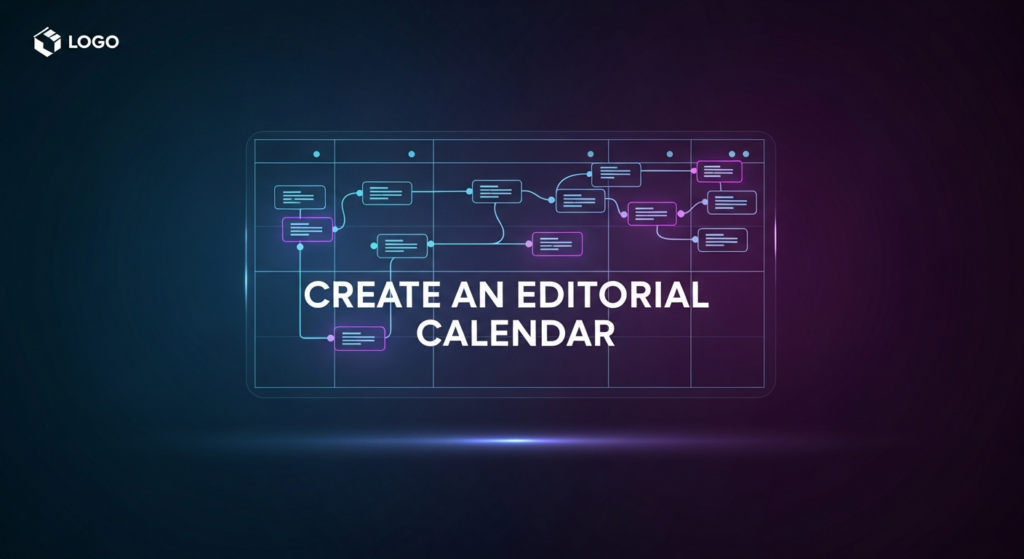


In the dynamic world of content marketing, consistency is king. Audiences crave reliable, valuable information, and search engines reward websites that publish fresh, relevant content regularly. But achieving this consistency without a plan is like trying to navigate a ship without a map. This is where an editorial calendar comes in. It’s far more than a simple schedule of blog posts; it’s a strategic command center for your entire content operation.
An editorial calendar is a comprehensive, visual system used by marketers, publishers, and businesses to plan, manage, and organize their content strategy over time. It provides a bird’s-eye view of all content-related activities, from initial idea to final publication and promotion. It answers critical questions: What are we publishing? Who is it for? When will it go live? Which channels will we use to promote it? And most importantly, how does this piece of content support our overarching business goals?
Many people use the terms “content calendar” and “editorial calendar” interchangeably, but there’s a subtle yet important distinction. A content calendar often focuses on the tactical details of scheduling and publishing—the “when” and “where.” An editorial calendar is more strategic. It incorporates the “why” behind each piece of content, aligning it with marketing campaigns, business objectives, buyer personas, and key performance indicators (KPIs). It’s the master document that guides your content strategy, ensuring every article, video, and social media post is a deliberate move toward a larger goal, not just a random act of content creation.
Without this strategic oversight, content marketing can devolve into a chaotic, reactive scramble. You miss opportunities, publish off-brand content, and fail to build the topical authority needed to rank in search engines. In today’s competitive landscape, an editorial calendar isn’t a luxury; it’s a non-negotiable tool for any team serious about achieving measurable results through content.

Implementing a well-structured editorial calendar transforms your content marketing from a series of disjointed tasks into a cohesive, goal-oriented machine. The benefits extend beyond simple organization, impacting team efficiency, content quality, SEO performance, and overall marketing ROI.
An editorial calendar serves as the single source of truth for your entire content team, including writers, editors, designers, SEO specialists, and social media managers. Everyone can see the entire production pipeline, understand their specific roles, and recognize how their work contributes to the bigger picture. This transparency eliminates confusion, reduces redundant communication, and prevents tasks from falling through the cracks. Deadlines are clear, ownership is defined, and a culture of accountability is fostered, ensuring a smoother, more efficient workflow.
When you’re constantly scrambling to meet last-minute deadlines, content quality inevitably suffers. Strategic planning allows you to move from a reactive to a proactive mindset. By planning content weeks or even months in advance, you give your team the necessary time for thorough research, thoughtful writing, and meticulous editing. This foresight also ensures a consistent publishing cadence, which trains your audience to anticipate and look forward to your content. Furthermore, it helps maintain a consistent brand voice, tone, and messaging across all publications, strengthening your brand identity and building trust with your audience.
Modern SEO is about more than just targeting individual keywords; it’s about building topical authority. An editorial calendar is the perfect tool for executing a strategic topic cluster model. You can plan a central “pillar” page on a broad topic and then schedule a series of related “cluster” articles that link back to it. This intentional, organized approach signals to search engines like Google that you are an expert on a particular subject. It allows you to strategically map out keyword targets over a quarter or a year, ensuring comprehensive coverage of your niche and systematically improving your search rankings over time.
Creating great content is only half the battle; getting it in front of the right audience is the other. An editorial calendar ensures that content distribution is not an afterthought. You can plan promotional activities for each piece of content directly within the calendar. This includes scheduling social media posts, drafting email newsletter announcements, planning outreach to industry influencers, and identifying opportunities for content syndication. By integrating distribution into your initial plan, you maximize the reach and impact of every asset you create.

Before you write a single word or plot a single topic on your calendar, you must answer a fundamental question: What are we trying to achieve? Without clear goals, your content efforts will lack direction, and you’ll have no way to measure success. Your content marketing goals should be directly tied to your broader business objectives.
Start by identifying high-level goals. Are you trying to increase brand awareness in a new market? Generate more qualified leads for your sales team? Improve customer retention? Or establish your CEO as a thought leader in the industry? Often, it will be a combination of these. The key is to be specific. Instead of a vague goal like “increase traffic,” aim for a SMART goal: “Increase organic blog traffic by 20% in the next quarter.”
Once you have your goals, you need to define the Key Performance Indicators (KPIs) you will use to track progress. KPIs are the quantifiable metrics that tell you whether your content strategy is working. Connecting specific KPIs to each goal makes your efforts measurable and allows you to demonstrate the value of content marketing to stakeholders.
Here’s a table illustrating how goals connect to specific KPIs:
| Content Marketing Goal | Primary KPIs | Secondary KPIs |
|---|---|---|
| Increase Brand Awareness | Organic Traffic, Social Media Impressions, Share of Voice | Backlinks, Brand Mentions, Website Referral Traffic |
| Generate Leads | Form Submissions, Gated Content Downloads, Email Subscribers | Conversion Rate, Cost Per Lead (CPL) |
| Improve Customer Engagement | Time on Page, Pages per Session, Comments, Social Media Shares | Bounce Rate, Click-Through Rate (CTR) on internal links |
| Enhance Customer Retention | Usage of help docs/tutorials, Repeat visits from existing customers | Customer churn rate, Lifetime value (LTV) |
Document these goals and KPIs at the top of your editorial calendar. They will serve as your North Star, guiding every decision you make about what content to create and prioritize.

Once you know your goals, the next step is to focus on who you’re trying to reach. Content resonates when it speaks directly to the needs, challenges, and interests of a specific audience. Creating detailed buyer personas is a critical exercise. A buyer persona is a semi-fictional representation of your ideal customer based on market research and real data about your existing customers.
Your personas should include demographic information (age, location, job title), but more importantly, they should delve into psychographics: their goals, pain points, motivations, and where they go for information. What questions are they asking? What problems are they trying to solve? Understanding this allows you to create content that provides genuine value and builds a relationship.
With your personas defined, you need to map their journey. The customer journey describes the active process a potential buyer goes through leading up to a purchase. It’s typically broken down into three main stages:
Your editorial calendar should feature a healthy mix of content targeting all three stages of this journey. This ensures you are not only attracting new prospects at the top of the funnel but also nurturing them toward a final purchase decision, creating a complete and effective content marketing engine.

With your goals and audience defined, it’s time for the creative part: content ideation. However, this shouldn’t be a random guessing game. The best ideas are born from a combination of creativity and data. Your goal is to build a backlog of validated topics that you know have a high probability of success.
Start by looking at what your competitors are doing. Use SEO tools like Ahrefs, Semrush, or Moz to analyze their top-performing content. Identify the keywords they rank for and the topics that drive the most traffic to their sites. Look for their successes to find inspiration, but more importantly, look for gaps. What questions are they not answering? Are there topics they’ve only covered superficially that you could explore in greater depth? Finding these content gaps is a prime opportunity to capture an audience they are missing.
Keyword research is the foundation of a strong SEO-driven content strategy. Use tools to identify the search terms your buyer personas are using at each stage of their journey. Focus not just on high-volume keywords, but also on long-tail keywords (longer, more specific phrases) that often indicate higher purchase intent. Group related keywords together to form topic clusters. For each cluster, plan a long-form pillar page that covers the core topic broadly, and then schedule several cluster content pieces that dive deeper into specific subtopics. This structured approach helps you build authority and rank for a wide range of relevant search queries.
Your customer-facing teams are a goldmine of content ideas. They speak with prospects and customers every single day and have a deep understanding of their most pressing questions, objections, and pain points. Set up a recurring meeting or a shared document where your sales and customer service teams can log frequently asked questions. Turning these real-world queries into blog posts, FAQs, or video tutorials is one of the most effective ways to create content that truly serves your audience.
Don’t reinvent the wheel every time. Look at your existing content analytics to identify your top-performing pieces. Is there a blog post that consistently drives a lot of traffic? Consider repurposing it into other formats to reach a wider audience. For example, a popular list-based article could become an infographic. A detailed guide could be expanded into a webinar or an email course. A successful webinar could be broken down into a series of short video clips for social media. Repurposing maximizes the ROI on your initial content creation efforts.

Content is not one-size-fits-all. The format you choose should align with the topic’s complexity, the preferences of your target audience, and the channel where you plan to distribute it. A successful content strategy typically employs a mix of formats to keep the audience engaged and cater to different consumption habits.
Common content formats include:
Simultaneously, you must decide on your primary distribution channels. It’s better to dominate one or two channels where your audience is most active than to spread yourself too thin across every platform. Is your audience made up of B2B professionals who spend their time on LinkedIn? Are they a younger, visual-focused demographic on Instagram and TikTok? Is email marketing your most effective tool for nurturing leads? Your channel selection will influence the formats you prioritize. For example, if LinkedIn is your primary channel, short-form videos and insightful text-based posts might be more effective than long articles. Your editorial calendar should specify both the format and the primary distribution channels for each piece of content.

Now it’s time to translate your strategy into a tangible calendar. The tool you use can range from a simple spreadsheet to a sophisticated project management platform, but the core components you need to track remain the same. A robust editorial calendar should be a comprehensive dashboard, not just a list of dates.
Here are the essential fields to include for each piece of content:
The most basic elements. The firm deadline for when the content will go live and the name of the person responsible for creating it. This establishes a clear timeline and assigns ownership from the outset.
The working title provides a clear focus for the writer. Including the primary target keyword ensures that SEO is baked into the content creation process from the very beginning, rather than being an afterthought.
Specify the format (e.g., Blog Post, Video, Infographic) and the customer journey stage it targets (Awareness, Consideration, Decision). This allows you to see at a glance if you have a balanced mix of content across formats and funnel stages.
This is crucial for workflow management. Use a dropdown or labels to track the content’s progress through your production cycle (e.g., Ideation, Outline Ready, Drafting, In Review, Scheduled, Published). The “Next Steps” column clarifies the immediate action required and who is responsible for it.
Don’t let promotion be an afterthought. Include a checklist of promotional tasks for each piece of content (e.g., Share on LinkedIn, Post to Twitter, Send to Email List, Submit to relevant communities). This ensures a consistent and thorough distribution process for every asset.
Here is a sample layout for a single entry in a spreadsheet-based calendar:
| Pub Date | Author | Working Title | Target Keyword | Format | Funnel Stage | Status | Distribution Checklist |
|---|---|---|---|---|---|---|---|
| 2023-10-26 | Jane Doe | A Beginner’s Guide to Topic Clusters | topic clusters | Blog Post | Awareness | Published | [x] Email [x] LinkedIn [ ] Twitter [x] Outreach |
| 2023-11-02 | John Smith | How Our Software Boosts Team Productivity by 40% | team productivity software | Case Study | Decision | In Review | [ ] Email [ ] LinkedIn [ ] Twitter [ ] Outreach |

Your editorial calendar outlines *what* you’re going to create, but your content production workflow defines *how* you’re going to create it. A documented, standardized workflow is the engine that brings your calendar to life, ensuring a smooth and efficient process from idea to publication. It minimizes bottlenecks, clarifies roles, and maintains quality standards.
A typical content workflow includes several distinct stages. While the specifics may vary depending on your team’s size and the content format, a common sequence looks like this:
For this process to work, you must assign clear ownership for each stage and set realistic timelines. How long does it typically take your team to draft a 2000-word article? How many rounds of review are standard? Build these timelines into your calendar. Working backward from your desired publication date, you can set deadlines for each preceding step. This level of planning prevents last-minute rushes and ensures every piece of content receives the attention it deserves.

The right tool can make or break your editorial calendar’s effectiveness. The best choice depends on your team’s size, budget, and workflow complexity. There are three main categories of tools to consider, each with its own set of advantages and disadvantages.
For small teams or individuals just starting out, a simple spreadsheet is often the best option. It’s free, infinitely customizable, and easily accessible. You can use features like color-coding, dropdown menus for status tracking, and filtering to create a surprisingly powerful system. The primary downside is the lack of automation and collaboration features. As your team and content volume grow, spreadsheets can become cumbersome and difficult to manage.
These tools are a significant step up from spreadsheets. They are designed for managing workflows and collaboration. You can create cards or tasks for each piece of content and move them across a visual Kanban board representing your production stages (e.g., To Do, In Progress, In Review, Done). They allow you to assign tasks, set deadlines, attach files, and have conversations within the context of a specific content piece. While not built specifically for content marketing, their flexibility makes them a popular choice for many teams.
For larger teams with more complex needs, dedicated content marketing platforms offer an all-in-one solution. Tools like CoSchedule integrate your calendar with your blog and social media platforms, allowing you to schedule content and social promotions from one place. They often include features for idea management, workflow automation, and performance analytics. Airtable, a hybrid between a spreadsheet and a database, offers incredible power and customization for creating a truly bespoke content operations hub. These platforms typically come with a higher price tag but can offer significant efficiency gains.
Here’s a comparison to help you choose:
| Tool Category | Pros | Cons | Best For |
|---|---|---|---|
| Spreadsheets | Free, highly customizable, low learning curve. | Manual updates, poor for asset management, can get messy. | Individuals, small teams, and those on a tight budget. |
| Project Management Tools | Excellent for workflow visualization, great collaboration features, flexible. | Not purpose-built for content, may require workarounds. | Growing teams that need strong process management. |
| Dedicated Content Platforms | All-in-one solution, automation, social integration, analytics. | Can be expensive, may have a steeper learning curve. | Larger marketing teams and organizations scaling their content. |

An editorial calendar should not be a static document that you create once and forget. It is a living, breathing plan that must be informed by data. Regularly measuring your content’s performance is crucial for understanding what resonates with your audience, what drives business results, and how you should adapt your strategy going forward.
Establish a regular cadence for performance review—monthly and quarterly reviews are a good starting point. During your monthly check-in, focus on the performance of individual content pieces published that month. Look at the KPIs you defined in Step 1. Which blog posts drove the most organic traffic? Which social posts had the highest engagement? Did that new case study generate any leads? Use tools like Google Analytics, Google Search Console, and your social media analytics dashboards to gather this data.
Your quarterly review should be more strategic. Look for broader trends. Are videos outperforming blog posts? Is your content on a particular topic cluster consistently ranking well? Is your audience engaging more on LinkedIn than on Twitter? These high-level insights are what should inform your content plan for the next quarter. If you discover that “how-to” guides are your most successful format, prioritize creating more of them. If a topic you thought would be a winner fell flat, it might be time to pivot. This continuous loop of planning, executing, measuring, and adapting is the hallmark of a mature and effective content marketing program. Let the data be your guide to refine your calendar and double down on what works, ensuring your content efforts become more effective and efficient over time.

The journey from chaotic, reactive content creation to a streamlined, strategic operation is a transformative one. An editorial calendar is the map that guides you on this journey. It’s the framework that turns abstract goals into a concrete plan of action, aligning your team, enhancing your quality, and driving measurable business results. By systematically defining your goals, understanding your audience, brainstorming validated ideas, and establishing a robust workflow, you replace guesswork with intention.
Remember that the perfect editorial calendar is not one you download from a template; it’s one you build and refine to fit the unique needs of your team and your business. Start simple. A well-organized spreadsheet is far more effective than a complex piece of software that no one uses. The key is to begin. Plot out your next month of content using the steps outlined in this guide. Establish the process, get your team on board, and commit to the plan.
As you move forward, your calendar will evolve from a simple schedule into a powerful strategic asset—a record of what you’ve accomplished and a clear roadmap for where you’re going. The consistency you build will not only please search engine algorithms but, more importantly, it will build trust and loyalty with your audience, turning casual readers into dedicated fans and, ultimately, into valued customers.

While often used interchangeably, there’s a key difference. A content calendar typically focuses on the tactical details of what content will be published, when, and on which channel. An editorial calendar is more strategic. It includes all the information of a content calendar but adds the ‘why’—aligning each piece of content with business goals, buyer personas, funnel stages, and broader marketing campaigns. The editorial calendar is the master plan that governs the content strategy.
A common best practice is to plan content in detail one quarter (three months) in advance. This provides enough lead time for quality production without being so rigid that you can’t adapt to changing trends. Many teams also create a higher-level annual plan that outlines major themes, campaigns, and key content pillars for the entire year, which then informs the more detailed quarterly plans.
At a minimum, every editorial calendar should include: the final publication date, the author/owner, a working title, the content format (e.g., blog, video), the target keyword or topic, the current status (e.g., drafting, in review), and the channels for distribution. More advanced calendars will also include the target buyer persona, the relevant funnel stage, and specific KPIs for measuring success.
Absolutely. Powerful and effective editorial calendars can be built using free tools. Google Sheets is an excellent choice, as it’s highly customizable, collaborative, and accessible from anywhere. Similarly, the free tiers of project management tools like Trello or Asana offer fantastic features for building a visual workflow and managing the content production process without any cost.
For a large team, management success hinges on clarity, communication, and the right tools. It’s essential to use a collaborative platform like Asana, Monday.com, or a dedicated content platform like CoSchedule. Clearly define roles and responsibilities for each stage of the workflow. Implement a system of notifications and automate handoffs where possible. Hold regular (e.g., weekly) stand-up meetings to review the calendar, discuss progress, and identify any bottlenecks before they become major issues.
Your editorial calendar should be a living document. It’s wise to conduct two types of reviews. First, a weekly or bi-weekly tactical check-in to ensure projects are on track and to make minor adjustments. Second, a more in-depth strategic review on a monthly or quarterly basis. This is when you analyze content performance data and use those insights to inform your content plan for the upcoming period, ensuring your strategy remains effective and agile.