





In today’s crowded digital marketplace, a great product alone isn’t enough to guarantee success. For your online store to thrive, it must be visible to potential customers who are actively searching for what you sell. This is the role of e-commerce Search Engine Optimization (SEO). It serves as the engine that drives qualified, ready-to-buy traffic to your website, operating 24/7. Unlike paid advertising, which ceases when you stop paying, a well-executed SEO strategy becomes a long-term asset that builds brand authority, customer trust, and sustainable revenue.
This comprehensive guide will walk you through every critical component of an effective e-commerce SEO strategy. From foundational keyword research and site architecture to advanced technical optimization and link building, you’ll gain the actionable insights needed to improve your search engine rankings. We will demystify the process, providing a step-by-step roadmap to help you optimize your online store, attract more organic traffic, and compete effectively in the search results for your niche.

E-commerce SEO is the specialized process of making an online store more visible in the organic (non-paid) search results of engines like Google and Bing. The objective is to rank highly for the keywords and phrases your target audience uses when looking to buy the products you offer. This involves a multifaceted approach, optimizing everything from your site’s technical structure to the content on your category and product pages.
For any online retailer, SEO is not just a marketing tactic; it’s a fundamental business strategy. When a potential customer types a query into a search engine, they are expressing a direct need. By appearing at the top of the results, your brand presents itself as an immediate solution. This positions you ahead of competitors and captures high-intent traffic that is significantly more likely to convert than traffic from most other channels. Investing in e-commerce SEO means investing in a sustainable pipeline of customers and a powerful competitive advantage.
While the core principles of SEO are universal, e-commerce SEO has distinct characteristics that set it apart from SEO for a blog, service business, or informational website. The primary differences lie in scale and user intent. An e-commerce site can have thousands of product pages, which creates unique challenges for managing duplicate content, site architecture, and indexation.
Furthermore, the focus is heavily skewed toward commercial and transactional intent. While a blog might target informational keywords like “how to fix a leaky faucet,” an e-commerce store targets keywords like “buy delta kitchen faucet” or “best pull-down kitchen faucets.” The optimization targets also differ. E-commerce SEO prioritizes category and product detail pages (PDPs), ensuring they are optimized for both users and search engines. It also involves specific technical elements, like product schema markup, which are less relevant for non-retail websites.
A robust e-commerce SEO strategy delivers numerous benefits that extend far beyond simple website visits. It is one of the most effective digital marketing channels available, often providing a high return on investment (ROI).
Effective SEO aligns with the customer’s path to purchase, which typically consists of three main stages. By creating content and optimizing pages for each stage, you can attract users from initial awareness to the final purchase decision.
The journey begins at the Awareness Stage, where the user has a problem but may not know the solution. They use broad, informational keywords. SEO targets this stage with blog posts and guides, such as content for the query “what type of running shoe is best for flat feet?”
Next is the Consideration Stage. Here, the user explores specific solutions and compares options, using more targeted commercial keywords. Your category pages and product comparison guides should be optimized for this stage, targeting terms like “trail running shoes for men” or “Hoka vs. Brooks running shoes.”
Finally, the user reaches the Decision Stage. They are ready to buy and are searching for a specific product with highly transactional keywords. Your product pages must be optimized for this stage, targeting long-tail keywords like “buy Hoka Speedgoat 5 size 11 blue.” Mapping your SEO efforts to this journey ensures your store is visible at every critical touchpoint.

Keyword research is the cornerstone of any successful e-commerce SEO strategy. It is the process of identifying the words and phrases your potential customers type into search engines. Executing this step correctly ensures you attract qualified traffic that is actively looking to purchase your products. Rushing this step is like building a house without a blueprint; the entire structure is likely to fail.
For an online store, keyword research goes beyond finding high-volume terms; it’s about understanding user intent—the ‘why’ behind a search. You must differentiate between someone researching a topic and someone ready to make a purchase. This understanding allows you to map the right keywords to the right pages, creating a seamless user experience that guides visitors from search to checkout.
The most valuable keywords for an e-commerce store are those with high commercial intent, as these queries signal that the searcher is close to making a purchase. You can identify these keywords by looking for specific modifiers attached to your core product terms.
Long-tail keywords (phrases of three or more words) are particularly powerful for e-commerce. While they have lower search volume individually, they are highly specific and often have much higher conversion rates. A user searching for “men’s nike air zoom pegasus 39 running shoes size 10.5” is far more likely to buy than someone searching for just “shoes.”
Once you have a list of keywords, you must strategically assign them to the appropriate pages on your site. This process creates a logical hierarchy that is easy for both users and search engines to understand. A common mapping structure includes:
Your competitors have already done a lot of the work for you. Analyzing their keyword strategies can reveal valuable opportunities and help you benchmark your own performance. Using SEO tools like Ahrefs or SEMrush, you can uncover a wealth of information.
Start by identifying your top three to five direct competitors. Enter their domains into an SEO tool to see which organic keywords they rank for. Look for “keyword gaps”—valuable, relevant keywords they rank for that you currently do not. Analyze their top-performing pages to understand which product categories and blog topics drive the most traffic. This competitive analysis not only helps you build a more comprehensive keyword list but also provides insight into the types of content and page structures that are succeeding in your niche.
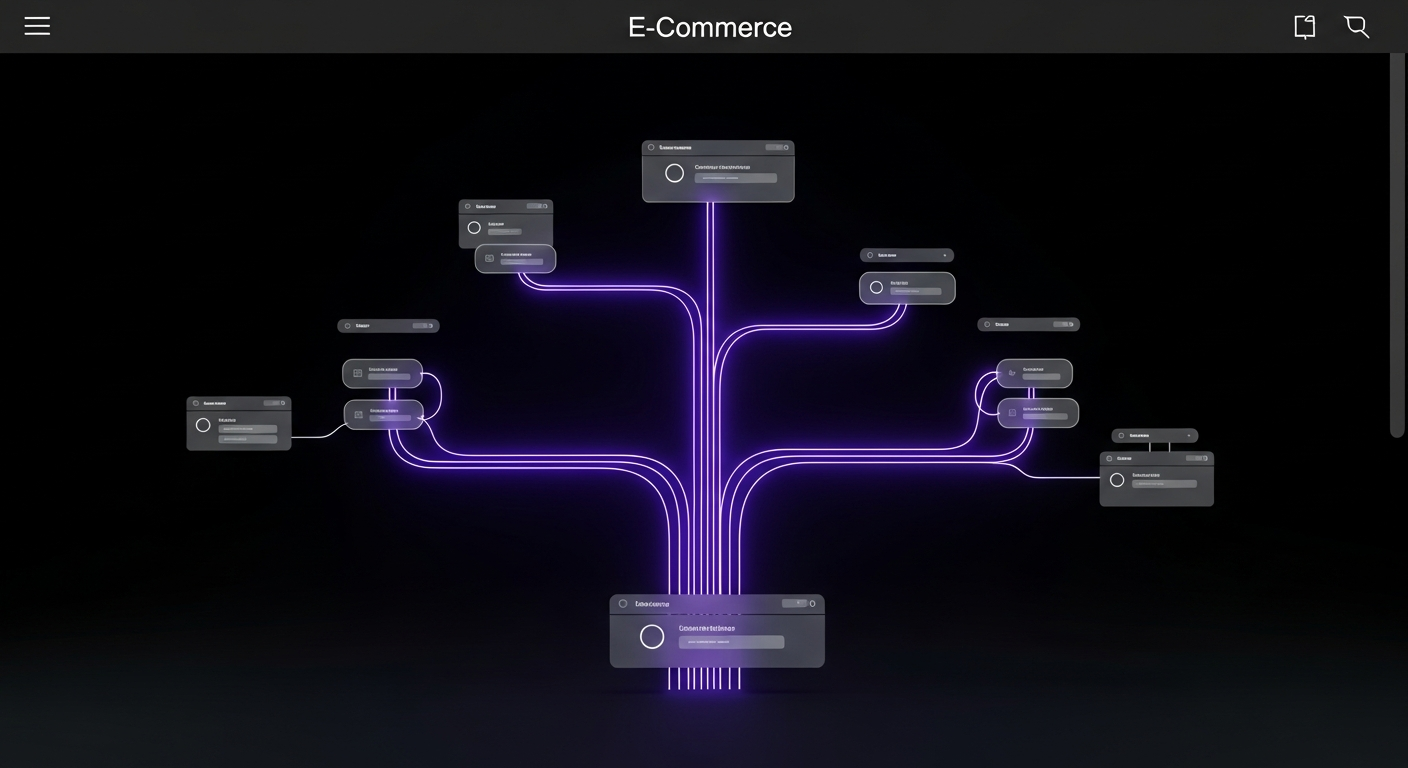
Site architecture refers to how your website’s pages are structured and linked together. For an e-commerce store, a logical and intuitive architecture is crucial for both user experience (UX) and SEO. A well-planned structure helps users find products easily and allows search engine crawlers to discover and index all your pages efficiently. The golden rule is to keep it simple and scalable, ensuring a customer can navigate from your homepage to any product page in three clicks or fewer.
Think of your site architecture as the digital equivalent of aisles in a physical store. Clear navigation and a logical layout prevent customer frustration and guide them directly to what they need. For search engines, this clear structure helps them understand the relationship between your pages and distribute authority, or “link equity,” effectively throughout your site, boosting the ranking potential of your most important pages.
Your URL structure should mirror your site’s hierarchy and be easily readable for both humans and search engines. A clean, keyword-rich URL provides context about the page’s content before a user clicks on it. Aim for a structure that is logical and consistent across your entire site.
A good e-commerce URL structure often follows this pattern:
`https://www.yourstore.com/category/sub-category/product-name`
For example:
`https://www.yourstore.com/womens-clothing/dresses/summer-maxi-dress`
Best practices for URL structure include:
Breadcrumb navigation is a secondary navigation aid that shows users their current location on a website. It typically appears as a trail of links at the top of a page, showing the path from the homepage to the current page. For example: `Home > Men’s Apparel > Shirts > Classic Cotton T-Shirt`.
Breadcrumbs are incredibly valuable for e-commerce SEO and UX. They improve the user experience by making it easy for shoppers to navigate back to higher-level category pages without using the “back” button. From an SEO perspective, breadcrumbs create a strong internal linking structure, helping search engines understand your site’s hierarchy and spread link equity more effectively. Many platforms can also automatically add breadcrumb schema markup, which can enhance your appearance in search results.
Internal linking is the practice of linking from one page on your site to another. A strategic internal linking plan is essential for distributing page authority and guiding both users and search engines to your most important pages. Pages with more internal links pointing to them are often seen as more important by search engines.
For an e-commerce site, focus on these key internal linking strategies:
By consciously building these internal links, you create a web of connections that strengthens the overall SEO value of your entire site and improves a user’s ability to discover more of your products.

On-page SEO is the practice of optimizing individual web pages to rank higher and earn more relevant traffic. For an e-commerce store, your category and product pages are the most critical pages to optimize. They are your digital storefront and virtual product displays. Effective optimization involves crafting compelling content that appeals to both shoppers and search engine crawlers, ensuring every element is fine-tuned for maximum visibility and conversion.
This is where your keyword research pays off. Each category and product page should target a specific set of keywords, which must be integrated naturally into various on-page elements. From title tags and meta descriptions that entice clicks in the search results to unique product descriptions and optimized images that sell the product, meticulous on-page SEO is what can turn a visitor into a customer.
The title tag and meta description are your first opportunity to make an impression in the search engine results pages (SERPs). They act as a mini-advertisement for your page and are a major factor in a user’s decision to click.
For Title Tags, follow a clear and consistent formula:
For Meta Descriptions, focus on persuasion and value:
Your product descriptions must persuade a human to buy while providing context for search engines. A common mistake is using generic, duplicate descriptions provided by the manufacturer. Writing unique, detailed, and engaging descriptions is essential for both SEO and conversions.
To optimize them effectively:
High-quality product images are non-negotiable in e-commerce, but they also offer a significant SEO opportunity. Since search engines cannot “see” images, you need to provide them with textual context.
Customer reviews are an on-page SEO powerhouse. They provide a constant stream of fresh, unique, and relevant content for your product pages, which search engines value. More importantly, they use the natural language and long-tail keywords that real customers use, helping you rank for a wider range of search queries.
Beyond the SEO benefits, reviews provide social proof, building trust and credibility with potential buyers. Encourage customers to leave reviews through post-purchase email follow-ups. Displaying star ratings on your category pages and in search results (via schema markup) can significantly increase click-through rates and conversions.

Technical SEO is the foundation upon which your entire SEO strategy is built. It involves optimizing your website’s technical aspects to help search engines find, crawl, understand, and index your pages more effectively. For large e-commerce sites with thousands of products and filtered navigation, technical SEO is critical. Ignoring it can lead to severe issues like duplicate content, slow page speeds, and poor mobile experiences, all of which can harm your rankings.
While it can seem intimidating, mastering the essentials of technical SEO ensures that your on-page and off-page efforts aren’t wasted. A technically sound website provides a seamless experience for both search engine bots and human users, creating a solid platform for sustainable growth in organic search.
Schema markup (or structured data) is a code vocabulary added to your website’s HTML to help search engines understand your content more clearly. For e-commerce sites, Product Schema is paramount. By marking up details like product name, price, availability, brand, and review ratings, you provide Google with structured information it can use to create “rich snippets.”
Rich snippets are enhanced search results that display this extra information directly on the SERP. A listing with a star rating, price, and availability status is more eye-catching and informative than a standard blue link. This can dramatically increase your click-through rate (CTR), driving more qualified traffic to your product pages even without an improvement in your ranking position.
E-commerce websites are prone to generating duplicate content, which occurs when the same or very similar content is accessible through multiple URLs. Common causes include:
Search engines can be confused by duplicate content, not knowing which version to index or rank. The solution is canonicalization. The `rel=”canonical”` tag is an HTML element that tells search engines which URL represents the master copy of a page. By implementing canonical tags correctly, you consolidate ranking signals into a single, preferred URL, preventing duplicate content issues from harming your SEO.
Site speed is a confirmed ranking factor, and for e-commerce, it’s a critical conversion factor. A slow-loading site leads to high bounce rates and abandoned carts. Google measures user experience with a set of metrics called Core Web Vitals, which include:
To improve these metrics and overall site speed, focus on:
Google predominantly uses the mobile version of a website for indexing and ranking. This means that if your mobile site is subpar, your rankings will suffer, regardless of your desktop experience. For e-commerce, where mobile shopping is the norm, a mobile-friendly site is essential for both SEO and sales.
Ensure your site uses a responsive design, which automatically adjusts the layout to fit any screen size. Pay close attention to mobile usability: buttons should be easy to tap, navigation should be intuitive, and forms should be simple to complete on a small screen. Use Google’s Mobile-Friendly Test tool to identify and fix any issues.

Content marketing for e-commerce extends far beyond product descriptions. It’s a strategic approach to creating and distributing valuable and relevant content to attract and retain a defined audience—and, ultimately, to drive profitable customer action. By creating content that addresses your customers’ questions, problems, and interests at every stage of their buying journey, you can build brand authority, attract top-of-funnel traffic, and guide potential buyers toward a purchase.
A well-rounded content strategy allows you to rank for a much broader set of keywords than your product and category pages alone. It establishes your brand as a helpful expert in your niche, building trust and creating a loyal customer base that turns to you not just for products, but for information and advice. This approach transforms your store from a simple retailer into a valuable resource.
Customers in the consideration stage of their journey are actively researching and comparing options. Creating detailed buying guides and product comparison articles is one of the most effective ways to capture this high-intent traffic. This type of content targets commercial investigation keywords and positions your brand as a helpful advisor.
For example, a store that sells cameras could create a guide titled “The Best Mirrorless Cameras for Beginners in [Current Year].” This article would compare several models the store sells, outline the pros and cons of each, and offer a final recommendation. Within the content, you can strategically link to the relevant product and category pages, driving qualified traffic directly to your sales pages. These guides are also highly linkable assets that can attract backlinks from other websites.
A blog is an essential tool for attracting customers at the top of the sales funnel—users who have a problem or question related to your niche but are not yet ready to buy a specific product. By targeting these informational keywords, you can introduce them to your brand early in their journey.
A store selling kitchenware could write blog posts like:
These articles solve a problem for the reader and build trust. By naturally weaving internal links to relevant products within the content (e.g., linking to your cast iron skillets in the seasoning guide), you create a seamless path from information to purchase.
Video is a powerful medium for e-commerce. It allows you to showcase your products in a dynamic and engaging way that static images cannot. Videos can significantly increase conversion rates when embedded on product pages by giving customers a better understanding of a product’s features, size, and real-world application.
Consider creating various types of video content:
Optimize your videos for search by uploading them to platforms like YouTube with keyword-rich titles, descriptions, and tags. Then, embed these videos on your product pages and blog posts to improve user engagement and time on page, which are positive SEO signals.

Link building is the process of acquiring hyperlinks from other websites to your own. In the eyes of search engines like Google, a backlink acts as a vote of confidence. The more high-quality, relevant websites that link to your store, the more authoritative and trustworthy your site appears. For e-commerce, a strong backlink profile is a critical factor for ranking in competitive markets, signaling to Google that your brand is a recognized entity in your industry.
However, not all links are created equal. The focus must be on quality over quantity. A single link from a respected industry blog is far more valuable than dozens of links from low-quality directories. A successful e-commerce link building strategy involves a variety of tactics designed to earn natural, authoritative links that drive both referral traffic and SEO value.
One of the most accessible link building opportunities in e-commerce is leveraging your existing business relationships. The manufacturers and suppliers of the products you sell often have pages on their websites listing their authorized retailers. If you are an official reseller, this is a straightforward and highly relevant link to acquire.
Reach out to your contact at the supplier or manufacturer. Politely ask if they have a “Where to Buy” or “Retailers” page and request that they add a link to your store. Since you are already their partner, they have a vested interest in helping you sell more of their products, making this a mutually beneficial arrangement.
Digital PR involves creating compelling stories or content that journalists, bloggers, and industry publications will want to cover and link to. This is a powerful way to earn high-authority backlinks at scale. For an e-commerce brand, this often revolves around your products or industry expertise.
Examples of Digital PR tactics include:
An unlinked brand mention occurs when another website writes about your brand or product but doesn’t include a hyperlink to your site. These are prime link building opportunities because the author is already familiar with your brand; they just need a small nudge to add the link.
You can find these mentions using tools like Google Alerts or Ahrefs to monitor the web for your brand name. When you find an unlinked mention on a relevant, quality website, reach out to the author or editor. Thank them for the mention and politely ask if they would consider adding a link to make it easier for their readers to find you. This is a simple and effective tactic for building high-quality links.

For e-commerce businesses that also operate brick-and-mortar locations, local SEO is a critical strategy for driving both online traffic and in-store foot traffic. Local SEO involves optimizing your online presence to attract more business from relevant local searches. When a user searches for “running shoes near me,” you want your business to appear prominently in the local search results, including the Local Pack (the map with three listings).
A successful local SEO strategy ensures that customers in your service area can find you easily, whether they plan to visit your physical store or make a purchase online for local pickup. It bridges the gap between your digital and physical storefronts, creating a cohesive customer experience.
Your Google Business Profile (GBP) is your most important tool for local SEO. It’s the free business listing that appears in Google Search and Maps. A fully optimized GBP is essential for ranking in the Local Pack.
Key optimization steps include:
A local citation is any online mention of your business’s name, address, and phone number (NAP). Citations appear in online directories like Yelp, industry-specific websites, and local business association sites. Consistency is key; your NAP information must be identical across all platforms to avoid confusing search engines and customers.
For businesses with multiple physical locations, it is crucial to create dedicated local landing pages for each store. Each page should feature the unique NAP, store hours, and a description of that specific location. Embed a Google Map of the location and include photos of the store. These pages provide highly relevant information for local searchers and give search engines clear, indexable content for each of your locations.
Customer reviews are a major ranking factor for local search. Google aims to show users the best and most trusted local businesses, and a high volume of positive reviews is a strong signal of quality. The number of reviews, the overall star rating, and the frequency of new reviews all impact your local ranking.
Actively encourage satisfied customers to leave a review on your Google Business Profile. You can do this through email follow-ups after a purchase, in-store signage with a QR code, or a link on your website. It is also important to respond to all reviews, both positive and negative. Engaging with feedback shows that you value your customers and are committed to providing a great experience.

Your e-commerce platform is the foundation of your online store, and your choice can have significant implications for your SEO performance. While most modern platforms have good built-in SEO capabilities, they differ in flexibility, customizability, and advanced features. The right platform depends on your technical expertise, business size, and specific SEO goals.
When evaluating platforms, consider factors like the ability to customize URL structures, edit robots.txt files, implement canonical tags, and manage on-page elements like title tags. A platform that gives you granular control over these elements will empower you to execute a more sophisticated SEO strategy.
Shopify is one of the most popular e-commerce platforms, known for its user-friendliness and extensive app ecosystem. It is an excellent choice for beginners and small to medium-sized businesses that want to get started quickly.
BigCommerce is a powerful and scalable platform that often appeals to larger or rapidly growing businesses. It is well-regarded for its robust, built-in SEO features that require fewer third-party apps compared to Shopify.
WooCommerce is not a standalone platform but a free, open-source plugin for WordPress. This makes it an incredibly flexible and powerful option for those who want complete control over their store and are comfortable with the WordPress environment.
| Feature | Shopify | BigCommerce | WooCommerce |
|---|---|---|---|
| Ease of Use | Excellent | Good | Moderate |
| URL Structure | Limited Customization | Fully Customizable | Fully Customizable |
| Core SEO Features | Good | Excellent | Requires Plugins |
| Site Speed | Good (Managed Hosting) | Excellent (Managed Hosting) | Depends on Hosting/Setup |
| Flexibility | Moderate (App-based) | Good | Excellent (Open-source) |
| Best For | Beginners, SMBs | Growing Businesses, Enterprise | Users wanting full control (WordPress) |

Executing an SEO strategy is only half the battle; the other half is measuring its impact. Without proper tracking, you won’t know what’s working, what isn’t, and where to focus your efforts. Tracking the right Key Performance Indicators (KPIs) allows you to demonstrate the value of SEO, make data-driven decisions, and continuously refine your strategy. For e-commerce, this means moving beyond vanity metrics like traffic and focusing on KPIs that directly impact your bottom line.
Using a combination of powerful tools, you can monitor performance, diagnose issues, and uncover new opportunities. A consistent measurement framework is essential for understanding the true return on investment (ROI) of your SEO efforts and ensuring long-term, sustainable growth.
The single most important KPI for e-commerce SEO is organic revenue. This metric tells you exactly how much money your SEO efforts are generating. A surge in organic traffic is a positive sign, but it is most meaningful when those visitors are making purchases. By setting up e-commerce tracking in your analytics platform, you can directly attribute sales to the organic search channel.
Closely related is the organic conversion rate—the percentage of visitors from organic search who complete a purchase. Monitoring this KPI helps you understand the quality of the traffic you’re attracting. A high conversion rate indicates that you’re ranking for relevant, high-intent keywords and providing a great user experience. If traffic is increasing but the conversion rate is dropping, it may be a sign that you’re attracting the wrong audience or that there are issues on your product or checkout pages.
Google Search Console (GSC) is an essential, free tool that provides invaluable insights into how your site performs in organic search. GSC allows you to see which queries are driving traffic to your site, monitor your click-through rates (CTR), and track your average ranking position for specific keywords.
Beyond performance data, GSC is a critical diagnostic tool. It will alert you to technical issues, such as crawl errors, mobile usability problems, and security issues. You can also use it to submit your sitemap, check the indexing status of your pages, and review your Core Web Vitals report. Regularly monitoring GSC is fundamental to maintaining a healthy and well-optimized e-commerce site.
Google Analytics 4 (GA4) is the primary tool for analyzing website traffic and user behavior. To measure the true impact of SEO, it is crucial to properly configure e-commerce tracking. This allows GA4 to collect detailed data about your sales and transactions.
With e-commerce tracking enabled, you can analyze a host of valuable metrics for your organic traffic segment, including:
This data allows you to connect your SEO activities directly to sales results, providing a clear picture of your ROI and helping you optimize your strategy for maximum profitability.

SEO is a long-term strategy. While minor improvements may be visible in a few weeks, it typically takes 4 to 12 months to see significant results in traffic and revenue. The exact timeline depends on factors like the competitiveness of your industry, the current authority of your website, and the consistency of your SEO efforts.
E-commerce SEO is a holistic process where many factors work together. However, a strong foundation is built on two key pillars: comprehensive, intent-based keyword research and a logical, scalable site architecture. Without understanding what customers are searching for and having a site structure that allows them (and Google) to easily find products, other efforts will be less effective.
The cost of e-commerce SEO can vary dramatically, from a few hundred dollars per month for a freelancer to over $10,000 per month for an agency working with a large enterprise brand. Costs depend on the scope of work, niche competitiveness, and the size of the website. It is also possible to manage SEO in-house, in which case the cost is your time and the price of necessary tools.
Absolutely. Many business owners successfully manage their own SEO, especially for smaller stores. It requires a significant investment in time and a commitment to continuous learning. Start with the fundamentals: keyword research, on-page optimization, and setting up Google Analytics and Search Console. As your business grows, you can decide whether to continue DIY or hire a professional.
The main differences are scale, intent, and page types. E-commerce sites often have thousands of pages, making technical issues like duplicate content and site architecture more complex. The focus is almost exclusively on commercial and transactional keywords. The primary optimization targets are category and product pages, which have unique requirements like product schema and customer reviews.
A good e-commerce SEO toolkit typically includes: