





In a digital world saturated with information, generic messaging no longer cuts through the noise. Today’s consumers don’t just appreciate personalized experiences—they expect them. They reward brands that understand their needs and penalize those that offer one-size-fits-all solutions. This is where a dynamic content strategy becomes not just a competitive advantage, but a business necessity. By tailoring content to individual users in real-time, you can create more relevant, engaging, and effective interactions that drive conversions and build lasting loyalty.
Implementing such a strategy, however, can seem daunting. It requires a sophisticated blend of data, technology, and creativity. How do you gather the right information, segment your audience effectively, and use the right tools to deliver personalized content at scale without overwhelming your team? This guide will walk you through every step of building and executing a powerful dynamic content strategy. We will explore the core pillars of success, from understanding your audience to measuring your results, providing you with actionable insights to transform your user experience.

Before diving into strategy, it’s crucial to establish what dynamic content is and why it has become so pivotal in modern marketing. At its core, dynamic content shifts the conversation from a monologue—where one message is broadcast to everyone—to a dialogue tailored to the individual. This shift is fundamental to building meaningful customer relationships in the digital age.
Static content is fixed; it remains the same for every visitor, regardless of who they are, where they come from, or how they’ve interacted with your brand. Think of a standard webpage from a decade ago—the text, images, and calls-to-action were identical for every visitor. It’s predictable and easy to create, but ultimately impersonal.
Dynamic content, also known as adaptive or smart content, is the opposite. It changes based on a set of rules and data points related to the user, such as demographics, past behavior, location, or stage in the customer journey. For example, an e-commerce site might show a winter coat advertisement to a visitor from Canada while showing swimwear to a visitor from Florida. The underlying page template is the same, but specific content blocks adapt in real-time to create a more relevant experience.
| Feature | Static Content | Dynamic Content |
|---|---|---|
| User Experience | One-size-fits-all; same for every visitor. | Personalized; tailored to individual user data and behavior. |
| Creation Complexity | Simple to create and manage. | More complex; requires data, logic, and content variations. |
| Engagement Level | Generally lower, can feel impersonal. | Significantly higher, feels relevant and helpful. |
| Example | A standard “About Us” page. | An e-commerce homepage showing products based on your browsing history. |
| Technology Requirement | Basic HTML/CMS. | Advanced CMS, personalization engine, or marketing automation platform. |
The move toward dynamic content is driven by its profound impact on key business metrics. Hyper-personalization, the most advanced form of this strategy, uses data and AI to deliver highly contextual communication. The results are compelling. When customers feel a brand understands their unique needs, they are more likely to engage, convert, and remain loyal. Research consistently shows that personalization boosts revenue, with some studies indicating that companies excelling at personalization generate 40% more revenue from those activities than average players.
This impact is felt across the entire customer lifecycle. For acquisition, personalized ads and landing pages lead to higher click-through and conversion rates. For retention, tailored email campaigns and product recommendations reduce churn and increase customer lifetime value. By making every interaction relevant, you build a stronger connection with your audience, transforming casual buyers into brand advocates.
The modern consumer is empowered, informed, and has limitless choices. They constantly interact with platforms like Netflix, Amazon, and Spotify, which have made personalization the default experience. Netflix doesn’t just recommend movies based on your viewing history; it even changes the promotional artwork to appeal to your specific tastes. Amazon’s recommendation engine is legendary for driving a significant portion of its sales.
These experiences have fundamentally reshaped customer expectations. People now expect a similar level of relevance from every brand. A generic, impersonal website or email campaign feels outdated and signals that the brand doesn’t know or care about the individual customer. A dynamic content strategy is no longer a “nice-to-have” feature; it’s a fundamental requirement for meeting the expectations of today’s digital-native consumers.

A successful dynamic content strategy is not just about installing new software. It is a holistic approach built on four interconnected pillars. Each pillar is essential for creating a system that can deliver meaningful personalization at scale, ensuring your efforts are both effective and sustainable.
Technology is an enabler, but the foundation of any great personalization strategy is a profound understanding of your audience. You cannot personalize for someone you don’t know. This goes beyond basic demographics to understanding your customers’ needs, pain points, motivations, and the context of their journey. This pillar involves creating detailed user personas, mapping the customer journey to identify key touchpoints, and gathering qualitative feedback. Without this deep insight, your personalization efforts will be superficial and may miss the mark entirely.
Data is the fuel that powers dynamic content. To personalize effectively, you need access to clean, accurate, and comprehensive data from various sources—website behavior, purchase history, CRM data, and email engagement. However, simply collecting data is not enough. It must be managed effectively, often by centralizing it in a Customer Data Platform (CDP) to create a single, unified view of each customer. Ensuring data quality and governance is also critical, as personalization based on inaccurate data can do more harm than good.
Delivering personalized experiences to thousands or even millions of users in real-time is impossible without the right technology. Your tech stack is the engine that executes your strategy. This typically includes a Content Management System (CMS) capable of serving dynamic content, a marketing automation platform for personalized communication, and potentially a dedicated personalization engine for advanced testing and AI-driven recommendations. The key is to ensure these systems are well-integrated, allowing data to flow freely to support a seamless user experience across all channels.
A dynamic content strategy is not a one-time project; it’s an ongoing process of refinement. The digital landscape and customer expectations are constantly evolving, and your strategy must adapt. This pillar is built on a culture of testing and learning. It involves continuously running A/B tests on your personalized elements, analyzing performance against your Key Performance Indicators (KPIs), and using those insights to make data-driven improvements. This iterative loop of hypothesizing, testing, measuring, and optimizing is what separates high-performing personalization programs from those that stagnate.

Before you implement any dynamic content, you must define what success looks like. A personalization strategy without clear goals is like a ship without a rudder. Setting clear objectives and Key Performance Indicators (KPIs) ensures your efforts are focused, measurable, and aligned with broader business goals.
Your personalization goals should not exist in a vacuum; they must directly support overarching business objectives. Start by asking what the company is trying to achieve. Is the primary goal to increase revenue, improve customer retention, generate more qualified leads, or enhance brand loyalty? Once you have clarity on the main business drivers, you can craft personalization goals that contribute to them.
This alignment ensures your strategy has stakeholder buy-in and demonstrates tangible business value.
Once you have your goals, you need specific metrics to track progress. KPIs are quantifiable measures that tell you whether your strategy is working. Your choice of KPIs will depend on your goals, and it’s important to select a mix of leading indicators (which show early engagement) and lagging indicators (which measure final outcomes).
Common KPIs for personalization include:
A measurement framework is your plan for how you will collect, analyze, and report on your KPIs. This framework should be established *before* you launch any personalization campaigns. It involves configuring your analytics tools, setting up event tracking for interactions with dynamic content, and creating dashboards to monitor performance. A solid framework allows you to attribute changes in your KPIs directly to your personalization efforts, providing clear evidence of your strategy’s ROI and enabling informed decisions for future optimization.

At the heart of personalization is the ability to group your audience into meaningful segments. Segmentation allows you to move beyond one-size-fits-all messaging and deliver content that resonates with specific subsets of your users. The more sophisticated your segmentation, the more effective your personalization can be.
This is the most basic level of segmentation, grouping users based on objective characteristics. It’s a foundational step that provides broad context about your audience.
While useful, these segments are often too broad for deep personalization. They tell you *who* the user is but not *why* they behave a certain way.
This is where segmentation becomes truly powerful. By layering behavioral and psychographic data on top of demographics, you can understand user intent and motivation.
A user persona is a semi-fictional character that represents a key audience segment, built from the demographic, firmographic, behavioral, and psychographic data you’ve collected. Personas transform abstract data into relatable human stories, which is invaluable for your entire team.
A good persona includes:
For example, instead of targeting “SMBs in the tech industry,” you can target “Startup Steve,” a 32-year-old CTO focused on rapid scaling and worried about security. This level of detail makes it much easier to decide what dynamic content would be most relevant to him.

Data is the lifeblood of any dynamic content strategy. The quality, depth, and accessibility of your user data will directly determine the success of your personalization efforts. This step involves understanding data sources, centralizing data for a unified view, and handling it all in a way that respects user privacy.
Not all data is created equal. Understanding the difference between data sources is critical for building a sustainable strategy, especially in an era of increasing privacy concerns.
| Data Type | Description | Examples | Pros | Cons |
|---|---|---|---|---|
| First-Party Data | Information you collect directly from your audience and customers. | Website analytics, CRM data, purchase history, email engagement, survey responses. | Most accurate, relevant, and privacy-compliant. You own it. | Limited to your own audience; can take time to build a significant dataset. |
| Third-Party Data | Data purchased from external sources (data aggregators) that did not collect it directly. | Demographic and behavioral data from data brokers. | Provides broad reach and scale quickly. Can be used to find new audiences. | Often less accurate. Faces significant challenges from privacy regulations (GDPR) and browser changes (cookie deprecation). |
For a modern strategy, the clear focus should be on first-party data. It’s the most reliable foundation for personalization and builds trust with your audience because they have willingly shared it with you.
One of the biggest challenges in personalization is that user data often lives in disconnected silos. Your website analytics are in one system, sales data is in a CRM, and support tickets are in another. This fragmented view makes it impossible to personalize effectively. A Customer Data Platform (CDP) is software designed to solve this problem.
A CDP ingests data from all your sources, cleans and standardizes it, and then stitches it together to create a single, unified profile for each customer. This 360-degree view allows you to track a user’s entire journey—from their first anonymous website visit to their latest purchase—and use that complete context to deliver relevant dynamic content on any channel.
With great data comes great responsibility. The use of personal data is regulated by laws like the General Data Protection Regulation (GDPR) in Europe and the California Consumer Privacy Act (CCPA). Non-compliance can result in massive fines and a loss of customer trust.
A privacy-first approach is non-negotiable. This means:
Ethical personalization is not only a legal requirement but also good business. When users trust that you are using their data responsibly to provide genuine value, they are more willing to share it.
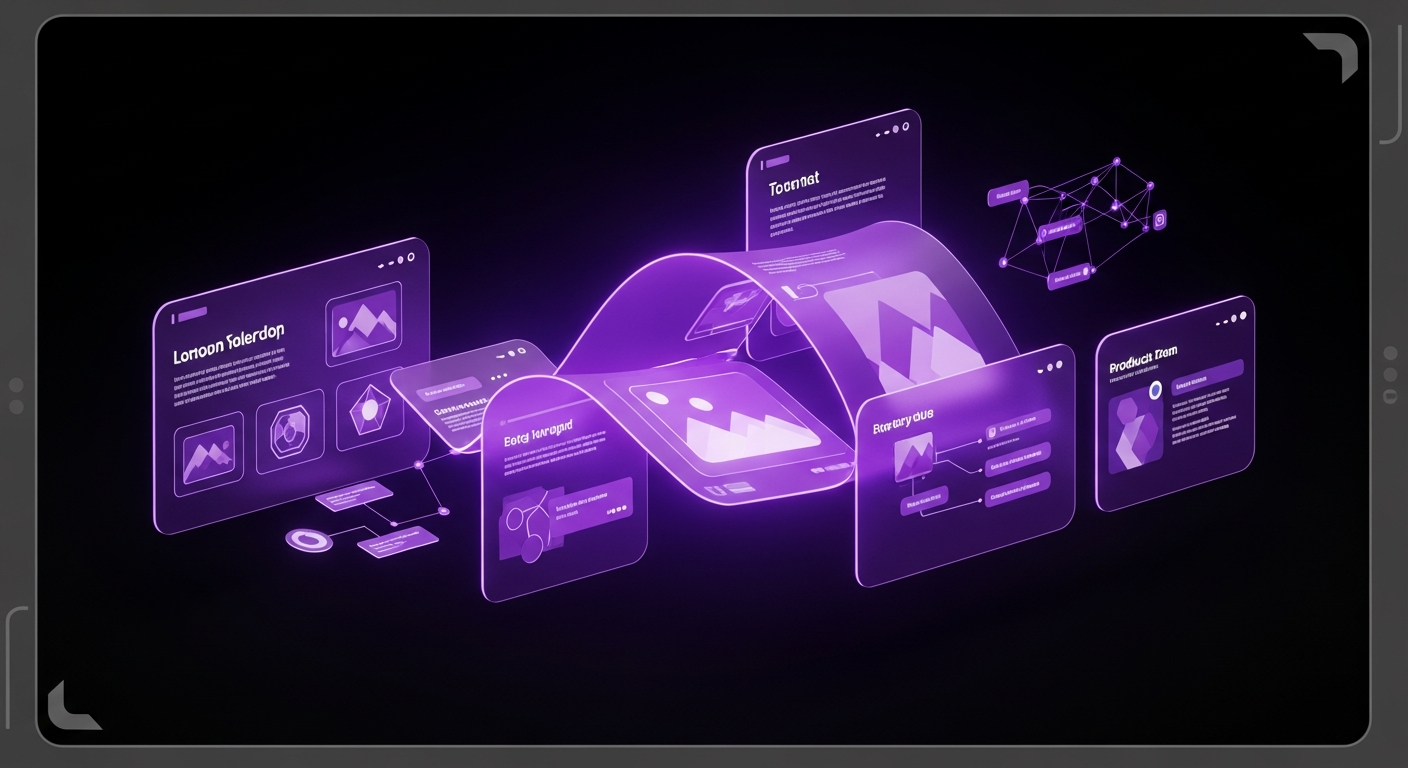
Once your goals, segments, and data infrastructure are in place, it’s time to decide what content to personalize. It’s best to start with a few high-impact implementations and expand over time. Here are some of the most common and effective types of dynamic content.
This is often the easiest and most effective starting point. Swapping out headlines, subheadings, and body copy based on user attributes can dramatically increase relevance. For instance, a B2B software company’s homepage headline could change from “The #1 Platform for Growth” to “The #1 Platform for Healthcare Providers” if the visitor is from that industry. Similarly, a CTA can be dynamic. A first-time visitor might see “Request a Demo,” while a returning lead might see “Start Your Free Trial.”
Visuals are incredibly powerful, and personalizing them can create an immediate connection. An online travel agency could show a hero image of a snowy mountain landscape to a user who has previously searched for ski trips, while showing a tropical beach to someone who has browsed Caribbean destinations. E-commerce sites can use dynamic banners to feature products the user has recently viewed, encouraging them to complete their purchase.
This is a cornerstone of e-commerce personalization, famously used by Amazon. Recommendation engines use algorithms to suggest products based on a user’s behavior. Common types of recommendations include:
These recommendations not only improve the user experience by making discovery easier but also significantly boost average order value.
Dynamic content extends beyond your website. Email marketing is one of the most powerful channels for personalization. Beyond using the subscriber’s first name, you can dynamically change entire content blocks within an email based on the recipient’s past purchases or loyalty status. When a user clicks a link in that email, they should arrive at a landing page that continues the personalized conversation. If the email promoted women’s shoes, the landing page hero image and featured products should reflect that, creating a seamless and effective user journey.

Your dynamic content strategy is only as powerful as the technology that enables it. The right tech stack will allow you to collect data, manage segments, create content variations, and deliver personalized experiences seamlessly. The best choice depends on your budget, technical resources, and strategic complexity.
Many modern Content Management Systems now include built-in personalization capabilities. Platforms like HubSpot CMS Hub, Adobe Experience Manager, and Sitecore allow marketers to create audience segments and build personalization rules directly within the CMS. This can be an excellent all-in-one solution, as it keeps content creation and personalization tightly integrated. For example, you can create a rule that shows a German-language version of a page with pricing in Euros to any visitor from Germany.
Marketing automation platforms like Marketo, Pardot, and ActiveCampaign are powerhouses for personalizing the customer journey, especially through email and lead nurturing. These tools excel at tracking user behavior over time and using that data to trigger automated, personalized communication. They can change email content based on a lead’s score, send follow-up messages after a content download, and pass detailed information to a CRM. While their on-site personalization may be less robust than dedicated engines, they are essential for communication across multiple touchpoints.
For businesses seeking the most advanced on-site personalization and testing capabilities, dedicated personalization engines are the gold standard. Tools like Optimizely, Dynamic Yield, and Google Optimize specialize in this area. They offer sophisticated features like AI-powered product recommendations, advanced multivariate testing, and detailed analytics. These platforms often use a visual editor, allowing marketers to deploy personalization experiments on their website without writing code. They are designed to integrate with your existing CMS and data sources to deliver highly impactful personalization.
The most important consideration is not which individual tool is best, but how well your tools work together. A disconnected tech stack leads to data silos and a fragmented customer experience. The goal is to create a single customer view, where data flows freely between systems. Your CMS should know what a user did in your email campaign, and your marketing automation platform should know what pages they viewed on your website. A well-integrated stack ensures that the personalization a user sees is consistent across all channels, creating a truly unified experience.

Manually personalizing content for every user segment is not sustainable. As your audience grows and your strategy becomes more sophisticated, the complexity can become overwhelming. The key to delivering personalization at scale is to leverage automation and Artificial Intelligence (AI) to create more relevant experiences with greater efficiency.
Traditional personalization relies on rules-based logic (“if this, then that”). For example, “If a user is a ‘New Visitor,’ show them the introductory video.” This is effective but limited. AI and machine learning take this a step further with predictive personalization. AI algorithms analyze vast datasets of user behavior to identify patterns and predict future intent. This allows the system to decide in real-time which content, offer, or product recommendation is most likely to resonate with each individual at that specific moment, much like how Netflix decides which movie poster to show you.
Automation is the engine that executes your personalization rules at scale. Instead of manually coding every content variation, you can set up rules in your CMS or personalization platform that automatically swap content blocks based on user data. For example, you can create five different case study blocks for five key industries. A single automation rule can then display the case study that matches the visitor’s industry. This “one-to-many” approach allows a handful of content assets to be combined into thousands of unique personalized experiences.
A common bottleneck in scaling personalization is content production. If you need ten variations of every headline, your creative team can quickly become overloaded. To manage this, you need efficient workflows. Start with a modular content strategy, breaking pages into smaller, reusable components (like a testimonial block or a CTA block). These modules can then be mixed and matched to create personalized layouts. Additionally, establishing a clear process for requesting, creating, approving, and tagging content variations is crucial for keeping up with the demands of a scaled personalization strategy.

Launching your dynamic content strategy is the starting line, not the finish line. The only way to know if your personalization efforts are working and to improve them over time is through rigorous measurement and optimization. A disciplined approach to testing ensures your strategy is guided by data, not assumptions.
Testing is the process of comparing different versions of your content to see which one performs better. It is a fundamental practice in Conversion Rate Optimization (CRO).
The key to effective testing is to start with a clear hypothesis, such as: “We believe that personalizing the homepage headline for the finance industry will increase demo requests because the message will be more relevant to their pain points.”
After a test has run long enough to achieve statistical significance, it’s time to analyze the results. Go back to the KPIs you defined in the first step. Did the personalized version lead to a higher conversion rate or a lower bounce rate? The data will give you a clear winner. But the analysis shouldn’t stop there. Dig deeper to understand the *why* behind the results. Segment your test results by device type, traffic source, or user segment. These insights are goldmines that help you refine your user personas and build more effective strategies in the future.
Optimization is not a one-off task; it’s a continuous cycle. The insights from one test should feed the hypothesis for the next, creating a powerful feedback loop for continuous improvement.
The optimization cycle looks like this:
By embracing this iterative process, you ensure that your dynamic content strategy is constantly evolving and delivering increasing value to both your users and your business.

Implementing a dynamic content strategy is a powerful endeavor, but it’s not without its challenges. Being aware of potential pitfalls and planning for them from the outset can be the difference between a successful program and a frustrating one.
There is a fine line between personalization that is helpful and personalization that feels invasive. Using someone’s name in an email is helpful; showing them an ad for a product seconds after they had a private conversation about it can feel like surveillance. The key is transparency and value. Be open about the data you collect and use it to genuinely improve the user’s experience. Personalization works best when it removes friction and provides relevant information. If the user feels the exchange is fair—they provide data and get a better experience in return—they will welcome it.
Personalization requires more content. If you have five key audience segments, you might need five versions of your homepage hero banner, which can overwhelm content teams. The solution is to start small and scale intelligently. Don’t try to personalize your entire website at once. Pick one high-impact page and one important audience segment for a pilot project. Use a modular content approach and templates to make content variation more efficient. Prioritize your efforts based on where you can have the biggest impact with the least overhead.
Perhaps the biggest technical hurdle is data. If your customer data is fragmented across a dozen systems that don’t talk to each other (data silos), or if the data itself is inaccurate (poor data quality), your personalization efforts are doomed. The strategic solution is to invest in a central data infrastructure, like a Customer Data Platform (CDP), to unify your data. On a tactical level, this involves establishing clear data governance policies to define how data should be collected, formatted, and maintained across the organization. This ensures the fuel for your personalization engine is always clean and reliable.