






In today’s competitive landscape, understanding your customer is a fundamental requirement. Thriving businesses are those that focus on the customer experience, anticipating needs and removing friction. A powerful strategic tool for gaining this insight is the customer journey map. This guide provides a practical, step-by-step framework to build a map that delivers actionable insights, drives growth, and builds lasting loyalty.
Creating a customer journey map is an exercise in empathy and data-driven analysis. It requires you to step outside an internal, company-focused perspective and see your business through the eyes of your customers. By visualizing every step, interaction, and emotion your customer experiences, you can transform disconnected marketing tactics into a seamless, customer-centric narrative. This tutorial will help you revolutionize how you engage with your audience.

A customer journey map is a visual representation of the entire experience a customer has with your company. It tells the story of their relationship with your brand, from the first moment of awareness to post-purchase loyalty and advocacy. An effective map captures not just a timeline of events, but also what the customer is doing, thinking, and feeling at each stage. This holistic view provides invaluable context that raw data alone often misses.
By charting this path, you replace assumptions with a deep, empathetic understanding of your audience’s motivations, needs, and frustrations. The map is a diagnostic tool that illuminates the highs and lows of the customer experience (CX), showing you where you are delighting customers and, more importantly, where you are letting them down. This insight is the foundation for making smarter, more strategic decisions across all departments, from marketing and sales to product development and customer support.
The customer journey is the complete sum of experiences a customer has when interacting with your company and brand. Rather than focusing on a single transaction, the journey documents the full customer lifecycle. It encompasses every touchpoint, from discovering your brand on social media and browsing your website to making a purchase, using the product, and contacting customer service. The map is your way of documenting and understanding this personal narrative.
In the age of omnichannel marketing, customers interact with brands across a vast array of channels—social media, email, mobile apps, and physical stores. Their journey is rarely linear. A customer journey map helps you make sense of this complexity. Its strategic importance cannot be overstated, as it allows you to:
While often discussed together, a customer journey map and a sales funnel are fundamentally different tools. The sales funnel is a linear, company-centric model describing the process a business uses to convert leads into customers. In contrast, the customer journey map is a non-linear, customer-centric model that focuses on the customer’s actual experience—their actions, thoughts, and feelings.
| Aspect | Sales Funnel | Customer Journey Map |
|---|---|---|
| Perspective | Company-centric: Focuses on the company’s process and goals. | Customer-centric: Focuses on the customer’s experience, emotions, and goals. |
| Structure | Linear and predictable (e.g., Awareness > Interest > Desire > Action). | Non-linear and complex, reflecting the real-world, omnichannel path of a customer. |
| Focus | Quantitative metrics like conversion rates at each stage. | Qualitative insights like customer emotions, pain points, and motivations. |
| Primary Goal | To guide leads toward a sale and optimize conversion rates. | To understand and improve the overall customer experience and build loyalty. |
| Output | A model showing how many prospects move from one stage to the next. | A visual narrative detailing the customer’s story, including their feelings and frustrations. |

While journey maps vary in design, the most effective ones share a common set of core components that create a comprehensive and actionable narrative. Think of these as the essential building blocks for your map, providing the depth needed to drive meaningful change. A robust map typically includes the following elements laid out across a timeline or grid:
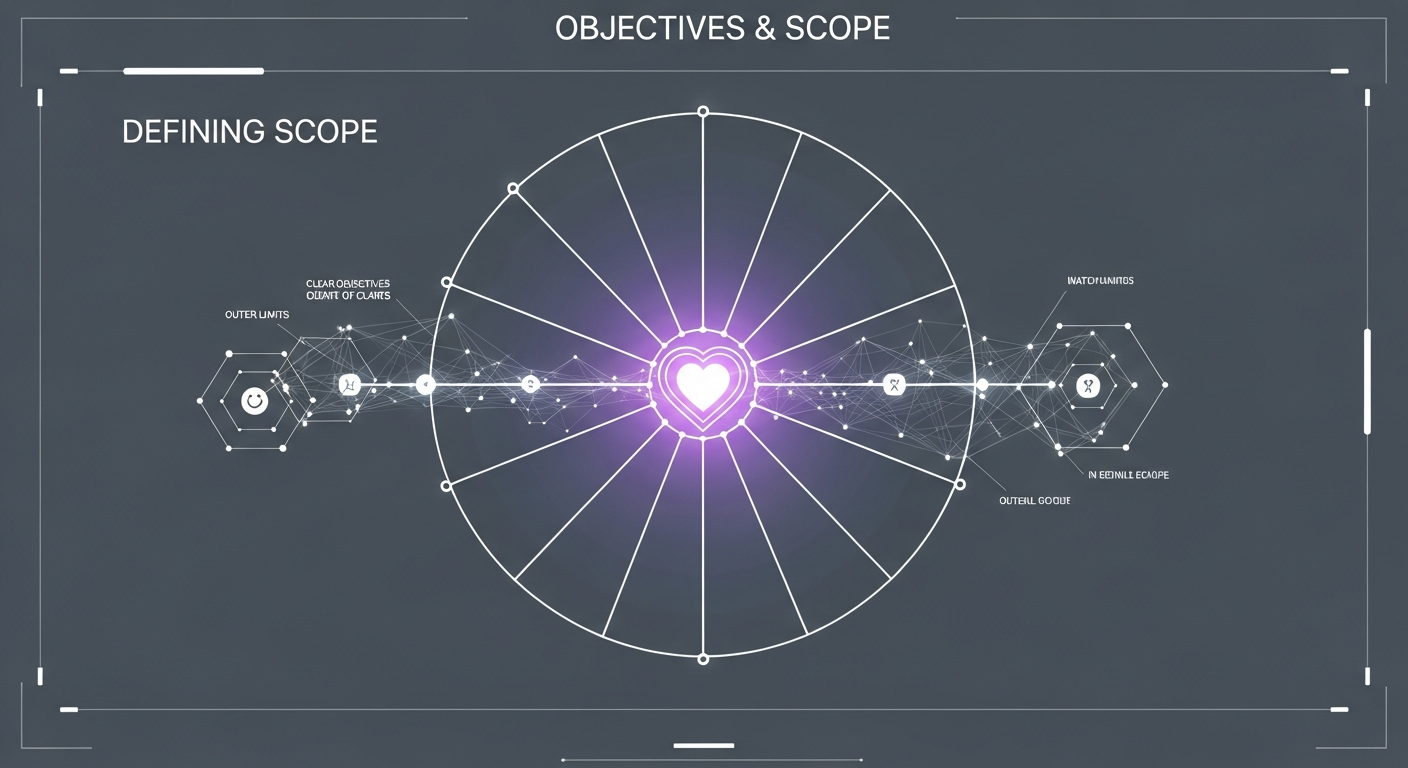
Before diving into data collection, the most critical first step is to establish a clear purpose for your customer journey map. Without a defined objective, your mapping effort can become an unfocused exercise that produces a diagram with no real business value. Start by asking: “Why are we creating this map, and what do we hope to achieve with it?” Your objectives will guide every subsequent step and ensure your map is a strategic tool, not just an academic project.
Start with a specific business problem or goal. Your objective should be specific and measurable. Examples of strong objectives include:
A clear ‘why’ gives your team a shared purpose and makes it easier to gain buy-in from stakeholders.
One of the biggest mistakes companies make is trying to map every possible customer journey at once, which leads to an overly complex and generic map. Instead, narrow your scope. Focus on one specific persona and one specific scenario. For your first map, choose a high-impact journey or one related to a known problem area. For example, instead of mapping the “customer journey,” you might choose to map the “journey of a first-time online buyer purchasing Product X.” A narrow scope allows for greater depth and more valuable insights.
How will you know if your journey mapping project was successful? Define success metrics upfront that are directly tied to your objectives. These Key Performance Indicators (KPIs) will serve as your benchmark. After you implement changes based on the map, you can measure these KPIs again to quantify the impact.
Connecting your map to tangible business metrics elevates it from a visualization to a powerful tool for driving strategic growth.

A customer journey map is only as good as the persona it’s built around. A buyer persona is a semi-fictional, research-based representation of your ideal customer that goes beyond demographics to include their goals, motivations, behaviors, and challenges. Creating a data-driven persona ensures your map is based on reality, not internal assumptions. This step is crucial for building the empathy required to see the world from your customer’s point of view and helps your team rally around a relatable character like “Marketing Mary” instead of an abstract segment.
The best personas are built on a foundation of both quantitative and qualitative research. You need to understand both the ‘what’ and the ‘why’ of customer behavior.
Combining these data types provides a complete picture, grounding your persona in both statistical facts and human stories.
There is no substitute for talking directly to your customers. Schedule 5-10 interviews with recent customers who fit your target profile. Ask open-ended questions to uncover their motivations and challenges:
For broader insights, use survey tools like SurveyMonkey or Typeform to gather data at scale. Include a mix of multiple-choice and open-ended questions to capture both structured data and rich, qualitative feedback.
Once you’ve gathered your research, synthesize it into a concise, one-page persona profile that is easy to share. Include the following elements:
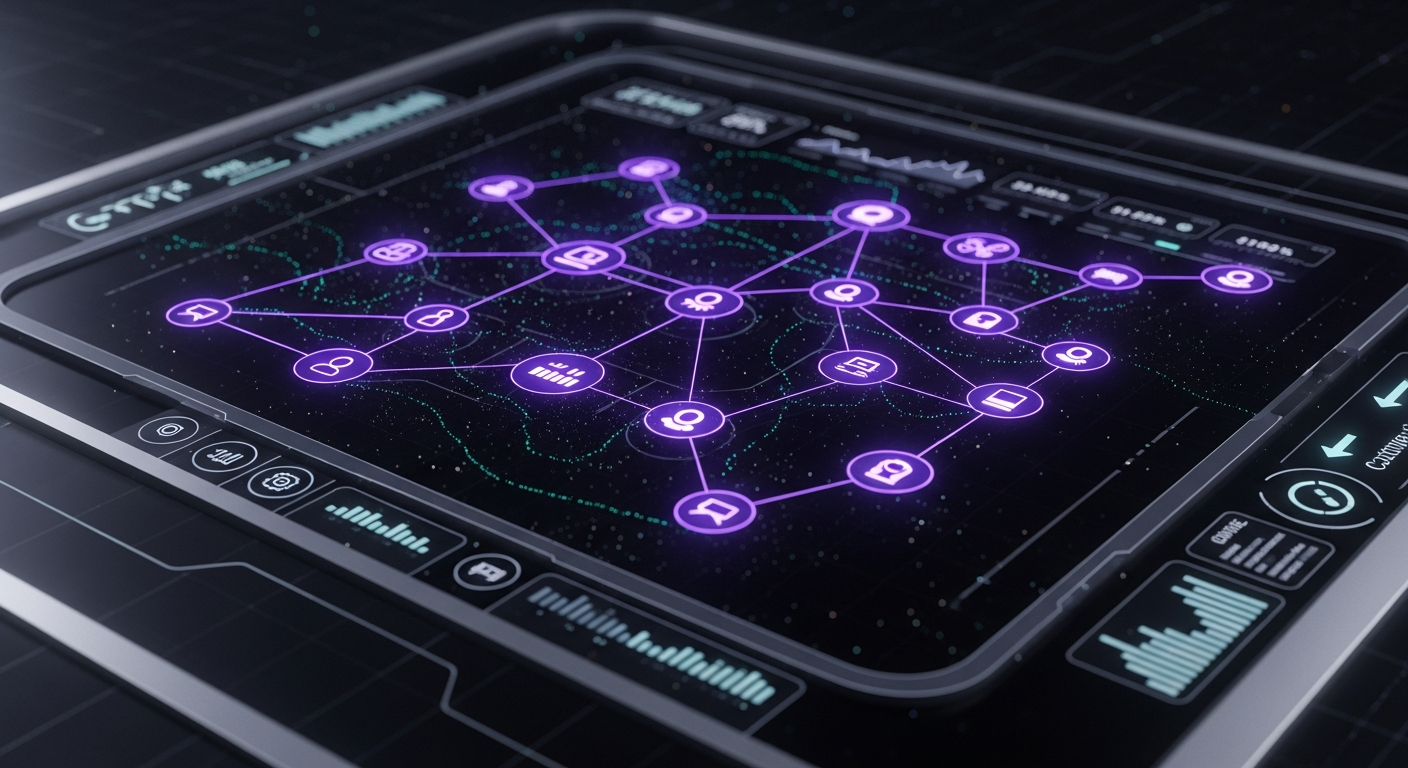
Customer touchpoints are all points of interaction where a customer comes into contact with your brand. Identifying these is a critical step because they are the moments where you can shape the customer’s experience. A comprehensive list of touchpoints forms the backbone of your map, providing the specific locations and channels where the customer’s actions, thoughts, and feelings play out. Involve people from different departments—marketing, sales, product, and customer service—to ensure you capture every possible interaction and create a complete inventory of how customers engage with you.
In a digital-first world, online touchpoints are often the most numerous and influential. Your list should include:
Do not neglect the physical and traditional interactions that define a customer’s experience, especially for businesses with a brick-and-mortar presence or a field sales team. Offline touchpoints include:
A simple list of touchpoints is not enough. The real value comes from connecting these touchpoints to the specific stages of the journey and your persona’s actions. For each stage you’ve outlined (e.g., Awareness, Consideration), ask: “Which touchpoints is our persona interacting with at this stage?” For example, in the Awareness stage, “Marketing Mary” might interact with a LinkedIn ad and a blog post. In the Consideration stage, she might engage with a product comparison page and a webinar. This mapping exercise provides structure and helps you see how different channels work together.
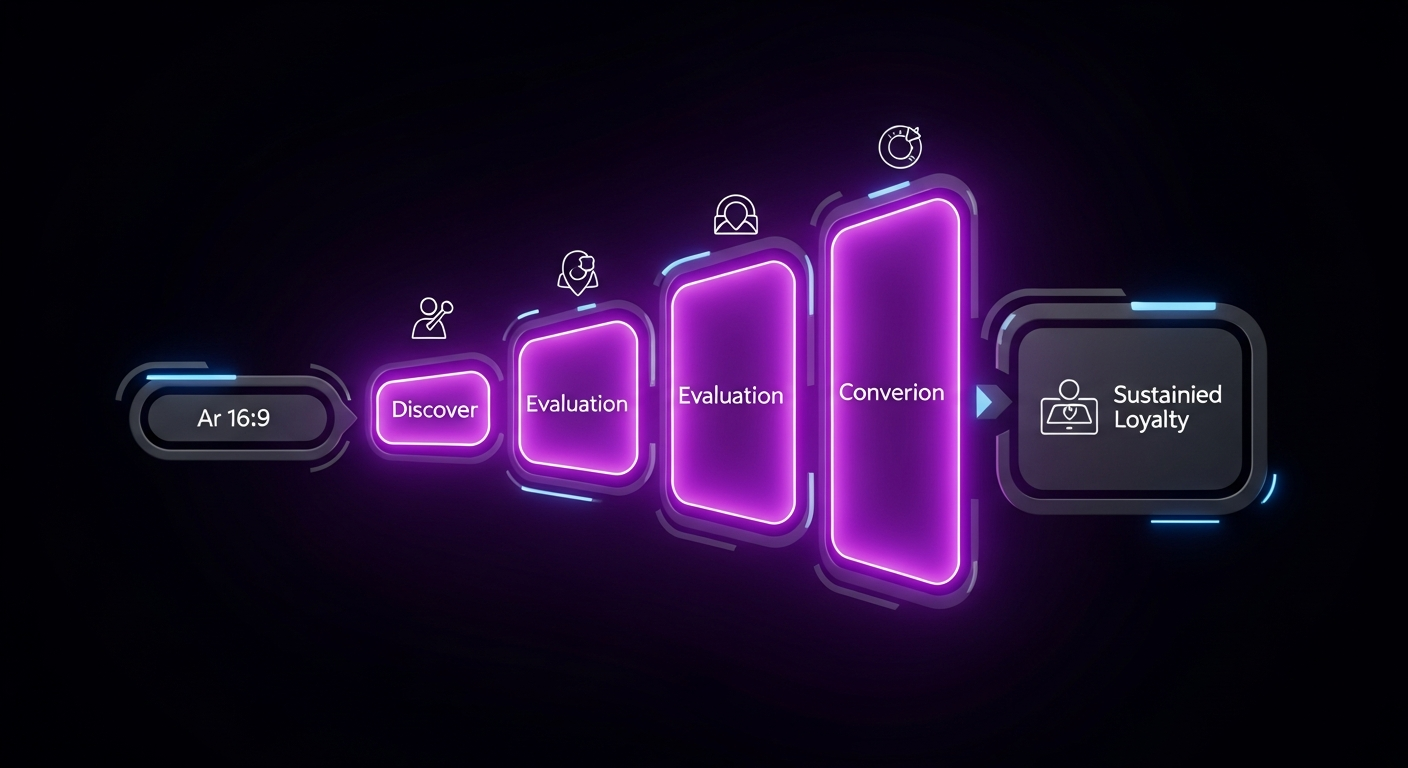
With your objectives, persona, and touchpoints established, it’s time to structure your map by outlining the key stages of the customer journey. These stages represent the major milestones in your customer’s relationship with your brand, from initial discovery to becoming a loyal advocate. While the stages can be customized, a common framework includes Awareness, Consideration, Decision, and Retention/Advocacy. These stages serve as the columns of your journey map, providing a chronological framework to organize the customer’s actions, thoughts, and feelings into a logical narrative.
This initial stage begins when a prospect becomes aware that they have a problem or need and discovers that your company offers a potential solution. They are not yet ready to buy but are in an information-gathering mode, seeking to understand their problem at a high level. At this stage, their actions might include reading blog posts, listening to podcasts, or seeing a social media ad that piques their interest.
In the Consideration stage, the prospect has defined their problem and is now actively researching and evaluating different options to solve it. They are aware of your brand and are comparing you against competitors. Their behavior is more focused and intentional, including actions like reading detailed product guides, comparing features, watching demo videos, and reading third-party reviews. Your goal is to provide the detailed information they need to build trust in your solution.
This is the moment of truth where the customer is ready to make a purchase. The focus of this stage shifts from education to facilitation. You must make the conversion process as seamless and frictionless as possible. Key actions include requesting a quote, signing up for a free trial, adding an item to the cart, and completing the checkout. Any friction here—a confusing form or an unexpected cost—can lead to an abandoned purchase.
The journey does not end when the payment is processed. The post-purchase experience is where you turn a one-time customer into a loyal advocate. This stage encompasses everything that happens after the initial sale, including product onboarding, customer support interactions, and ongoing engagement. A positive experience here leads to higher customer lifetime value, lower churn, and powerful word-of-mouth marketing. The goal is to deliver on your promises and provide outstanding support.
This is the most crucial data-entry phase, where you populate your framework with the rich insights gathered from your research. For each stage, you will document what your persona is doing, thinking, and feeling. This process transforms your map from a simple flowchart into a powerful empathy-building tool, uncovering the critical moments of friction and delight that define the customer experience. Be as specific and evidence-based as possible, using direct quotes, analytics data, and team feedback to ground the map in reality.
Under each stage, list the specific actions your persona takes. Avoid vague descriptions. Instead of “Researches online,” be more granular. For example, in the Consideration stage, actions might be:
This level of detail helps pinpoint the most important touchpoints and moments.
Understanding your customer’s emotional journey is what separates a good map from a great one. For each action, consider what the customer is thinking and feeling. Are they hopeful, confused, overwhelmed, or confident? You can capture this with an “emotional journey” line graph that plots their emotional state across the stages. Use quotes from your interviews to bring these feelings to life:
An Empathy Map framework (charting what a user Says, Thinks, Does, and Feels) is an excellent tool to organize these qualitative insights.
As you map out your customer’s emotions, the pain points will become obvious. These are the moments where the emotional journey dips. A pain point is any instance where the experience fails to meet expectations, causing friction or frustration. Explicitly call these out on your map. Examples include:
These documented pain points are your roadmap for improvement.

Once your map is populated, it’s time to transition from documentation to analysis. A completed journey map is a treasure trove of insights, but they are only valuable if used to drive action. This step involves looking at the entire journey holistically to identify the most critical areas for improvement. Gather your cross-functional team to review the map together. Each department will bring a unique perspective, leading to more creative and effective solutions. The objective is to transform every identified pain point into a clear opportunity for innovation.
Within the journey are “Moments of Truth”—critical touchpoints that have a disproportionate impact on the customer’s perception of your brand. A positive experience at a moment of truth can create a loyal customer, while a negative one can cause them to leave permanently. Analyze your map to identify these make-or-break moments, which often occur where customer emotion is at a peak or a trough, such as the first use of your product or a call to customer support.
Go through your map, one pain point at a time, and brainstorm potential solutions. For each pain point, ask “How can we fix this?” or “What would the ideal experience look like here?”
You cannot fix everything at once. After brainstorming, prioritize your opportunities using an Impact/Effort matrix. For each potential solution, plot it on a graph with two axes: “Impact” (how much will this improve the CX and benefit the business?) and “Effort” (how many resources will this take to implement?).
This framework ensures you focus resources on the changes that will deliver the most value.

Now it’s time to bring your research, analysis, and brainstorming together in a clear, compelling, and shareable format. The final visualization is critically important. A dense spreadsheet will be ignored, but a well-designed visual narrative can capture attention and inspire action across the organization. The goal is to create a document that is informative, engaging, and easy to digest. A journey map’s power lies in its ability to create a shared understanding and foster empathy, so it must be accessible.
There is no single correct format for a customer journey map. The best format depends on the journey’s complexity and your audience. Common formats include:
Choose a format that best tells your persona’s story while clearly highlighting the key stages, pain points, and opportunities.
Regardless of the format, your map should tell a story. Use visual cues to guide the viewer and convey information quickly. Incorporate elements like:
The design should support the data, making complex information accessible and memorable.
A customer journey map that lives on a single person’s hard drive is useless. Share it widely and integrate it into your company’s culture. Present the map in a company-wide meeting, hang large-format prints in common areas, and make it a central part of your onboarding for new employees. Encourage teams to use the map as a lens for their work. When a product manager designs a new feature, they should ask, “How does this address a pain point for our persona?” This is how the map becomes a living document that drives a truly customer-centric culture.
A customer journey map is not a one-time project; it’s a strategic asset that should continuously inform your marketing efforts. The map becomes a blueprint for creating more relevant, empathetic, and effective campaigns. By aligning your strategy with the customer’s actual journey, you can meet them where they are with the right message at the right time. This integration is what turns insights into measurable results like higher engagement, better conversion rates, and increased customer loyalty. By referring back to the map, your team can move from a reactive, channel-focused approach to a proactive, customer-focused strategy.
The pain points and questions identified in your journey map are a goldmine for content ideas. Analyze each stage to identify content gaps.
The pain points on your map are a prioritized to-do list for your User Experience (UX) and Conversion Rate Optimization (CRO) teams. If the map shows customers are frustrated by a complex checkout process, that’s a clear signal to A/B test a simplified version. If users are confused by navigation, use the map’s insights to inform a website redesign. The map helps you focus optimization efforts on the areas with the biggest negative impact on the customer experience, leading to more impactful improvements.
Share your journey map with customer service and support teams. It provides them with context about what a customer may have experienced *before* they reached out for help. If a customer is contacting support during onboarding, the agent can see the common pain points associated with that phase and provide more proactive, empathetic assistance. The map can also highlight the need for better self-service resources, like a more robust knowledge base, to address common issues before they become support tickets.

While you can start with a simple whiteboard or spreadsheet, dedicated software can streamline the process, facilitate collaboration, and help you create a more polished final product. The right tool depends on your team’s needs, budget, and desired design fidelity.
The primary goal is to gain a deep, empathetic understanding of the customer’s entire experience with your company. It visualizes the journey from the customer’s perspective to identify their pain points, uncover opportunities for improvement, and ultimately create a more seamless and positive customer experience (CX) that fosters loyalty and drives business growth.
A sales funnel is a company-centric model that tracks the linear path a business wants a customer to take, focusing on conversion rates. A customer journey map is a customer-centric model that visualizes the customer’s actual, often non-linear path, focusing on their actions, thoughts, emotions, and pain points. The funnel is about the sale; the map is about the experience.
It’s best to start with one. Choose your most important or common customer persona and create a detailed journey map for them first. Mapping multiple personas at once can lead to a generic and unactionable result. Once you complete the process for one persona, you can create separate maps for other key customer segments, as their journeys and pain points will likely differ.
The most common mistakes include: 1) Basing the map on internal assumptions instead of real customer research. 2) Trying to map every journey at once instead of focusing on one specific persona and scenario. 3) Creating the map and then never using it to drive change. 4) Viewing it as a one-time project instead of a living document that needs to be updated as your business and customers evolve.
Yes. While data-driven maps are ideal, you can create a preliminary “hypothesis map” with limited data. Start by gathering your internal team (sales, marketing, support) and mapping out what you *assume* the journey looks like. This is a valuable first step that highlights your assumptions and knowledge gaps. Use this hypothesis map as a guide to determine what research you need to conduct to validate and refine it with real customer insights.
A customer journey map is not a static document. You should review and update it at least once a year, or whenever there is a significant change to your products, services, or market. It’s also wise to revisit the map after implementing major changes based on its insights to assess their impact on the customer experience. Continuously gathering customer feedback will help you know when it’s time for a refresh.