






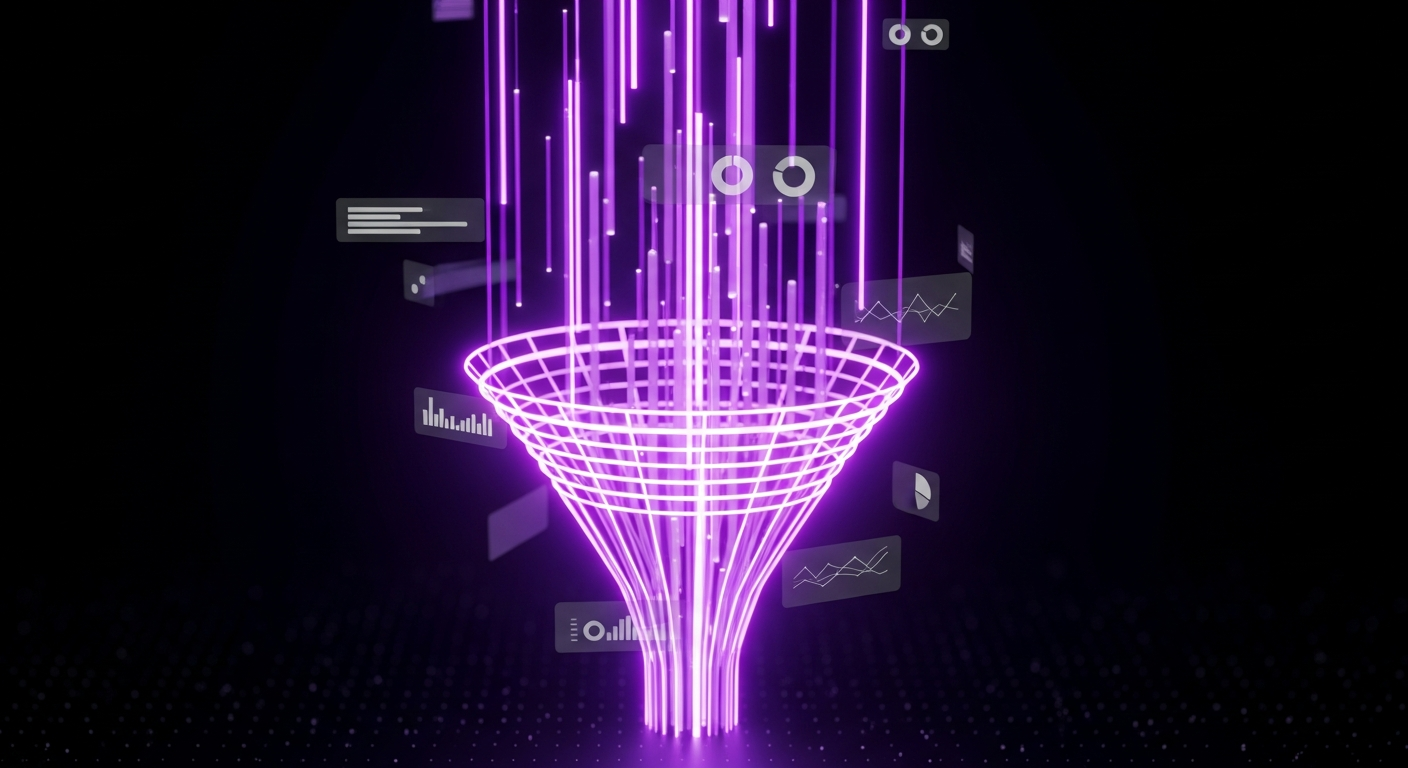
In digital marketing, a customer acquisition funnel is a strategic model that visualizes the journey a potential customer takes from their first interaction with your brand to becoming a loyal, paying customer. Think of it as a roadmap for guiding strangers to become advocates. The funnel starts wide at the top to capture a large audience and gradually narrows as it filters prospects through different stages of engagement, culminating in a conversion.
This concept is more than a theoretical framework; it’s a critical engine for sustainable growth. Without a structured funnel, acquisition efforts are often chaotic, unpredictable, and difficult to measure. Potential revenue is lost when initial interest isn’t systematically nurtured. A well-designed funnel provides a predictable and scalable process for generating leads and sales, transforming marketing from a cost center into a measurable revenue driver. It allows you to understand your customer’s mindset at each step, deliver the right message at the right time, and optimize your marketing spend for better results.
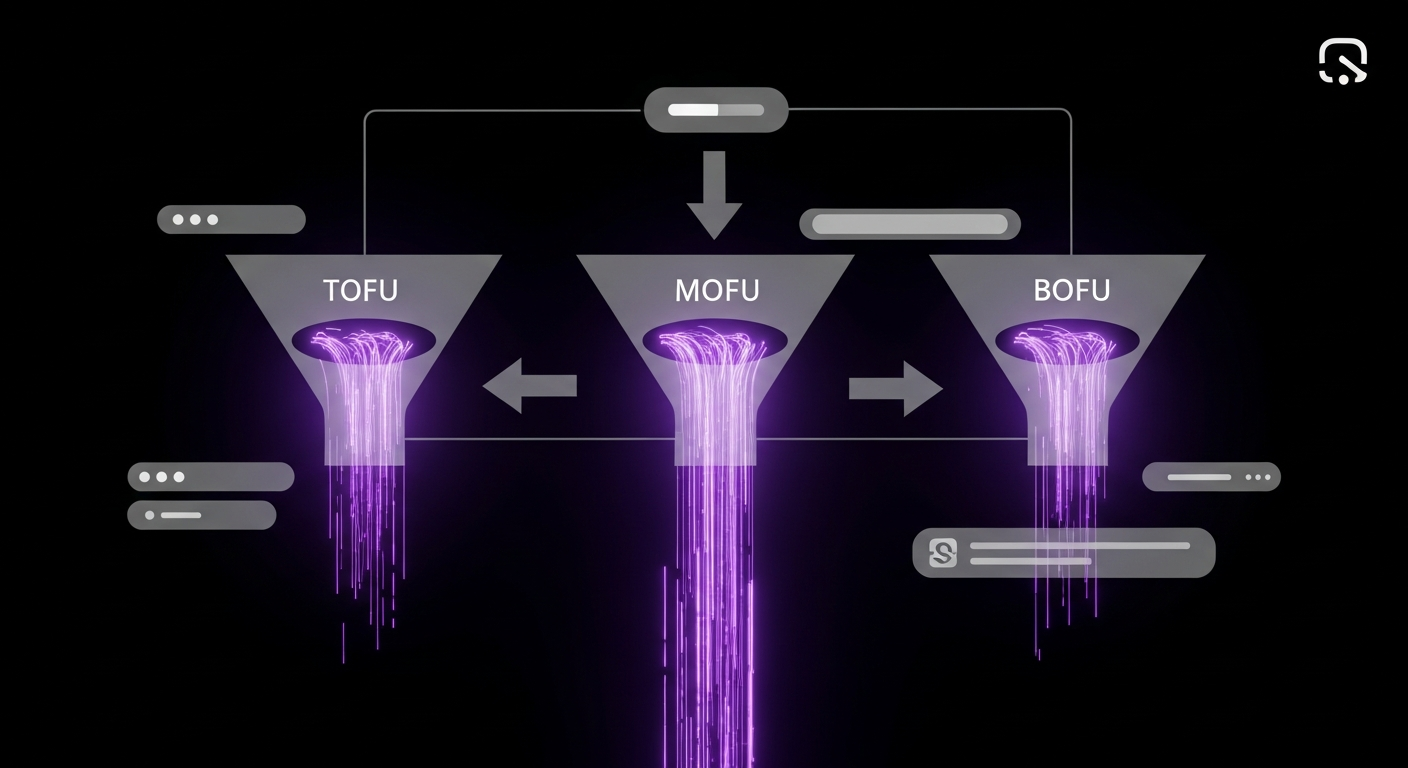
The modern customer acquisition funnel is commonly broken down into three distinct stages, each with its own goals, strategies, and performance indicators. Understanding these stages—Top of the Funnel (TOFU), Middle of the Funnel (MOFU), and Bottom of the Funnel (BOFU)—is fundamental to building a system that effectively attracts, nurtures, and converts your target audience. Each stage addresses a different level of customer awareness and intent, requiring a tailored approach to content and communication.
The Top of the Funnel focuses on awareness and attraction. At this stage, your target audience is experiencing a problem or has a question, but they may not know about your company or the specific solutions you offer. The goal is not to make a hard sale but to cast a wide net and capture the attention of anyone who fits your ideal customer profile. Your strategy should focus on providing value and education, positioning your brand as a helpful authority. Content at this stage is typically broad, addressing common pain points and questions. Examples include blog posts, infographics, educational videos, social media updates, and podcasts. The key is to solve a problem or answer a question without demanding anything in return, thereby building initial trust and familiarity.
Once you capture someone’s attention, the next step is to move them into the Middle of the Funnel. Here, prospects have identified their problem and are actively researching potential solutions. The primary goal of MOFU is to nurture the relationship, build trust, and position your specific solution as the best choice. This is where you convert an anonymous visitor into a known lead by offering more in-depth, valuable content in exchange for a small commitment, typically their email address. This content, often called a “lead magnet,” can include ebooks, whitepapers, case studies, or webinars. By providing this gated content, you can begin engaging with your new lead through targeted communications, such as email nurturing sequences.
The Bottom of the Funnel is the final stage where consideration turns into decision. Leads at this stage are highly qualified and on the verge of making a purchase. They understand their problem and have evaluated potential solutions; now they need to be convinced that your offer is the right one. The goal of BOFU is to convert these qualified leads into paying customers. Your content and messaging should be direct, persuasive, and focused on your product’s unique value proposition. This is the time to build confidence and remove any final barriers to purchase. Effective BOFU tactics include free trials, product demonstrations, consultations, detailed pricing pages, and customer testimonials. The call to action is clear: buy now, sign up, or get started.

Before writing a single blog post or designing an ad, you must lay the foundation for your entire funnel: a deep understanding of who you are trying to reach. Building a funnel without a clear picture of your ideal customer is like navigating without a map. Your messaging will be generic, your targeting will be off, and your results will be disappointing. A successful acquisition strategy begins with defining your Ideal Customer Profile (ICP) and mapping the customer journey, ensuring every piece of content and every touchpoint is relevant and resonant.
A buyer persona is a detailed, semi-fictional representation of your ideal customer, based on market research and real data from your existing customer base. It goes beyond simple demographics to paint a picture of a real person with goals, challenges, motivations, and pain points. A strong persona helps you humanize your audience, enabling you to create content and offers that speak directly to their needs.
A comprehensive buyer persona should include:
Once you know *who* your customer is, you need to understand *how* they interact with your brand. A Customer Journey Map is a visual representation of this process, from initial awareness to post-purchase advocacy. It charts every touchpoint a customer has with your company, including their actions, thoughts, and feelings at each stage. Mapping this journey helps you identify opportunities to improve the customer experience and pinpoint potential friction points where prospects might be dropping off. It connects your internal view of the funnel (TOFU, MOFU, BOFU) with the external reality of the customer’s experience, ensuring a seamless and logical progression.
User intent is the underlying goal a person has when performing a search or interacting with content. This intent evolves as they move through the acquisition funnel, and your strategy must adapt accordingly. Misaligning your content with user intent is a common reason funnels fail. For example, showing a “Buy Now” button to someone just starting their research is premature and likely to drive them away.

The Top of the Funnel is where your customer acquisition journey begins. The primary goal here is to attract a broad but relevant audience by providing valuable, engaging content that addresses their initial questions and pain points. Success at this stage is measured by metrics like website traffic, social media reach, and brand awareness. The key is to be a resource, not a salesperson. Here are three proven strategies for filling the top of your funnel with qualified visitors.
Content marketing is the cornerstone of any effective TOFU strategy. By creating high-quality, informative, and engaging content, you can attract visitors organically through search engines. Search Engine Optimization (SEO) is the practice of optimizing this content to rank for keywords your ideal customers are searching for. This typically involves creating blog posts, in-depth guides, articles, and videos that target informational keywords. For example, a company selling project management software might create an article titled “10 Proven Strategies to Improve Team Productivity.” This content attracts people who are trying to solve a problem that the software ultimately addresses, establishing the company as a helpful expert long before a sales pitch is made.
Social media platforms are powerful channels for distributing your TOFU content and engaging with your target audience where they spend their time. The key is to choose platforms that align with your buyer personas. A B2B software company might find its audience on LinkedIn, while a B2C fashion brand would likely focus on Instagram and TikTok. The strategy on social media should be to share educational content, start conversations, and build a community around your brand. It’s a place for engagement and brand-building, not for aggressive selling. Use visuals, videos, and interactive content like polls to capture attention and drive traffic back to your website or blog.
While organic strategies like SEO are powerful for long-term growth, paid advertising offers a way to generate immediate traffic and visibility. Pay-Per-Click (PPC) ads on search engines like Google allow you to target users based on the exact keywords they are searching for, placing your brand at the top of the results page. Social media ads on platforms like Facebook, Instagram, and LinkedIn offer sophisticated targeting options based on demographics, interests, and behaviors. For TOFU, paid ad campaigns should promote your educational content, like a blog post or a free guide, rather than a direct sales offer. The goal is to drive targeted traffic to your site at a controlled cost.
| Strategy | Primary Goal | Pros | Cons |
|---|---|---|---|
| Content Marketing & SEO | Build long-term organic traffic and authority | Cost-effective over time, builds trust, generates high-quality traffic | Takes time to see results, requires consistent effort |
| Social Media Marketing | Build community, increase brand awareness, and distribute content | High potential for engagement, precise audience targeting | Can be time-consuming, organic reach is often limited |
| Paid Advertising | Generate immediate, targeted traffic | Fast results, highly measurable, scalable | Can be expensive, requires ongoing management and budget |

Once you have successfully attracted visitors to your site, the next critical step is to convert them into leads. The Middle of the Funnel is where this transformation happens. Your goal is to build upon the initial trust you’ve established and encourage prospects to take the next step in their journey by providing their contact information. This is achieved by offering something of significant value in exchange for their contact details. This stage is all about relationship building and demonstrating your expertise in solving their specific problem.
A lead magnet is a free, high-value resource offered to prospects in exchange for their contact details. To be effective, a lead magnet must be irresistible—it needs to provide a quick, tangible solution to a pressing problem your buyer persona faces. It’s a targeted piece of content that goes deeper than a blog post. The quality of your lead magnet directly impacts the quality of the leads you generate. Generic offers result in low-quality leads, while specific, actionable resources attract highly interested prospects.
Examples of effective lead magnets include:
A landing page is a standalone web page created specifically for a marketing or advertising campaign. It’s where a visitor “lands” after they click on a link in an email, an ad, or another digital location. Unlike a homepage, which has many potential distractions, a landing page is designed with a single, focused objective: to get the visitor to take one specific action, such as downloading your lead magnet. A high-converting landing page is clear, concise, and compelling.
Key elements of an effective landing page include:
Once a visitor has downloaded your lead magnet and become a lead, the nurturing process begins. It’s rare for a lead to be ready to buy immediately. An email nurturing sequence is an automated series of emails designed to build a relationship with your new leads over time. The goal is to provide continued value, educate them further about their problem, and gently guide them toward your solution without being overly salesy. A typical sequence might start by delivering the promised lead magnet, followed by emails that share related content, case studies, and insights, eventually leading to a soft pitch for your product or service.

The Bottom of the Funnel is where your hard work of attracting and nurturing leads pays off. Prospects at this stage are problem-aware and solution-aware; they are now actively evaluating their options and are close to making a purchasing decision. Your objective is to convert these qualified leads into paying customers by demonstrating why your product or service is the best possible choice. This requires a shift from educational content to more product-focused, persuasive messaging that overcomes final objections and creates a sense of urgency.
At the BOFU stage, your offer needs to be irresistible and your Call to Action (CTA) must be crystal clear. The offer is the final incentive that encourages a lead to act. This could be a limited-time discount, a free trial, a product demonstration, a free consultation, or a bonus package. The key is to provide a clear value proposition that makes the decision to buy feel like a logical and beneficial next step. Your CTAs should be direct and action-oriented. Vague phrases like “Learn More” should be replaced with specific commands like “Start Your 30-Day Free Trial” or “Get 20% Off Today.” This clarity removes ambiguity and prompts immediate action.
Your sales page and checkout process are the final hurdles a customer must clear. Any friction or confusion at this stage can lead to abandoned carts and lost revenue. A great sales page reinforces the value proposition, highlights key benefits, uses powerful testimonials, and addresses common questions through an FAQ section. The checkout process itself should be as simple and seamless as possible. Minimize the number of form fields, offer multiple payment options, display trust signals like security badges, and be transparent about all costs upfront. The goal is to make the act of buying effortless and secure.
Social proof is one of the most powerful tools in your BOFU arsenal. When leads are on the fence, seeing that others have achieved success with your solution can provide the final push they need. Testimonials from happy customers build trust and credibility. In-depth case studies go a step further, providing a detailed narrative of how you helped a customer solve a specific problem and achieve measurable results. For software or complex services, a live demo or a pre-recorded product tour can be incredibly effective. It allows prospects to see the solution in action, ask specific questions, and visualize how it will work for them, effectively removing the risk associated with a new purchase.

Many businesses mistakenly believe the customer acquisition funnel ends when a sale is made. The most successful companies understand that the journey is far from over. The post-purchase phase is where you have the opportunity to turn a one-time customer into a loyal advocate and a recurring source of revenue. It is significantly more cost-effective to retain an existing customer than to acquire a new one. This final loop of the funnel focuses on customer success, retention, and turning happy customers into a growth engine through advocacy.
The first few days and weeks after a purchase are critical. This is the onboarding phase, where you validate your customer’s decision and set them up for long-term success. A strong onboarding process welcomes new customers, guides them through the essential features of your product or service, and helps them achieve their first “quick win.” This initial success builds momentum and confidence, drastically reducing the likelihood of churn. Onboarding can take the form of a welcome email series, in-app tutorials, a dedicated account manager, or a knowledge base with helpful guides and videos.
Your existing customer base is your most valuable asset for revenue growth. Once a customer has experienced value from your initial offering, they are often receptive to other solutions you provide. Upselling is the practice of encouraging customers to purchase a more expensive version of their current product, such as upgrading to a premium plan. Cross-selling involves recommending related products or services that complement their original purchase. The key to successful upselling and cross-selling is to focus on providing additional value. By understanding your customers’ evolving needs, you can proactively offer solutions that help them achieve even greater success.
The ultimate goal is to transform satisfied customers into enthusiastic brand advocates who actively promote your business. A formal referral program incentivizes customers to spread the word to their network by offering rewards like discounts or account credits for every new customer they bring in. This creates a powerful and cost-effective acquisition channel built on trust. A loyalty program rewards customers for their continued business, encouraging repeat purchases and increasing Customer Lifetime Value (LTV). By delighting your customers and making it easy for them to share their positive experiences, you create a self-perpetuating growth loop where your best customers become your best marketers.

Building a customer acquisition funnel is not a “set it and forget it” activity. To ensure its effectiveness and drive continuous improvement, you must consistently track and analyze its performance. Key Performance Indicators (KPIs) provide the data-driven insights you need to understand what’s working, what’s not, and where to focus your optimization efforts. By monitoring the right metrics, you can move from guesswork to making informed decisions that directly impact your bottom line.
Customer Acquisition Cost is the total cost of your sales and marketing efforts required to acquire a single new customer over a specific period. The formula is: Total Sales & Marketing Spend / Number of New Customers Acquired. For example, if you spent $10,000 on marketing in a month and acquired 100 new customers, your CAC would be $100. Tracking CAC is crucial for understanding the profitability of your acquisition efforts and ensuring your business model is sustainable.
Customer Lifetime Value (LTV) is the total projected revenue a business can expect from a single customer throughout their relationship. A high LTV indicates that you are acquiring valuable customers who are loyal and continue to make purchases over time. The real power comes from comparing LTV to CAC. A healthy LTV to CAC ratio is often cited as 3:1 or higher, indicating the value of a customer is at least three times the cost of acquiring them. This ratio is a primary indicator of your business’s long-term profitability.
This metric measures the percentage of people who move from one stage of your funnel to the next. For example, you would track your Visitor-to-Lead conversion rate (the percentage of website visitors who fill out a form) and your Lead-to-Customer conversion rate (the percentage of leads who make a purchase). Analyzing these micro-conversions is essential for identifying “leaks” in your funnel. A low conversion rate at a specific stage signals a problem that needs to be addressed, whether it’s a confusing landing page, an unappealing offer, or an ineffective email sequence.
Return on Investment is the ultimate measure of profitability. It calculates the net profit generated from your marketing and sales efforts relative to their cost. The formula is: (Net Profit – Cost of Investment) / Cost of Investment. A positive ROI means your campaigns are profitable, while a negative ROI indicates you are losing money. Tracking ROI for your overall funnel, as well as for individual channels and campaigns, allows you to allocate your budget to the strategies that deliver the best results.
| Metric | What It Measures | Why It’s Important |
|---|---|---|
| Customer Acquisition Cost (CAC) | The average cost to acquire one new customer. | Determines the efficiency and profitability of your marketing spend. |
| Customer Lifetime Value (LTV) | The total revenue generated from a single customer over time. | Indicates the long-term value of your customers and business health. |
| Conversion Rates | The percentage of users moving from one funnel stage to the next. | Helps identify bottlenecks and specific areas for optimization. |
| Return on Investment (ROI) | The overall profitability of your marketing efforts. | The ultimate measure of whether your funnel is generating a positive financial return. |

A high-performing customer acquisition funnel is not built overnight. It’s the result of a continuous process of analysis, testing, and refinement. Optimization is about making incremental improvements at every stage to reduce friction, increase conversion rates, and maximize your return on investment. By adopting a data-driven approach, you can turn a good funnel into a great one, ensuring it operates at peak efficiency.
A “leaky” funnel is one where a significant number of prospects drop off at a particular stage. These leaks represent lost opportunities and wasted marketing spend. The first step is to use your analytics to identify these problem areas. Are you seeing a high bounce rate on a key landing page? Is there a large drop-off during your checkout process? Are the open rates for a specific email in your nurture sequence abnormally low? Once you’ve identified a leak, you can hypothesize the cause. Perhaps the landing page copy is unclear, the checkout form is too long, or the email subject line is unengaging. You can then implement changes to plug the leak and monitor the results.
A/B testing, or split testing, is a powerful method for optimizing your funnel. It involves creating two versions of a single element (e.g., a landing page headline, an email subject line, or a call-to-action button color) and showing each version to a different segment of your audience. By measuring which version performs better against a specific goal like conversion rate, you can make data-backed decisions about what works best. Don’t rely on assumptions. Continuously test key elements throughout your funnel to achieve incremental gains that can compound into significant improvements over time.
Elements to A/B test include:
Your analytics platform (like Google Analytics) is your single source of truth for funnel performance. It provides invaluable quantitative data about user behavior: where your traffic is coming from, which pages they visit, how long they stay, and where they drop off. By regularly diving into this data, you can move beyond intuition and make strategic decisions based on what your audience is actually doing. Combine this with qualitative tools like heatmaps and session recordings to understand the “why” behind the numbers. This holistic view of user behavior is the key to unlocking powerful insights and driving meaningful funnel optimization.

Building, managing, and optimizing a modern customer acquisition funnel requires a set of powerful tools. The right technology stack can automate repetitive tasks, provide deep insights into customer behavior, and enable you to scale your efforts effectively. While the specific tools may vary based on your budget and needs, they generally fall into a few key categories that work together to create a seamless customer journey.
A Customer Relationship Management (CRM) platform is the central nervous system of your acquisition funnel. It’s a database where you store and manage all of your lead and customer information. A CRM tracks every interaction a person has with your brand—from the first website visit to email opens and sales calls. This provides a unified view of the customer journey and allows your marketing and sales teams to work together seamlessly. Popular CRM platforms include HubSpot, Salesforce, and Zoho CRM.
This software is essential for nurturing leads through the middle of the funnel and beyond. These tools allow you to build and manage your email list, send newsletters, and create automated email sequences (drip campaigns) that are triggered by user actions, such as downloading a lead magnet. Marketing automation helps you deliver personalized, timely messages at scale, guiding leads toward a purchase without manual intervention. Leading tools in this space include Mailchimp, ConvertKit, and ActiveCampaign.
To optimize your funnel, you need data. Web analytics tools like Google Analytics are non-negotiable for tracking traffic, user behavior, and conversion rates. They tell you *what* is happening on your site. To understand *why* it’s happening, you can use qualitative analytics tools like heatmaps, scroll maps, and session recorders. These tools visually represent where users click, how far they scroll, and how they navigate a page, providing invaluable insights for improving user experience and conversion rates. Popular choices include Hotjar, Crazy Egg, and Microsoft Clarity.
While you can build landing pages directly on your website, dedicated landing page builders offer a faster, more flexible solution for marketers. These tools provide drag-and-drop editors and a wide array of high-converting templates, allowing you to create and launch optimized landing pages for your campaigns without needing to write any code. They also typically include built-in A/B testing functionality, making it easy to test different variations and improve performance. Well-known landing page builders include Unbounce, Leadpages, and Instapage.