








In digital marketing, the demand for fresh, high-quality content is relentless. Businesses are constantly pressured to produce more articles, videos, podcasts, and social media updates to stay relevant and visible. This constant demand, often called the ‘content treadmill,’ can lead to burnout and diminishing returns. What if there was a way to multiply your output without multiplying your effort? This is where content repurposing comes in. It’s a strategy that transforms content creation from a linear sprint into a sustainable, cyclical engine for growth.
Before diving deeper, it’s crucial to distinguish between repurposing and republishing. While often used interchangeably, they represent different approaches. Republishing, also known as content syndication, involves posting an existing piece of content—such as a blog post—largely unchanged on another platform like Medium or a partner website. The goal is to reach a new audience with the same format.
Content repurposing, on the other hand, is a more transformative process. It involves taking the core message, data, and ideas from existing content and adapting them into an entirely new format. For example, a data-heavy blog post can be transformed into a visually engaging infographic. The audio from a webinar can be turned into a podcast episode. Repurposing isn’t about copying and pasting; it’s about reimagining your best ideas to suit different platforms and audience consumption habits.
The fundamental principle behind content repurposing is efficiency. Creating a single piece of high-value cornerstone content requires a significant investment of time, research, expertise, and budget. A comprehensive guide or an original research report can take weeks or even months to produce. It is not sustainable to let that asset have a single, fleeting moment in the spotlight. Repurposing allows you to maximize the return on that initial investment.
Think of your best content as a prime cut of meat. A great chef wouldn’t just serve it as a steak once. They would use the trimmings for a savory broth, the bones for a rich stock, and feature the main cut in several different dishes. A smart content marketer treats cornerstone content with the same resourcefulness, slicing and dicing it to create a multitude of assets, each appealing to a different taste and occasion.
Repurposing is a powerful amplifier. A single message confined to a single format can only reach a limited audience. People have diverse preferences for how they consume information. Some are avid readers who love in-depth articles. Others prefer watching short videos during their commute or listening to podcasts while exercising. By not repurposing your content, you are potentially ignoring large segments of your audience.
When you turn a blog post into a podcast episode, an infographic, a video, and a series of social media posts, you are meeting your audience where they are. This multi-format approach also reinforces your core message through strategic repetition. Seeing your brand’s insights across different platforms and in various formats builds familiarity and trust, solidifying your authority on the subject matter far more effectively than a single blog post ever could.

Adopting a content repurposing strategy goes far beyond simple efficiency gains. It is a strategic lever that can drive significant business results, from improving search engine visibility to building brand authority. By systematically breathing new life into your existing assets, you unlock a cascade of benefits that can fuel your entire marketing engine.
Search Engine Optimization (SEO) is a primary beneficiary of a smart repurposing strategy. By transforming your content into different formats, you create new opportunities to rank for a wider array of keywords. For instance, a blog post optimized for a specific long-tail keyword can be repurposed into a YouTube video that targets a similar video search query. An infographic can rank in Google Images and attract backlinks from other websites seeking visual data.
Furthermore, creating a cluster of related content assets around a central topic (a pillar page, video, podcast, infographic, etc.) signals topical authority to search engines like Google. This interconnected web of content, with each piece linking to others, strengthens your website’s overall authority and can improve rankings across the board. It’s a powerful way to dominate search results for your most important topics.
Your target audience is not a monolith. It is composed of different personas with varying preferences for content consumption. The executive who lacks time to read a 3,000-word guide might listen to a 20-minute podcast summary on their way to the office. The social media manager seeking quick insights might engage with a LinkedIn carousel that breaks down the guide’s key takeaways. The data analyst might be drawn to a detailed infographic shared on Pinterest.
Repurposing allows you to cater to these diverse preferences without reinventing the wheel each time. You take one core idea and present it in multiple ways, ensuring your message has the maximum possible reach. This extends your influence beyond your core following and introduces your brand to new communities on platforms you might not have otherwise prioritized.
This is the most immediate and tangible benefit of content repurposing. The content creation process is resource-intensive. From ideation and research to writing, editing, and design, producing a single piece of original content is a major undertaking. A content repurposing workflow dramatically reduces this burden, as the heavy lifting of research and ideation is already done.
Instead of spending ten hours on a new blog post, you might spend two hours turning an existing post into a compelling slide deck. Instead of budgeting for a new video shoot, you can extract powerful clips from a past webinar. This reallocation of resources allows your team to produce a higher volume of quality content, maintain a more consistent publishing schedule, and get more value from every dollar spent on content marketing.
Authority isn’t built with a single blog post; it’s built through consistent, high-quality communication across multiple touchpoints. When a potential customer encounters your brand’s expertise in multiple formats—they read your insightful article, see your data visualized in an infographic, and hear your founder discuss the topic on a podcast—their perception of your company’s authority is significantly enhanced. This multi-format presence creates an impression of deep knowledge and thought leadership.
This approach demonstrates that you understand a topic on a comprehensive level, not just a superficial one. This builds trust and confidence, making your brand the go-to resource in your niche and a clear choice when it comes time for a purchasing decision.

Not all content is created equal, and not every piece is a prime candidate for repurposing. An effective strategy focuses on your ‘goldmine’ assets—the content that has already proven its value or has the highest potential for future success. Identifying these pieces requires a data-driven approach, combining analytics with a qualitative understanding of your content library.
The best place to start is with your evergreen and cornerstone content. Evergreen content covers topics that remain relevant over a long period, independent of trends or news cycles. A guide on “How to Create a Budget” is evergreen; a post about a recent social media algorithm update is not. Cornerstone content (or pillar content) is a substantial, comprehensive piece that covers a core business topic in depth. These pieces are foundational to your content strategy.
Conduct a content audit to identify these assets. Look for your most comprehensive guides, ultimate how-to articles, and foundational whitepapers. These pieces are rich with information and insights, making them perfect raw material for creating dozens of smaller, repurposed assets.
Your website analytics are a treasure trove of information about what your audience already loves. Dive into Google Analytics to identify your top-performing pages by navigating to the ‘Behavior’ > ‘Site Content’ > ‘All Pages’ report. Look for content with the following characteristics:
These metrics point directly to the content that is already resonating with your audience and achieving business goals, making it a low-risk, high-reward choice for repurposing.
Your social media channels provide real-time feedback on which topics and formats excite your audience. Review your platform analytics to find posts that have generated the most engagement—likes, comments, shares, and saves. A blog post shared hundreds of times on LinkedIn is a strong indicator that the professional audience on that platform values the topic. A particular quote or statistic that got many retweets could be turned into its own visual graphic.
This data helps you understand not just *what* content to repurpose, but also *how* it might be best received in a different format. High engagement signals a strong emotional or intellectual connection, which you can leverage in new assets.
Sometimes, the best content to repurpose is content that is *almost* successful. Use Google Search Console to find pages that are ranking on the bottom of page one or on page two for valuable, high-volume keywords. These pages are on the cusp of driving significant organic traffic. Google has recognized them as relevant, but they need an extra push.
Repurposing this content can provide that push. By updating the original article with fresh information and then creating new assets like a video or infographic that link back to it, you can build its authority, attract new links, and improve its engagement signals. This can be enough to boost its ranking onto the first page, unlocking a new stream of organic traffic.

A successful content repurposing initiative is not a random, ad-hoc activity. It requires a structured process to ensure that every new asset is strategic, high-quality, and aligned with your business objectives. Following a clear framework will help you move from idea to execution efficiently and measure your results accurately.
Before considering formats or channels, you must define what you want to achieve. Your goal will dictate every subsequent decision. Are you trying to increase brand awareness, generate leads, boost SEO rankings for a specific keyword, or nurture existing leads? Each objective is best served by different types of repurposed content.
Once your goal is clear, select the most appropriate format and the platform where it will have the most impact. This requires understanding both the original content and the preferences of the audience on the target channel. A mismatch here can cause your repurposed content to fall flat. For example, a highly technical whitepaper won’t work as a TikTok video, but it could be a fantastic LinkedIn article series.
Here’s a simple comparison table to guide your choices:
| Original Content | Potential Repurposed Format | Best Channels |
|---|---|---|
| In-Depth Blog Post | Infographic, Twitter Thread, Video Summary | Pinterest, Twitter, YouTube, LinkedIn |
| Webinar | Video Clips, Blog Post Series, Podcast Episode | LinkedIn, YouTube, Your Blog, Podcast Platforms |
| Podcast Episode | Audiograms, In-depth Article, Quote Graphics | Instagram, Your Blog, Twitter, LinkedIn |
| Case Study | Social Media Carousel, Testimonial Video, Infographic | LinkedIn, Instagram, Your Website |
| Ebook / Guide | Email Mini-Course, Checklist, Webinar | Email, Landing Page, Social Media |
This step is critical and often overlooked. Repurposing is not a simple copy-and-paste job. To be effective, the content must be thoughtfully adapted to the new format. This involves several key actions:
Every new piece of repurposed content is an asset that deserves its own promotion plan. Don’t just publish it and hope for the best. Actively distribute it to ensure it reaches its intended audience. Your promotion checklist should include:
Finally, close the loop by measuring the performance of your repurposed content against the goals you set in Step 1. Track key metrics such as views, downloads, shares, engagement rates, leads generated, and traffic driven to your website. Use UTM parameters to accurately attribute results back to specific campaigns.
Analyze this data to understand what’s working and what isn’t. Did the infographic drive more traffic than the video clips? Did the email course generate higher-quality leads than the ebook? Use these insights to refine your strategy, double down on successful tactics, and make smarter repurposing decisions in the future.

Theory is important, but practical examples are what spark real action. Here are ten concrete, actionable ideas for how you can take your existing content assets and transform them into new formats that expand your reach and amplify your message.
Your data-rich, list-based, or process-oriented blog posts are perfect candidates for visual transformation. Pull out the most compelling statistics, key steps, or critical takeaways and use a tool like Canva to create a beautiful, easy-to-digest infographic. You can embed this in the original post for an SEO boost and share it on visual platforms like Pinterest, where it can drive traffic for years. Additionally, break the infographic into smaller ‘micro-graphics’ or pull impactful quotes to share on Instagram, LinkedIn, and Twitter.
A one-hour webinar is a content goldmine. Don’t let it sit forgotten on a landing page after the live event. Use a video editing tool to slice the webinar into 5-10 short, digestible video clips, each focused on a single key point. These ‘nuggets’ are perfect for sharing on social media to capture attention. You can also have the entire webinar transcribed and edit the text into a comprehensive blog post or even a series of posts, making the valuable spoken content discoverable by search engines.
Case studies are powerful proof of your product’s or service’s value, but their traditional PDF format can be dry. The narrative structure of a case study—Problem, Solution, Results—is perfectly suited for a social media carousel on platforms like LinkedIn or Instagram. Each slide can represent a different part of the story, using strong visuals, bold text, and compelling data points to showcase your customer’s success in a dynamic and engaging way.
Podcasts are fantastic for building a loyal audience, but their audio-only format limits their SEO potential. By transcribing your podcast episodes, you can unlock their value for search. Have the audio transcribed using a service like Descript or Rev, then have a writer clean up the text, add headings, pull quotes, include relevant images, and link to mentioned resources. This creates a fully-fledged, keyword-rich article that can attract a new audience through organic search.
If you have several blog posts that cover different facets of a single, broad topic, you have the makings of an ebook. Gather 3-5 of your best-related posts, organize them in a logical flow, write a new introduction and conclusion to tie everything together, and design a professional-looking PDF. You can then offer this comprehensive guide as a lead magnet on your website, converting readers into valuable email subscribers.
A long-form guide or whitepaper can be intimidating for some users. To make the information more accessible and build a relationship over time, break it down into an email mini-course. Deconstruct the guide into 5-7 distinct lessons and deliver one lesson via email each day. This ‘drip’ approach keeps your audience engaged, delivers value directly to their inbox, and keeps your brand top-of-mind for an entire week.

Effective content repurposing is not a one-size-fits-all process. To truly connect with audiences, you must adapt your content to the unique culture, format requirements, and user expectations of each platform. A piece of content that excels on LinkedIn might fail on Instagram if it is not properly tailored. Understanding these nuances is key to maximizing your impact.
These platforms prioritize aesthetics and immediate visual appeal. Your content must be eye-catching and deliver value quickly.
LinkedIn is the premier platform for B2B marketing and professional thought leadership. The audience here values in-depth insights, industry trends, and career advice.
These platforms thrive on concise, valuable information and conversation.
The rise of audio consumption provides a powerful new avenue for repurposing.

While content repurposing is a massive boon for SEO, it must be handled with technical care to avoid potential pitfalls. The primary concern is ensuring that search engines understand the relationship between the original piece and its repurposed variations, preventing issues like keyword cannibalization or perceived duplicate content. Following SEO best practices ensures your efforts boost, rather than hinder, your organic visibility.
First, let’s address a common fear: duplicate content. Google representatives, like John Mueller, have clarified that there is no direct ‘penalty’ for duplicate content. However, it can cause confusion for search engines. If multiple identical or very similar pages exist, Google may struggle to decide which one to rank, potentially diluting the authority of all versions. The good news is that true repurposing—changing the content’s format (e.g., text to video)—is not considered duplicate content. A blog post and a YouTube video are seen as distinct assets. The risk primarily arises when you republish text-based content on other domains.
When you republish a text-based article on another platform (like Medium or LinkedIn Articles), the canonical tag (`rel=\”canonical\”`) is your most important tool. A canonical tag is a snippet of HTML code that tells search engines a specific URL represents the master copy of a page. By placing a canonical tag on the syndicated version that points back to the original article on your website, you are telling Google, ‘This is a copy. Please credit all SEO value, like links and authority, to the original source.’ This step consolidates your SEO power and prevents the syndicated version from competing with your site in search results.
A smart internal linking strategy weaves your repurposed content together into a powerful topic cluster. This helps both users and search engines discover related content and understand the topical depth of your website. When you create a new asset, always think about how it connects to the original.
This creates a virtuous cycle where each piece of content supports and promotes the others, strengthening the overall authority of the topic cluster.
One of the most powerful forms of repurposing is refreshing an existing blog post. Over time, content can become outdated. By performing a ‘content refresh,’ you can bring it back to life and often achieve significant ranking improvements. This process involves:
After making substantial updates, change the ‘last updated’ date on the post. Some platforms even allow you to change the original publish date. This signals to Google that the content is fresh and relevant again, which can trigger a re-crawl and a potential boost in search rankings.

An effective content repurposing strategy relies on a well-equipped toolkit. The right software can dramatically speed up the creative process, improve the quality of your output, and help you manage the entire workflow from ideation to promotion. Here are some essential categories of tools to consider for your stack.
Creating professional-looking visual content is no longer the exclusive domain of graphic designers. User-friendly design platforms empower marketers to quickly create a wide range of assets.
Transforming text and long-form recordings into engaging video and audio content is easier than ever with AI-powered tools.
Keeping track of your original content and all its repurposed variations requires organization. Project management tools are essential for planning and collaboration.
Once you’ve created your repurposed assets, you need an efficient way to distribute them. Scheduling tools save time and ensure a consistent presence.
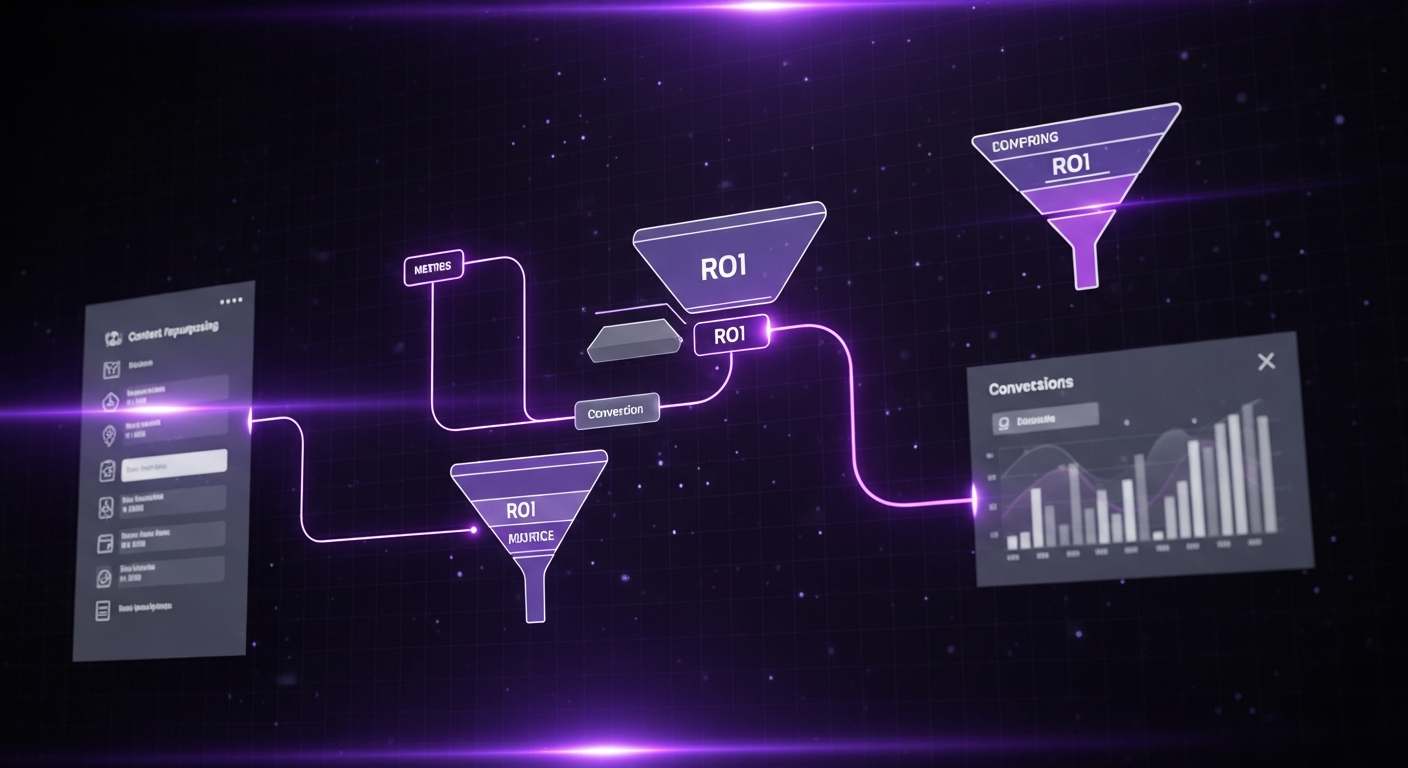
To justify the time and resources invested in content repurposing, you must be able to measure its impact. Tracking the right metrics allows you to demonstrate the return on investment (ROI), understand what works, and make data-driven decisions to optimize your strategy. A solid measurement framework connects your repurposing activities directly to tangible business outcomes.
The metrics you track should align directly with the goals you set for each repurposed asset. Don’t just look at vanity metrics; focus on data that reflects real business value.
UTM parameters are short snippets of code added to the end of a URL that help you track the effectiveness of your digital marketing campaigns. They are essential for accurately attributing traffic and conversions to your repurposed content. For example, when you share a link to your original blog post in a Twitter thread, you can add UTM parameters like this: `?utm_source=twitter&utm_medium=social&utm_campaign=repurposing_thread`. In Google Analytics, you can then see exactly how many visitors and conversions came from that specific Twitter thread, proving its value.
The ultimate goal of measurement is to connect the dots between a specific repurposing activity and a high-level business objective. It’s about telling a story with data. For example, you can demonstrate that:
Presenting your results this way elevates the conversation from content metrics to business impact, clearly demonstrating the immense value of a strategic approach to content repurposing.

Content repurposing is more than a clever tactic to fill your content calendar; it is a fundamental shift in how to approach content marketing. It’s a strategy built on the principles of efficiency, amplification, and maximizing value. By moving away from a ‘one-and-done’ publishing mindset, you transform every piece of cornerstone content into a recurring source of value that drives results across multiple channels long after its initial publication.
The benefits are clear: you save invaluable time and resources, boost your SEO and organic reach by building topical authority, connect with new and diverse audience segments on their preferred platforms, and solidify your brand’s reputation as a trusted expert. It’s the ultimate way to work smarter, not harder, in an increasingly demanding digital landscape.
The key is to make repurposing a proactive part of your process, not an afterthought. When you plan a new piece of cornerstone content, simultaneously brainstorm all the ways it can be deconstructed, reimagined, and reborn. Your next step is simple: conduct a quick audit of your top five best-performing blog posts. For each one, identify just one opportunity to repurpose it into a new format. Start there, and build a system that turns your existing content library into a perpetual motion machine for marketing success.
Repurposing involves changing the format of the content (e.g., blog to video), while republishing means posting the same piece of content again, often on a different platform. Repurposing adds new value by adapting the content for a new audience and format.
If done incorrectly, it can lead to issues with search engines perceiving it as duplicate content. However, when done correctly—by changing the format, adding new information, and using best practices like canonical tags—it significantly boosts SEO by targeting new keywords and earning new backlinks.
Start with your highest-performing assets. Look for ‘evergreen’ content that remains relevant over time and posts that have high traffic, engagement, or conversions according to your analytics.
Easy starting points include turning a list-based blog post into an infographic, pulling key quotes from an article to create social media graphics, or compiling several related blog posts into a simple PDF guide.
There is no fixed schedule, but it’s best to make content repurposing a continuous part of your content marketing workflow. A good practice is to review your top-performing content quarterly to identify new repurposing opportunities.