







In the dynamic landscape of search engine optimization, tactics that worked yesterday can become obsolete tomorrow. The outdated model of targeting individual, isolated keywords is no longer sufficient to secure top rankings and demonstrate expertise. Today, success hinges on building topical authority—proving to both search engines and users that you are a definitive resource on a subject. This is where the pillar-cluster model comes in. It is not just another SEO trend; it is a strategic framework for organizing, creating, and interlinking content that establishes your authority, enhances user experience, and builds a foundation for sustainable traffic.
This guide will walk you through the entire process, from conceptualizing your content pillars to measuring their long-term impact. You will learn how to move beyond a scattered collection of articles and build a powerful, interconnected content hub that attracts, engages, and converts your target audience. By mastering the pillar-cluster strategy, you can create a content ecosystem that works smarter to achieve your SEO and business goals.

The pillar-cluster model is a content strategy framework that organizes your website’s content around central topics rather than individual keywords. It involves creating a single, comprehensive “pillar” page for a broad topic and a series of in-depth “cluster” pages that address specific subtopics. All of these pages are strategically interlinked, forming a cohesive content hub that signals deep expertise to search engines.
A content pillar, or pillar page, is a comprehensive piece of content that covers a broad topic in its entirety. Think of it as the ultimate guide or definitive resource for a core subject relevant to your business. For example, if you are a digital marketing agency, a core pillar might be “Content Marketing Strategy.” This page would touch upon all essential aspects of the topic—planning, creation, promotion, measurement—without going into exhaustive detail on any single one. Its primary job is to serve as the central hub, providing a high-level overview and linking out to more detailed articles for those who want to learn more.
Topic clusters are groups of content pages that explore the subtopics of your pillar in much greater detail. Each piece of cluster content is a highly focused article, blog post, or landing page that answers a specific question or covers a narrow aspect of the main pillar topic. Following our “Content Marketing Strategy” example, cluster topics could include “How to Create a Content Calendar,” “10 Ways to Repurpose Blog Content,” or “Measuring Content Marketing ROI.” Each of these cluster pages provides in-depth information on its specific subject and, crucially, links back to the main pillar page.
The power of this model lies in its intentional internal linking structure. Each cluster page links up to the main pillar page, sending a clear signal to search engines like Google that the pillar page is the most authoritative resource on that topic within your site. The pillar page, in turn, links down to each of the cluster pages, distributing authority and guiding users to more specific information. This creates a tightly woven, logical site architecture that allows Google’s crawlers to easily understand the semantic relationship between your pages, recognizing that you have covered a topic comprehensively. This organized structure builds true topical authority, helping you rank not just for one keyword, but for a whole constellation of related search queries.

Adopting the pillar-cluster model is more than just a way to organize your content; it’s a fundamental shift in strategy that delivers powerful SEO benefits. By structuring your content this way, you create a virtuous cycle that satisfies both search engine algorithms and user expectations, leading to improved visibility, traffic, and engagement.
Modern search engines have moved beyond simply matching keywords in a query to a keyword on a page. Algorithms now prioritize understanding the context and intent behind a search, and they reward websites that demonstrate deep expertise on a subject. The pillar-cluster model is perfectly designed for this reality. By creating a comprehensive hub of interlinked content, you are explicitly showing Google that your website is an authority. This comprehensive coverage helps you rank for a wide array of long-tail keywords through your cluster pages, while the combined authority funnels up to help your pillar page compete for broad, high-volume head terms.
A disorganized website is difficult for both users and search engine crawlers to navigate. The pillar-cluster model imposes a clean, logical, and flat site architecture, creating clear pathways for crawlers to discover and index all your related content efficiently. This organized structure ensures that link equity flows purposefully throughout your content hub, strengthening the entire topic cluster. A well-organized site is indexed more quickly and thoroughly, which is a foundational element of good technical SEO.
From a user’s perspective, a content hub is a valuable resource. When a visitor lands on your pillar page, they get a complete overview of the topic. If they want to learn more about a specific aspect, a convenient link takes them directly to a detailed cluster article. This structure keeps users on your site longer, as they can easily find answers to all their related questions without returning to the search results page. This increased engagement—longer session durations, more pages per session, and lower bounce rates—are all positive user signals that Google uses to evaluate page quality and relevance.
The pillar-cluster model elevates internal linking from a haphazard task to a core strategic advantage. Instead of retroactively adding links to old posts, this framework creates an intentional network from the start. Each link from a cluster to its pillar reinforces the pillar’s importance to search engines. Links between related clusters guide users on a logical journey and distribute authority throughout the hub. This deliberate architecture is far more powerful than random linking, strengthening the SEO value of every piece of content involved.

The success of your entire strategy rests on choosing the right content pillars. A pillar should be broad enough to generate numerous cluster topics but specific enough to be relevant to your business offerings. It requires a balance of audience needs, business goals, and competitive analysis. Rushing this foundational step can lead to a misaligned and ineffective content strategy.
Your content strategy should begin and end with your audience. What are the fundamental challenges, questions, and pain points your ideal customers face? Your pillars should directly address these core problems. Think about the broad topics they need to understand to solve their problems effectively. You can gather these insights through various methods:
The goal is to identify 5-10 major problem areas that you can build your content around.
Once you understand your audience’s problems, you must align them with the solutions you provide. Your content pillars should naturally lead toward your product or service without being overtly promotional. Ask yourself: What does my customer need to believe or understand before they are ready to buy my product? For example, a company that sells project management software might choose pillars like “Agile Methodology,” “Team Collaboration,” and “Productivity Hacks.” These topics are educational and address user needs, while also framing the problem that the software solves. The pillar content educates the prospect, making your product the logical next step.
Analyzing your competitors’ content strategies can reveal proven pillar topics and uncover strategic gaps. Use SEO tools to identify which broad keywords your competitors rank for and which pages are driving the most organic traffic to their sites. Look for their most comprehensive, long-form content pieces, as these are likely their intended pillar pages. Evaluate their approach: Is their content comprehensive? Is it up-to-date? Where are the weak spots or unanswered questions? This analysis can help you validate your own pillar ideas and find opportunities to create a more valuable, in-depth resource.

With your core pillars identified, the next step is to flesh them out with specific, targeted topic clusters. This is where you move from a broad subject to a multitude of focused content ideas that will form the supporting structure of your content hub. This process should be driven by data, not guesswork, to ensure each piece of content serves a specific purpose and has a built-in audience.
Keyword research is the engine of cluster brainstorming. Your goal is to find all the specific, long-tail keywords and questions related to your main pillar topic. Start by entering your pillar topic (e.g., “email marketing”) into an SEO tool like Ahrefs or Semrush. Then, explore the following reports:
Group these keywords and questions into logical sub-themes. Each theme can become a piece of cluster content.
Each cluster article should be designed to be the best possible answer to a single, specific question. This focus is what makes the model so effective. While your pillar page provides a broad overview, your cluster page dives deep. For a pillar on “SEO Basics,” a cluster article shouldn’t just be “About Title Tags.” It should be “How to Write the Perfect SEO Title Tag (with Examples).” This approach ensures your content is highly relevant to the user’s search query, leading to higher click-through rates and better engagement. Frame your content creation process around answering questions comprehensively.
Search intent is the ‘why’ behind a search query. Understanding and aligning with it is critical for ranking. For each cluster topic you identify, determine the likely intent:
Your cluster content will primarily target informational and commercial investigation intent. By matching your content format and angle to the user’s intent, you significantly increase its chances of ranking well and satisfying the user.

The pillar page is the centerpiece of your content hub. It needs to be comprehensive, well-structured, and optimized to serve as the ultimate resource on your chosen topic. Creating a high-quality pillar page is a significant investment, but its ability to attract traffic, build authority, and generate leads makes it one of the most valuable content assets you can own.
An effective pillar page is more than just a long blog post; it is a carefully designed user experience. Here are the essential components:
Pillar pages can take several forms, depending on the topic and your goals. Choosing the right format is key to meeting user expectations.
| Pillar Page Format | Description | Best For |
|---|---|---|
| The Ultimate Guide | A single, long-form page that aims to be the most comprehensive resource on the internet for a topic. It reads like a chapter of a book. | Broad, educational topics where you want to establish foundational knowledge (e.g., “A Guide to SEO”). |
| The Hub Page | A curated resource page that primarily functions as a directory, linking out to many other internal pages (your clusters). It has less original content and more links. | Very broad topics where you have dozens of existing cluster articles that need to be organized (e.g., “Our Library of Marketing Resources”). |
| The “What Is” Page | A deep-dive explanation of a single concept, product, or service. It defines the term and explores its various facets. | Explaining core industry terms or foundational concepts related to your product (e.g., “What is CRM Software?”). |
To ensure your pillar page performs well in search, you must apply on-page SEO best practices. Pay extra attention to these elements:

With a robust pillar page in place, the focus shifts to creating the in-depth cluster content that will support it. This is where you prove your expertise by answering your audience’s specific questions with detailed, high-value articles. The success of this step hinges not only on the quality of the content but also on the precision of your internal linking strategy.
Cluster content should not be superficial. Each article must be a comprehensive resource on its own specific topic. The goal is for your cluster page to be the best answer on the internet for that particular long-tail query. For example, if your pillar is “Social Media Marketing,” a cluster article on “Instagram Hashtag Strategy” should cover everything a user needs to know: how hashtags work, how to find the best ones, how many to use, and tools to help. Aim for a word count that is appropriate for the topic’s complexity, often 1,500 words or more. Use data, examples, and actionable tips to provide maximum value.
This is the most critical rule of the pillar-cluster model: every single cluster page must link up to the main pillar page. This is not optional. This link signals to search engines that the pillar page is the central authority on the broader topic. The link should be placed contextually within the body of the article, using relevant anchor text. For instance, in an article about Instagram hashtags, you might write, “A solid hashtag strategy is a key component of a comprehensive social media marketing plan.” The underlined text would link directly to your pillar page. This single, deliberate link from each cluster funnels authority upwards, boosting the pillar’s ability to rank for competitive terms.
Beyond linking up to the pillar, you should also look for opportunities to link between related cluster pages (lateral linking). For example, your article on “Instagram Hashtag Strategy” could logically link to another cluster article on “Writing Engaging Instagram Captions.” This has two key benefits. First, it creates a better user experience by guiding readers to other relevant content, keeping them on your site longer. Second, it helps spread link equity across your content hub and shows search engines the semantic relationships between more granular subtopics, strengthening the topical relevance of the entire cluster.

Building a pillar and cluster content hub is not a one-time project; it’s a long-term commitment to maintaining a living library of resources. Evergreen content requires ongoing care to remain fresh, accurate, and effective. A proactive maintenance plan ensures your initial investment continues to pay dividends in traffic and authority for years to come.
The digital world changes quickly. Statistics become outdated, best practices evolve, and links can break. To keep your content truly evergreen, you must schedule regular audits. Plan to review your pillar page and its top-performing clusters at least once or twice a year. During an audit, look for:
Your content hub should grow over time. As you monitor your site’s performance and conduct new keyword research, you will inevitably discover gaps—subtopics you haven’t covered yet. Use Google Search Console to see what queries your pillar page is getting impressions for but not ranking highly. These queries are often perfect candidates for new cluster articles. Creating new content to fill these gaps further strengthens your topical authority and expands the reach of your content hub.
Your pillar page is a treasure trove of content that can be repurposed across multiple channels to extend its reach and impact. Don’t let it live only as a webpage. Break it down into smaller, digestible assets:
Repurposing maximizes the ROI on your content creation efforts and introduces your core ideas to new audiences in their preferred formats.
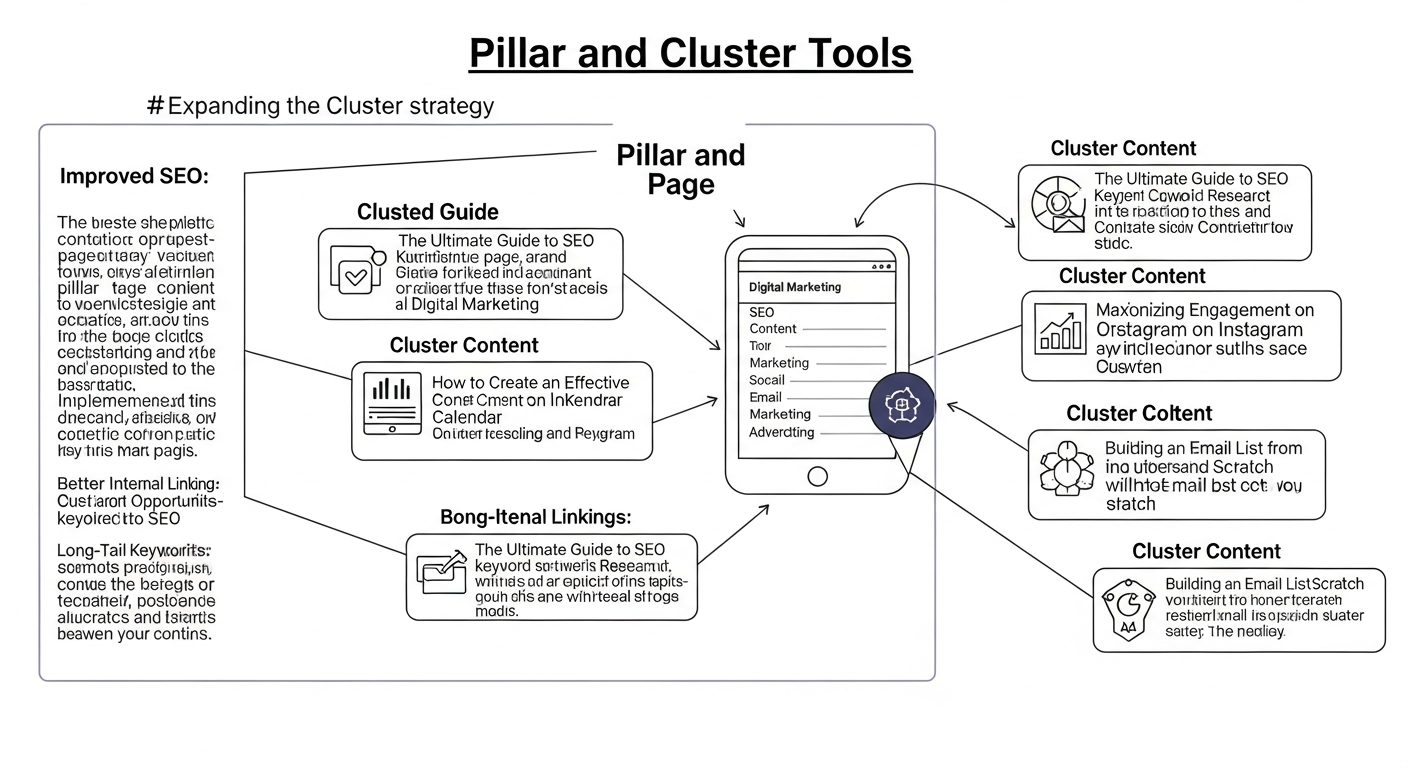
Executing a successful pillar and cluster strategy requires a combination of strategic thinking and the right technology. While you can start with basic tools, investing in a dedicated SEO and content marketing stack will streamline your workflow, provide deeper insights, and ultimately lead to better results. Here is a breakdown of essential tool categories.
These all-in-one SEO platforms are the command center for your strategy. They are indispensable for the initial research and ongoing measurement phases.
These tools are specifically designed to help you understand the questions your audience is asking, making them perfect for brainstorming cluster content ideas.
A pillar-cluster model involves creating and interlinking dozens of pieces of content, making organization key. Project management tools help you manage the entire content lifecycle, from ideation to publication and promotion.
| Tool Category | Examples | Primary Use Case |
|---|---|---|
| Project Management | Asana, Trello, Monday.com | Managing the entire content workflow, from creating detailed briefs and assigning tasks to tracking progress and meeting deadlines for each article. |
| Content Calendar | CoSchedule, Airtable, Google Calendar | Planning and visualizing your publication schedule to ensure a steady flow of new cluster content and timely updates to existing pages. |

Implementing a pillar and cluster strategy is a significant undertaking, so it’s crucial to track its performance to justify the investment and refine your approach. Success is measured not by a single metric but by a collection of KPIs that together paint a picture of growing topical authority and business impact.
Focus on a balanced set of metrics that measure visibility, engagement, and conversions. Here are the most important KPIs for your content hub:
These two free tools from Google are your primary sources of performance data.
The ideal outcome of a pillar-cluster strategy is a clear pattern in your keyword rankings. Your pillar page should begin to climb the ranks for its competitive, high-volume target keyword. At the same time, your individual cluster pages should start ranking for hundreds, or even thousands, of different long-tail keyword variations. This two-pronged success—the pillar capturing the broad term and the clusters capturing specific queries—is the ultimate sign that you have successfully established topical authority.

The pillar-cluster model is powerful, but it’s not foolproof. Several common pitfalls can undermine your efforts and prevent you from achieving the desired SEO results. Being aware of these mistakes from the outset can help you build a more effective and resilient content strategy.

The terms are often used interchangeably, but there’s a subtle difference in strategic intent. A “cornerstone article” is typically defined as one of the most important articles on your site. A “pillar page” specifically refers to the hub of a topic cluster. While a pillar page is always a cornerstone article, not all cornerstone articles are structured as pillar pages with dedicated cluster content supporting them. The pillar-cluster model is the formal strategy that gives a cornerstone piece its power.
There is no magic number, but a good starting point is to aim for 15-25 cluster topics for each pillar. This is a substantial enough number to signal comprehensive coverage to search engines. The key is to cover the topic thoroughly. If a topic requires 30 clusters to be complete, create 30. If it only requires 12, start with 12. You can always add more cluster content over time.
Absolutely. This is a fantastic strategy. Identify a blog post that already ranks well for a broad topic and has significant traffic. Your next step is to expand and reformat it to meet the criteria of a pillar page—make it more comprehensive, add a table of contents, and ensure it covers all key subtopics. Then, create new cluster content for those subtopics and link them all back to your newly minted pillar page. This leverages an existing asset to kickstart your content hub.
Pillar pages are long-form content by nature. While there’s no strict rule, they often range from 3,000 to 10,000 words or more. The length should be determined by the topic’s breadth and complexity, not an arbitrary word count. The goal is to be the most comprehensive resource available. Analyze the top-ranking pages for your target topic to get a baseline for how much depth is required to compete.
For your main pillar page, it’s good practice to perform a major review and update at least once a year. For cluster content, the frequency depends on the topic. A post about rapidly changing technology might need quarterly updates, while a post on a more stable topic might only need a check-in every 18-24 months. Schedule regular content audits to stay on top of this.
You don’t *need* special software, but it makes the process exponentially easier and more effective. You could theoretically do keyword research with free tools and manage your content in a spreadsheet. However, paid SEO tools like Ahrefs or Semrush provide invaluable data for topic validation, competitor analysis, and rank tracking that is very difficult to replicate manually. At a minimum, using Google Analytics and Search Console is essential for measurement.