





In a digital world saturated with generic messages, the brands that win are those that make their customers feel seen, understood, and valued. The era of one-size-fits-all content is over. Today, consumers expect experiences tailored to their specific needs, preferences, and context. This is where a robust content personalization strategy becomes a business necessity, not just a competitive advantage. It is the engine that powers meaningful interactions, drives customer loyalty, and ultimately, accelerates growth.
Executing a personalization strategy might seem like a monumental task reserved for tech giants with vast resources. However, with the right framework, data, and technology, any business can deliver tailored experiences at scale. This comprehensive guide will walk you through everything you need to know, from the foundational pillars of personalization to building a step-by-step roadmap, choosing the right tools, and measuring your return on investment. Prepare to transform your customer interactions from generic broadcasts into valuable one-to-one conversations.

Content personalization is the practice of using visitor and customer data to deliver relevant, individualized content and experiences across various touchpoints. Instead of showing every visitor the same static homepage, blog post, or email, personalization dynamically adjusts the message, offer, or visuals based on what is known about that individual. This can be based on their demographics, past behavior, location, or explicitly stated preferences.
The core principle is simple: relevance drives results. When content speaks directly to a user’s situation, challenges, or interests, it cuts through the digital noise. This creates a superior customer experience (CX) by making users feel that the brand truly understands their needs. Consider the difference between receiving a generic email blast about a new product line versus an email highlighting a specific product that complements one you recently purchased. The latter is far more likely to capture your attention and inspire action.
In today’s market, personalization is no longer a novelty; it’s an expectation. A study by McKinsey found that 71% of consumers expect companies to deliver personalized interactions, and 76% get frustrated when this doesn’t happen. Failing to personalize means risking customer churn, lower engagement, and missed revenue opportunities. A well-executed strategy moves your marketing from a monologue to a dialogue, building stronger, more profitable, and lasting customer relationships.

While implementing a content personalization strategy requires a significant investment of time and resources, the returns are substantial and can impact the entire business. By moving from broad segmentation to individualized experiences, companies can unlock powerful benefits that directly affect their bottom line, customer relationships, and long-term growth.
Personalized content is inherently more engaging because it is more relevant. When users see articles, products, or calls-to-action that align with their interests, they are more likely to stay on a site longer, explore more pages, and interact with the content. This increased engagement fosters a stronger connection between the customer and the brand. By consistently delivering value through tailored experiences, you demonstrate an understanding of your customers’ needs, which builds trust and cultivates loyalty. Loyal customers are not just repeat buyers; they become brand advocates, amplifying your marketing efforts through word-of-mouth.
One of the most direct benefits of personalization is its positive impact on conversion rate optimization (CRO). When you present a user with the right offer at the right time, you remove friction from the buying process. For example, an e-commerce site can use behavioral targeting to show product recommendations based on a user’s browsing history, significantly increasing the likelihood of a purchase. Similarly, a B2B company can display a case study relevant to a visitor’s industry, making its solution feel more tangible and compelling. This targeted approach leads to higher conversion rates across all key actions, from newsletter sign-ups to purchases, directly boosting revenue.
Customer Lifetime Value (CLV) is a critical metric that measures the total revenue a business can expect from a single customer account. Personalization is a powerful lever for increasing CLV. By creating tailored onboarding experiences, providing relevant post-purchase support, and offering personalized upsell and cross-sell opportunities, you enhance the entire customer lifecycle. This not only encourages repeat purchases but also reduces churn. A customer who feels understood and consistently receives value is far less likely to switch to a competitor, ensuring a longer and more profitable relationship with your brand.
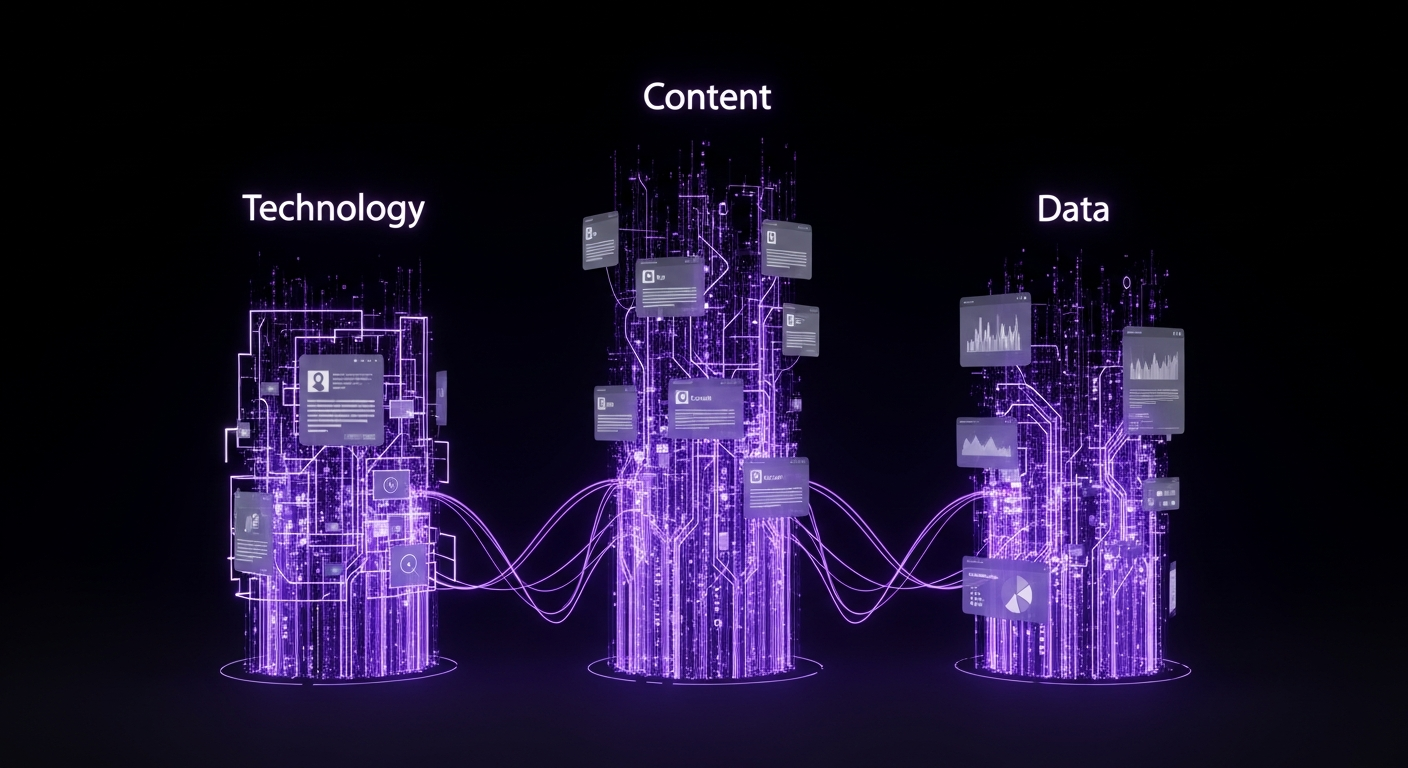
A successful personalization strategy is not built on guesswork or a single technology. It rests on three interconnected pillars that work in concert to power tailored experiences at scale. Without a strong foundation in each of these areas, any attempt at personalization will struggle to be effective, scalable, and sustainable.
Data is the bedrock of personalization. Without accurate, accessible, and comprehensive data, you cannot understand your audience, and without that understanding, you cannot personalize effectively. This involves collecting information from multiple sources, including demographic details, behavioral patterns (like pages visited and purchase history), contextual clues (like device and location), and zero-party data directly provided by the user. The goal is to build a unified, 360-degree view of each customer, which provides the intelligence that informs every personalization decision.
While data provides the intelligence, technology provides the means to act on it. Manually personalizing experiences for thousands, let alone millions, of users is impossible. A modern personalization tech stack is required to collect, unify, and activate data in real-time. Key components include Customer Data Platforms (CDPs) to create unified customer profiles, AI-powered personalization engines to make predictive recommendations, and advanced Content Management Systems (CMS) that support dynamic content delivery. These tools handle the heavy lifting, allowing you to execute complex strategies at scale.
Even with the best data and technology, personalization is impossible if your content is static and monolithic. The final pillar is a content strategy built around dynamic and modular assets. This means breaking down content into smaller, reusable components—headlines, images, calls-to-action, product descriptions—that can be programmatically assembled in different combinations to create a personalized experience for each user. This approach, often supported by a headless CMS, provides the flexibility needed to tailor messages across different channels and for different audience segments without having to create thousands of unique content variations manually.
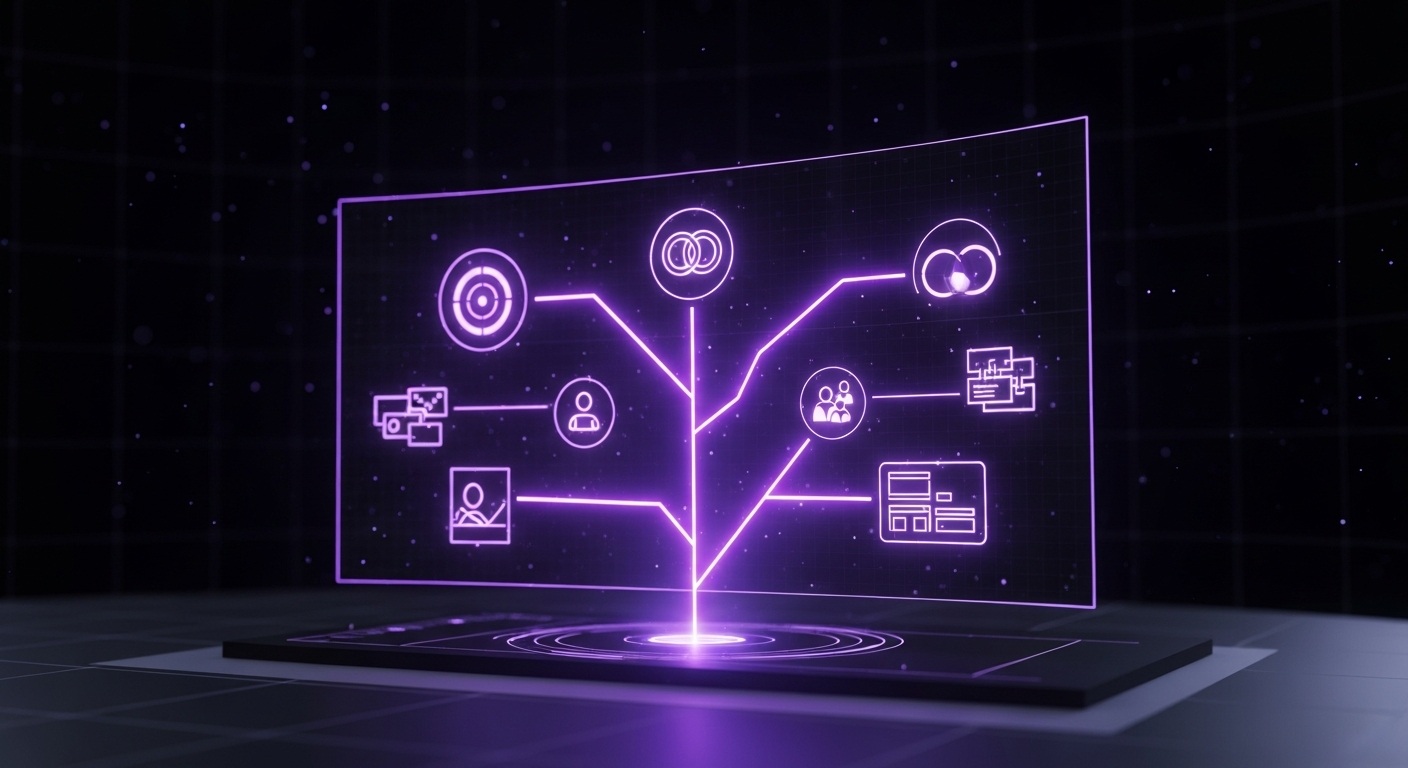
A successful content personalization strategy requires a structured, methodical approach. A clear roadmap ensures that your efforts are aligned with business objectives, targeted at the right audiences, and measurable. Follow these steps to build a plan that delivers tangible results.
Before you personalize anything, you must define what you want to achieve. Vague goals like “improve engagement” are insufficient. Your objectives should be specific, measurable, achievable, relevant, and time-bound (SMART). For example, a goal could be to “increase the conversion rate on our pricing page by 15% for enterprise visitors within the next quarter.” Once goals are set, identify the Key Performance Indicators (KPIs) that will measure your progress. These could include conversion rate, average order value, content downloads, or customer retention rate. This initial step provides clarity and a benchmark for success.
You cannot personalize for an anonymous crowd. The next step is to perform deep audience segmentation. Go beyond basic demographics and group your audience based on shared characteristics, such as behavior, interests, or lifecycle stage. Common segments include new vs. returning visitors, high-value customers, or users who have shown interest in a specific product category. For each key segment, develop detailed personas—semi-fictional representations of your ideal customer. These personas should include pain points, motivations, and goals to help you empathize with your audience and create content that truly resonates.
Personalization is most effective when it aligns with where the customer is in their relationship with your brand. Use customer journey mapping to outline the typical path a customer takes, from initial awareness to purchase and advocacy. The primary stages are typically:
Mapping content ensures you deliver the right message at the right time, guiding the user smoothly to the next step.
With your goals, segments, and journey map in place, you can now select the specific personalization tactics you will employ. It’s wise to start small with a few high-impact tactics rather than trying to do everything at once. You might begin with a simple rule-based approach, such as showing a different homepage hero image to visitors from different industries. Other common tactics include personalized email campaigns based on past purchases, dynamic calls-to-action (CTAs) for different audience segments, or product recommendations based on browsing behavior. Choose tactics that directly support the goals you defined in Step 1.

The quality and depth of your personalization efforts are directly tied to the data you collect. An effective strategy leverages multiple data types to build a rich, multi-dimensional understanding of each user. Combining these sources allows you to move from basic segmentation to truly individualized experiences.
This is foundational data that describes who your users are. For B2C, demographic data includes attributes like age, gender, location, and language. For B2B, firmographic data provides context about a user’s organization, such as industry, company size, and revenue. This data is excellent for broad-level segmentation. For example, a clothing retailer can use demographic data to show different styles to different age groups, while a B2B software company can use firmographic data to highlight features relevant to a specific industry.
Behavioral data describes what your users do. It is one of the most powerful inputs for personalization because past actions are a strong predictor of future intent. This includes tracking website activity (pages viewed, time on site, clicks), engagement with past campaigns (email opens, ad clicks), and purchase history (products bought, frequency, average order value). This data powers tactics like behavioral targeting, enabling you to retarget users with ads for products they viewed or send a follow-up email about an abandoned shopping cart.
Contextual data provides real-time information about the user’s current situation. This includes their device type (mobile vs. desktop), geographic location, local weather, and the time of day. This data allows for in-the-moment personalization. For instance, a restaurant chain can show the nearest location to a mobile user, a retailer can promote raincoats to visitors in a city where it is raining, or a news site can feature different headlines in the morning versus the evening. Contextual personalization makes the experience feel incredibly timely and relevant.
Zero-party data is information that a customer intentionally and proactively shares with a brand. This is often considered the gold standard of personalization data because it is explicit and comes with inherent consent. It can be collected through preference centers (“What topics are you interested in?”), quizzes, surveys, and interactive tools. For example, a beauty brand could use a quiz to ask about skin type and concerns, then use that information to recommend the perfect products. Using zero-party data builds trust and allows for a level of hyper-personalization that other data types cannot achieve alone.
| Data Type | Description | Example Use Case | Pros | Cons |
|---|---|---|---|---|
| Demographic/Firmographic | Static attributes about the user or their company (age, industry, location). | Showing industry-specific case studies on a B2B website. | Good for broad segmentation; widely available. | Can be generic; doesn’t reflect intent. |
| Behavioral | Actions taken by the user (pages viewed, items purchased, clicks). | Recommending products similar to ones a user recently browsed. | Strong indicator of intent; enables real-time reactions. | Requires robust tracking; can be complex to analyze. |
| Contextual | Real-time information about the user’s environment (device, time, weather). | Displaying a store locator map to a mobile user. | Highly relevant in the moment; enhances user experience. | Limited scope; provides a snapshot, not the full picture. |
| Zero-Party | Information explicitly and voluntarily shared by the user (preferences, quiz answers). | Creating a personalized skincare routine based on a customer’s quiz results. | Highly accurate and transparent; builds trust. | Requires active user participation; can be limited in volume. |

Understanding the theory is important, but seeing personalization in practice makes its power clear. There are numerous ways to implement a personalization strategy, from subtle adjustments to fully dynamic experiences. Here are some of the most common and effective methods used by leading brands today.
This is one of the most visible forms of personalization. Dynamic content involves changing elements of a webpage based on visitor data. A first-time visitor might see a homepage hero banner with a “Learn More” call-to-action (CTA), while a returning lead might see a banner with a “Request a Demo” CTA. Similarly, a B2B website can dynamically swap out customer logos and testimonials to feature companies from the visitor’s own industry, making the social proof far more powerful and relatable.
Effective email personalization goes far beyond inserting a recipient’s first name. Modern email personalization, often powered by marketing automation, uses behavioral data to trigger highly relevant messages. Examples include:
Recommendation engines, driven by machine learning, are a cornerstone of personalization for e-commerce and media companies. Amazon’s “Customers who bought this also bought” feature is a classic example. These systems analyze a user’s browsing history, purchase data, and the behavior of similar users to predict what they might be interested in next. This same logic applies to content. A news website or streaming service can recommend articles or shows based on a user’s viewing history, keeping them engaged on the platform for longer.
Tailoring on-site search results is an often-overlooked but powerful personalization tactic. When a user searches for a term on your website, the results can be prioritized based on their known data. For example, if a customer has previously purchased a specific brand of running shoes, a search for “shoes” could rank that brand higher in the results. This reduces the time it takes for users to find what they’re looking for, creating a smoother and more efficient customer experience.

A sophisticated personalization strategy requires a powerful and integrated technology stack. These tools work together to collect customer data, derive insights, and deliver tailored experiences across multiple channels in real-time, as manually managing these processes is not feasible at scale.
A Customer Data Platform (CDP) is the heart of a modern personalization stack. Its primary function is to collect data from all your sources—website, mobile app, CRM, support desk—and unify it into a single, persistent, and comprehensive profile for each customer. By breaking down data silos, a CDP creates the “single source of truth” needed to understand your customers holistically. This unified profile can then be activated in other tools, ensuring that personalization is consistent across all touchpoints.
While a CDP organizes the data, Artificial Intelligence (AI) and Machine Learning engines make sense of it. These platforms analyze vast datasets to identify patterns, predict future behavior, and determine the next best action or offer for each individual user. They power complex functionalities like product recommendations, predictive audience segmentation, and content affinity modeling. AI takes personalization beyond simple rules-based logic (“if user is in X industry, show Y content”) to a more nuanced, predictive approach that adapts in real-time.
Your ability to personalize is limited by your content’s flexibility. Traditional, monolithic CMS platforms can make it difficult to deliver dynamic content. In contrast, modern solutions like headless or composable CMS architectures are built for this purpose. A headless CMS decouples the content repository (the “body”) from the presentation layer (the “head”), allowing you to store content in a modular way and deliver it via API to any channel—website, mobile app, smart device, etc. This makes it much easier to mix and match content components to create personalized experiences on the fly.
Marketing automation platforms are the execution layer for many personalization tactics, particularly in channels like email and SMS. They use triggers and workflows to deliver automated, personalized messages based on user behavior or attributes. For example, you can set up a workflow in your automation tool that sends a series of personalized onboarding emails to new customers or triggers a follow-up message when a user downloads a specific whitepaper. They are essential for nurturing leads and customers with timely, relevant communication.

Personalization is not just about creating a delightful customer experience; it is about driving business growth. To justify continued investment and optimize your efforts, it is essential to measure the impact of your strategy. A clear measurement framework helps you understand what’s working, what’s not, and what the overall return on investment (ROI) is.
Your measurement should tie back directly to the goals and KPIs you established in your roadmap. While specific metrics will vary by business, some of the most common and important KPIs to track for personalization include:
Controlled testing is the most reliable way to prove the effectiveness of personalization. A/B testing involves showing two versions of a page or element to different segments of your audience—a control group (A) that sees the generic experience and a variant group (B) that sees the personalized version. By measuring which version performs better against your target KPI, you can scientifically validate the impact of your change. Multivariate testing is a more advanced form of this, allowing you to test multiple combinations of changes simultaneously to see which combination is most effective.
Attribution is the science of assigning credit to the various touchpoints that influence a conversion. It can be challenging to isolate the impact of a single personalized element within a complex customer journey. However, you can use attribution models to get a clearer picture. Set up specific conversion goals in your analytics platform for personalized campaigns. By creating control groups that are excluded from personalization, you can establish a baseline and measure the “lift” or incremental revenue generated by your personalization efforts over time. This data is crucial for calculating a clear ROI.

While the benefits of personalization are immense, the path to implementation has its challenges. Many organizations encounter common hurdles related to data, privacy, and internal processes. Being aware of these pitfalls is the first step to successfully navigating them.
Personalization runs on data, which makes data privacy and regulatory compliance paramount. Regulations like GDPR in Europe and CCPA in California impose strict rules on how customer data can be collected, stored, and used. Failure to comply can result in significant fines and a loss of customer trust. To avoid this, be transparent about the data you collect and why you collect it. Always obtain explicit consent before tracking users, and provide easy-to-use mechanisms for them to manage their data and preferences. Prioritize ethical data handling as a core tenet of your strategy.
There is a fine line between helpful and intrusive. Personalization is helpful when it saves a user time or surfaces something genuinely useful. It becomes intrusive when it reveals too much knowledge or uses sensitive information inappropriately. For example, referencing a highly specific or private piece of information in a marketing message can be off-putting. The key is to use data to improve the user’s experience subtly, without making them feel like they are under surveillance. Focus on relevance and value rather than demonstrating how much data you have.
One of the biggest technical and organizational barriers to effective personalization is data silos. This occurs when customer data is fragmented across different departments and systems that do not communicate with each other. The marketing team has its data, the sales team has its CRM data, and the customer support team has its ticket data. Without a unified view, you cannot deliver a consistent, personalized experience. The solution is to invest in technology like a Customer Data Platform (CDP) to centralize customer data and foster a culture of cross-departmental collaboration around a shared understanding of the customer.

The field of content personalization is constantly evolving, driven by advancements in technology and rising customer expectations. What seems cutting-edge today often becomes standard practice tomorrow. The future of personalization lies in creating more precise, predictive, and seamless experiences that feel less like marketing and more like a helpful, personal concierge service.
The next frontier is hyper-personalization, which moves beyond segment-based targeting to true one-to-one individualization in real-time. This is made possible by Artificial Intelligence (AI) and machine learning, which can analyze billions of data points to understand a user’s intent and context at a granular level. Instead of just personalizing a product recommendation, hyper-personalization can tailor the entire digital experience for a single user at a specific moment, from the page layout and tone of the copy to the sequence of information presented.
Looking even further ahead, the focus will shift from reactive to predictive personalization. AI will not only respond to a user’s current behavior but will also anticipate their future needs. By analyzing long-term patterns and contextual signals, systems will be able to proactively offer solutions, content, or support before the customer even realizes they need it. This evolution promises to create deeply integrated, valuable customer relationships built on a foundation of proactive understanding and unparalleled relevance.

A classic example is Amazon’s homepage. For a user who has been browsing for gardening tools, the homepage might feature deals on soil, seeds, and gloves. For another user who recently bought a new camera, the homepage might display recommendations for lenses, tripods, and memory cards. The core layout is the same, but the content modules are dynamically populated based on each user’s individual browsing and purchase history.
Ethical data collection is built on transparency, consent, and value exchange. First, be transparent in your privacy policy about what data you collect and how you use it. Second, obtain explicit consent (opt-in) before using cookies or tracking user behavior, as required by laws like GDPR. Finally, provide a clear value exchange: customers are more willing to share data if they receive tangible benefits in return, such as more relevant recommendations, exclusive offers, or a smoother user experience.
Although the terms are often used interchangeably, they describe different concepts. Customization is when users manually change their experience to suit their preferences (e.g., setting a preferred language or choosing widgets for a dashboard). The user is in control. Personalization is when the system automatically tailors the experience to the user based on their data and behavior. The system does the work for the user. A good strategy often uses a mix of both.
Small businesses can start with simple, high-impact tactics. Begin by using the data you already have in your email marketing platform to segment your audience based on purchase history and send targeted campaigns. On your website, you can use tools like Google Optimize to run simple A/B tests and personalize CTAs for different audiences, such as new vs. returning visitors. Start small, measure the results, and gradually scale your efforts as you see what works.
The most important metrics are those tied to your business goals. Key metrics to track include conversion rate (for specific goals like purchases or sign-ups), average order value (AOV), revenue per visitor (RPV), and engagement metrics like bounce rate and time on site. For a long-term view, tracking changes in Customer Lifetime Value (CLV) and customer retention rates for personalized vs. non-personalized cohorts is crucial.
AI and machine learning are essential for personalization at scale. They automate the analysis of massive user data sets to identify complex patterns and predict user intent—a task that is impossible to perform manually. AI can determine the optimal content or product to show each individual from millions of possibilities in real-time. This allows businesses to move from broad, rule-based segmentation to true, dynamic one-to-one personalization for every single customer.