






For decades, marketing operated on a broadcast model: create one message and send it to the masses. The advent of digital marketing brought the first wave of personalization, a revolutionary concept at the time. We could suddenly address customers by their first name in an email or show them an ad based on a broad demographic. While a step forward, this approach was akin to a town crier learning your name before shouting the same news to everyone. It quickly became table stakes and lost its impact in a world saturated with digital noise.
Today’s customers do not just appreciate personalization; they expect it. Inundated with choices, they have developed sophisticated filters for irrelevant content. The Hi [First Name] email no longer suffices. Customers subconsciously compare every digital interaction to the seamless, predictive experiences offered by giants like Amazon, Netflix, and Spotify. They expect brands to understand their needs, anticipate their wants, and communicate with them as unique individuals, not as members of a broad segment. This expectation has created a significant challenge for marketers still relying on manual, rule-based segmentation.
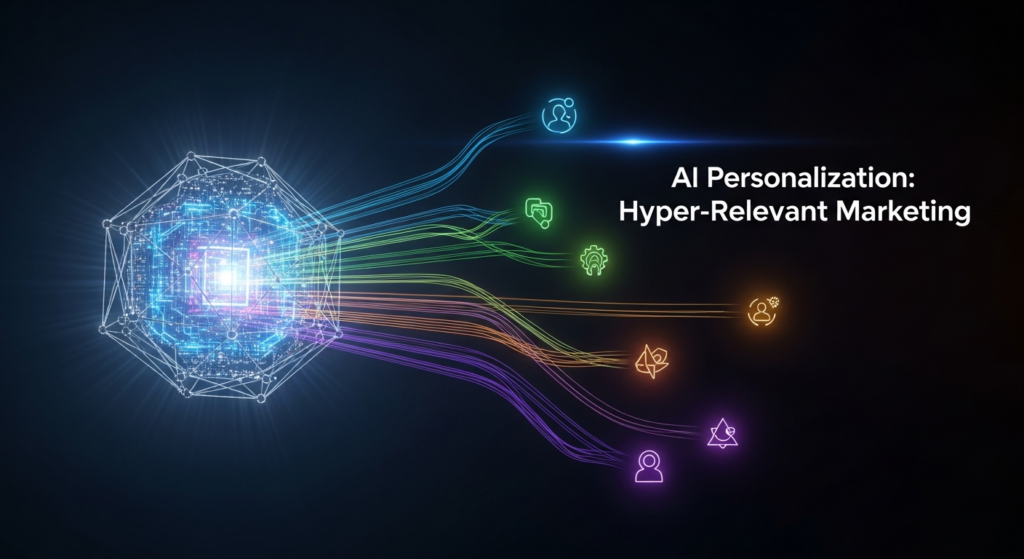
This is where Artificial Intelligence (AI) enters the picture, not as an incremental improvement but as a catalyst for a paradigm shift. AI allows marketers to move beyond basic personalization into the realm of hyper-personalization. It is the difference between a store clerk who knows your name and a personal shopper who knows your style, budget, and what you are looking for before you articulate it. This guide explores the strategy, technology, and practical steps required to leverage AI, transforming your marketing from a monologue into a deeply personal and valuable dialogue with every customer.

AI-powered personalization is the use of artificial intelligence (AI) and machine learning to analyze data and deliver individualized content, product recommendations, and experiences to each user in real-time. Unlike traditional methods that rely on predefined rules and static segments, AI systems learn and adapt continuously from user behavior. They analyze vast datasets to identify patterns and predict future intent, enabling a level of relevance and timeliness impossible to achieve at scale with manual efforts. This technology allows brands to create a unique journey for every customer, dynamically adjusting messaging, offers, and even website layouts based on an individual’s context and needs at any given moment.
The core difference between traditional marketing segmentation and AI-powered personalization lies in the approach to understanding the customer. Traditional segmentation groups customers into broad, static buckets based on a few shared characteristics, such as demographics (age, location) or past purchase history (e.g., “high-value customers”). All individuals within a segment receive the same message. In contrast, AI-powered personalization, or hyper-personalization, treats each customer as a “segment of one.” It uses dynamic, multi-dimensional data to understand individual behaviors, preferences, and intent to create a truly unique experience.
| Aspect | Traditional Segmentation | AI-Powered Personalization |
|---|---|---|
| Methodology | Rule-based and manual. Marketers create fixed segments. | Algorithmic and automated. Machine learning models identify patterns. |
| Data Scope | Limited to a few variables (e.g., demographics, purchase history). | Utilizes vast, real-time data streams (e.g., clicks, dwell time, context). |
| Scale | Manages a handful of large segments. | Scales to millions of individual customer profiles. |
| Timing | Static. Segments are updated periodically (e.g., quarterly). | Dynamic. Experiences are adjusted in real-time based on current behavior. |
| Customer View | Groups people together based on past similarities. | Treats each person as an individual with predictive future needs. |
Perhaps the most powerful capability of AI in marketing is its ability to infer customer intent. While a demographic profile tells you who a customer *is*, their real-time behavior reveals what they *want to do right now*. AI algorithms act as digital detectives, analyzing thousands of signals to piece together the customer’s current mission. These signals can include:
By processing this information collectively, an AI engine can predict whether a user is casually browsing, actively researching a purchase, or at risk of abandoning their cart. This deep understanding of intent allows brands to intervene with the most relevant message or offer at the perfect moment, dramatically increasing the likelihood of conversion and improving the overall customer experience.

In the current digital landscape, hyper-personalization is no longer a “nice-to-have” feature; it has become a fundamental driver of business growth and sustainability. Companies that fail to deliver relevant, individualized experiences risk becoming invisible to consumers who have come to expect more. The shift toward a personalized approach is driven by powerful forces in consumer behavior and competitive dynamics, making it a critical strategic focus for any forward-thinking organization.
The modern consumer is empowered, informed, and has limitless choices. Their expectations are shaped by their best digital experiences, which are almost universally powered by sophisticated personalization. When Netflix recommends a movie you love, or Spotify curates a playlist that feels made just for you, it raises the bar for every other brand. Customers now expect this level of understanding across the board. Research consistently shows that a majority of consumers are more likely to shop with brands that provide relevant offers and recommendations. Conversely, they are quick to disengage from brands that bombard them with generic messaging. Failing to personalize is no longer a missed opportunity; it is a direct path to customer churn.
In a crowded marketplace, competing on product or price alone is often a losing battle. Hyper-personalization offers a more durable form of competitive differentiation. An effective personalization strategy is built upon a foundation of proprietary first-party data and refined machine learning models, creating a powerful competitive moat that is difficult for rivals to replicate. It also initiates a virtuous cycle, often called the “personalization flywheel.” Better personalization leads to higher customer engagement. Higher engagement generates more data. More data allows AI models to become smarter and deliver even better personalization. This self-reinforcing loop allows market leaders to continuously widen the gap with their competitors, creating a long-term, sustainable advantage.
Personalization is the engine of modern customer loyalty. When a brand consistently demonstrates that it understands a customer’s needs and preferences, it transforms the relationship from transactional to relational. This feeling of being understood fosters the trust and emotional connection that are the cornerstones of loyalty. Loyal customers are more likely to make repeat purchases, tend to spend more over time, and are less sensitive to price changes. By delivering relevant experiences that add value at every touchpoint, AI-powered personalization directly increases Customer Lifetime Value (CLV). It reduces churn by proactively addressing customer needs and increases revenue by identifying relevant upsell and cross-sell opportunities, maximizing the value of each customer relationship.

Hyper-personalization is not a single technology but an ecosystem of interconnected AI capabilities working in concert. Understanding these core components helps demystify how AI translates raw data into meaningful customer experiences. Each technology plays a distinct role, from predicting future behavior to generating unique content on the fly.
Machine Learning (ML) is the heart of any AI personalization engine. It involves algorithms that learn from historical data to identify patterns and make predictions about future outcomes without being explicitly programmed. In marketing, ML models are trained on vast datasets of customer behavior to forecast actions like purchase likelihood, churn risk, and potential lifetime value. Predictive analytics uses these models to score customers in real-time, enabling marketers to present a special offer to a customer at high risk of cart abandonment or recommend a product a user is statistically likely to buy next. This moves marketing from a reactive to a predictive discipline.
Natural Language Processing (NLP) is the branch of AI that gives computers the ability to understand, interpret, and generate human language. In personalization, NLP is crucial for enhancing communication. It powers intelligent chatbots that can understand customer queries in context and provide helpful answers 24/7. It can perform sentiment analysis on customer reviews, social media comments, and support tickets to gauge brand perception. Furthermore, NLP can be used to personalize marketing copy at scale, from generating compelling email subject lines tailored to an individual’s interests to dynamically adjusting the tone of website content to match a user’s profile.
Computer Vision enables AI to interpret and understand information from images and videos. This technology is revolutionizing personalization in visually driven industries like fashion, home decor, and travel. E-commerce platforms use computer vision to power “visual search” features, allowing users to upload a photo to find similar products. It can also analyze the visual attributes (e.g., color, pattern, style) of products a customer has browsed to recommend other items that match their aesthetic preferences. This goes beyond simple category-based recommendations to a much more nuanced understanding of a customer’s personal style.
Generative AI is one of the most exciting frontiers in personalization. Unlike other AI forms that analyze or classify existing data, Generative AI creates new, original content. This technology can produce unique text, images, and even video tailored to a single user. For marketers, the possibilities are transformative. Imagine automatically generating thousands of variations of ad copy, each personalized to a specific micro-segment, or creating unique product descriptions that highlight the features most relevant to the individual shopper viewing the page. Generative AI can even create dynamic images, such as showing furniture in a room that matches the user’s home style, creating a level of dynamic content that was previously unimaginable.

Artificial intelligence, for all its power, is entirely dependent on the quality and quantity of the data it is fed. An advanced AI model with poor data will produce poor results. Therefore, a successful personalization strategy begins not with algorithms but with a robust and ethical approach to data collection and management. The data you collect is the fuel that powers your entire personalization engine.
In an era of increasing privacy regulations and the deprecation of third-party cookies, first-party and zero-party data have become the gold standard for marketers.
Focusing on these data types not only ensures higher quality inputs for your AI models but also builds trust with customers, as you are using information they have willingly provided to improve their experience.
One of the biggest obstacles to effective personalization is the problem of data silos. Customer data is often fragmented across different systems that do not communicate with each other—your CRM, e-commerce platform, email service provider, analytics tools, and more. A Customer Data Platform (CDP) is technology designed to solve this problem. A CDP ingests data from all these disparate sources, cleans and de-duplicates it, and stitches it together to create a single, unified, and persistent profile for each customer. This 360-degree view is then made available to your AI tools and other marketing platforms, ensuring that every personalization effort is based on a complete and up-to-date understanding of the customer.
With great data power comes great responsibility. As you collect more granular customer data, navigating privacy regulations like GDPR and CCPA becomes paramount. However, compliance should be seen as the bare minimum. The true goal is to build a relationship of trust with your customers. This requires a commitment to ethical data handling, which includes:
The line between helpful personalization and intrusive surveillance is a fine one. The key is to always use data in a way that provides clear value to the customer, making their interactions with your brand easier, more relevant, and more enjoyable.

Implementing AI-driven personalization is a strategic journey, not a one-time project. It requires careful planning, a clear understanding of your goals, and a commitment to continuous improvement. A structured, step-by-step approach ensures that your efforts are aligned with business objectives and that you can demonstrate value along the way. Rushing into implementation without a solid framework can lead to wasted resources and lackluster results.
Before writing a single line of code or evaluating any platform, you must define what success looks like. What business outcome are you trying to achieve with personalization? Your goals should be specific, measurable, achievable, relevant, and time-bound (SMART). Instead of a vague goal like “improve customer experience,” aim for something concrete. Examples of strong goals and their corresponding Key Performance Indicators (KPIs) include:
Clear goals will guide your entire strategy, from use case selection to technology investment.
With your goals defined, the next step is a realistic assessment of your current capabilities. This involves a two-part audit. First, evaluate your data infrastructure. What first-party and zero-party data are you collecting? Is it clean, accessible, and unified? Where are the data silos? Identify any gaps in the data you will need to power your desired personalization use cases. Second, audit your technology stack. What marketing automation, analytics, and e-commerce platforms do you currently use? Do they have APIs that allow for data integration? Can they execute real-time personalization? This audit will reveal whether you need to invest in new technologies, like a Customer Data Platform (CDP), to achieve your goals.
Do not try to personalize everything at once. This “boil the ocean” approach is a common cause of failure. Instead, start with a few high-impact, relatively low-effort use cases that align with your primary goals. Brainstorm potential applications across the customer journey and prioritize them based on potential business impact and implementation feasibility. Good starting points often include:
Starting small allows you to secure early wins, learn from the process, and build momentum for more complex initiatives.
AI personalization is not a “set it and forget it” solution. It is an iterative process of continuous improvement. Once you have launched your initial use case, your work has just begun. The key is to adopt a test-and-learn mindset. Use A/B testing and multivariate testing to compare the performance of your personalization algorithms against control groups. Are your recommendations driving more sales? Does the personalized subject line get a higher open rate? Meticulously track your KPIs and use the insights to refine your models and strategies. The data generated from each interaction should be fed back into the system, making the AI smarter and your personalization more effective over time.

The theory behind AI personalization is compelling, but its true power is evident in its real-world applications across various industries. Leading companies are leveraging these technologies to create seamless, intuitive experiences that drive engagement and revenue. These examples illustrate the tangible impact of a well-executed personalization strategy.
Amazon is the quintessential example of AI-powered e-commerce personalization. Its recommendation engine is legendary and reportedly responsible for a significant portion of its revenue. The system analyzes a user’s purchase history, viewed items, cart contents, and what similar users have purchased to generate highly relevant “Customers who bought this item also bought” and “Frequently bought together” suggestions. This not only improves the shopping experience by helping customers discover products but also significantly increases the average order value.
Streaming giants like Netflix and Spotify have built their entire business models around hyper-personalization. Netflix uses a sophisticated AI system to analyze viewing habits, time of day, and even the devices you use to personalize everything from the content rows on your homepage to the specific thumbnail artwork shown for a title, selecting the image most likely to appeal to you. Similarly, Spotify’s “Discover Weekly” and “Release Radar” playlists use machine learning to analyze your listening history and create unique, personalized music selections that help users discover new artists they are highly likely to enjoy, fostering immense user loyalty.
The travel industry uses AI to personalize both pricing and planning. Airlines and hotel booking sites like Booking.com use dynamic pricing algorithms that adjust prices in real-time based on factors like demand, competitor pricing, and a user’s browsing history. Beyond pricing, travel companies are using AI to act as personal travel agents. They can recommend destinations based on a user’s past trips and budget, create personalized itineraries, and send timely offers for local tours or restaurant reservations once a customer has arrived at their destination, enhancing the entire travel experience.
The financial services sector is leveraging AI to democratize personalized financial guidance. Robo-advisors like Wealthfront and Betterment use algorithms to create and manage investment portfolios tailored to an individual’s risk tolerance and financial goals. Digital banks like Chime analyze a user’s spending habits to provide personalized budgeting tips, savings recommendations, and alerts about upcoming bills. This proactive and personalized advice helps customers improve their financial health, building deep trust and long-term relationships with the financial institution.
Once you have a strategy in place, the next critical decision is selecting the technology to power it. The market for AI personalization tools is vast and complex, ranging from comprehensive marketing clouds to specialized point solutions. Making the right choice depends on your specific goals, budget, technical resources, and existing technology stack.
The technology landscape for personalization generally falls into two categories: all-in-one suites and best-of-breed tools. All-in-one suites, offered by large vendors like Adobe, Salesforce, and Oracle, provide a wide range of marketing, analytics, and personalization capabilities within a single integrated platform. Best-of-breed tools are specialized solutions that focus on doing one thing exceptionally well, such as a standalone recommendation engine or a dedicated Customer Data Platform (CDP). Each approach has its trade-offs.
| Factor | All-in-One Suites | Best-of-Breed Tools |
|---|---|---|
| Integration | Pre-integrated components, simplifying data flow within the suite. | Requires more integration effort to connect different specialized tools. |
| Functionality | Broad range of features, but may lack depth in specific areas. | Deep, advanced functionality and cutting-edge features in their niche. |
| Vendor Management | Single vendor relationship, simplifying procurement and support. | Managing multiple vendor contracts, relationships, and support channels. |
| Flexibility | Can be less flexible; you are locked into the vendor’s ecosystem. | Highly flexible and composable; you can swap out tools as needs change. |
| Cost | Often higher upfront cost and long-term contracts. | Can be more cost-effective to start, paying only for needed capabilities. |
Regardless of which approach you choose, there are several key features that any robust AI personalization platform should offer. When evaluating potential solutions, look for the following capabilities:
A final consideration for larger enterprises is the “build vs. buy” decision. Building a proprietary personalization engine from scratch offers complete control and customization but requires a massive, ongoing investment in a dedicated team of data scientists, ML engineers, and infrastructure. For all but the largest tech companies, this is often impractical. Buying a commercial solution offers faster time-to-market, access to proven technology, and lower upfront costs. For most businesses, a hybrid approach—buying a flexible platform and customizing it to fit specific needs—provides the best balance of speed, power, and control.

While the rewards of AI-driven personalization are immense, the path to implementation is not without its challenges. Many organizations encounter significant hurdles related to data, skills, and measurement. Acknowledging these potential obstacles upfront and planning for them is crucial for a successful initiative.
The most common and significant barrier to effective personalization is siloed data. Customer information is often fragmented across numerous systems—the CRM holds sales data, the email platform has engagement metrics, and the e-commerce system contains transaction history. These systems rarely communicate, making it impossible to get a complete view of the customer. AI algorithms need unified, clean data to work effectively. The primary solution is to invest in a Customer Data Platform (CDP) to centralize customer data. However, this is not just a technology problem; it also requires an organizational shift toward cross-departmental collaboration and a shared vision for data management.
Successfully implementing and managing an AI personalization strategy requires specialized talent. You need data scientists to build and refine models, data engineers to manage data pipelines, and marketing technologists who can bridge the gap between the technical and business sides. This talent can be difficult and expensive to hire. To overcome this, organizations can focus on two strategies. First, invest in upskilling your existing marketing team to be more data-literate. Second, prioritize AI platforms that are designed for business users, with intuitive interfaces and “out-of-the-box” models that democratize AI capabilities and reduce the reliance on a large team of dedicated data scientists.
Attributing revenue and other positive outcomes directly to personalization efforts can be complex. If a customer receives a personalized recommendation, sees a retargeting ad, and gets a promotional email before converting, which touchpoint gets the credit? Proving the return on investment (ROI) of your personalization platform and program is essential for securing ongoing budget and executive buy-in. The key is to implement a rigorous measurement framework from day one. Use control groups (a portion of users who receive a generic experience) to establish a baseline. This allows you to measure the incremental lift—the additional conversions, revenue, or engagement—generated by your personalization efforts compared to the control group, providing a clear and defensible measure of ROI.
The current state of AI personalization, focused on predictive recommendations, is already transforming marketing. However, this is just the beginning. The future of personalization will evolve beyond simply predicting what a customer might like, moving into more sophisticated and valuable realms: prescriptive and proactive engagement. This evolution will further blur the lines between marketing, sales, and service, creating a truly unified customer experience.
The next stage is prescriptive personalization. While predictive AI says, “Based on your data, you will likely enjoy this product,” prescriptive AI says, “To achieve your stated goal, here is the sequence of products and content you need.” For example, a fitness app could move from recommending workout videos to prescribing a complete, personalized weekly plan of exercise and nutrition to help a user achieve their goal of losing 10 pounds. This shifts the brand’s role from a passive seller to an active partner in the customer’s success.
The ultimate goal is proactive personalization. This is where a brand anticipates a customer’s needs and solves a problem before the customer is even aware of it or has to ask for help. Imagine an airline whose system detects that your connecting flight is delayed. It proactively rebooks you on the next available flight, sends the new boarding pass to your phone, and issues a digital meal voucher, all without you having to do anything. This level of service, powered by interconnected data and intelligent automation, turns a potential negative experience into a moment of brand delight and builds profound, lasting loyalty.

Embarking on the journey to AI-powered personalization can feel daunting, but it does not have to be. The key is to start small, focus on delivering value, and build momentum over time. You do not need a massive budget or a team of data scientists to begin. By taking a measured, strategic approach, any organization can start harnessing the power of AI to create more relevant and effective marketing experiences.
The shift to hyper-personalization is not a fleeting trend; it is the new foundation for building meaningful, lasting customer relationships. By leveraging data and AI to understand and serve each customer as an individual, you can cut through the digital noise, foster genuine loyalty, and drive sustainable business growth. The future of marketing is personal, and the time to start building that future is now.
Here are your first steps to get started: