






In today’s competitive marketplace, customer expectations are higher than ever. Consumers demand instant, personalized, and effortless interactions with the brands they choose. Meeting these demands at scale requires more than a larger support team—it requires a strategic shift in technology. This is where Artificial Intelligence (AI) comes in, transforming customer service from a reactive cost center into a proactive, data-driven engine for growth and loyalty. AI is not just about automated responses; it’s about understanding, anticipating, and delivering on customer needs with unprecedented precision. By integrating intelligent systems into service and marketing workflows, businesses can create seamless experiences that solve problems and build lasting relationships. This guide explores AI’s profound impact on customer service, detailing its practical applications and how you can leverage it to enhance support, supercharge marketing, and cultivate unwavering customer loyalty.

Artificial Intelligence (AI) in customer service refers to the use of technology to automate, augment, and analyze customer communications. It has rapidly evolved from a futuristic concept to an essential component of the modern Customer Experience (CX) stack. The role of AI is not to replace human agents but to enhance their capabilities, creating a symbiotic relationship where technology handles routine and data-heavy tasks. This frees human agents to focus on complex, high-empathy interactions, allowing businesses to deliver support that is simultaneously efficient, scalable, and deeply personal.
Modern AI’s role extends far beyond simple chatbots. It encompasses a suite of sophisticated technologies, including Natural Language Processing (NLP), Machine Learning (ML), and predictive analytics. These tools work in concert to understand customer intent, learn from past interactions, and anticipate future needs. The result is a customer service ecosystem that is proactive rather than reactive. Instead of merely answering questions, AI can guide customers to solutions, offer relevant product recommendations, and identify potential issues before they escalate. This shift establishes a new standard where customer service is an integrated, intelligent function that drives value across the entire organization.

The strategic implementation of Artificial Intelligence fundamentally alters the dynamics of customer support and retention. By leveraging AI, companies can overcome traditional limitations of scale, time, and cost to deliver a superior experience that directly translates into increased customer loyalty. These benefits represent a paradigm shift in how businesses interact with their customers.
In a globally connected world, the 9-to-5 service desk is obsolete. Customers expect support on their terms, at any time of day or night. AI makes this possible without the prohibitive costs of a 24/7 human staff. AI-powered chatbots and virtual assistants can handle a vast range of queries instantly, from checking an order status to troubleshooting a common issue. This immediacy resolves problems faster, reduces customer frustration, and demonstrates a brand’s commitment to availability. Instant resolution is a powerful driver of satisfaction and a key factor in a customer’s decision to remain loyal.
Customer service has traditionally been a significant operational expense. AI directly addresses this by automating a high volume of repetitive inquiries. By deflecting common questions to automated channels, businesses can significantly reduce the cost per interaction. This automation frees human agents to dedicate their time and expertise to more complex, value-added tasks. Furthermore, AI tools can provide agents with real-time assistance by suggesting answers and displaying relevant customer data, which reduces handle times and increases first-contact resolution rates. This dual impact leads to a more efficient, streamlined, and cost-effective support operation.
A primary challenge for growing businesses is scaling customer support to match demand. Hiring and training new agents is time-consuming and expensive. AI solutions, however, can scale to meet demand with no degradation in performance. An AI-powered virtual assistant can handle ten, a thousand, or tens of thousands of conversations simultaneously. This elasticity is invaluable for managing seasonal peaks, product launches, or unexpected service disruptions. The ability to scale support on demand ensures a consistent, high-quality customer experience, helping retain customers during periods of rapid growth or crisis.

The effectiveness of AI in customer service stems from a convergence of several powerful technologies. These disciplines enable machines to comprehend human language, learn from data, and make intelligent predictions, forming the foundation of any effective AI support strategy.
Natural Language Processing (NLP) is the branch of AI that gives computers the ability to understand, interpret, and generate human language. In customer service, NLP allows a chatbot to understand that “my order hasn’t arrived,” “where is my package?” and “delivery status?” are all asking the same question. Advanced NLP models can decipher intent, recognize entities like order numbers or product names, and even understand slang and typos. This enables more natural, human-like conversations that move beyond rigid, keyword-based scripts to a more flexible and intuitive user experience.
Machine Learning (ML) is the engine of continuous improvement for AI systems. ML algorithms analyze vast amounts of data from past customer interactions—transcripts, tickets, and outcomes—to identify patterns and learn what constitutes a successful resolution. With every conversation, the AI model refines its understanding and improves its accuracy. This means an AI-powered system gets progressively better at answering questions, routing tickets correctly, and understanding customer sentiment. It’s a self-optimizing loop that ensures the AI tool becomes an increasingly valuable asset.
Predictive analytics uses historical data, ML, and statistical algorithms to identify the likelihood of future outcomes. In customer service, this technology is transformative. It can analyze a customer’s behavior—such as repeatedly visiting a help page or having multiple failed login attempts—to predict an imminent problem. This allows a business to intervene proactively, perhaps by triggering a pop-up chat window offering help. Predictive analytics can also identify customers at high risk of churn, enabling the company to take preemptive action to retain them and turn a potential negative experience into a positive, loyalty-building one.

The theoretical power of AI becomes tangible when applied to real-world customer service scenarios. Across every touchpoint, AI is being deployed to create more efficient, personalized, and satisfying experiences that leading companies are using today.
As the most visible application of AI in customer service, intelligent chatbots and virtual assistants have evolved far beyond their simple, rule-based predecessors. Powered by NLP and ML, these assistants engage in sophisticated conversations, understand complex queries, and perform tasks like booking appointments or processing returns. They serve as the first line of support, resolving most common issues instantly and ensuring a seamless, context-rich handover to a human agent when a problem requires a human touch.
Behind the scenes, AI is revolutionizing support ticket management. When a customer sends an email or fills out a support form, AI algorithms can instantly analyze the content to categorize the issue, assign a priority level, and route it to the agent or department best equipped to handle it. This smart routing eliminates manual triage, reduces response times, and ensures that complex problems are immediately directed to specialized experts for faster, more accurate resolutions.
Understanding a customer’s emotional state is critical for providing effective support. Sentiment analysis tools use AI to analyze written text or spoken words to detect emotions like frustration, anger, or satisfaction. A support manager can use this data to monitor overall customer happiness and identify trends. On an individual level, it can flag a particularly frustrated customer, allowing a human agent to prioritize them and approach the conversation with the appropriate empathy and urgency.
Traditional self-service portals often require customers to hunt through dozens of articles. AI enhances this experience by transforming static knowledge bases into dynamic, interactive resources. When a customer types a question, an AI-powered system understands the intent and provides a direct answer or points to the most relevant section of an article. It can also personalize the experience by suggesting articles based on the customer’s purchase history or previous support interactions, making it easier for customers to help themselves.

Customer service is no longer an isolated function; it is a critical source of intelligence that can fuel and refine marketing strategies. AI acts as the bridge between these two departments, transforming raw service interactions into actionable insights that drive personalization, engagement, and revenue.
Every customer conversation is a piece of feedback. AI can analyze thousands of support chats, emails, and call transcripts to identify emerging trends, common product complaints, feature requests, and the language customers use to describe their problems. This voice-of-the-customer data is a goldmine for marketing teams. It allows them to craft more relevant messaging, create targeted content that addresses real pain points, and provide valuable input for product development, ensuring marketing efforts align with customer needs.
Modern consumers expect personalized experiences, and AI makes this possible on a massive scale. By integrating data from CRM and customer service platforms, AI builds a comprehensive 360-degree view of each customer, including their purchase history, past support issues, and preferences. This deep understanding allows marketing automation systems to deliver hyper-personalized content, product recommendations, and offers. For instance, a customer who recently received support for a specific feature could be sent a targeted email with tips on how to get more value from it, strengthening their brand relationship.
AI can identify revenue opportunities that might otherwise be missed. During a support interaction, an AI system can analyze the conversation in real time. If a customer expresses a need that could be met by a higher-tier product or a complementary service, the AI can alert the agent or have the chatbot make a relevant suggestion. This approach turns a support interaction into a consultative selling moment, increasing customer lifetime value in a way that feels helpful rather than pushy.

Achieving customer satisfaction is good, but cultivating loyalty and advocacy is the ultimate goal. AI provides the tools to build deep, lasting relationships by delivering consistently superior experiences that make customers feel understood and valued.
Customers interact with brands across a multitude of channels, and loyalty is built on consistency. AI is the thread that ties these channels into a single, seamless omnichannel experience. An AI-powered system ensures that the context of a customer’s interaction is preserved as they move from one channel to another. A conversation started with a chatbot on a laptop can be seamlessly picked up by a human agent on the phone without the customer having to repeat themselves. This frictionless journey is a hallmark of a truly customer-centric brand.
The most powerful way to build loyalty is to solve a problem the customer did not know they had. Using predictive analytics, AI can monitor for signals of potential trouble, such as a late delivery or unusual usage patterns in a software product. The system can then trigger a proactive outreach—an email, SMS, or in-app notification—to inform the customer of the issue and explain how it is being resolved. This transforms a potential frustration into a moment of delight, proving that the brand is looking out for its customers.
Generic, one-size-fits-all loyalty programs have limited impact. AI enables the creation of truly personalized loyalty initiatives. By analyzing an individual’s purchasing habits, engagement levels, and preferences, AI can tailor rewards and offers that are genuinely meaningful to that customer. Instead of a generic coupon, a loyal customer might receive early access to a product they’ve shown interest in or a special offer on a complementary item. This level of personalization makes customers feel recognized and appreciated, turning them into passionate brand advocates.
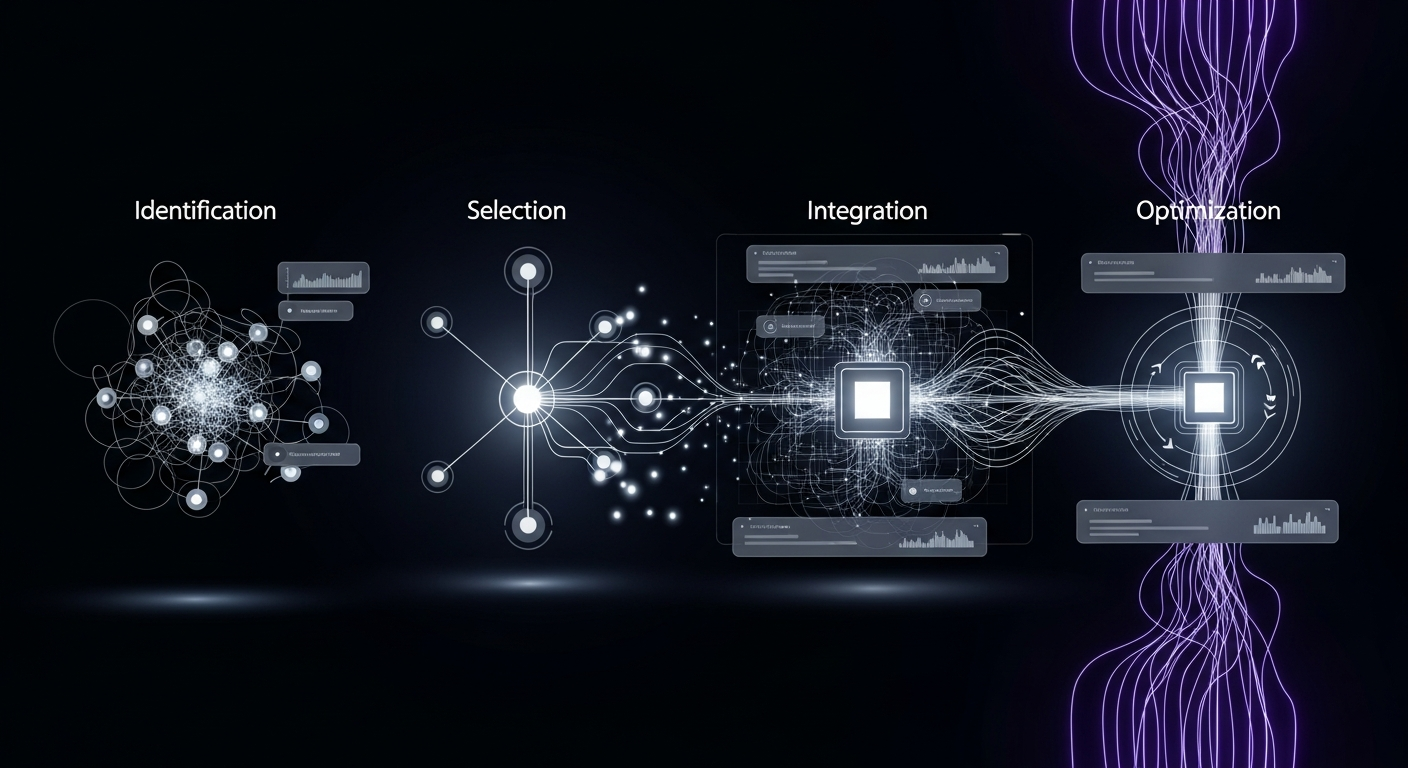
Adopting AI is a strategic journey, not a single purchase. A methodical approach ensures that your implementation aligns with business goals, integrates smoothly with existing systems, and delivers measurable value. Follow these steps to successfully integrate AI into your customer service operations.
Before exploring technology, start with your business problems. Where are the biggest frictions in your customer journey? Are you struggling with long response times, high volumes of repetitive questions, or low satisfaction scores? Clearly define the problems you want to solve. Then, set specific, measurable, achievable, relevant, and time-bound (SMART) goals, such as “reduce first-response time by 40% within six months” or “automate 50% of tier-1 support queries by year-end.” This clarity will guide your entire strategy.
The market for AI customer service tools is vast. Your choice should be dictated by your goals, budget, and technical resources. Consider whether an all-in-one helpdesk with built-in AI is a better fit than a specialized tool that integrates with your existing stack. Evaluate vendors based on their NLP capabilities, ease of integration, scalability, and support.
| Tool Type | Best For | Pros | Cons |
|---|---|---|---|
| All-in-One Helpdesk Platforms (e.g., Zendesk, Intercom) | Businesses looking for a unified solution for ticketing, chat, and AI. | Seamless integration, single vendor, unified reporting. | May have less specialized AI features than dedicated tools. |
| Specialized Chatbot Platforms (e.g., Ada, Drift) | Companies focused on automating conversational support and marketing. | Advanced conversational AI, powerful workflow builders. | Requires integration with other systems like CRM and helpdesk. |
| Custom AI Development | Large enterprises with unique requirements and technical resources. | Completely tailored to specific needs, full control over data. | High cost, long development time, requires in-house expertise. |
AI’s power is magnified when it has access to data. Integrating your chosen AI tool with your Customer Relationship Management (CRM) system is non-negotiable. This connection allows the AI to access customer history and purchase data, enabling it to provide personalized, context-aware support. For example, when a customer starts a chat, the AI can greet them by name and reference their recent order. Integration with your knowledge base is also crucial for providing accurate answers.
An AI model is only as good as the data it’s trained on. You will need to train your AI system using your company’s actual customer service data, such as chat transcripts and help articles. Before going live, conduct rigorous testing with internal teams and a small group of beta customers. Once launched, implementation is not over. Continuously monitor key performance indicators (KPIs) like automation rate, customer satisfaction, and escalation rates. Use these insights and customer feedback to regularly refine and optimize the AI’s responses and workflows.

While the benefits of AI in customer service are compelling, successful implementation is not without challenges. Acknowledging and planning for these potential hurdles is crucial for a smooth transition and for maximizing the return on your investment.
AI systems process vast amounts of sensitive customer data, and protecting this information is paramount. Businesses must ensure their chosen AI solutions comply with data protection regulations like GDPR and CCPA. This involves vetting vendors for their security protocols, understanding how and where data is stored, and implementing clear data governance policies. Transparency with customers about how automated systems use their data is also key to building and maintaining trust.
Implementing a sophisticated AI solution can be a significant investment of both money and time. Costs include software licenses, integration development, and resources for training and maintenance. Integrating AI with legacy systems can also be a major hurdle. To manage this, start with a pilot project focused on a specific, high-impact use case. This approach allows you to demonstrate value, learn from the process, and build a business case for a broader rollout, rather than attempting a massive, high-risk overhaul all at once.
A common fear surrounding AI is that it will lead to cold and frustrating customer experiences. A poorly designed AI system can trap customers in endless loops or fail to understand their needs. The key is to design for a human-centric experience. This means giving the AI a clear, helpful personality, being transparent that the customer is interacting with a bot, and, most importantly, always providing an easy and seamless escape hatch to a human agent. The goal of AI is to resolve issues efficiently, not to create a barrier to help.
[[INNER_IMAGE]]
The narrative of AI replacing jobs overlooks a more powerful reality: in customer service, AI is a tool for empowerment. It augments the capabilities of human agents, allowing them to perform their jobs more effectively and focus on what they do best—connecting with other humans.
Customer service agents spend much of their day answering the same basic questions. These repetitive tasks are prime candidates for automation. By letting AI handle this high-volume, low-complexity work, agents are freed from monotony. This allows them to dedicate their cognitive energy and problem-solving skills to more challenging customer issues, leading to higher job satisfaction and lower agent burnout.
AI can act as a powerful co-pilot for your support team. During a live chat or phone call, an AI assistant can work in the background, providing the agent with relevant information in real time. It can automatically display the customer’s complete history, suggest relevant knowledge base articles, and even provide response templates. This “agent-assist” technology reduces research time, ensures consistency, and empowers agents to resolve issues faster and with greater confidence.
No matter how advanced AI becomes, it cannot replicate genuine human empathy, creativity, or nuanced judgment. When a customer is deeply frustrated, dealing with a sensitive issue, or has a unique problem, they need to speak with a person. By filtering out simple queries, AI ensures that human agents are available for these critical moments. This elevates the role of the customer service professional from a simple problem-solver to a true brand ambassador, tasked with navigating the most complex interactions and building strong emotional connections.
[[INNER_IMAGE]]
The evolution of AI in customer service is accelerating. As technology matures and becomes more accessible, we can expect even more sophisticated and integrated applications to emerge. Staying aware of these future trends is key for any business looking to maintain a competitive edge.
Frustrating Interactive Voice Response (IVR) systems are being replaced by conversational IVRs. Powered by advanced voice AI, these systems allow customers to state their problem in natural language. The AI understands their intent and can either resolve the issue directly or route them to the correct agent instantly. The integration with smart speakers and voice assistants will further cement voice as a primary channel for customer support.
The future lies in moving beyond automating simple tasks to automating entire, complex workflows. This concept, known as hyper-automation, involves orchestrating multiple AI tools and robotic process automation (RPA) to handle an entire customer journey without human intervention. For example, a customer could initiate a product return via a chatbot, which then automatically generates a shipping label, schedules a pickup, tracks the return, processes the refund, and updates the inventory system.
A burgeoning field, Emotion AI (or Affective Computing) aims to recognize, interpret, and simulate human emotions. In the future, customer service AI will not only understand what a customer is saying but how they are feeling. By analyzing vocal tone, word choice, and even facial expressions in video support, AI will be able to detect subtle emotional cues. This will enable more empathetic automated responses and provide human agents with deeper insights into the customer’s emotional state.
[[INNER_IMAGE]]
The integration of Artificial Intelligence into customer service and marketing is no longer a question of ‘if,’ but ‘how.’ AI has proven its ability to deliver the speed, scale, and personalization that modern customers demand. From providing 24/7 instant support with intelligent chatbots to uncovering deep marketing insights from service conversations, AI is a transformative force that breaks down departmental silos and places the customer at the center of the business.
By automating routine tasks, AI empowers human agents to focus on high-value, empathetic interactions, elevating their role and improving job satisfaction. By anticipating needs and personalizing every touchpoint, AI turns fleeting moments of satisfaction into the bedrock of long-term loyalty. The journey to implementing AI requires a clear strategy and a commitment to balancing technological efficiency with the irreplaceable human touch. For businesses willing to embrace this new standard, the reward is the ability to create truly unforgettable customer experiences that drive sustainable growth and build a community of passionate brand advocates.