




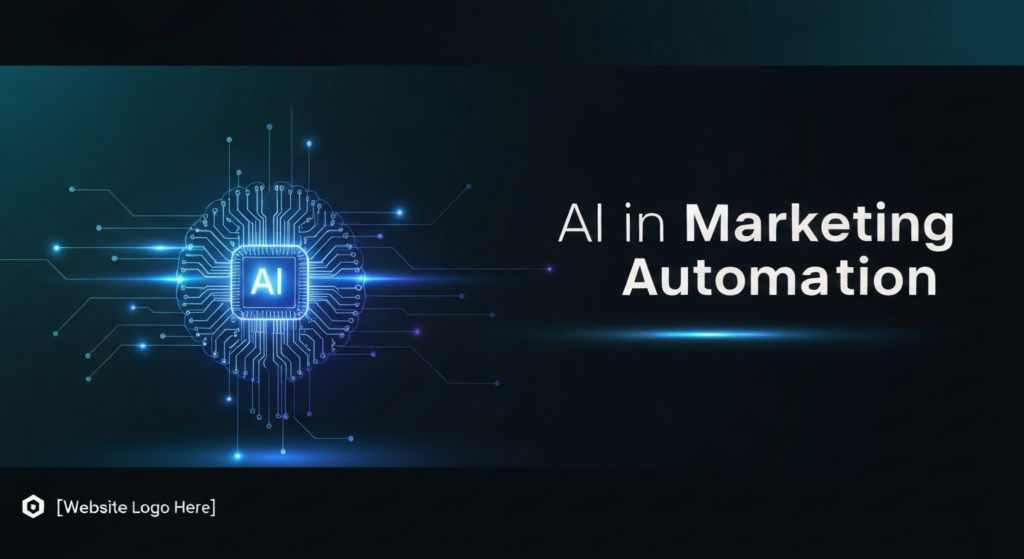


The digital marketing landscape is constantly evolving, but the latest shift represents a fundamental change in how brands connect with consumers. For years, marketing automation has been a cornerstone of efficiency, allowing businesses to execute repetitive tasks, nurture leads, and manage campaigns at scale. However, this automation has largely operated on predefined rules and static workflows. This is changing with the convergence of two powerful forces: automation and intelligence. The integration of Artificial Intelligence (AI) and its subset, Machine Learning (ML), is transforming rule-based automation into a dynamic, adaptive, and predictive engine for growth.
This convergence moves marketers from a reactive to a proactive stance. Instead of merely automating a pre-written email sequence triggered by a form submission, marketers can now leverage AI to predict which content a lead needs next, determine the optimal time to send it, and even generate a compelling subject line—all tailored to the individual user. This shift elevates the customer experience from being managed to being genuinely understood. It is the difference between a one-size-fits-all campaign and a one-to-one conversation, conducted seamlessly across millions of customers simultaneously.
The impact of this intelligent automation is profound, affecting every facet of the marketing lifecycle. From hyper-personalizing website experiences in real time to forecasting customer churn before it happens, AI is unlocking new levels of performance and delivering a tangible Return on Investment (ROI). This guide explores how AI and Machine Learning are not just upgrading marketing automation but fundamentally reshaping it, empowering marketers to build smarter campaigns, foster deeper customer relationships, and drive significant business results.
[[INNER_IMAGE]]
To fully grasp the power of this new marketing paradigm, it’s essential to understand the core technologies at play. While often used interchangeably, marketing automation, Artificial Intelligence, and Machine Learning are distinct concepts that build upon one another to create a sophisticated marketing stack. Understanding their individual roles and synergistic relationship is the first step toward leveraging their combined potential.
Traditional marketing automation refers to software platforms and technologies designed to streamline, automate, and measure marketing tasks and workflows. At its core, it operates on “if this, then that” (IFTTT) logic. Marketers create rules and triggers that initiate a specific action or sequence of actions. For example:
This rule-based approach is highly effective for scaling operations and ensuring consistent follow-up. It saves countless hours of manual work and provides a structured framework for the customer journey. However, its primary limitation is its rigidity. The rules are static, defined by the marketer, and do not adapt on their own based on new data or changing customer behavior.
Artificial Intelligence (AI) is the broader concept of creating machines that can simulate human intelligence to perform tasks like problem-solving, understanding language, and recognizing patterns. Machine Learning (ML) is a specific subset of AI that gives computers the ability to learn from data without being explicitly programmed. Instead of following a fixed set of rules, an ML model is trained on a large dataset. It identifies patterns, correlations, and anomalies within that data to build a predictive model. The model can then make predictions or decisions when presented with new, unseen data.
In marketing, this means the system can learn what works and what does not. For instance, an ML model can analyze thousands of past email campaigns and customer interactions to predict which subject line will perform best for a specific customer segment, or which leads are most likely to convert based on a complex combination of behavioral and demographic signals—something impossible to codify in a simple if-then rule.
A common misconception is that AI is here to replace marketing automation platforms. In reality, AI serves as a powerful intelligence layer that augments the capabilities of existing automation infrastructure. The automation platform still handles the execution—sending the email, updating the CRM, launching the ad campaign—but AI provides the strategic direction for those actions.
Think of it this way: your marketing automation platform is the car, capable of getting you from point A to point B. Traditional automation is like following a pre-printed map; it’s effective but inflexible. AI is the GPS. It analyzes real-time traffic (data), recalculates the best route (strategy) on the fly, and predicts your arrival time (forecasts outcomes). The car still does the driving, but the intelligence guiding it is far more advanced. In short, AI makes your automation smarter, more efficient, and more effective at achieving its goals.
[[INNER_IMAGE]]
The ultimate goal for many marketers is to deliver a true one-to-one experience for every customer. Achieving this manually is impossible at any meaningful scale. While traditional automation enables segmentation, these segments are often broad and based on a few simple criteria. Artificial Intelligence overcomes these limitations, enabling dynamic, real-time personalization that adapts to each user’s unique context, behavior, and intent. This is hyper-personalization, and it is a cornerstone of how AI enhances campaign performance.
A visitor’s first interaction with your brand is often through your website. Instead of presenting a static homepage, AI can transform it into a unique experience for every individual. By analyzing data points such as geolocation, referral source, past browsing history, device type, and firmographic data for B2B visitors, AI-powered tools can dynamically alter website content in real time. This can include changing headlines, hero images, calls-to-action (CTAs), and case studies to align with the visitor’s industry or interests. For an e-commerce site, this might mean showing winter coats to a visitor from a cold climate and swimwear to one from a tropical location, all on the same URL.
Perhaps the most well-known application of AI in personalization is the recommendation engine, famously used by companies like Amazon and Netflix. These systems go far beyond simple rules like “people who bought X also bought Y.” Machine learning models analyze a user’s entire interaction history—products viewed, items added to cart, content consumed, time spent on pages—and compare it against the behavior of millions of other users. This allows them to make highly accurate predictions about what a user might be interested in next. For an e-commerce store, this means relevant product suggestions. For a media company, it means recommending the next article or video to keep the user engaged. This not only improves the customer experience but also significantly increases key metrics like average order value and time on site.
A customer’s journey is rarely confined to a single channel. They interact with a brand via email, social media, mobile apps, and the web. AI helps create a cohesive and personalized experience across all these touchpoints. An AI model can determine the optimal channel and timing for a specific message for a particular user. For example, it might learn that one user is highly responsive to push notifications for flash sales, while another prefers a weekly email digest. It can also ensure that messaging is consistent. If a customer abandons a shopping cart on the website, AI can trigger a personalized follow-up email and subsequently show them a dynamic retargeting ad on social media featuring the exact products they left behind, creating a seamless and persuasive multi-channel narrative.
[[INNER_IMAGE]]
For any business with a sales funnel, effective lead management is critical to revenue growth. Sales and marketing teams are often overwhelmed with a high volume of leads, many of which are not yet ready to buy. The challenge is to identify sales-ready leads and nurture the rest until they are. Traditional methods rely on manual scoring systems that are often subjective and inaccurate. AI introduces a new level of precision and efficiency to this process through predictive lead scoring and intelligent nurturing.
Traditional lead scoring involves assigning points to leads based on explicit demographic information (like job title or company size) and simple behaviors (like opening an email). A lead must reach a certain point threshold to be deemed “sales-qualified.” While better than no system at all, this approach is flawed. The point values are set by humans, often based on assumptions rather than data, and it fails to capture the nuanced signals of true buying intent.
Predictive lead scoring, powered by machine learning, is a significant paradigm shift. Instead of relying on manual rules, an ML model is fed historical data from your CRM and marketing automation platform. It analyzes all the attributes and behaviors of past leads—both those who converted into customers and those who did not. By processing thousands of data points, the model identifies complex patterns that truly predict a lead’s likelihood to convert. It then builds a predictive model that can score new leads in real time, assigning a probability of conversion (e.g., this lead has a 92% chance to close). This allows sales teams to focus their energy on leads with the highest potential, dramatically increasing their efficiency and close rates.
Furthermore, AI enhances the nurturing process for leads that are not yet sales-ready. Instead of pushing every low-scoring lead into the same generic email sequence, AI-driven nurturing can tailor the journey. The system can analyze a lead’s behavior to understand their specific interests and pain points, then dynamically select the most relevant content—a blog post, case study, or webinar invitation—to send next. It can also adjust the timing and frequency of communications based on the lead’s engagement level. This personalized approach keeps the brand top-of-mind, guiding prospects through the funnel until their predictive score indicates they are ready for a sales conversation.
[[INNER_IMAGE]]
The success of any marketing campaign hinges on the quality and resonance of its creative assets—the ad copy, email subject lines, imagery, and calls-to-action. Historically, optimizing this creative has been a process of trial and error, guided by intuition and cumbersome A/B testing. AI is revolutionizing this domain by providing tools that can not only test and optimize creative at an unprecedented scale but also assist in its creation, helping marketers overcome creative blocks and achieve maximum impact.
Traditional A/B testing, where marketers test one variation (B) against a control (A), is a valuable but slow and limited practice. To test multiple elements like a headline, an image, and a CTA button, you would need to run a series of tests sequentially. AI-powered multivariate testing, or A/B/n testing, allows marketers to test dozens or even hundreds of variations of a webpage or email simultaneously. The AI algorithm often uses a method like multi-armed bandit testing to dynamically allocate more traffic to the variations that are performing best while still exploring other options. This approach finds the optimal combination of elements much faster than traditional A/B testing, ensuring the campaign is continuously and automatically optimized for the highest possible conversion rate.
One of the most significant advancements in AI is the rise of Generative AI, powered by large language models (LLMs) like GPT. These tools are transforming content creation. Marketers can now use AI platforms to generate numerous options for email subject lines, social media posts, Google Ads headlines, and product descriptions by providing a simple prompt. Some advanced tools can even analyze the tone of a brand’s existing content to generate new copy that aligns with its voice. This does not replace the need for human strategy and oversight but serves as a powerful brainstorming partner, saving countless hours and providing creative angles that marketers might not have considered.
Every marketer has asked the question: “When is the best time to send an email?” The traditional answer is a broad generalization based on industry-wide data. AI provides a far more precise solution. By analyzing historical engagement data for each individual in your database—when they typically open emails, click links, and visit your website—AI can determine the optimal send time for every single person. An AI-powered tool can hold an email and deliver it at the precise moment an individual is most likely to engage. This level of personalization extends beyond a single message to optimize the entire communication cadence, ensuring you are not contacting customers too frequently (leading to fatigue) or too infrequently (leading to disengagement).
[[INNER_IMAGE]]
Beyond optimizing current campaigns, one of the most transformative applications of AI in marketing is its ability to look into the future. Predictive analytics uses machine learning models to analyze historical and real-time data to make forecasts about future events. This gives marketers unprecedented insight, allowing them to move from reacting to past performance to proactively shaping future business outcomes. It empowers strategic decision-making, helps allocate resources more effectively, and ultimately uncovers new avenues for revenue growth.
Customer Lifetime Value (CLV) is a critical metric representing the total net profit a company can expect from a customer over their entire relationship. Traditionally, calculating CLV has been a backward-looking exercise based on historical averages. AI changes this by enabling predictive CLV. Machine learning models can analyze a customer’s early behaviors—their initial purchase amount, products bought, engagement frequency—and accurately forecast their future value. This allows marketers to segment customers not just by what they have spent, but by what they are *likely* to spend. This insight is invaluable for deciding how much to invest in acquiring similar new customers and for prioritizing retention efforts on the most valuable existing ones.
Customer acquisition is expensive; retaining existing customers is far more profitable. The challenge is identifying which customers are at risk of churning before they leave. AI-powered churn prediction models are designed to solve this exact problem. They analyze subtle changes in customer behavior, such as a decrease in login frequency, a drop in product usage, fewer support tickets, or a decline in email engagement. By recognizing these patterns, which are often invisible to the human eye, the model can assign a “churn risk score” to each customer. This acts as an early warning system, allowing the marketing team to proactively intervene with targeted retention campaigns, special offers, or personal outreach to save the customer relationship before it is too late.
AI’s predictive capabilities extend beyond individual customers to the market as a whole. By analyzing vast datasets—including social media sentiment, competitor activities, search trends, and macroeconomic indicators—machine learning models can identify emerging trends and forecast future demand for products or services. For an e-commerce business, this could mean predicting which products will be popular next season, allowing for smarter inventory management. For a B2B software company, it might involve identifying a rising demand for a specific feature. This foresight provides a significant competitive advantage, enabling businesses to be more agile and strategic in their product development, marketing, and overall business planning.
[[INNER_IMAGE]]
Paid advertising is a powerful driver of growth, but it can also be a significant drain on resources if not managed effectively. The complexity of modern ad platforms, with their countless targeting options, bidding strategies, and creative formats, makes manual optimization a formidable task. Artificial Intelligence is fundamentally changing the paid media landscape by automating and optimizing campaigns with a level of speed and precision that is unattainable for human managers. This leads to significantly improved campaign performance and a higher Return on Investment (ROI) on ad spend.
One of the most impactful applications of AI is in bid management. Platforms like Google Ads and Meta (Facebook) now have sophisticated AI-driven bidding strategies (e.g., Target CPA, Maximize Conversions). These algorithms analyze hundreds of real-time signals for every ad auction—such as device type, time of day, location, and browsing history—to determine the optimal bid. They can predict the likelihood of a click leading to a conversion and adjust bids accordingly, ensuring that you pay the right price for every impression. This automated process is far more efficient and effective than manual bidding, maximizing your budget to achieve specific campaign goals.
AI also revolutionizes ad creative through a technology known as Dynamic Creative Optimization (DCO). Instead of creating dozens of static ad variations, marketers provide a DCO platform with a library of creative components—different headlines, descriptions, images, videos, and calls-to-action. The AI then mixes and matches these components in real time to assemble the ideal ad for each individual user. It learns which combinations resonate best with different audience segments and automatically optimizes the campaign to show the highest-performing creative to the right person at the right time. This not only improves ad relevance and performance but also saves a tremendous amount of creative production time.
Finally, AI enhances audience targeting and segmentation. It can analyze your existing customer data to build highly accurate lookalike audiences, finding new users who share the characteristics of your best customers. Furthermore, AI can create dynamic audience segments based on predictive analytics, such as users with a high propensity to purchase a specific product category or those identified as being at risk of churn. By targeting these intelligent, data-driven segments, marketers can deliver more relevant messages and significantly improve the efficiency of their ad spend.
[[INNER_IMAGE]]
The promise of AI in marketing is immense, but adopting these technologies can feel daunting. A successful implementation relies on a strategic and phased approach. Rather than attempting a complete overhaul overnight, businesses should focus on a practical framework that involves careful evaluation, a strong data foundation, and a commitment to starting small and scaling based on measurable success. This methodical process demystifies AI adoption and paves the way for a sustainable, high-impact integration.
The market is flooded with tools claiming to be AI-powered. To cut through the noise, it’s crucial to evaluate potential solutions based on your specific business needs. Many modern marketing automation and CRM platforms (like HubSpot, Salesforce, and Marketo) now have powerful AI features built-in, which can be the easiest place to start. When evaluating standalone tools or platform features, consider the following criteria:
| Evaluation Criterion | What to Look For |
|---|---|
| Use Case Specificity | Does the tool solve a specific, high-priority problem for your team (e.g., lead scoring, churn prediction, content generation)? Avoid vague, all-in-one solutions. |
| Integration Capabilities | How easily does it integrate with your existing marketing stack (CRM, analytics, email platform)? Seamless data flow is non-negotiable. |
| Data Requirements | What type and volume of data does the tool need to be effective? Ensure you have the necessary historical data to train the models. |
| Ease of Use | Is the interface intuitive for your team? Look for a tool that provides clear insights and doesn’t require a data scientist to operate. |
| Support and Training | Does the vendor offer robust onboarding, training, and ongoing support to ensure you get the most value from the platform? |
Artificial Intelligence is not magic; it is fundamentally dependent on the quality and accessibility of your data. An AI model fed with inaccurate, incomplete, or siloed data will produce unreliable and ineffective results. Before you can successfully implement AI, you must prioritize data hygiene and integration. This involves breaking down data silos between your departments and systems—sales, marketing, customer service, and e-commerce. The goal is to create a single, unified view of the customer, where all interaction data is centralized and accessible. Investing in data cleansing processes and potentially a Customer Data Platform (CDP) is a critical prerequisite for any successful AI initiative.
The most effective way to introduce AI into your marketing is to start with a focused pilot program. Identify a single, well-defined problem that has the potential for high impact. Predictive lead scoring is often an excellent starting point because its success can be clearly measured by an increase in sales-qualified leads and conversion rates. Define clear Key Performance Indicators (KPIs) before you begin the pilot. For example, you might aim to increase the lead-to-customer conversion rate by 15% within three months. By starting small, you can prove the value of AI with a clear ROI, gain buy-in from stakeholders, and learn valuable lessons before scaling the implementation to other areas of your marketing strategy.
[[INNER_IMAGE]]
The theoretical benefits of AI in marketing automation become clearer when viewed through the lens of real-world applications. Leading brands across various industries are already using these technologies to create superior customer experiences and drive business growth. These examples showcase the practical and powerful impact of integrating intelligence into the marketing stack.
One of the pioneers in AI-driven marketing is Amazon. Its recommendation engine is a prime example of hyper-personalization. When you browse Amazon, the “Customers who bought this item also bought” and “Recommended for you” sections are powered by sophisticated machine learning algorithms. These systems analyze your individual browsing history, purchase patterns, and items in your cart, comparing them against the data of millions of other shoppers in real-time. The result is a highly personalized shopping experience that is not only helpful to the customer but is also a massive driver of revenue, with recommendations reportedly accounting for a substantial portion of sales.
Another powerful example comes from the beauty industry with Sephora. The company uses AI to bridge the gap between online and in-store shopping. Its “Virtual Artist” feature in the mobile app uses facial recognition technology to allow customers to virtually try on different makeup products. Furthermore, its Color IQ service uses an AI-powered device to scan a customer’s skin and find the scientifically precise foundation shade match from thousands of products. By leveraging AI, Sephora provides a deeply personalized and valuable service that builds customer confidence, reduces returns, and fosters brand loyalty.
In the B2B space, Salesforce has deeply integrated AI into its CRM platform with its “Einstein” technology. Salesforce Einstein provides predictive lead scoring to help sales teams prioritize their efforts, forecasts sales revenue with greater accuracy, and suggests the next best action for sales reps to take on any given account. It analyzes emails, calendars, and CRM data to surface key insights automatically. This empowers sales and marketing teams to work more intelligently, embedding predictive insights directly into their daily workflows to close more deals and build stronger customer relationships.
[[INNER_IMAGE]]
While the potential of AI in marketing is vast, its implementation is not without significant challenges and responsibilities. The very data that fuels AI’s power—customer behavior, personal information, and interaction history—is also at the heart of growing concerns around privacy and ethics. As marketers become custodians of these powerful technologies, it is imperative to navigate this landscape with transparency, integrity, and a deep respect for customer trust.
The regulatory environment surrounding data privacy has become increasingly stringent. Regulations like the General Data Protection Regulation (GDPR) in Europe and the California Consumer Privacy Act (CCPA) grant consumers greater control over their personal data, including the right to know how it is being collected, used, and processed. Marketing teams using AI must ensure their data practices are fully compliant. This means obtaining explicit consent, being transparent about how AI models use data to make decisions, and having clear processes for honoring user requests for data access or deletion. Failure to comply can result in severe financial penalties and irreparable damage to brand reputation.
Beyond legal compliance lies the ethical imperative of avoiding algorithmic bias. Machine learning models learn from historical data, and if that data contains biases, the AI will learn and amplify them. For example, if a historical dataset shows that a certain demographic was unintentionally underserved by past marketing efforts, an AI model trained on that data might perpetuate this bias by deprioritizing that same demographic in future campaigns. Marketers must be vigilant in auditing their data and models to identify and mitigate potential biases, ensuring that AI-driven campaigns are fair, inclusive, and do not produce discriminatory outcomes. This often requires a diverse team and a “human-in-the-loop” approach to review and validate the AI’s recommendations.
Ultimately, the key to navigating these challenges is to build a foundation of trust with your audience. This involves being transparent about your use of AI and demonstrating the value it provides to the customer. When customers understand that you are using their data to create a more relevant, helpful, and personalized experience—not merely to exploit them—they are more likely to share their information willingly. The ethical use of AI is not just a legal requirement; it is a strategic imperative for building lasting customer relationships in the modern era.
[[INNER_IMAGE]]
The integration of AI into marketing automation is not an end state but the beginning of a new evolutionary path. The progress in personalization, prediction, and optimization is just the first wave. The future of AI in marketing points towards a world of greater autonomy, where intelligent systems not only provide insights but also take independent action to achieve strategic goals, allowing marketers to focus more on high-level strategy, creativity, and customer empathy.
We are moving towards the concept of the “autonomous marketing campaign.” In this future, a marketer might simply define a high-level objective (e.g., “launch a new product and acquire 1,000 new customers next quarter with a $50,000 budget”). The AI system would then handle the rest. It would analyze market data to identify the ideal target audience, generate ad copy and creative, determine the optimal channel mix, execute campaigns, and reallocate the budget in real-time based on performance—all with minimal human intervention. This level of automation will free marketing teams from tactical execution, allowing them to become the strategic architects of a brand’s growth.
Another key trend will be the rise of conversational AI and AI agents. As Natural Language Processing (NLP) becomes more sophisticated, AI-powered chatbots and virtual assistants will manage increasingly complex customer interactions, providing instant, personalized support and guidance 24/7. We may also see the emergence of AI agents that act on behalf of consumers—automatically finding the best products, negotiating prices, and managing subscriptions—creating a new and fascinating dynamic for brands to navigate.
However, as AI becomes more autonomous, the role of human oversight will become more critical than ever. In this scenario, marketers will act as the conductors of an AI orchestra, setting the strategic direction, ensuring ethical guidelines are followed, and infusing campaigns with the creative spark and emotional intelligence that machines cannot replicate. The future of marketing is not about machines replacing marketers; it is about marketers augmented by machines, working together to create smarter, more human-centric experiences at a scale we are only beginning to comprehend.