




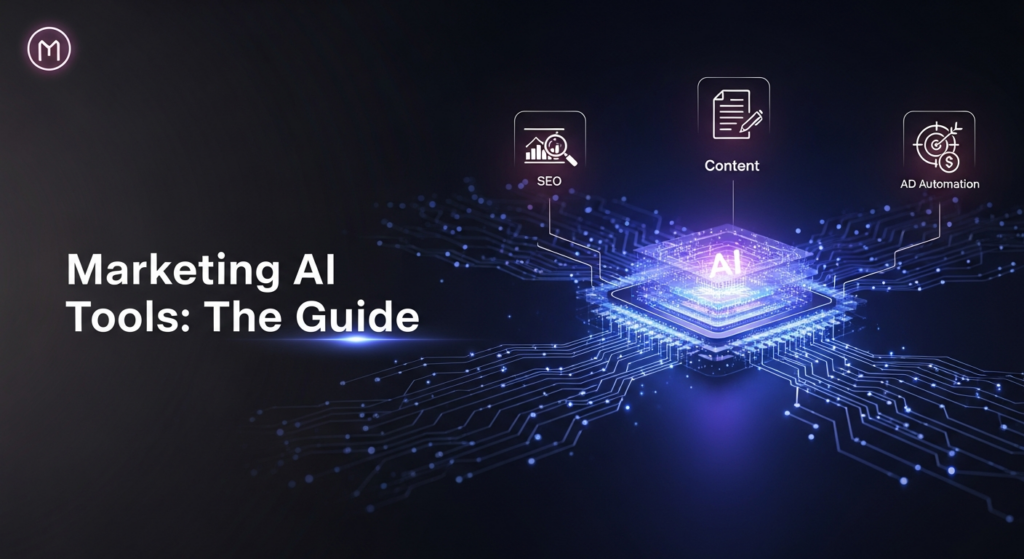


In today’s competitive digital landscape, marketers are constantly seeking an advantage. Increasingly, that advantage is found in Artificial Intelligence (AI). Marketing AI tools are software platforms that leverage technologies like Machine Learning (ML), Natural Language Processing (NLP), and predictive analytics to automate tasks, analyze data, and generate insights that drive marketing strategies. These tools are no longer a futuristic concept but a fundamental component of a modern marketing stack, enabling teams to make smarter, data-driven decisions with unprecedented scale and speed.
The core function of these tools is to process vast amounts of data—from customer behavior and campaign performance to market trends and competitor activities—and transform it into actionable intelligence. By identifying patterns and making predictions, AI helps marketers shift from reactive to proactive strategies. Instead of guessing which content will resonate or which customer segment to target, marketers can rely on AI-powered recommendations to optimize every facet of their campaigns. This capability makes AI an essential driver of growth and efficiency.
In marketing, Artificial Intelligence refers to systems designed to perform tasks that typically require human intelligence, such as learning from data, understanding language, recognizing patterns, and making decisions. The goal is not to replace marketers but to augment their capabilities. Key AI subsets in marketing include:
The transition to AI-powered marketing represents a fundamental shift in how brands connect with consumers. Traditional marketing often relied on broad segmentation, manual A/B testing, and intuition-based decisions. Campaigns were planned over long periods, and performance analysis was often a retrospective exercise using limited, siloed data. This process was labor-intensive, slow, and frequently inefficient.
In contrast, AI-powered marketing is dynamic, precise, and automated. It enables real-time personalization, where each customer interaction can be tailored based on past behavior and predicted needs. Automation handles repetitive tasks like data entry and social media scheduling, freeing marketers to focus on strategy and creativity. Decision-making becomes data-driven, with AI models providing insights on which channels to invest in, what copy will perform best, and which leads are most likely to convert. This shift transforms the marketing department from a cost center into a strategic growth engine for the organization.
The rapid integration of AI into marketing is not just anecdotal; the data underscores a significant industry-wide transformation. These trends highlight the urgency for businesses to adopt AI to remain competitive.
These statistics indicate that AI is no longer a niche technology for large enterprises. It has become a critical tool for businesses of all sizes seeking to enhance efficiency, deepen customer relationships, and drive a measurable return on investment (ROI).

Integrating Artificial Intelligence into a marketing strategy unlocks tangible business benefits. From hyper-personalization to predictive forecasting, AI empowers marketers to build more efficient, effective, and profitable campaigns. By automating tasks and providing deep, data-driven insights, AI tools act as a force multiplier, allowing teams to achieve more with greater precision.
Today’s consumers expect personalized experiences and relevant, timely communication from brands. Delivering this level of personalization to thousands or millions of customers manually is impossible. AI excels at this task. Machine learning algorithms analyze customer data—browsing history, purchase records, and real-time behavior—to build a comprehensive profile for each individual. Based on this profile, AI can dynamically tailor website content, product recommendations, and ad creatives. Amazon’s product suggestions and Netflix’s content recommendations are classic examples of AI-driven personalization at scale, creating a unique experience for every user and boosting engagement and sales.
Marketing teams are often occupied with repetitive, time-consuming tasks, such as scheduling social media posts, segmenting email lists, and managing ad bids. AI-powered automation can handle these duties with speed and accuracy, freeing up marketers to focus on high-value strategic work like creative development and brand strategy. For example, an AI tool can automatically schedule social media content for optimal engagement times or adjust PPC ad bids in real-time to maximize conversions within a budget. This improves team productivity and reduces the risk of human error, leading to more consistent campaign execution.
Marketers have access to vast amounts of data, but its true value lies in the insights that can be extracted. AI and machine learning algorithms are designed to sift through massive datasets from various sources (CRM, web analytics, social media) and identify patterns, correlations, and anomalies that a human analyst might miss. AI can uncover which customer segments are most profitable, which marketing channels deliver the highest quality leads, or why a campaign is underperforming. These deep insights enable more informed decision-making, helping marketers craft strategies that resonate with their audience.
One of the most powerful applications of AI in marketing is predictive analytics. By analyzing historical data, AI models can forecast future outcomes with a high degree of accuracy, directly impacting marketing ROI. For instance, predictive lead scoring can identify which prospects are most likely to convert, allowing sales and marketing teams to prioritize their efforts. Predictive models can also forecast customer churn, enabling businesses to launch proactive retention campaigns. Furthermore, AI can predict the potential ROI of different marketing investments, helping leaders allocate their budget to the channels most likely to yield the best results.

Content is the foundation of modern marketing, but consistently creating high-quality, optimized material is a major challenge. AI tools have emerged as powerful allies for content marketers and SEO specialists, streamlining everything from brainstorming and writing to optimization and analysis. These platforms use advanced algorithms to help create content that engages readers and ranks highly on search engine results pages (SERPs).
AI tools equipped with Generative AI and NLP can help overcome writer’s block. They can generate blog post outlines, draft articles, write social media captions, and craft email copy from simple prompts. While these drafts require human review to ensure brand voice and factual accuracy, they serve as an excellent starting point, drastically reducing content production time. Additionally, AI can analyze trending topics, competitor content, and audience questions from forums to suggest relevant content ideas that are likely to attract organic traffic.
Creating great content is only half the battle; it also needs to be discoverable. AI-powered SEO platforms have revolutionized content optimization. Tools like SurferSEO or MarketMuse analyze top-ranking pages for a target keyword and provide data-driven recommendations. This goes beyond simple keyword density, suggesting:
By following these AI-driven guidelines, creators can craft articles that are better aligned with search engine algorithms, increasing their chances of ranking on the first page.
Effective SEO begins with strategic keyword research and a deep understanding of the competitive landscape. AI enhances this process by automating the discovery of valuable keywords and providing sophisticated competitor insights. AI tools can identify long-tail keywords with high purchase intent, uncover question-based keywords for FAQ content, and group keywords into thematic clusters to inform a pillar-and-cluster content strategy. For competitor analysis, AI can crawl competitor websites to identify their top-performing keywords, analyze backlink profiles, and pinpoint content gaps your business can address. This automated, in-depth analysis provides a clear roadmap for outranking competitors.

Email marketing remains a high-ROI channel, but its effectiveness depends on relevance and personalization. Generic email blasts are no longer sufficient. Artificial Intelligence is transforming email marketing by enabling a level of personalization and automation that ensures every message is timely, relevant, and optimized for engagement.
Manually segmenting an email list based on a few demographic data points is outdated. AI introduces dynamic, behavioral segmentation. Machine learning algorithms analyze customer data in real-time, including purchase history, website browsing behavior, and email engagement. Based on this analysis, AI automatically groups subscribers into micro-segments with shared characteristics and predicted interests. This allows marketers to send highly targeted campaigns that speak directly to the needs of each segment, dramatically increasing open rates, click-through rates, and conversions. For example, an e-commerce store can use AI to automatically segment customers who viewed a product category but did not purchase, then send them a targeted follow-up email.
The subject line is the most critical element of an email, determining whether it gets opened or ignored. AI tools can analyze millions of data points from past campaigns to predict which subject lines will perform best for a specific audience. Some platforms use NLP to generate and score subject line variations based on tone, emotional appeal, and keyword usage. Beyond subject lines, AI enhances A/B testing. Instead of manually testing one or two variables, AI can simultaneously test dozens of combinations of subject lines, headlines, and calls-to-action, quickly identifying the winning formula and automatically deploying it to the rest of the audience for maximum impact.
Not all leads have the same potential. Predictive lead scoring uses AI to analyze lead attributes and behaviors to assign a score indicating their likelihood to convert. The model learns from historical data, considering factors like job title, company size, website pages visited, and content downloaded. This allows marketing and sales teams to focus their resources on the most promising leads. Furthermore, AI can automate lead nurturing by triggering personalized email sequences based on a lead’s score and behavior, delivering the right content at the right time to guide them through the buyer’s journey.

The social media landscape is a fast-paced environment where staying relevant is a constant challenge. AI tools are revolutionizing social media management by automating key tasks, providing deep audience insights, and enabling brands to monitor conversations at scale. This empowers social media managers to shift from reactive posting to proactive, data-driven community building.
Consistently sharing valuable content is key to social media success. AI can significantly lighten this workload. AI-powered content curation tools scan the web for relevant articles and news related to your industry, suggesting a stream of high-quality third-party content to share. This keeps your feed active and establishes your brand as a helpful resource. For scheduling, AI algorithms analyze past engagement data to determine the optimal times to post for each platform and audience segment, ensuring your content reaches the maximum number of people when they are most active. This data-driven approach removes guesswork and boosts visibility.
Manually tracking every mention of your brand or competitors across social media is an impossible task. AI-powered social listening tools automate this process. Using Natural Language Processing (NLP), these tools analyze millions of posts and comments in real-time to gauge public sentiment, classifying mentions as positive, negative, or neutral. This provides an instant snapshot of brand health, allowing teams to quickly address customer complaints, capitalize on positive feedback, and monitor sentiment around campaigns. This real-time feedback loop is invaluable for reputation management.
Influencer marketing is a powerful strategy, but finding the right partners can be time-consuming. AI tools can analyze vast networks of social media users to identify potential influencers who have an engaged audience that aligns with your brand’s target demographic. These tools look beyond follower counts, analyzing engagement rates, audience demographics, and content relevance to recommend authentic partners. Additionally, AI can analyze audience engagement patterns to reveal which content formats perform best, what topics drive conversation, and who your most active followers are, allowing you to tailor your content strategy for maximum impact.

Digital advertising and Pay-Per-Click (PPC) campaigns are complex ecosystems of bidding, targeting, and creative testing. AI has become an indispensable tool for advertisers, automating complex processes and leveraging predictive analytics to maximize ad spend efficiency and drive higher conversion rates across platforms like Google Ads and Meta.
Creating compelling ad copy and visuals that resonate with different audience segments is a major creative challenge. Generative AI tools can now automate much of this process. By providing a few inputs about the product and target audience, AI can generate dozens of variations of ad headlines, descriptions, and image concepts. This allows advertisers to rapidly test a wide range of creative combinations. Platforms like Google’s Performance Max use AI to automatically mix and match assets to create and serve the most effective ad combinations across all of Google’s channels, optimizing creative performance at a scale no human could manage.
One of the most impactful applications of AI in PPC is automated bid management. AI algorithms can analyze thousands of signals in real-time—such as device type, time of day, and user location—to determine the optimal bid for each ad auction. This ensures you are not overpaying for clicks that are unlikely to convert while bidding aggressively for high-value prospects. This is far more sophisticated than manual bidding. Similarly, AI can help with budget allocation, shifting ad spend in real-time between campaigns or channels based on which ones are delivering the best performance and ROI.
Reaching the right audience is the foundation of a successful advertising campaign. AI significantly enhances targeting capabilities. It can analyze your existing customer data to identify the key characteristics of your most valuable customers. Then, it can build powerful lookalike audiences on platforms like Facebook and Google—new audiences of people who share similar traits with your best customers but have not yet interacted with your brand. This allows you to expand your reach to highly relevant new prospects, improving campaign efficiency and driving scalable growth.

In the age of big data, the ability to collect, unify, and analyze customer information is a key competitive advantage. AI-powered analytics and Customer Data Platforms (CDPs) act as the central nervous system of a modern data-driven marketing organization, providing a holistic view of the customer and uncovering insights needed to drive personalization and strategy.
Customer data is often fragmented across multiple systems: a CRM holds sales data, an e-commerce platform has purchase history, and analytics tools track browsing behavior. A Customer Data Platform (CDP) is designed to solve this problem. It ingests data from these disparate sources and uses AI to cleanse, de-duplicate, and stitch it together into a single, unified customer profile. This creates a true 360-degree view of each customer, allowing marketers to understand their entire journey and interact with them in a consistent, context-aware manner across all touchpoints.
With a unified customer profile, AI can apply predictive models to forecast key business outcomes. One valuable application is predicting customer churn. By analyzing behavioral patterns—such as a decrease in login frequency or a drop in purchase rate—AI can identify customers at a high risk of leaving. This allows the marketing team to launch proactive retention campaigns. Similarly, AI can predict the Customer Lifetime Value (CLV) of different customer segments. This insight is crucial for making strategic decisions about customer acquisition costs and marketing budget allocation.
The sheer volume of modern marketing data makes it impossible for humans to manually identify all meaningful patterns. AI-powered analytics platforms excel at this. Machine learning algorithms can perform complex analyses like market basket analysis (identifying which products are frequently bought together), customer journey mapping (understanding common paths to conversion), and attribution modeling (determining which marketing touchpoints contribute most to a sale). By uncovering these hidden trends, AI provides marketers with actionable insights to optimize strategies and discover new growth opportunities.
[[INNER_IMAGE]]
AI-powered chatbots have evolved far beyond simple, rule-based systems. Modern chatbots, driven by Natural Language Processing (NLP) and Machine Learning, can understand user intent, hold context-aware conversations, and perform complex tasks. They have become a vital tool on the front lines of digital marketing, serving as a 24/7 assistant for customer service and lead generation.
Customers expect immediate answers to their questions, regardless of the time of day. AI chatbots provide instant, round-the-clock support, handling a high volume of common queries simultaneously. They can answer questions about order status, product features, and shipping policies, freeing up human support agents to focus on more complex customer issues. By providing instant resolutions to common problems, chatbots improve the customer experience, reduce support costs, and increase customer satisfaction.
Chatbots are powerful lead generation and qualification engines. When a visitor lands on your website, a chatbot can proactively engage them, asking qualifying questions to understand their needs and budget. Based on their responses, the chatbot can determine if they are a good fit for your services. For qualified leads, the chatbot can integrate with calendars to schedule demos or appointments with the sales team, eliminating scheduling friction. This automates the top of the sales funnel, ensuring the sales team receives a steady stream of well-qualified leads.
Beyond answering questions, AI chatbots can create dynamic and personalized website experiences. By analyzing a visitor’s behavior or asking direct questions, a chatbot can guide them to the most relevant content or products. For example, on an e-commerce site, a chatbot can act as a personal shopper by asking about the user’s preferences and recommending specific items. On a B2B site, it can direct different visitors (such as a potential customer vs. a job seeker) to the appropriate sections. This personalized guidance helps users find what they need more quickly, increasing engagement and conversions.
[[INNER_IMAGE]]
The market for AI marketing tools is vast and growing, which can make selecting the right platform a daunting task. A tool that is perfect for a large enterprise might be overly complex for a small business. A strategic approach is necessary to ensure you invest in a solution that aligns with your specific needs, goals, and resources.
Before evaluating specific tools, first assess your internal strategy. Start by identifying the biggest challenges and opportunities in your current marketing efforts. Are you struggling with content creation? Is your lead qualification process inefficient? Do you lack deep insights into customer behavior? Clearly define the problems you are trying to solve and the goals you want to achieve, such as “increase lead conversion rates by 20%” or “reduce content production time by 50%.” These objectives will provide a framework for evaluating which AI tools offer the most impactful features for your business.
Once you know your goals, you can evaluate tools based on their features. While specific needs vary, several key features are important to consider when assessing any AI marketing platform:
Finally, practical considerations like budget, scalability, and integration are crucial. AI tools can range from affordable monthly subscriptions to significant enterprise investments. Determine a realistic budget while also considering the potential ROI the tool can deliver. Think about scalability—will the tool be able to grow with your business? A platform with tiered pricing is often a good choice. Integration is non-negotiable. A powerful AI tool that cannot communicate with your other systems will create data silos. Create a list of your must-have integrations (e.g., Salesforce, HubSpot, Google Analytics) and ensure any tool you consider offers robust connections to them.
| Tool Category | Primary Use Case | Ideal Business Size | Key Features to Look For |
|---|---|---|---|
| Content & SEO AI | Content generation, optimization, keyword research | Small to Enterprise | NLP quality, SEO recommendations, plagiarism checker, competitor analysis |
| Email Marketing AI | Personalization, segmentation, lead scoring | Small to Enterprise | Predictive analytics, send-time optimization, subject line generator, CRM integration |
| Advertising AI | Bid management, audience targeting, creative optimization | Medium to Enterprise | Real-time bidding, lookalike audience modeling, budget optimization, multi-channel support |
| Analytics & CDP AI | Data unification, customer insights, churn prediction | Medium to Enterprise | Data stitching, predictive modeling, segmentation, data security |
| Chatbot AI | Lead qualification, 24/7 support, user guidance | Small to Enterprise | NLP capabilities, calendar integration, CRM sync, conversation flow builder |
[[INNER_IMAGE]]
The integration of Artificial Intelligence in marketing is an ongoing evolution, not a final destination. The technology is advancing at an exponential rate, and what seems cutting-edge today will become standard practice tomorrow. Staying ahead requires keeping a close eye on emerging trends that are set to redefine the relationship between brands and consumers.
While early generative AI focused on text, the next frontier is multimodal content—AI models that can understand and generate a combination of text, images, audio, and video from a single prompt. Marketers may soon be able to describe a campaign concept and have an AI generate a complete set of assets: a blog post, corresponding social media images, and a short promotional video. This will dramatically accelerate content production and enable a level of creative experimentation that is currently cost-prohibitive. The challenge will be maintaining brand consistency and authenticity in an era of AI-generated creativity.
As we move towards more immersive digital experiences like the metaverse, the demand for hyper-personalization will intensify. AI will be the engine that powers these experiences, creating dynamic, one-to-one environments where every element is tailored in real-time based on a user’s unique data profile. This will shift marketing from broadcasting messages to creating personalized realities, where the brand experience is uniquely crafted for each individual consumer.
As AI becomes more sophisticated in its ability to use personal data, ethical considerations and data privacy will move to the forefront. Consumers are increasingly concerned about how their data is being used. Marketers must prioritize transparency, giving customers clear control over their data. The future of AI in marketing will be defined not just by technological capability, but by trust. Brands that build a reputation for ethical AI practices and a commitment to data privacy will win the long-term loyalty of their customers. Navigating issues of algorithmic bias and ensuring fairness in targeting will be a critical challenge for the industry.