





In the complex world of digital marketing, businesses constantly search for a reliable roadmap to guide potential customers from initial awareness to a final purchase. This roadmap is the marketing funnel, a foundational concept that provides structure, clarity, and predictability to your marketing efforts. Far from being a rigid formula, the marketing funnel is a flexible framework that helps you understand your customer’s mindset, deliver the right message at the right time, and ultimately, drive sustainable business growth.
Whether you sell software, run an e-commerce store, or offer local services, understanding how to build and optimize a marketing funnel is an essential skill. It transforms marketing from a series of disconnected activities into a cohesive, measurable system. This guide will demystify the marketing funnel by breaking down its core concepts, stages, and practical applications. We will explore classic and modern models, walk through real-world examples, and provide a step-by-step plan to help you build your first funnel. By the end, you will have a comprehensive understanding of how to map the customer journey and turn strangers into loyal brand advocates.
At its heart, a marketing funnel is a strategic model that visualizes the journey a potential customer takes from their first interaction with your brand to becoming a paying customer. It is called a funnel because, like its physical counterpart, it is wide at the top and gradually narrows toward the bottom. The process begins by attracting a large number of people who might be interested in what you offer. Through a series of carefully planned steps, you guide a smaller, more qualified group toward a conversion. This systematically filters prospects, ensuring that those who reach the final stage are the most likely to buy.
The marketing funnel is more than a theoretical concept; it is a practical tool for organizing your marketing strategy. It encourages you to think from the customer’s perspective, considering their needs, questions, and concerns at every step. By understanding this journey, you can align your marketing activities—from content creation and advertising to email campaigns and sales calls—with the specific mindset of your audience, making your efforts more effective and efficient.
Imagine a physical funnel. You pour a large amount of liquid in at the top, but only a concentrated stream emerges from the bottom. The marketing funnel works in a similar way. At the top, you have a broad audience of people who are just becoming aware of a problem or a need—these are your prospects. This is the largest part of the funnel, where you cast a wide net using tactics like blog posts, social media, and search engine optimization (SEO) to attract attention.
As these prospects move down, they begin to learn more about your brand and potential solutions. Some will lose interest and ‘leak’ out of the funnel, which is a natural and expected part of the process. Those who remain are more engaged and qualified. They move into the middle of the funnel, where you nurture the relationship with more targeted content. Finally, at the narrow bottom of the funnel, you have a small group of highly qualified leads who are ready to make a purchase decision. Your goal here is to provide the final push they need to convert into customers. This visual analogy helps businesses understand that not everyone who enters the funnel will become a customer, and it highlights the importance of qualifying and nurturing leads effectively.
The marketing funnel is essentially a map of the customer’s path to purchase. This journey is not random; it follows a series of predictable psychological stages. A customer rarely sees an ad for a complex product for the first time and immediately decides to buy it. Instead, they go through a series of micro-decisions and learning phases. The funnel provides a structure for these phases, allowing you to create a deliberate and streamlined experience.
Mapping this path involves identifying the key touchpoints where a customer interacts with your brand. What questions are they asking when they first realize they have a problem? What information do they need when comparing different options? What reassurances do they need before committing to a purchase? By answering these questions, you can create specific content and offers tailored to each stage. This ensures that you are a helpful guide rather than an aggressive salesperson, building trust and credibility along the way. A well-mapped funnel leads to a smoother customer journey, which in turn can lead to higher conversion rates and greater customer satisfaction.
Implementing a marketing funnel is not just good practice; it is a strategic imperative for any business serious about growth. It provides the framework needed to attract, engage, and convert customers in a systematic and scalable way. Without a funnel, marketing can feel chaotic and reactive—a series of disconnected campaigns with no clear path or purpose. With a funnel, every piece of content, every ad, and every email has a specific role to play in moving a prospect closer to a purchase. This strategic alignment is what often separates high-growth companies from those that struggle to gain traction.
The value of the funnel extends beyond simple organization. It introduces predictability into your marketing and sales pipeline, improves the efficiency of your lead generation efforts, and provides a clear set of metrics for measuring success. By understanding and optimizing each stage of the funnel, you can make data-driven decisions that have a direct impact on your bottom line.
A primary benefit of the marketing funnel is its ability to streamline the customer journey. Instead of leaving prospects to navigate your website and content on their own, a funnel creates a guided path. Each step is logically connected to the next, making the experience feel intuitive and helpful for the user. For example, a visitor who reads a blog post about a specific problem might then be invited to download a guide that explores the solution in more detail. After downloading the guide, they could receive an email inviting them to a webinar that demonstrates the solution in action.
This curated experience prevents confusion and reduces friction. Prospects are not left wondering what to do next. By providing relevant information and clear calls-to-action at each stage, you build momentum and gently guide them toward the desired outcome. This not only improves the user experience but also can significantly increase the likelihood of conversion, as you are systematically addressing their needs and objections as they arise.
The marketing funnel provides a clear distinction between a simple visitor and a qualified lead. At the top of the funnel, you attract a large volume of traffic. The middle of the funnel is specifically designed to convert that traffic into leads by offering something of value—like an ebook, a webinar, or a checklist—in exchange for their contact information. This process is known as lead generation.
Once you have a lead, the funnel provides a framework for lead nurturing. Not all leads are ready to buy immediately. Lead nurturing is the process of building a relationship with these prospects over time, providing them with valuable content and information until they are ready to make a purchase. An automated email sequence, for instance, can educate a lead about your industry, showcase customer success stories, and answer common questions. This keeps your brand top-of-mind and establishes you as a trusted authority, so when the time comes to buy, you are a clear choice.
Perhaps the most powerful aspect of a marketing funnel is that it makes your marketing measurable and predictable. By tracking the number of people at each stage and the percentage that moves to the next (the conversion rate), you can gain valuable insights into your business’s health. For example, if you know that 1,000 visitors lead to 100 leads, and 100 leads lead to 10 customers, you have a clear picture of your funnel’s performance.
This data allows you to forecast future sales with a greater degree of accuracy. If you want to acquire 20 customers next month, you know you need to generate approximately 2,000 visitors at the top of your funnel. It also helps you identify bottlenecks. If you have a high conversion rate from visitor to lead but a very low rate from lead to customer, you know you need to improve your lead nurturing or sales process. This ability to diagnose problems and make data-driven optimizations is what turns marketing from an art into a science, enabling you to allocate your budget and resources for maximum return on investment (ROI).
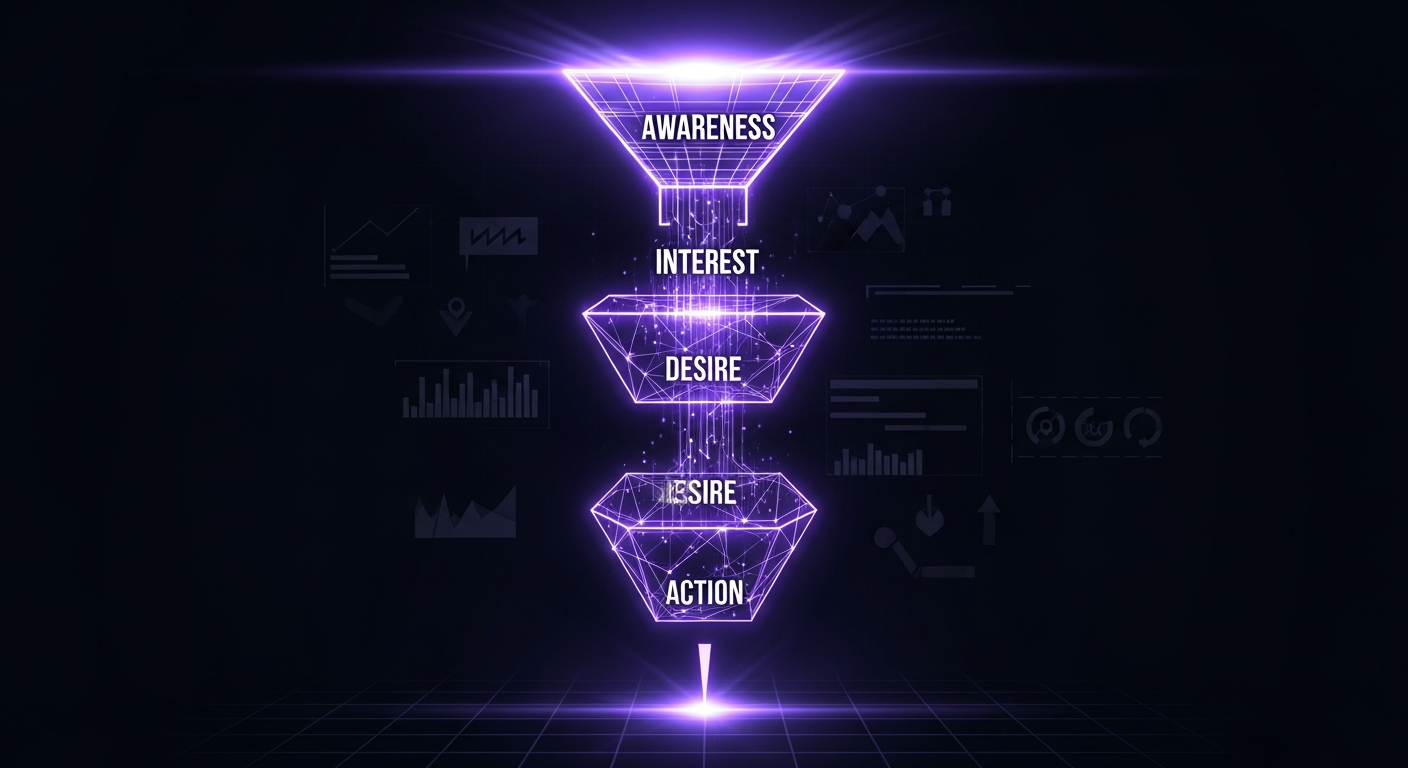
One of the oldest and most enduring frameworks for understanding the marketing funnel is the AIDA model. Developed in the late 19th century, its principles remain remarkably relevant in the digital age. AIDA is an acronym that stands for Awareness, Interest, Desire, and Action, representing the four key stages a consumer goes through during their purchasing journey. This model provides a simple yet powerful lens through which to view your marketing activities and ensure you are addressing the customer’s psychological state at each step.
The first stage, Awareness, is all about capturing your audience’s attention. At this point, potential customers may not even know your brand exists, or they may only have a vague understanding of the problem they need to solve. Your goal is to break through the noise and make them aware of your brand and your solution. This is the widest part of the funnel, where you focus on reach and exposure.
Marketing activities in the Awareness stage are designed to attract a broad audience. Common tactics include:
Once you have captured their attention, the next step is to generate Interest. In this stage, the consumer has moved from passive awareness to active engagement. They are actively researching solutions, comparing options, and trying to understand how your product or service can help them. Your goal is to provide them with more detailed and compelling information that holds their interest and encourages them to learn more.
Content at the Interest stage should be more in-depth and educational. Examples include:
The Desire stage is where you transition from building interest to creating a genuine want for your specific product or service. The consumer now understands their problem and is evaluating your solution against competitors. Your objective is to build an emotional connection and convince them that your offering is the best choice for them. This involves highlighting your unique value proposition, building trust, and showing them what their life or business could look like with your solution.
Tactics for creating desire often focus on building confidence and social proof:
The final stage of the AIDA model is Action. This is the moment of truth where you prompt the consumer to take the final step and make a purchase, sign up for a service, or fill out a contact form. Your goal is to make this process as simple and frictionless as possible. Any hesitation or confusion at this stage can result in a lost sale, so clarity and ease of use are paramount.
The Action stage is driven by a strong and clear Call-to-Action (CTA). Key elements include:
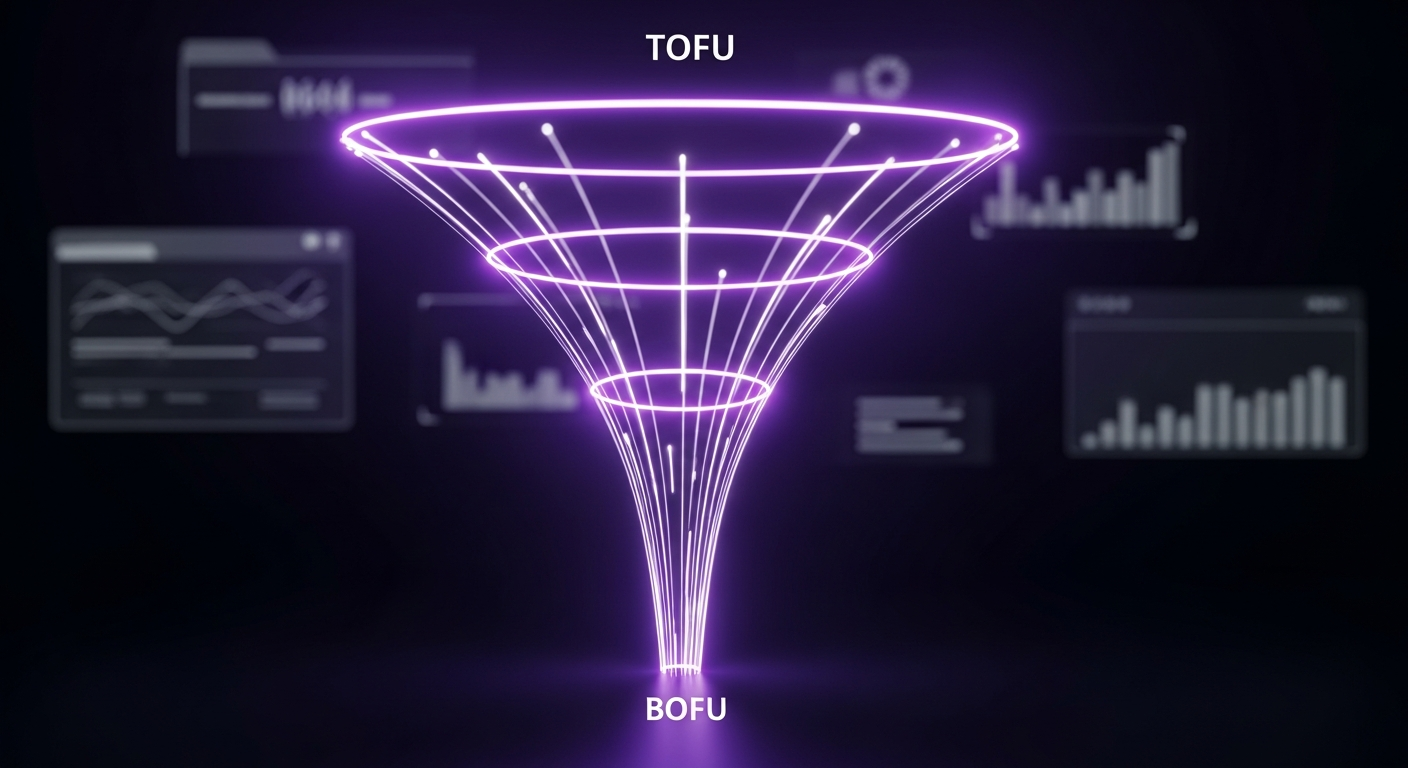
While the AIDA model provides a great psychological foundation, modern digital marketers often use a more content-centric framework known as TOFU, MOFU, and BOFU. This acronym stands for Top of the Funnel, Middle of the Funnel, and Bottom of the Funnel. This model directly aligns marketing content and activities with the different stages of the buyer’s journey, making it extremely practical for planning and executing digital marketing campaigns. It helps you answer the critical question: “What type of content should I create for someone at this specific stage?”
The Top of the Funnel (TOFU) corresponds to the Awareness stage in the AIDA model. The audience at this stage is very broad. They are experiencing the symptoms of a problem but may not have given it a name yet. They are looking for information, education, and answers, not a sales pitch. The primary goal of TOFU content is to attract these individuals to your brand by providing helpful, valuable information related to their pain points. The key is to be a resource, not a vendor.
Content at this stage should be easily discoverable and shareable. The focus is on generating traffic and building brand awareness. Examples of effective TOFU content include:
The Middle of the Funnel (MOFU) is where you begin to convert the anonymous traffic from the TOFU stage into identifiable leads. People in the MOFU stage have clearly defined their problem and are now actively evaluating different solutions. They are looking for more in-depth, specific information to help them make an informed decision. The primary goal of MOFU content is lead generation—offering a valuable piece of content (a ‘lead magnet’) in exchange for the prospect’s contact information, such as an email address.
This content should be more substantial than TOFU content and directly address how to solve the prospect’s problem. Examples of effective MOFU content include:
The Bottom of the Funnel (BOFU) is the final decision-making stage. The leads here are highly qualified and are on the verge of making a purchase. They are comparing final options and need to be convinced that your specific product or service is the best choice for them. The goal of BOFU content is conversion—to provide the final piece of information or incentive needed to turn a lead into a customer. Content at this stage should be highly targeted and product-focused.
BOFU offers are designed to reduce risk and make it easy to say “yes.” Examples include:
| Funnel Stage | Audience Mindset | Marketing Goal | Content Examples |
|---|---|---|---|
| Top of the Funnel (TOFU) | “I have a problem, but I don’t know what it is.” | Attract traffic and build awareness. | Blog posts, infographics, social media, podcasts. |
| Middle of the Funnel (MOFU) | “I know what my problem is, and I’m researching solutions.” | Generate leads and build trust. | Ebooks, case studies, webinars, checklists. |
| Bottom of the Funnel (BOFU) | “I’m ready to choose a solution.” | Drive conversions and close sales. | Free trials, demos, consultations, testimonials, pricing pages. |
Theory is useful, but seeing the marketing funnel in action brings the concepts to life. The principles of the funnel can be adapted to virtually any business model, from a global e-commerce giant to a local service provider. The specific tactics and tools may change, but the underlying strategy of guiding a prospect through stages of awareness, consideration, and decision remains the same. Let’s explore three distinct examples to illustrate how different businesses implement this framework.
E-commerce businesses depend on their ability to convert traffic into sales, making the marketing funnel an essential part of their strategy.
For Business-to-Business (B2B) Software-as-a-Service (SaaS) companies, the sales cycle is often longer and more complex, requiring significant lead nurturing.
Even local, service-based businesses like plumbers, electricians, or dentists rely on a funnel to attract and convert local customers.
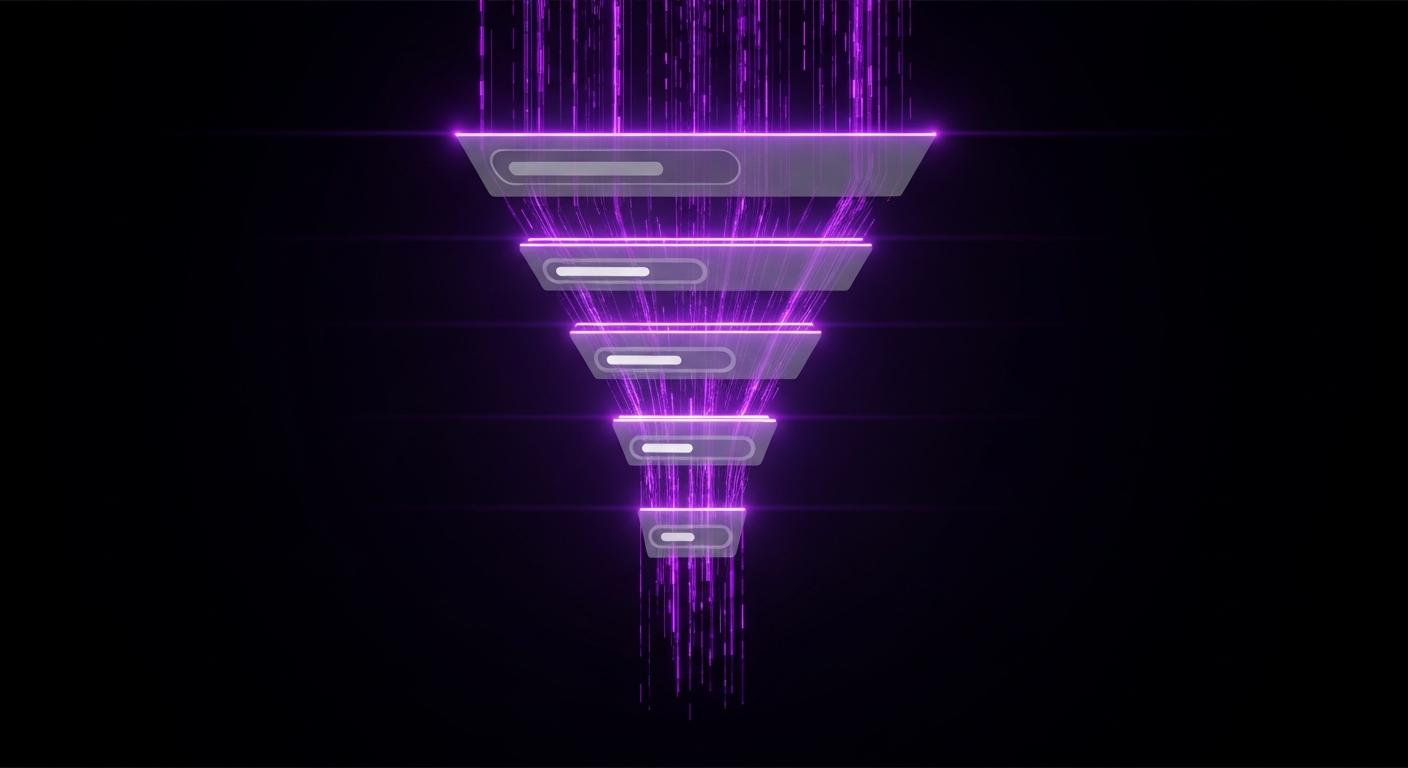
Building a marketing funnel from scratch can seem daunting, but it is a methodical process that can be broken down into manageable steps. The key is to start simple and focus on creating a cohesive journey for your ideal customer. This five-step guide provides a practical framework for constructing your first funnel, from understanding your audience to driving traffic and measuring results. Remember, your first funnel will not be perfect, but it provides a baseline for future testing and optimization.
Before you create a single piece of content or build a landing page, you must have a crystal-clear understanding of who you are trying to reach. A funnel built for the wrong audience is destined to fail. Start by creating a detailed buyer persona, a semi-fictional representation of your ideal customer. This persona should include demographic information, goals, challenges, and motivations. Most importantly, you need to deeply understand their pain points. What problems are they trying to solve? What questions are they asking at each stage of their journey? What are their biggest fears or objections to buying? This deep empathy is the foundation upon which your entire funnel will be built.
With your audience defined, the next step is to create the content that will attract and guide them through the funnel. This involves mapping specific content assets to the TOFU, MOFU, and BOFU stages. Your goal is to create a logical pathway where one piece of content naturally leads to the next.
Landing pages are specialized web pages designed for a single, focused objective: to get a visitor to take a specific action. You will need landing pages for your MOFU and BOFU offers. For example, you will need a landing page where visitors can sign up for your ebook and another where leads can request a product demo. A high-converting landing page is free of distractions (like a main navigation bar) and includes several key elements: a compelling headline, clear and concise copy that highlights benefits, social proof (like testimonials), and a single, prominent Call-to-Action (CTA) button.
What happens after someone downloads your ebook and becomes a lead? You cannot just leave them waiting. This is where email automation comes in. Set up an automated email sequence to nurture the new lead. This sequence should be designed to build trust, provide additional value, and gently guide them toward the bottom of the funnel. A simple sequence might look like this:
A perfectly constructed funnel is useless without people entering it. The final step is to actively drive traffic to your TOFU content. There are numerous ways to do this, and the best strategy will depend on where your target audience spends their time online. Common traffic generation methods include:
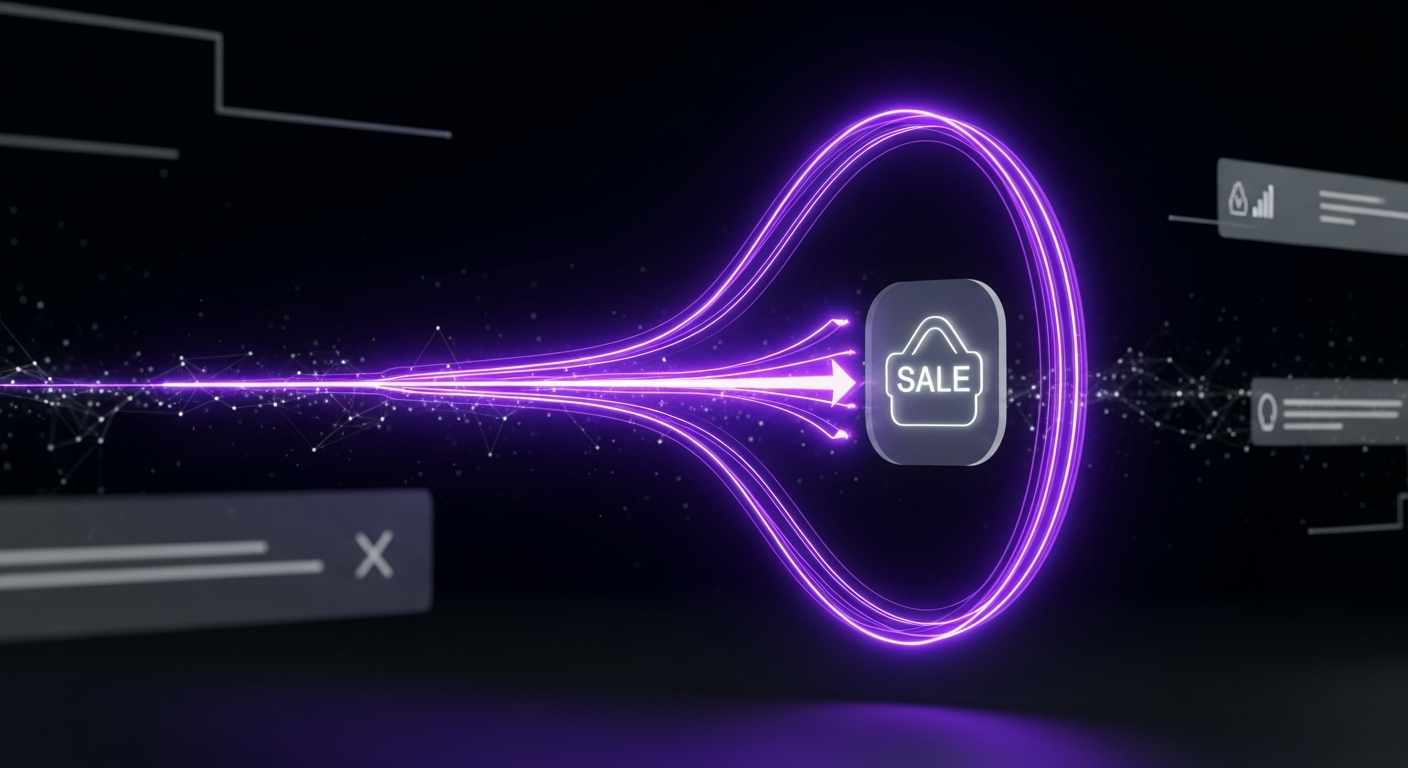
The traditional marketing funnel model, while incredibly useful, has one significant limitation: it ends at the point of purchase. This implies that once a customer buys from you, the journey is over. However, in today’s competitive landscape, this view is shortsighted. The most successful businesses understand that the customer journey does not conclude with a transaction; it is just the beginning of a new phase. The real, long-term value lies in retaining that customer and turning them into a loyal advocate for your brand.
Focusing on what happens after the sale is crucial for sustainable growth. A happy, loyal customer is far more valuable than a one-time buyer. They are more likely to make repeat purchases, are often less price-sensitive, and, most importantly, can become a powerful marketing channel in their own right. When a customer is so delighted with their experience that they actively recommend your brand to their friends, family, and colleagues, they create positive word-of-mouth—one of the most trusted forms of marketing. This stage involves activities like excellent customer service, a smooth onboarding process, loyalty programs, and actively seeking feedback. By investing in the post-purchase experience, you create a cycle where customers not only stay but also help feed new prospects into the top of your funnel.

A marketing funnel is not a ‘set it and forget it’ tool. Its true power is unlocked when you consistently measure its performance and use that data to make informed optimizations. Tracking the right metrics allows you to understand what is working, identify weak points or ‘leaks’ in your funnel, and ultimately improve your return on investment. Focusing on a few key performance indicators (KPIs) will give you the clarity needed to refine your strategy and drive better results.
The conversion rate is the percentage of people who complete a desired action and move from one stage of the funnel to the next. This is arguably the most important funnel metric. You should measure the conversion rate between each major step: from visitor to lead, from lead to marketing qualified lead (MQL), from MQL to sales opportunity, and from opportunity to customer. A low conversion rate at a specific stage is a red flag indicating a problem. For example, if you have lots of traffic but a low visitor-to-lead conversion rate, your lead magnet or landing page may not be compelling enough. Analyzing conversion rates by stage helps you identify where to focus your optimization efforts.
Customer Acquisition Cost (CAC) is the total cost of your sales and marketing efforts required to acquire a single new customer over a specific period. The formula is simple: Total Sales & Marketing Spend / Number of New Customers Acquired. A well-structured funnel helps you track these costs more effectively. By understanding your CAC, you can determine the profitability of your marketing campaigns. The goal is to keep your CAC as low as possible while still attracting high-quality customers. If your CAC is too high, you can look at your funnel to see where you might be spending inefficiently—perhaps your ad spend is too high for the number of leads it generates, or your sales process is too lengthy.
Customer Lifetime Value (CLV) is a prediction of the total net profit your business will make from any given customer over the entire duration of their relationship with you. This metric is crucial because it shifts the focus from a single transaction to the long-term value of a customer. It is essential to compare your CLV to your CAC. A healthy business model requires a CLV that is significantly higher than the cost to acquire that customer (a common benchmark is a CLV:CAC ratio of 3:1 or higher). Efforts to improve customer retention and encourage repeat purchases—the stages beyond the initial sale—have a direct and powerful impact on increasing your CLV.
Return on Investment (ROI) is the ultimate measure of your marketing effectiveness. It tells you how much revenue you have generated for every dollar you have spent on marketing. The formula is: (Revenue from Marketing – Marketing Spend) / Marketing Spend. A measurable funnel makes calculating ROI much more accurate. You can track a cohort of customers who entered the funnel through a specific campaign (e.g., a Google Ads campaign) and see how much revenue they ultimately generated. This allows you to justify your marketing budget and make strategic decisions about where to allocate future resources for the highest possible return.
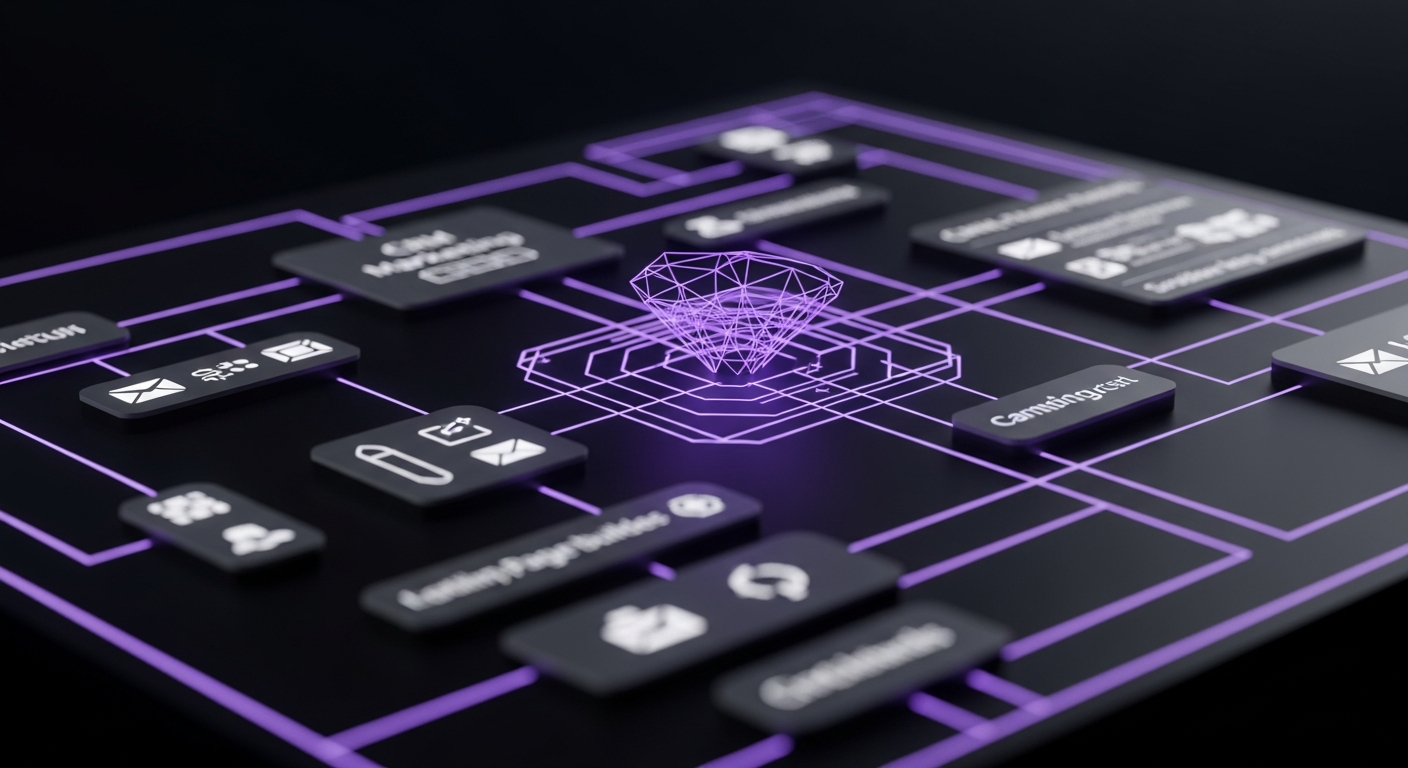
Building, managing, and optimizing a modern marketing funnel is significantly more difficult without the right technology stack. A variety of tools are available to help you automate repetitive tasks, gather crucial data, and create a seamless experience for your customers. While you do not need every tool on the market, a few key categories are essential for a functional and effective funnel.
| Tool Category | Purpose | Examples |
|---|---|---|
| CRM Platforms | To store and manage all your lead and customer data, tracking their interactions with your brand throughout the funnel. | HubSpot, Salesforce, Zoho CRM |
| Email Marketing Software | To automate lead nurturing sequences, send targeted campaigns, and communicate with your audience at scale. | Mailchimp, ConvertKit, ActiveCampaign |
| Landing Page Builders | To create and test dedicated, high-converting pages for your lead magnets and offers without needing to code. | Leadpages, Unbounce, Instapage |
| Analytics and Tracking Tools | To measure website traffic, track user behavior, monitor conversion rates, and understand how people move through your funnel. | Google Analytics, Hotjar, Mixpanel |
A Customer Relationship Management (CRM) platform is the central nervous system of your marketing and sales funnel. It is a database where you store all the information about your leads and customers, including their contact details, communication history, and their current stage in the funnel. A good CRM allows you to see the entire customer journey in one place, enabling better collaboration between marketing and sales teams and providing the data needed for personalized communication.
Email remains one of the most effective channels for lead nurturing. Email marketing software allows you to build automated sequences that are triggered when a user takes a specific action, such as downloading an ebook. This ensures that every new lead receives a consistent and timely series of communications designed to build trust and move them closer to a purchase. These tools also provide detailed analytics on open rates and click-through rates, helping you refine your messaging.
As mentioned earlier, landing pages are critical for conversion. While you can build them on your website, dedicated landing page builders offer powerful features like drag-and-drop editors, pre-built templates, and A/B testing capabilities. A/B testing allows you to test different versions of a headline, image, or CTA to see which one performs better, enabling you to continuously optimize your conversion rates based on real data.
You cannot optimize what you do not measure. Analytics tools like Google Analytics are essential for understanding where your traffic is coming from and how users are behaving on your site. You can set up goals to track key conversions, such as form submissions or purchases. More advanced tools like Hotjar can provide heatmaps and session recordings to give you visual insights into where users are clicking and where they might be getting stuck, helping you identify and fix friction points in your funnel.
Building a marketing funnel is a powerful step, but it is not immune to pitfalls. Many businesses make common mistakes that can hinder performance and lead to disappointing results. Being aware of these potential errors can help you build a more robust and effective funnel from the outset. By avoiding these missteps, you can ensure a smoother journey for your customers and a better return on your marketing efforts.
One of the most frequent mistakes is focusing all energy on the top (attracting traffic) and the bottom (closing sales) while completely neglecting the middle. This creates a massive gap in the customer journey. You attract visitors with great content but then immediately try to sell to them without building any trust or relationship. This is like asking someone to marry you on the first date. The fix is to dedicate resources to creating valuable MOFU content—webinars, case studies, and detailed guides—and implementing a lead nurturing system. The middle of the funnel is where you build the credibility and trust necessary to earn the sale.
A ‘leaky’ funnel is one where potential customers drop out at various stages without any mechanism to bring them back. A common example is e-commerce cart abandonment. A visitor adds a product to their cart but leaves without buying, and the business does nothing to re-engage them. This is leaving money on the table. To fix this, it is crucial to implement follow-up systems. Use retargeting ads to show relevant offers to people who have visited your site. Set up automated abandoned cart email sequences to remind and incentivize customers to complete their purchase. Proactive follow-up can plug these leaks and recover a significant amount of lost revenue.
Another critical error is a mismatch between your content’s message and the prospect’s stage in the funnel. Trying to push a product demo (BOFU content) in a blog post aimed at problem awareness (TOFU) will feel aggressive and premature, turning potential customers away. Conversely, offering a beginner’s guide to a lead who has already requested a demo is unhelpful and can stall their momentum. The solution is to perform a content audit and ensure every piece of content has a clear purpose and is mapped to a specific funnel stage. Your CTA should align with the prospect’s current mindset and guide them to the next logical step, not skip ahead three steps.
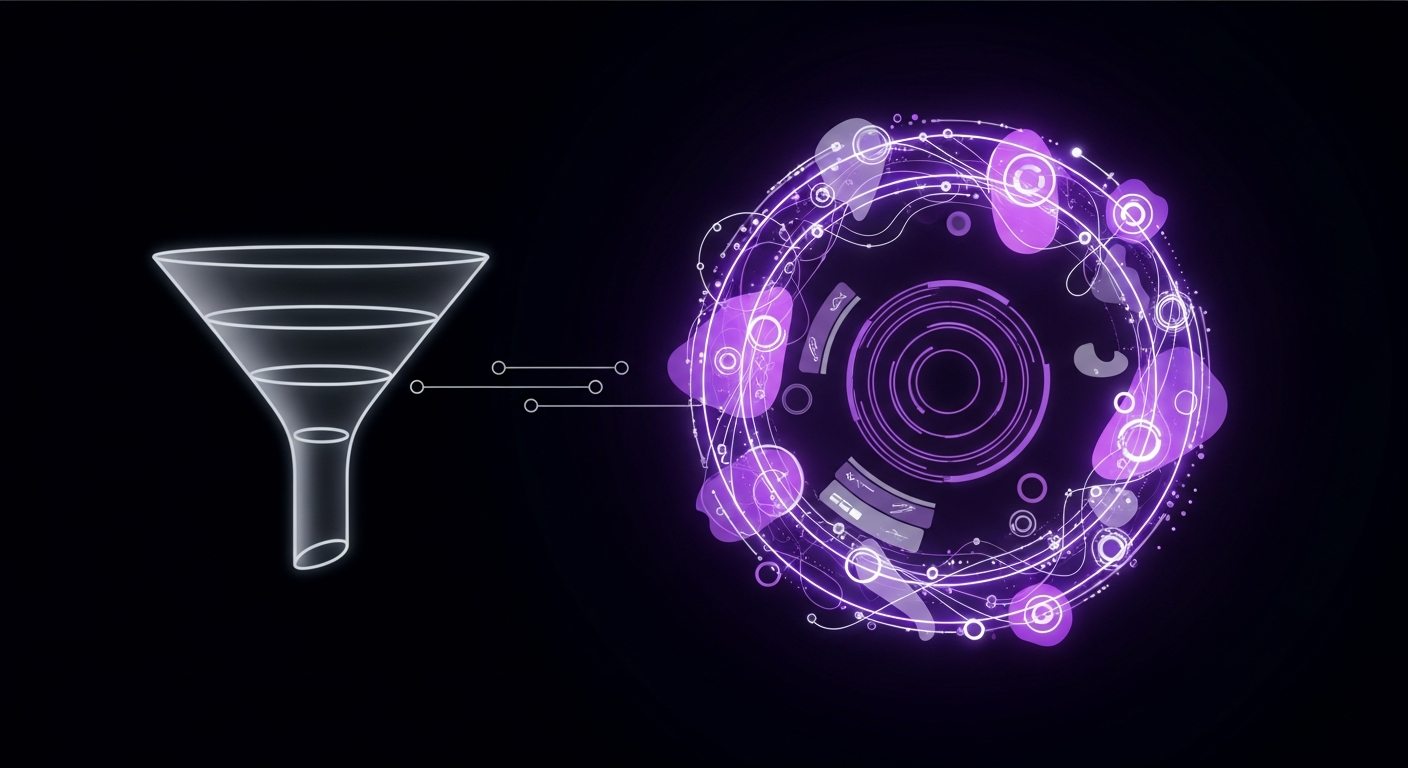
For decades, the linear funnel has been the dominant model for understanding the customer journey. However, as marketing has become more customer-centric, some limitations of this model have become apparent. The funnel’s primary weakness is its linear nature, which treats customers as an output—the end result of a process. Once they convert, they fall out of the bottom, and the focus shifts back to acquiring new prospects at the top. This model fails to account for the immense power of existing customers to drive new business through word-of-mouth, referrals, and reviews.
In response to this, new models have emerged, most notably the HubSpot Flywheel. The flywheel places the customer at the center of the business. Instead of a linear process, it envisions a circular motion with three phases: Attract, Engage, and Delight. In this model, the goal is to create such a positive experience that customers become a driving force for growth. Delighted customers provide the energy that keeps the flywheel spinning by becoming advocates who refer new business and feed the ‘Attract’ phase. This creates a self-sustaining loop where your marketing and customer service efforts build momentum over time. While the funnel is still an invaluable tool for mapping the initial acquisition journey, the flywheel provides a more holistic view, reminding us that the ultimate goal is not just to acquire customers, but to create happy, successful advocates who fuel your growth.