







The customer service landscape is undergoing a fundamental shift, moving from reactive, time-consuming processes to a proactive, intelligent, and highly personalized ecosystem. At the heart of this transformation is Artificial Intelligence (AI). Once a concept of science fiction, AI is now a foundational technology redefining how businesses interact with their customers. This evolution is no longer just about answering questions; it’s about understanding, anticipating, and acting on customer needs in real-time to create experiences that build satisfaction and loyalty.
In this new era, the traditional silos between customer service, marketing, and sales are dissolving. Every customer interaction is a rich source of data, a potential marketing opportunity, and a chance to strengthen brand loyalty. AI acts as the central nervous system, processing vast amounts of information from these interactions to deliver seamless, context-aware support. It empowers businesses to move beyond simply solving problems to creating value at every touchpoint. This evolution is critical in today’s competitive market, where customer experience (CX) is a primary brand differentiator.
This guide explores the multifaceted role of AI in customer service, delving into its core technologies, tangible benefits, and profound impact on marketing support and customer loyalty. We will examine how AI is not a replacement for human empathy but a powerful tool that augments human capabilities, allowing support teams to focus on building genuine relationships. From predictive analytics that preemptively solve issues to generative AI that crafts personalized responses, we are witnessing the dawn of a more efficient, empathetic, and intelligent approach to customer engagement.
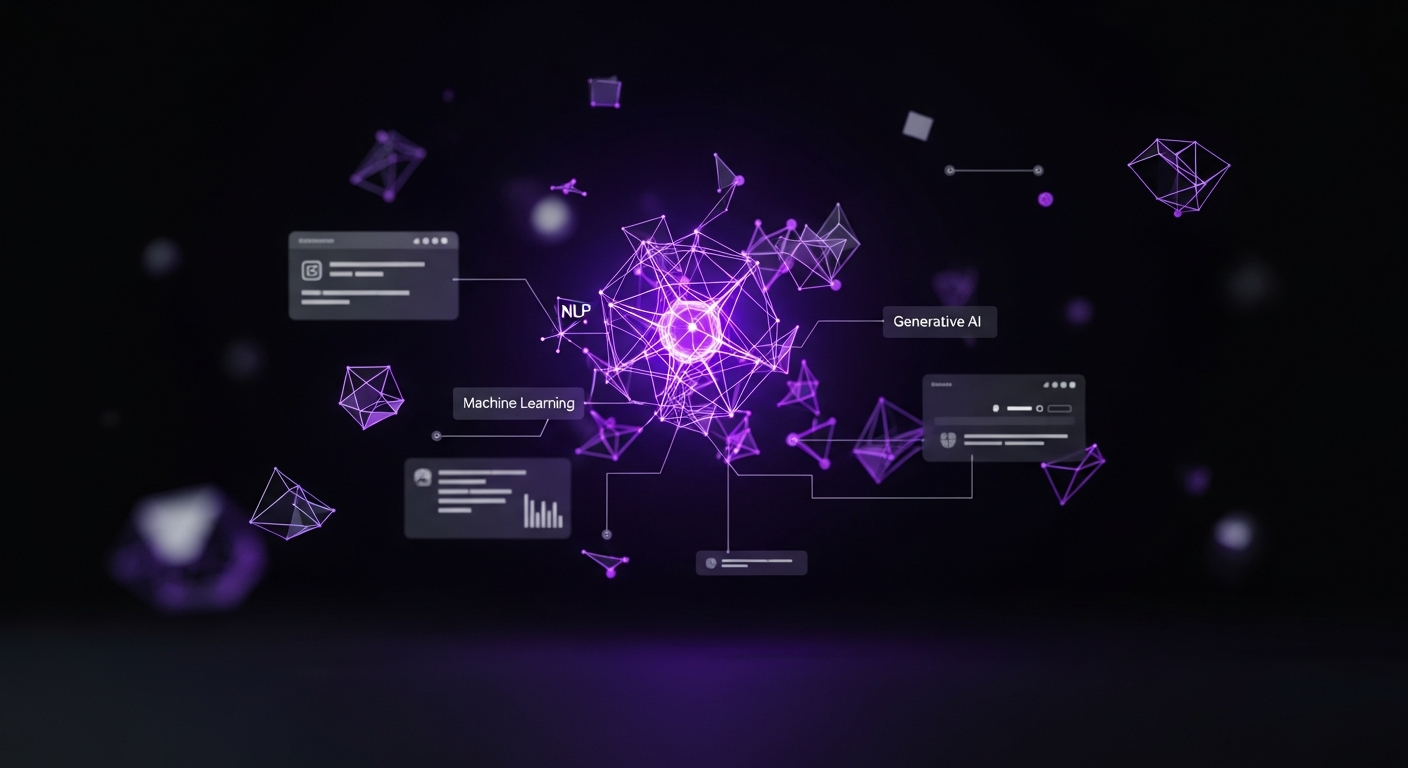
To grasp the power of AI in customer service, it is essential to understand the key technologies that form its foundation. These are not standalone concepts but interconnected components that work in concert to analyze, understand, and respond to human interaction. They are the engines driving the intelligent automation and deep insights that characterize modern customer support.
Machine Learning (ML) is a subset of AI that enables systems to learn from data and improve their performance over time without being explicitly programmed. In customer service, ML algorithms analyze historical data—such as past support tickets, customer feedback, and purchase history—to identify patterns and make predictions. This capability fuels predictive analytics, which forecasts future customer behaviors. For example, an ML model can analyze a customer’s recent support interactions and product usage to calculate a “churn score,” flagging them as at risk of leaving. This allows the business to intervene proactively with targeted offers or specialized support. Similarly, ML can predict future support ticket volumes, helping managers optimize staffing levels for peak periods.
Natural Language Processing (NLP) is the branch of AI that gives computers the ability to understand, interpret, and generate human language, both text and speech. It is the technology that allows a chatbot to comprehend the intent behind a customer’s query, even with slang, typos, or grammatical errors. NLP is crucial for automating responses, routing inquiries to the correct department, and extracting key information from unstructured conversations. A powerful application of NLP is sentiment analysis, which automatically gauges the emotional tone of a customer’s words. By analyzing emails, chat transcripts, or social media comments, sentiment analysis can classify interactions as positive, negative, or neutral. This provides invaluable, real-time feedback on customer satisfaction and can alert managers when a customer becomes frustrated, enabling swift human intervention.
A recent and transformative development in this space is Generative AI, powered by Large Language Models (LLMs). Unlike older AI systems that relied on predefined scripts, Generative AI can create new, contextually relevant, and human-like content. In customer service, this means AI can draft empathetic and detailed email responses, summarize complex customer conversations for agents, and power sophisticated virtual assistants that can handle multi-step, nuanced dialogues. LLMs are trained on massive datasets of text and code, enabling them to understand context, maintain conversational flow, and adapt their tone. This technology helps scale high-quality support by providing agents with instant, well-written response suggestions and by automating the creation of knowledge base articles from recent support tickets, ensuring documentation remains current.

Adopting AI in customer service is not merely a technological upgrade; it is a strategic business decision that yields significant, measurable benefits. These advantages extend beyond cost savings, touching every aspect of the customer experience and empowering both customers and support agents. By automating routine tasks and augmenting complex ones, AI unlocks new levels of efficiency and effectiveness.
In a globally connected world, customers expect support on their terms, not just during standard business hours. AI-powered chatbots and virtual assistants provide immediate, round-the-clock assistance. They can answer frequently asked questions, process orders, check account statuses, and guide users through troubleshooting steps at any time. This instant availability dramatically reduces customer wait times and resolves simple issues on the spot, leading to higher satisfaction. For businesses, it means capturing leads and solving problems even when the human team is offline, ensuring no opportunity is missed.
One of the most compelling benefits of AI is its ability to handle a high volume of repetitive inquiries simultaneously. By automating these common tasks, businesses can significantly reduce their reliance on a large human workforce for tier-1 support, leading to substantial savings in operational costs. An AI system can handle thousands of conversations at once without fatigue or error, scaling effortlessly during peak demand periods like holidays or product launches. This efficiency frees up resources that can be reinvested into other areas, such as product development or specialized agent training.
Rather than replacing human agents, AI’s primary role is to augment their abilities. AI acts as a powerful co-pilot for the support team. While chatbots handle frontline queries, AI-powered internal tools can assist human agents in real time. For instance, an AI can transcribe a customer call, pull up relevant customer history from the CRM, and suggest solutions from the knowledge base—all while the agent is speaking. This automation of administrative tasks allows agents to dedicate their cognitive energy to solving complex, emotionally charged, or unique problems where human empathy and critical thinking are irreplaceable. This not only boosts productivity but also increases agent job satisfaction by making their work more engaging.
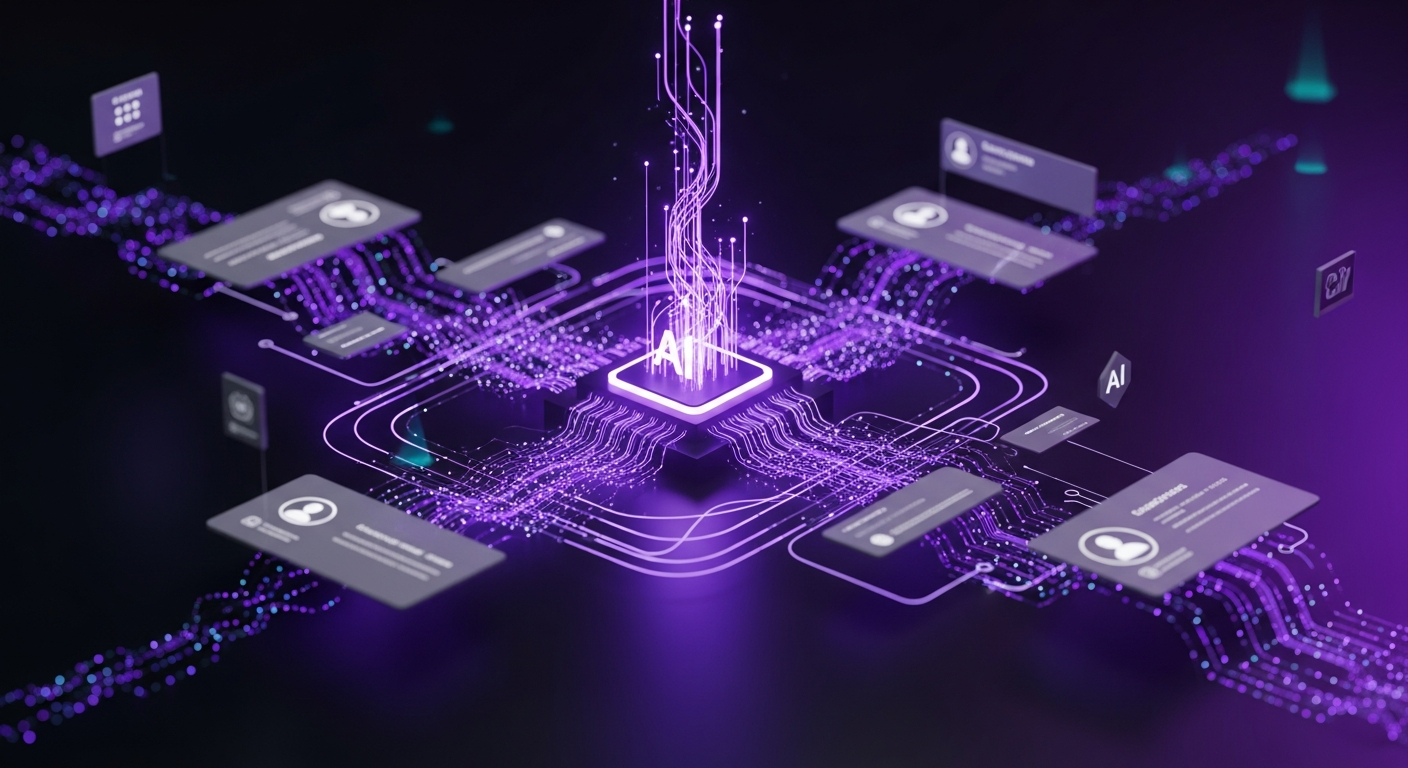
The integration of AI into customer service creates a powerful feedback loop that directly fuels marketing efforts. Every support interaction becomes a data point, offering deep insights into customer needs, pain points, and preferences. By breaking down the traditional barriers between service and marketing, AI enables a holistic approach to the customer journey, where support activities seamlessly transition into personalized marketing opportunities.
Customer service channels are a rich source of first-party data. AI systems can analyze chat transcripts, email tickets, and call summaries to understand what customers are struggling with, what features they are asking for, and what products they are interested in. This data can be used to create hyper-personalized marketing campaigns. For instance, if a customer contacts support about a specific software feature, the marketing team can automatically enroll them in an email sequence that provides helpful tutorials for that feature. If a customer asks about a product that is out of stock, they can be automatically notified and sent an offer when it becomes available. This transforms a support issue into a highly relevant and timely marketing touchpoint.
AI’s predictive capabilities allow businesses to shift from a reactive to a proactive engagement model. By analyzing user behavior on a website or within an app, AI can identify when a customer might be struggling or showing purchase intent. For example, if a user repeatedly visits a complex pricing page, a proactive AI chatbot can appear to ask, “Do you have any questions about our plans? I can help.” This not only prevents potential frustration but also opens a dialogue at a critical moment in the buyer’s journey. AI can identify these micro-moments of opportunity at a scale impossible for human teams to manage.
During a support interaction, AI can analyze a customer’s entire history—past purchases, support tickets, and product usage—to identify relevant cross-sell and upsell opportunities. An AI-powered virtual assistant helping a customer set up a new camera might suggest, “I see you’re an avid photographer. Many customers who bought this camera also find our high-speed memory card essential for getting the best shots.” These recommendations are far more effective than generic promotions because they are delivered in context and are based on the customer’s specific needs. This helps turn the customer service department from a cost center into a revenue-generating engine.

Customer loyalty is a primary goal for any business, earned through consistently positive and effortless experiences. AI plays a pivotal role in building these strong bonds by making interactions faster, more accurate, and seamlessly integrated across all channels. By focusing on proactive problem-solving and deep personalization, AI helps create an environment where customers feel understood and valued, making them less likely to switch to a competitor.
Acquiring a new customer is significantly more expensive than retaining an existing one. AI-powered predictive analytics are a game-changer for retention strategies. By continuously analyzing a wide range of data points—such as declining product usage, negative sentiment in support tickets, or payment issues—AI models can accurately predict which customers are at high risk of churning. This early warning system allows customer success teams to intervene before it’s too late. They can reach out with personalized support, special offers, or educational content designed to address the customer’s specific issues and reaffirm the value of the product or service.
Today’s customers interact with brands across a multitude of channels: website chat, social media, email, and phone. A major source of frustration is having to repeat an issue every time they switch channels. AI is key to solving this problem. An AI-powered CRM can unify all customer data and interaction history into a single, cohesive profile. This means that when a customer starts a conversation with a chatbot on the website and then escalates to a phone call with a human agent, the agent instantly has the full context of the previous interaction. The AI can even provide a concise summary of the issue, creating a frictionless experience that makes the customer feel heard.
Speed and accuracy are cornerstones of great customer service. AI excels at both. For customers, AI-powered self-service tools like intelligent knowledge bases and chatbots provide instant answers to common questions, leading to immediate resolutions. For agents, AI tools act as an instant source of truth. Instead of manually searching through dense documentation, an agent can ask an internal AI assistant, “What is the return policy for international orders?” and get an immediate, accurate answer. This rapid access to information dramatically reduces handle times and ensures that the information provided to customers is consistent and correct, which builds trust and confidence in the brand.

To harness the power of AI, businesses need to equip their teams with the right tools. The market is filled with a diverse range of AI-powered solutions designed to address different aspects of the customer service journey. Understanding these key tool categories is the first step toward building a modern, intelligent support stack.
This is often the most visible application of AI in customer service. However, not all chatbots are created equal. Basic, rule-based chatbots can only follow a predefined script. In contrast, AI-powered virtual assistants use NLP and ML to understand user intent, handle complex queries, and maintain context over a longer conversation. They can integrate with other business systems to perform actions like booking appointments, processing returns, or updating account information, providing a more natural and helpful self-service experience.
Modern Customer Relationship Management (CRM) and ticketing platforms are increasingly infused with AI capabilities. These systems can automatically analyze incoming support tickets, classify them by topic, assign a priority level, and route them to the agent with the most relevant expertise. AI can also detect duplicate tickets from the same user across different channels and merge them. Within the agent’s interface, AI suggests macro responses, links to relevant knowledge base articles, and provides a summarized view of the customer’s history, significantly speeding up response times.
For businesses that rely heavily on phone support, voice analytics tools are transformative. This software uses AI to transcribe calls in real-time and analyze them for key metrics. It can detect customer sentiment by analyzing tone of voice and word choice, flagging calls where a customer is becoming upset. It can also be used for quality assurance by automatically checking if agents are following compliance scripts. A major productivity booster is automatic call summarization. After a call ends, the AI generates a concise summary of the conversation, saving agents several minutes of manual note-taking after every call.

Successfully integrating AI into your customer service operations requires more than just purchasing new software. It demands a thoughtful strategy, careful planning, and a focus on people as much as technology. Following a structured approach can ensure a smooth transition and maximize the return on your investment.
The first step is to avoid adopting AI for its own sake. Instead, start by identifying your biggest customer service challenges. Are agents overwhelmed with repetitive questions? Are response times too slow? Is customer churn a problem? Once you’ve identified the pain points, set specific, measurable, achievable, relevant, and time-bound (SMART) goals. For example, a goal might be to “reduce first-response time for email tickets by 50% within six months” or “deflect 30% of common ‘how-to’ questions to a chatbot by the end of the quarter.” These clear objectives will guide your entire implementation process.
With your goals defined, you can begin evaluating potential AI solutions. It’s crucial to select tools that not only meet your immediate needs but can also scale with your business. Here are key factors to consider:
| Evaluation Criterion | Description |
|---|---|
| Integration Capabilities | How well does the tool integrate with your existing CRM, helpdesk, and other business systems? Seamless integration is key to a unified customer view. |
| Ease of Use | Is the platform intuitive for both administrators to set up and agents to use? A steep learning curve can hinder adoption. |
| Scalability and Performance | Can the tool handle your current volume of inquiries and grow with you? Check performance metrics and reliability. |
| Customization and Control | How much control do you have over the AI’s responses, branding, and conversational flows? It should align with your brand voice. |
| Vendor Support and Training | What level of onboarding, training, and ongoing technical support does the vendor provide? A strong partnership is essential for success. |
The human element is the most critical part of any AI implementation. Communicate openly with your customer service team about why the changes are being made and how AI will benefit them. Frame AI as a tool that will eliminate tedious tasks and empower them to do more meaningful work. Provide comprehensive training not just on how to use the new software, but also on the new workflows and redefined roles. Agents may need to develop skills in handling complex escalations or managing the AI’s performance. Fostering a culture of collaboration between humans and AI is key to unlocking its full potential.

The theoretical benefits of AI become much clearer when viewed through the lens of real-world application. Across various industries, companies are leveraging AI to solve tangible business problems, enhance customer experiences, and drive growth. These examples illustrate the practical power of a well-executed AI strategy.
Case Study 1: The E-commerce Retailer Reducing Cart Abandonment
An online fashion retailer was struggling with a high cart abandonment rate. By implementing a proactive AI chatbot on their checkout page, they were able to identify user hesitation in real-time. The chatbot was programmed to trigger when a user paused for more than 60 seconds or moved their mouse towards the exit button. It would then initiate a conversation, asking questions like, “Having trouble with shipping costs? We offer free shipping on orders over $50,” or “Do you have a question about our return policy?” This immediate, contextual intervention addressed common concerns causing users to leave. The retailer saw a 15% reduction in cart abandonment and a 7% increase in overall conversion rates within three months.
Case Study 2: The SaaS Company Improving User Onboarding
A fast-growing B2B software company found that many new users were dropping off during the initial setup and onboarding process. They deployed an AI-powered virtual assistant within their application. This assistant provided interactive, step-by-step guidance, answered context-specific questions about features, and proactively offered tips based on the user’s actions. If the AI detected a user was stuck on a particular step, it would offer to connect them with a live onboarding specialist. This blended approach of AI self-service and human support led to a 40% increase in successful product activations and a significant decrease in onboarding-related support tickets.
Case Study 3: The Telecommunications Provider Predicting Churn
A major telecom provider faced intense competition and high customer churn. They implemented an AI platform that analyzed customer data from multiple sources, including call history, data usage, billing inquiries, and sentiment from support calls. The machine learning model identified complex patterns that preceded a customer canceling their service. When the system flagged a high-risk customer, it automatically created a “retention ticket” and routed it to a specialized team. The ticket included a summary of the reasons the customer was at risk (e.g., “recent network issue, negative sentiment on last call, viewed competitor websites”). Armed with this insight, the retention team could make a proactive, personalized outreach call, resulting in a 25% reduction in voluntary churn over the first year.

While the benefits of AI in customer service are substantial, the path to implementation is not without its challenges. Acknowledging and proactively addressing these potential hurdles is crucial for a successful deployment. Businesses must navigate technical complexities, ethical considerations, and the delicate balance between automation and human connection.
AI systems, particularly those powered by machine learning, require large amounts of data to function effectively, often including sensitive customer information. Businesses have a critical responsibility to protect this data. It is imperative to choose AI vendors that adhere to strict security protocols and comply with data privacy regulations like GDPR and CCPA. Companies must be transparent with customers about how their data is being used and ensure that all data is anonymized and encrypted where possible. A data breach involving an AI system can severely damage brand trust.
One of the biggest risks of AI implementation is creating a cold or frustrating customer experience. An over-reliance on automation without a clear and easy path to a human agent can alienate customers. The goal should be to use AI for simple, transactional tasks, freeing up humans for complex, empathetic conversations. The design of AI interactions is key; they should use natural language, express empathy where appropriate, and be able to recognize their own limitations and seamlessly escalate the conversation to a person when needed. The best AI strategies blend automation with human oversight.
Most companies operate with a complex web of existing systems, including CRMs, e-commerce platforms, and billing databases. A new AI tool must integrate smoothly with this existing tech stack to be effective. A chatbot that cannot access a customer’s order history is of limited use. These integrations can be technically challenging and time-consuming. It is vital to conduct a thorough technical audit before selecting a vendor and to allocate sufficient resources for the integration process. A phased rollout, starting with simpler integrations, can often mitigate risk.

The evolution of AI in customer service is accelerating rapidly. The technologies and strategies that are cutting-edge today will be standard practice tomorrow. Staying ahead of the curve requires an understanding of the emerging trends shaping the future of customer and marketing interactions, moving toward a state of hyper-automation and deeply predictive engagement.
A key trend is the rise of proactive and predictive support. Instead of waiting for a customer to report a problem, AI will monitor product usage and system diagnostics to identify issues before they impact the user. For instance, a customer might receive an email that says, “We noticed your internet connection has been unstable. We’ve already run a diagnostic and resolved the issue from our end. Your service should now be back to normal.” This level of proactive service can build significant trust and loyalty.
Another significant development is the increasing emotional intelligence of AI. Through advanced sentiment and tonal analysis, AI will become better at recognizing subtle emotional cues in a customer’s text or voice. This will allow AI assistants to adapt their communication style, showing more empathy to a frustrated customer or adopting a more upbeat tone with a happy one. This “affective computing” will make automated interactions feel more human and natural.
Finally, the convergence of service and marketing will become even more profound through AI-driven journey orchestration. AI will manage the entire customer lifecycle, seamlessly blending support, marketing, and sales into a single, continuous conversation. An AI could guide a customer through a support issue, use the data from that interaction to recommend a new product, and then follow up with personalized marketing content, all within a unified and context-aware experience. The future is not just about solving problems; it’s about creating intelligent, predictive, and personalized journeys for every customer.

AI improves CX by providing 24/7, instant responses to queries through chatbots, which reduces wait times. It enables hyper-personalization by using data to anticipate customer needs and tailor interactions. AI also ensures consistency and accuracy across all channels, creating a seamless, omnichannel experience. By handling routine tasks, it frees up human agents to focus on complex and emotional issues, adding a higher-quality human touch where it matters most.
It is highly unlikely that AI will completely replace human agents. The future of customer service is a collaborative model where AI and humans work together. AI excels at handling high volumes of repetitive, data-driven tasks, while humans manage complex, nuanced, and emotionally charged situations that require empathy, creativity, and critical thinking. The role of the human agent will evolve to be more specialized and focused on high-value relationship building.
One of the most significant challenges is the integration of new AI platforms with existing legacy systems (like CRMs and billing systems). Ensuring a seamless flow of data between these systems is technically complex and crucial for AI to function effectively. Other major challenges include ensuring data privacy and security, and managing the cultural shift required to train employees to work alongside AI tools.
Absolutely. AI can be a great equalizer for small businesses. Many AI customer service platforms offer scalable, subscription-based pricing models that are affordable for smaller companies. AI allows a small team to provide 24/7 support and handle a volume of inquiries that would otherwise require a much larger staff. This helps them compete with larger corporations by offering a highly responsive and efficient customer experience.
AI analyzes data from service interactions (like chat transcripts or support tickets) to understand a customer’s specific pain points, interests, and needs. This insight is then fed into marketing automation systems. For example, if a customer contacts support about a specific product feature, AI can trigger a personalized marketing email that provides a tutorial on that feature or suggests an upgrade that enhances it. This makes marketing messages highly relevant and timely.
A standard, rule-based chatbot operates on a fixed script or decision tree. It can only respond to specific keywords and commands it has been pre-programmed with. An AI-powered virtual assistant, on the other hand, uses Natural Language Processing (NLP) and Machine Learning (ML). It can understand the intent and context behind a user’s query, handle complex conversations, learn from interactions, and integrate with other systems to perform actions (like checking an order status), providing a much more flexible and intelligent user experience.