




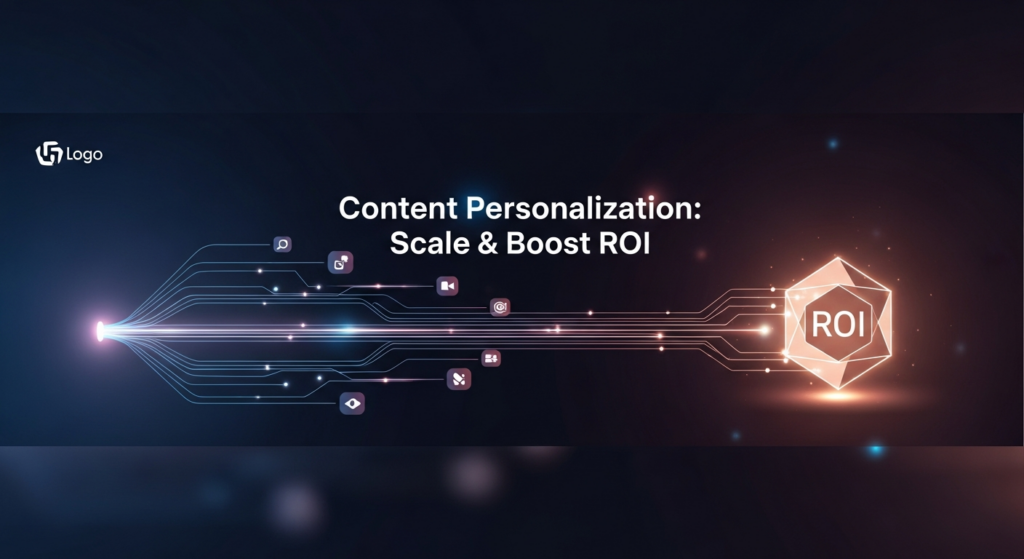

In a digital landscape saturated with generic advertising and one-size-fits-all messaging, capturing and holding a customer’s attention has become a primary challenge for businesses. Consumers now expect brands to understand their needs, anticipate their questions, and speak to them directly. This is where content personalization evolves from a marketing buzzword into a critical business strategy. It is the art and science of delivering the right content to the right person at the right time through the right channel.
A well-executed content personalization strategy does more than increase click-through rates; it builds trust, fosters loyalty, and creates a seamless customer experience that feels helpful rather than intrusive. It is the difference between a user seeing a generic homepage and one that greets them by name and highlights products based on their past browsing history. This guide provides a comprehensive framework for building and scaling a successful content personalization strategy, from foundational data collection to advanced execution and measurement.

Content personalization is the process of using data and technology to tailor content and experiences to the specific characteristics, preferences, and behaviors of an individual user or audience segment. Unlike a static website where every visitor sees the same information, a personalized site dynamically adjusts its messaging, imagery, offers, and recommendations. The goal is to create an experience that feels uniquely relevant and valuable to each person, making them feel seen and understood by the brand.
Though often used interchangeably, personalization and customization are distinct concepts. Understanding this difference is key to building an effective strategy.
A mature strategy often employs both. The system personalizes the core experience, while the user has options to customize it further, providing valuable explicit data in the process.
The core benefit of personalization is a significantly improved user experience (UX). When content speaks directly to a user’s pain points, industry, or interests, it removes friction from their journey. They find what they need faster, feel a stronger connection to the brand, and are more likely to perceive the company as a helpful partner. This enhanced experience translates directly into tangible business results. Personalized calls-to-action (CTAs) typically convert at a higher rate than generic ones, and tailored product recommendations can substantially increase average order value. By nurturing a customer with relevant content throughout their lifecycle, brands can increase engagement, reduce churn, and boost overall Customer Lifetime Value (CLV).
The demand for personalization is not just a marketing assumption; it is a clear expectation from consumers. The data speaks for itself:
These figures underscore a fundamental shift in consumer behavior. Generic, mass-market communication is no longer sufficient. Brands that fail to adapt risk becoming irrelevant, while those that master personalization can build deeper, more profitable customer relationships.

A successful personalization strategy is built on a foundation of high-quality, accessible data. Without a clear understanding of who your audience is and how they behave, any attempt at personalization is merely a guess. A robust and ethical data collection framework is non-negotiable and involves gathering information from multiple sources transparently.
Understanding data types is the first step. The two primary categories are first-party and third-party data.
Explicit data is information that users intentionally and consciously provide. This data is powerful because it reveals direct intent and preferences. Methods for collecting explicit data include:
Implicit data is information gathered by observing a user’s behavior and context. It provides insights into their interests and intent without them having to state it directly. Key types of implicit data include:
By combining explicit and implicit data, you can build a comprehensive, 360-degree view of your customer, enabling you to deliver truly relevant and timely experiences.

Once you have a steady stream of data, the next step is to organize it into meaningful groups. Audience segmentation is the process of dividing your broad audience into smaller, more manageable segments based on shared characteristics. This allows you to move beyond one-size-fits-all messaging and target specific groups with tailored content.
This foundational form of segmentation focuses on ‘who’ the customer is.
Behavioral segmentation is particularly powerful because it is based on what users *do*, not just who they are. It provides strong signals of intent. Segments can be based on:
Psychographic segmentation delves into the ‘why’ behind user actions, grouping people based on their values, attitudes, interests, and lifestyles. This data is often gathered through surveys and analysis of content consumption. For example, an outdoor gear company might create segments for ‘casual hikers,’ ‘extreme mountaineers,’ and ‘eco-conscious travelers,’ each receiving different content and product recommendations that align with their core values.
The culmination of segmentation is the creation of detailed, data-driven buyer personas. A persona is a semi-fictional representation of your ideal customer within a specific segment. It goes beyond a simple description by giving the segment a name, a face, goals, challenges, and motivations. For example, instead of a segment called ‘SMB in Tech,’ you might create a persona named ‘Marketing Mary,’ a marketing manager at a 100-person tech startup whose main challenge is generating qualified leads with a limited budget. This persona makes the segment tangible and helps your content and marketing teams empathize with and create content for a real person.

Understanding your audience segments is critical, but to be effective, you must also know where they are in their relationship with your brand. The customer journey map provides a framework for delivering the right content at the right time. By personalizing content for each stage, you can guide users seamlessly from initial awareness to long-term loyalty.
At the Awareness stage, potential customers are experiencing a problem or have a need and are looking for answers. They may not even be aware of your brand yet. Personalization here focuses on providing educational content that addresses their initial questions. For example, a visitor from the healthcare industry could see a blog post titled ‘Top 5 Data Security Challenges for Hospitals in 2024,’ while a visitor from the finance sector sees ‘How FinTech is Navigating New Compliance Regulations.’ This immediately establishes relevance and positions your brand as a knowledgeable resource.
In the Consideration stage, users have defined their problem and are now actively researching and comparing potential solutions. Your brand is on their radar. Personalization at this stage should focus on demonstrating how your product or service specifically solves their problem. This is the perfect time to surface personalized case studies, webinars, or solution briefs. If a user from a large enterprise has been reading about your scaling capabilities, you can dynamically display a case study featuring a Fortune 500 client rather than a small business success story.
At the Decision stage, the user is ready to make a purchase. Personalization here can provide the final nudge they need. This can involve customized pricing pages based on company size, personalized demo offers that mention their specific use case, or a targeted CTA with a special offer for their industry. For an e-commerce site, this could mean showing a ‘complete the look’ recommendation based on an item in their cart. The goal is to make the final step as relevant and frictionless as possible.
The journey does not end at the sale. The Loyalty stage is about retaining customers and turning them into advocates. Personalization is crucial for nurturing this relationship. This includes sending personalized onboarding tips based on how they are using your product, offering exclusive content or early access to new features for power users, and providing proactive support by identifying potential issues based on their usage patterns. A personalized ‘Thank You’ email that references their first purchase or a milestone anniversary can go a long way in building a lasting connection.
With a solid data foundation and a clear understanding of your audience and their journey, you can begin implementing specific personalization tactics. These range from simple, rule-based changes to sophisticated, AI-driven experiences.
This is one of the most common and effective forms of personalization. Dynamic content, also known as adaptive content, refers to elements on a webpage, email, or ad that change based on user data. Examples include:
Recommendation engines are algorithms that suggest relevant items to users. They are the powerhouse behind platforms like Amazon, Netflix, and Spotify. This tactic can be applied in many contexts:
Rule-based personalization uses ‘if-then’ logic to deliver experiences to specific audience segments. You manually define the rules based on the data you have. While less sophisticated than AI, it is a powerful and accessible starting point. Examples of rules include:
This is the most advanced form of personalization. It uses machine learning (ML) and predictive analytics to go beyond past behavior and anticipate future needs. Instead of relying on pre-set rules, AI algorithms analyze vast datasets to identify patterns and predict the content, product, or offer that is most likely to resonate with each individual user in real-time. This can power hyper-personalization, creating a unique 1:1 experience for every visitor. For example, an AI engine might predict a customer is at risk of churning based on subtle changes in their behavior and proactively serve them a special offer or helpful content to re-engage them.
| Tactic | Complexity | Scalability | Data Requirement | Best For |
|---|---|---|---|---|
| Dynamic Content | Low | High | Low to Medium | Targeted messaging on key pages (homepage, landing pages). |
| Rule-Based | Medium | Medium | Medium | Delivering specific experiences to high-value, well-defined segments. |
| Recommendations | Medium to High | High | High (Behavioral Data) | E-commerce, media sites, and large content libraries. |
| AI-Powered | High | Very High | Very High (Large Datasets) | Mature organizations aiming for real-time, 1:1 hyper-personalization. |

Executing a personalization strategy requires the right set of tools. Your technology stack, or ‘martech stack,’ is the engine that collects data, manages segments, and delivers tailored experiences. The core components work together to create a seamless flow of information and execution.
A Customer Data Platform (CDP) is the heart of a modern personalization stack. Its primary job is to collect customer data from all sources (website, mobile app, CRM, support tickets, etc.), unify it into a single, persistent customer profile, and make that data available to other systems. By breaking down data silos, a CDP provides the comprehensive, 360-degree customer view needed for advanced segmentation and personalization. It acts as the single source of truth for all customer information.
Your Content Management System (CMS) is where your content lives. Modern enterprise CMS platforms (like Adobe Experience Manager, Sitecore, or HubSpot CMS Hub) have built-in personalization capabilities. They allow you to create audience segments and apply rules to show or hide specific content blocks, components, or even entire pages based on user attributes. A CMS with native personalization features simplifies creating and deploying dynamic content directly within your content creation workflow.
Marketing automation platforms and ESPs (like HubSpot, Marketo, or Mailchimp) are essential for personalizing communication outside of your website. These tools excel at email personalization, allowing you to insert dynamic fields (like a contact’s first name or company), segment email lists based on behavior, and build automated nurture campaigns that send different messages based on how a user interacts with previous emails or your website. They are critical for executing journey-based personalization.
For more advanced strategies, you may need dedicated tools. Personalization engines (like Dynamic Yield, Optimizely, or VWO) offer powerful AI-driven recommendation and personalization capabilities that can often go beyond what is native to a CMS. They provide sophisticated algorithms for predictive targeting and product recommendations. These tools almost always include robust A/B testing and multivariate testing features, which are essential for measuring the impact of your personalization efforts and optimizing your strategy through data-driven experimentation.

A few one-off personalization tactics can deliver quick wins, but their true value is realized when you systemize your approach to deliver tailored experiences consistently across all touchpoints. Scaling requires a strategic framework, efficient processes, and a supportive culture.
A content matrix is a planning tool that maps your content assets to your buyer personas and their stage in the customer journey. You can create a spreadsheet with personas or segments as the rows and journey stages (Awareness, Consideration, Decision) as the columns. In each cell, you list the existing or planned content assets that are most relevant. This matrix helps you visualize your personalization strategy, identify content gaps (e.g., ‘We have no consideration-stage content for our Enterprise IT Director persona’), and prioritize your content creation efforts.
Creating a unique piece of content for every single segment and scenario is unsustainable. The key to scaling content creation is a modular approach. This means breaking down content into smaller, reusable chunks or ‘modules’ (e.g., a testimonial, a product feature description, a case study summary, a CTA block). These modules can then be dynamically assembled in different combinations to create a personalized page or email. A centralized digital asset management (DAM) system can house these reusable components, making it easy for your team to find and deploy them.
Automation is the engine of scalability. Use your marketing automation platform and CDP to create workflows that trigger personalized experiences based on user actions. For example:
Technology and processes are only part of the equation; your team is the most critical element. Scaling personalization requires a cultural shift where everyone—from content creators to marketers to developers—thinks about the customer experience through the lens of personalization. This involves:

To justify investment and optimize your strategy, you must measure its impact. A common mistake is focusing only on high-level vanity metrics. Effective measurement requires tracking specific Key Performance Indicators (KPIs) that directly reflect the performance of your personalization efforts, ideally by comparing a personalized experience against a generic control version via A/B testing.
Engagement metrics are leading indicators that show whether your personalized content is resonating with the audience. Key metrics include:
This is one of the most important KPIs. The ultimate goal of most personalization efforts is to drive action. Conversion Rate Optimization (CRO) is intrinsically linked to personalization. You should measure the lift in conversion rates for key goals, such as:
By running A/B tests, you can precisely quantify the percentage lift generated by the personalized variant over the control group.
While conversion rates measure immediate impact, Customer Lifetime Value (CLV) measures the long-term health of your customer relationships. A successful personalization strategy should increase the total net profit a customer generates over their entire relationship with your brand. By personalizing the post-purchase and loyalty stages of the journey, you can increase repeat purchases, drive upsells and cross-sells, and reduce churn—all of which contribute to a higher CLV.
Ultimately, stakeholders will want to know the Return on Investment (ROI) of your personalization program. The formula is straightforward: ROI = (Gain from Investment – Cost of Investment) / Cost of Investment. The ‘cost’ includes technology licenses, content creation resources, and team hours. The ‘gain’ is the incremental revenue generated by your personalization efforts, which you can calculate based on the conversion rate lift and increased CLV. Proving a positive ROI is essential for securing ongoing budget and support for your strategy.

While the benefits of personalization are clear, the path to implementation is not without its challenges. Being aware of these common hurdles can help you navigate them effectively.
Data privacy regulations like Europe’s GDPR and California’s CCPA have fundamentally changed how companies can collect and use customer data. Non-compliance can result in hefty fines and a loss of customer trust.
There is a fine line between helpful personalization and an invasive experience that feels intrusive or ‘creepy.’ Using sensitive information or being too specific (e.g., ‘We see you spent 2 minutes and 43 seconds looking at this product’) can backfire and alienate users.
In many organizations, customer data is scattered across different systems that do not communicate—the CRM, the email platform, the e-commerce system, the support desk. This creates a fragmented view of the customer and makes effective personalization impossible.
The need to create content variations for different segments can quickly become a bottleneck, overwhelming your content team and potentially leading to a drop in quality.

The field of content personalization is constantly evolving, driven by rapid advancements in artificial intelligence and machine learning. The industry is moving away from broad, segment-based rules and toward true 1:1 hyper-personalization, where every interaction across every channel is uniquely tailored to the individual in real time. AI will not only analyze past behavior but will also predict future intent with increasing accuracy, allowing brands to proactively address needs before the customer even articulates them. We can expect to see more AI-driven journey orchestration, where a customer’s entire experience—from the first ad they see to the support chat they engage with—is a single, cohesive, and individually personalized conversation. As technology becomes more sophisticated, the focus will remain on using these powerful tools ethically and transparently to build trust and deliver genuine value, creating experiences that are not just personalized, but truly personal.

Personalization is system-driven; it uses data and algorithms to automatically tailor content for the user (like Netflix recommendations). Customization is user-driven; it allows the user to manually select their preferences to change the experience (like choosing a dark mode theme).
Start small by using the built-in features of your email marketing platform to segment your audience and send targeted campaigns. Leverage free tools like Google Analytics to understand user behavior and identify your most valuable segments. Focus on simple dynamic content, such as inserting a user’s name or company name into an email subject line or body.
To measure ROI, you must A/B test personalized experiences against a generic control version. Track the lift in key metrics like conversion rates, average order value, and engagement. The formula is: (Gain from Investment – Cost of Investment) / Cost of Investment. The ‘gain’ is the incremental revenue or leads generated by the personalized version.
A foundational stack includes a Customer Data Platform (CDP) or a robust CRM to unify customer data, a Content Management System (CMS) that supports dynamic content, and a marketing automation tool. More advanced strategies may incorporate dedicated personalization engines and A/B testing platforms.
Focus on collecting first-party data transparently. Always obtain explicit consent (opt-in) before tracking users or using their data for personalization. Be clear in your privacy policy about what data you collect and how it is used. Allow users to easily manage their data and preferences, and avoid using sensitive personal information for targeting.