




In today’s competitive digital landscape, customers have more choices than ever. They don’t just buy products or services; they invest in experiences. The path they take from initial awareness to loyal advocacy is a complex series of interactions known as the customer journey. A great product alone is no longer sufficient. Thriving businesses are those that meticulously design, manage, and improve every touchpoint along this path through a strategic process called customer journey optimization.
Understanding and optimizing this journey is not a one-time task but a continuous cycle of analysis, learning, and refinement. It requires viewing the experience from the customer’s perspective to understand their needs, frustrations, and motivations at each stage. By systematically removing friction, businesses can create a seamless and positive experience. This approach not only increases conversions but also builds lasting relationships that turn one-time buyers into lifelong brand advocates.
This guide provides a comprehensive overview of the customer journey optimization process. We will cover everything from mapping your current journey and identifying pain points to implementing targeted strategies for each stage. You will learn about the essential tools to power your efforts, the key metrics to measure success, and the future trends shaping the next generation of customer experiences.
Customer Journey Optimization is the strategic process of analyzing and improving the customer experience (CX) across all touchpoints and channels. Its goal is to create a more efficient, effective, and enjoyable path for customers as they interact with a brand, from initial awareness to post-purchase engagement. This practice moves beyond siloed, channel-specific improvements (like optimizing a single landing page) to adopt a holistic view of the entire end-to-end experience.
Consider the difference between fixing a single pothole and redesigning an entire highway system for better traffic flow. While fixing the pothole is helpful, redesigning the system creates a fundamentally better experience for every driver. Similarly, customer journey optimization examines how different touchpoints—such as social media ads, website content, email newsletters, and customer support chats—connect and influence one another to guide the customer smoothly toward their goal.
The importance of this practice is significant. In an era of abundant choice, customer experience has become a key competitive differentiator. A well-optimized journey directly drives business growth by removing barriers to purchase and increasing conversion rates. It enhances Customer Lifetime Value (CLV), as satisfied customers are more likely to make repeat purchases and less likely to churn. Furthermore, it fosters brand loyalty and advocacy; customers with positive experiences are more inclined to recommend the brand to others, creating a powerful and cost-effective marketing engine. Neglecting the journey, in contrast, leads to fragmented experiences, customer frustration, high churn rates, and lost revenue.
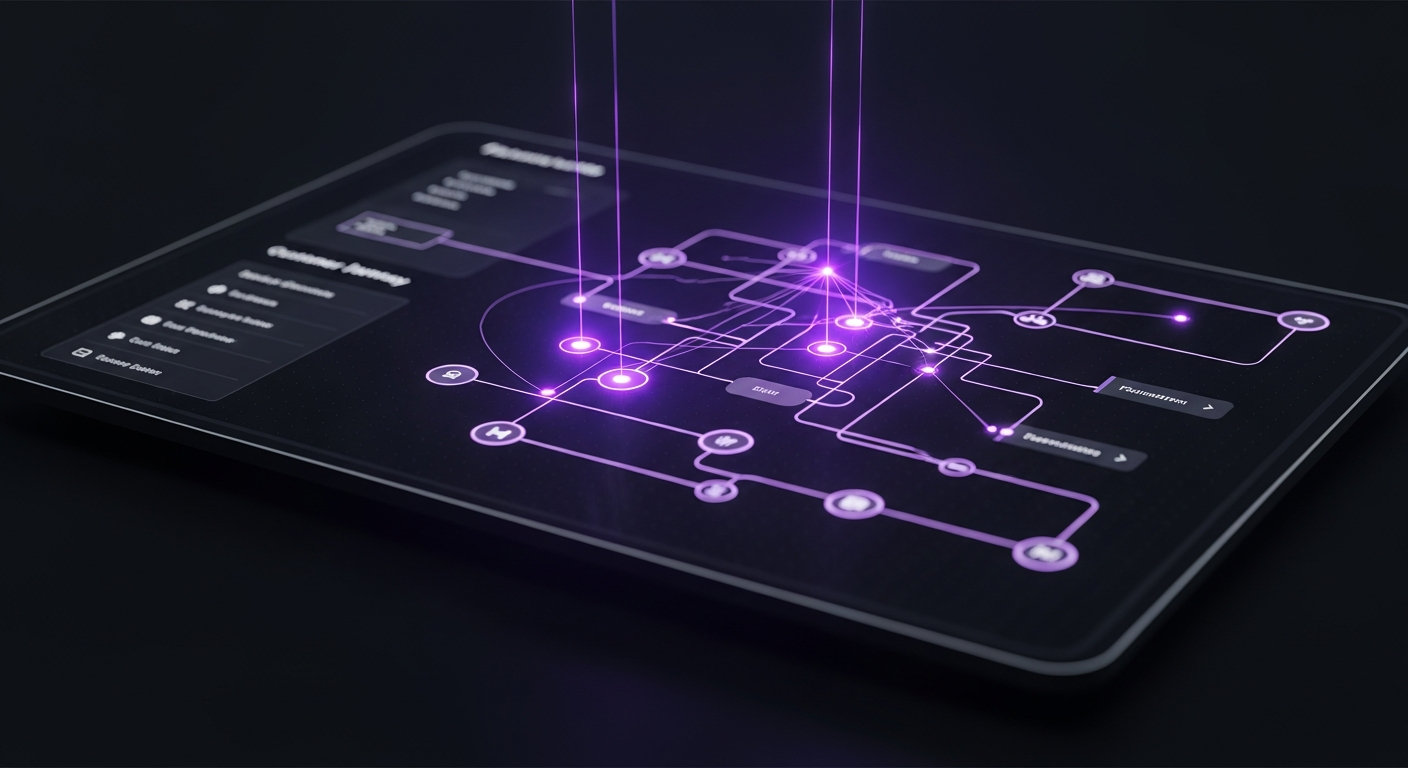
Before optimizing the journey, you must first understand it from your customer’s perspective. Customer Journey Mapping is the foundational exercise of visualizing the steps a customer takes when engaging with your company. This map serves as a diagnostic tool, revealing the reality of your current customer experience, not just your assumptions. A successful map is built on data, not guesswork, and requires a deep analysis of customer behavior and motivations.
The customer journey is typically segmented into several key stages that mirror the traditional marketing funnel. While specific models can vary, a common framework includes:
Mapping these stages helps organize your understanding of the customer’s mindset and goals at each phase, allowing you to align your content and interactions accordingly.
An effective customer journey map must be rooted in real data, as assumptions can be misleading. To build an accurate picture, you need to gather both quantitative and qualitative data from multiple sources:
After gathering data, synthesize it into Customer Personas. A persona is a semi-fictional character that represents your ideal customer, serving as a narrative that brings your target audience to life. An actionable persona should include:
By creating two to three primary personas, you can map the journey through their specific lens. This humanizes the data and ensures your optimization efforts are focused on solving real problems for real people.
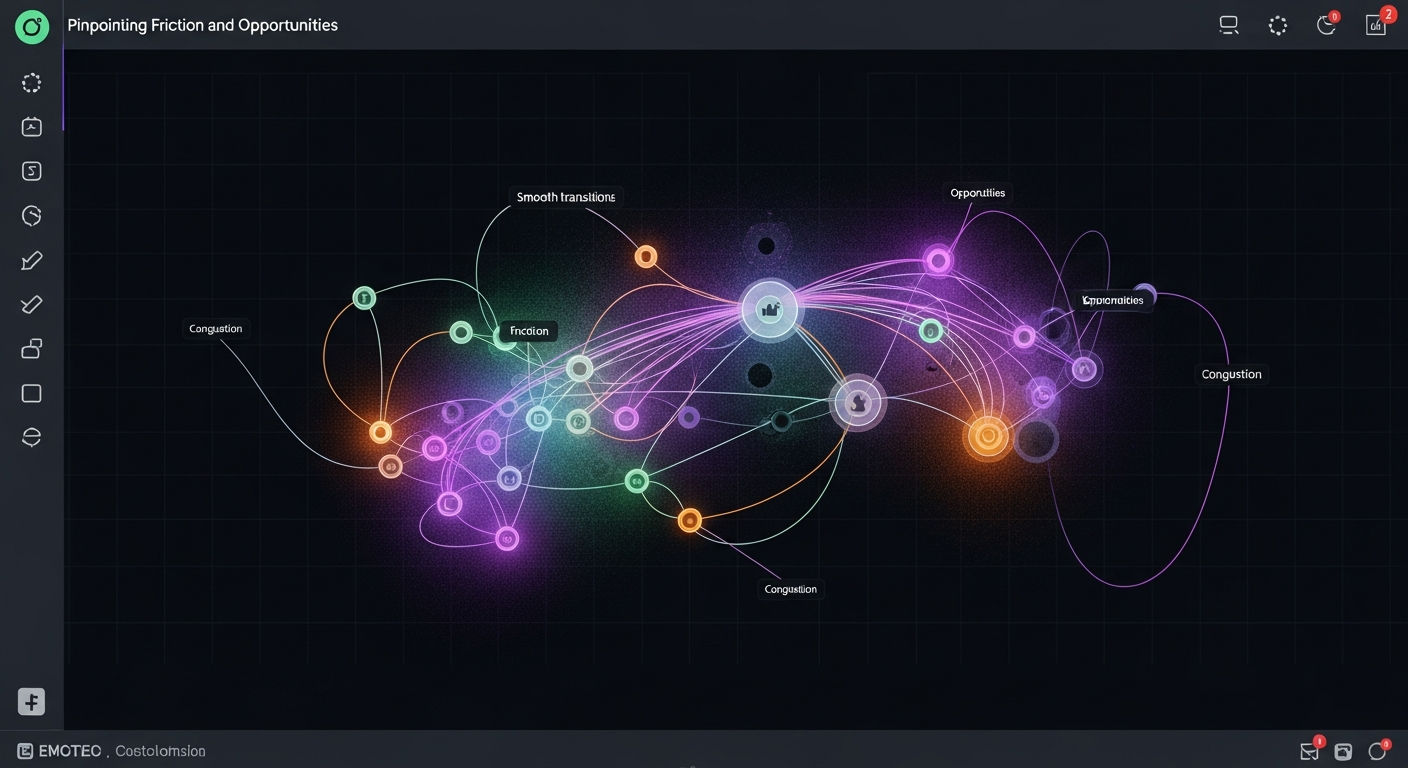
With a data-backed customer journey map and clear personas, you can begin the critical work of analysis. The primary goal is to identify points of friction—moments where customers experience frustration, confusion, or difficulty. These pain points are roadblocks that prevent customers from moving smoothly to the next stage and often lead to abandonment. Identifying them is the first step toward meaningful optimization.
Review your map stage by stage, asking critical questions from the customer’s perspective. Where are the drop-off rates highest in your analytics? What are the most common complaints in support tickets? Do survey results indicate confusion around pricing? Look for inconsistencies between the intended experience and what the data reveals. Common friction points include a slow-loading website, confusing navigation, technical errors, unclear calls-to-action, a lack of transparent pricing, or a cumbersome checkout process.
Once you have a list of pain points, prioritize them. Not all issues have an equal impact. Use a framework to score each issue based on its impact on the customer and the business (e.g., number of users affected, revenue lost) and the level of effort required to fix it (e.g., time, resources, cost). This prioritization transforms your journey map from a diagram into an actionable roadmap. Focus first on high-impact, low-effort opportunities—the “quick wins”—to build momentum, then systematically address more complex challenges. This ensures your efforts are directed where they will make the most significant difference.
The Awareness stage is your first opportunity to make an impression. Optimization here focuses on ensuring your target audience can find you easily and that your initial interactions provide immediate value. The goal is not just to attract traffic, but to attract the right traffic—potential customers who are experiencing the problem your product solves. This requires a deep understanding of their search behavior and informational needs.
User intent is the underlying goal a person has when typing a query into a search engine. In the Awareness stage, this intent is typically informational. People are seeking answers, education, and advice, not a direct sales pitch. Your SEO and content strategy must align with this reality. Instead of focusing solely on product-centric keywords, target the questions and pain points of your customer personas.
For example, if you sell project management software, a potential customer isn’t searching for your brand name. They are searching for terms like “how to improve team productivity” or “best way to manage remote team projects.” Create high-quality, comprehensive blog posts, guides, and videos that directly address these queries. By providing valuable, educational content, you position your brand as a helpful expert and build trust from the first touchpoint. This approach drives qualified organic traffic and establishes the foundation for a customer relationship.
Social media is a powerful channel for reaching audiences in the Awareness stage, but it requires a strategy that prioritizes engagement over broadcasting. Your presence on platforms like LinkedIn, Twitter, or Instagram should be tailored to where your personas spend their time and the type of content they consume there. The goal is to become part of their community, not just an advertiser interrupting their feed.
Create content that is native to each platform and encourages interaction. This could include running polls to understand audience challenges, hosting live Q&A sessions with experts, sharing behind-the-scenes content that humanizes your brand, or creating infographics that simplify complex topics. By focusing on starting conversations and providing value, you can capture attention and draw potential customers into your ecosystem, encouraging them to visit your website or subscribe to your newsletter.

Once a potential customer is aware of your brand, they enter the Consideration stage, where they actively evaluate your solution against competitors. Your optimization goal shifts from attracting attention to building trust and demonstrating value. You must provide deeper, more specific information to help them understand why your solution is the best fit for their needs. Personalization and credibility are paramount during this critical phase.
Email marketing is a highly effective tool for nurturing leads during the Consideration stage, but generic email blasts are no longer sufficient. The key is personalization. Using a marketing automation platform, you can segment your audience based on their behavior and interests. For instance, if a user downloads an ebook about a specific feature, you can enroll them in an automated email sequence that provides more detailed information on that topic, including relevant blog posts, a short video demo, and a case study.
This targeted approach ensures every communication is relevant and helpful, guiding the prospect through their evaluation. True personalization goes beyond using a first name; it involves delivering the right content at the right time based on demonstrated interests. This builds a stronger connection and keeps your brand top-of-mind as they move closer to a decision.
During the Consideration stage, prospects seek proof that your solution delivers on its promises. Case studies and webinars are powerful trust-building assets. A well-crafted case study tells a compelling story of how a customer, similar to the prospect, overcame a challenge using your product. It provides tangible evidence of your value proposition, moving beyond marketing claims to showcase real-world results.
Webinars offer an interactive way to build credibility. They allow you to demonstrate your product live, showcase your team’s expertise, and answer prospect questions in real-time. This direct interaction can be incredibly effective at overcoming objections and building a personal connection. Promoting these assets through email nurtures and on your website gives prospects the detailed information and social proof they need to feel confident in your brand.
The Decision stage is the culmination of your previous efforts. The prospect is convinced of your value and is ready to purchase. At this final hurdle, your optimization focus must be on removing all possible friction from the conversion process. Any confusion, doubt, or difficulty at this stage can lead to last-minute abandonment. The goal is to make saying “yes” as simple and reassuring as possible.
A complicated or lengthy checkout process is a primary cause of lost conversions. Every extra field, unnecessary step, and second of loading time increases the likelihood of abandonment. To optimize this critical touchpoint, you must simplify relentlessly.
Continuously use A/B testing to experiment with different layouts, calls-to-action, and form configurations to identify the highest-performing version.
Even when a customer has decided to buy, they may experience last-minute hesitation. This is where social proof becomes incredibly powerful. Displaying evidence that others have made the same decision and are happy with it provides the final reassurance needed to complete the purchase.
Strategically place social proof elements on your product and checkout pages. This can include customer testimonials with photos, star ratings, logos of well-known companies that use your product, and security badges from trusted third parties. These elements build trust, reduce perceived risk, and reinforce that the customer is making a smart choice. They act as a final, persuasive nudge that can significantly increase your conversion rate at the most critical moment of the journey.
The customer journey does not end with a payment. The post-purchase phase presents the greatest opportunity to build long-term value and turn a one-time customer into a loyal advocate. Optimizing this stage focuses on delivering on your promises, ensuring customer success, and creating a relationship that encourages retention and repeat business. This is how you maximize Customer Lifetime Value (CLV).
For many businesses, particularly in SaaS or those selling complex products, the first few interactions after the sale are critical. A poor onboarding experience can lead to confusion, frustration, and rapid customer churn. A seamless onboarding process, conversely, ensures that customers understand how to derive value from your product as quickly as possible.
Effective onboarding can include a welcome email series that guides users through key features, interactive in-app tutorials, a comprehensive knowledge base with articles and video guides, and access to proactive customer support. The goal is to empower the customer and demonstrate your commitment to their success from the very beginning. This initial positive experience sets the tone for the entire relationship.
Acquiring a new customer is significantly more expensive than retaining an existing one. Therefore, a key part of post-purchase optimization is implementing strategies that encourage loyalty. This goes beyond providing good customer service; it involves proactively creating value for your existing customer base.
Consider implementing a loyalty program that rewards repeat purchases with points or exclusive access. Create a customer community where users can connect with each other and your team. Develop referral programs that incentivize customers to spread the word about your brand. Proactively reach out with personalized recommendations or early access to new products. By continuously nurturing the relationship, you create a powerful loyalty loop that drives sustainable growth.
Effectively optimizing the customer journey requires a combination of strategy and technology. The right tools allow you to gather data, automate processes, personalize communications, and measure results at scale. While the specific stack will vary by company size and need, several core software categories are essential for any serious optimization effort.
| Tool Category | Purpose | Examples |
|---|---|---|
| CRM & Marketing Automation | To store customer data, segment audiences, and automate personalized communication across channels like email and SMS. | HubSpot, Salesforce, Marketo, ActiveCampaign |
| Analytics & Data Visualization | To track user behavior, measure website performance, and identify quantitative trends and drop-off points in the journey. | Google Analytics, Adobe Analytics, Mixpanel, Tableau |
| Behavioral Analytics Tools | To gain qualitative insights into how users interact with your site through heatmaps, scroll maps, and session recordings. | Hotjar, Crazy Egg, FullStory, Microsoft Clarity |
| Customer Feedback & Survey Software | To collect direct feedback from customers through surveys, polls, and feedback widgets to measure satisfaction (CSAT, NPS). | SurveyMonkey, Typeform, Delighted, Qualtrics |
| A/B Testing & CRO Platforms | To run controlled experiments on web pages, emails, and other touchpoints to identify which variations perform best. | Optimizely, VWO (Visual Website Optimizer), Google Optimize |
A Customer Relationship Management (CRM) system is the core of your tech stack, serving as a centralized database for all customer information and interactions. When integrated with a Marketing Automation platform, it becomes a powerhouse for delivering personalized experiences. This combination allows you to track every touchpoint, segment your audience, and trigger automated communication workflows based on user behavior, ensuring timely and relevant messaging at every stage.
While traditional analytics platforms like Google Analytics provide the “what” (e.g., 40% of users drop off at checkout), behavioral analytics tools provide the “why.” Heatmaps show where users click, move, and scroll, revealing which parts of a page are engaging and which are ignored. Session replay tools allow you to watch anonymized recordings of actual user sessions, letting you see firsthand where they get stuck or confused. This qualitative insight is invaluable for identifying friction points that quantitative data alone cannot reveal.
To truly understand the customer journey, you must combine behavioral data with direct feedback. Customer feedback tools make it easy to ask customers about their experience at key moments. You can use them to deploy Net Promoter Score (NPS) surveys to measure loyalty, send Customer Satisfaction (CSAT) surveys after a support interaction, or place open-ended feedback widgets on your site. This direct voice-of-the-customer data helps validate assumptions and prioritize improvements based on what matters most to your audience.
Customer journey optimization is a data-driven discipline. To determine if your efforts are successful, you need to track the right Key Performance Indicators (KPIs). These metrics provide a clear, objective view of performance and help demonstrate the ROI of your initiatives. While many metrics exist, focusing on a few key ones will provide the most insight into the health of your customer journey.
Customer Lifetime Value is arguably the ultimate metric for measuring the success of your overall journey optimization strategy. It represents the total revenue a business can expect from a single customer throughout their entire relationship. A rising CLV is a strong indicator that your efforts are working, as it means customers are staying longer, making more frequent or larger purchases, and are less likely to churn. It reflects the cumulative impact of a positive experience across the entire journey.
Instead of only looking at the final conversion rate, it is crucial to measure micro-conversions between each stage of the journey. For example, track the conversion rate from website visitor to email subscriber (Awareness to Consideration), from email subscriber to free trial user (Consideration to Decision), and from free trial user to paying customer (Decision). Monitoring these stage-by-stage rates helps you pinpoint exactly where your funnel is leaking and allows for targeted interventions.
While CLV and conversion rates measure behavioral outcomes, NPS and CSAT measure customer perception and sentiment. Net Promoter Score measures loyalty by asking, “On a scale of 0-10, how likely are you to recommend our company to a friend or colleague?” It categorizes customers into Promoters, Passives, and Detractors, providing a high-level view of brand health.
Customer Satisfaction (CSAT) is more transactional, measuring satisfaction with a specific interaction, such as a purchase or support ticket. Tracking these scores over time, especially at key touchpoints, provides direct feedback on how customers feel about the experience and helps identify areas for improvement.
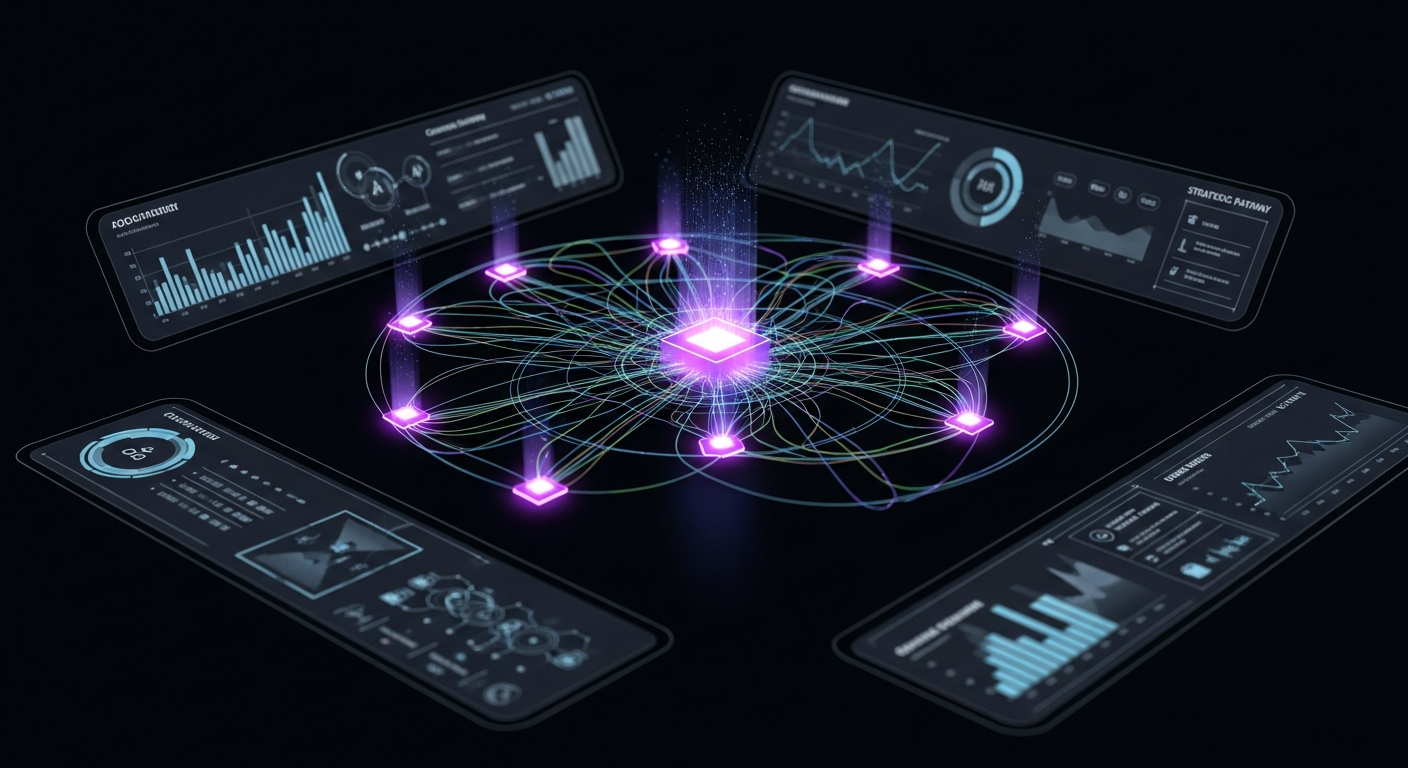
The landscape of customer experience is constantly evolving, driven by new technologies and rising expectations. Looking forward, three interconnected trends are set to redefine customer journey optimization: Artificial Intelligence (AI), hyper-personalization, and true omnichannel integration. Businesses that embrace these trends can create experiences that are not just seamless, but also predictive, adaptive, and uniquely tailored to each individual.
Artificial Intelligence is becoming a core component of the marketing tech stack. AI algorithms can analyze vast datasets to predict customer behavior, identifying which customers are at risk of churning or are most likely to convert. AI-powered chatbots provide 24/7 support, answering common questions instantly and freeing up human agents to handle more complex issues. Most importantly, AI is the engine behind 1:1 personalization, enabling brands to dynamically adjust website content, product recommendations, and messaging in real-time based on an individual’s behavior.
This capability leads to the next frontier: hyper-personalization. Customers now expect brands to understand their individual needs. The future of the journey is one where no two paths are exactly alike. The content, offers, and support a customer receives will be uniquely tailored to them, creating a feeling of being understood and valued. This moves far beyond using a customer’s first name in an email to creating a truly individualized experience across all touchpoints.
Finally, these personalized experiences must be delivered through a unified omnichannel strategy. This is the evolution from multichannel (being present on many channels) to omnichannel (providing a consistent experience across those channels). In an omnichannel world, the customer’s context and history follow them seamlessly. They can start a conversation on a mobile app, continue it via web chat, and finish it over the phone without having to repeat themselves. This unified approach breaks down internal silos to create one cohesive customer journey, regardless of how, when, or where the customer interacts.

The main stages of a typical customer journey are Awareness, where a customer discovers a problem and potential solutions; Consideration, where they research and evaluate different options; Decision, where they choose a specific product or service; and Post-Purchase, which includes onboarding, retention, and advocacy, where the focus is on customer success and building long-term loyalty.
The customer journey is the map of all the steps and touchpoints a customer has with your company from start to finish. It outlines the ‘what’ and ‘where’ of their interactions. Customer Experience (CX), on the other hand, is the customer’s overall perception and feeling about the sum of those interactions. The journey is a framework used to analyze and improve the overall CX.
Pain points are identified by combining quantitative and qualitative data. This includes analyzing web analytics for high drop-off rates, reviewing customer support tickets and live chat transcripts for common complaints, sending customer surveys (like NPS and CSAT) to gather direct feedback, and using behavioral analytics tools like heatmaps and session recordings to observe user struggles on your website.
Key metrics include Customer Lifetime Value (CLV), which measures a customer’s long-term value; Conversion Rates between each stage of the journey, which identify leaks in the funnel; Customer Churn Rate, which tracks customer attrition; and sentiment scores like Net Promoter Score (NPS) and Customer Satisfaction (CSAT).
Yes. The principles of customer journey optimization are scalable. A small business can start by mapping one or two of its most critical journeys, such as the path from a social media ad to a purchase. They can use free or low-cost tools like Google Analytics, free survey software, and spreadsheets to gather data and visualize the map. The key is to start small, focus on high-impact areas, and iterate over time.
AI processes massive amounts of customer data in real-time to understand individual behavior, preferences, and intent. This allows businesses to automate hyper-personalization at scale. For example, AI can power product recommendation engines, dynamically change website content for each visitor, deliver highly targeted email offers, and provide instant, personalized support through intelligent chatbots.