




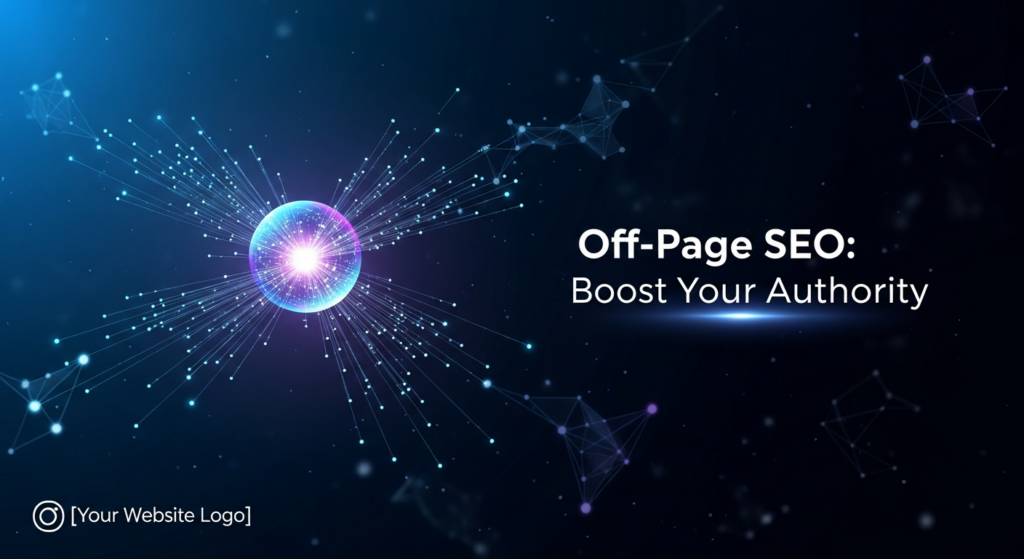

Achieving top search engine rankings is a multi-faceted challenge. While many marketers focus on on-page elements like content and meta tags, they often neglect the other half of the equation: off-page SEO. Off-page SEO includes all strategic actions taken outside your website to enhance its reputation, credibility, and authority. These efforts signal to search engines like Google that your website is a valuable resource endorsed by others.
This comprehensive guide explores the essential pillars of a powerful off-page SEO strategy. From the cornerstone of high-quality link building to the nuanced impact of brand mentions, social signals, and local citations, we will cover the actionable best practices you need to implement in 2024. Mastering these techniques will not only boost your search engine rankings but also build a resilient, authoritative brand that withstands algorithm updates.

Off-page SEO refers to all optimization activities that occur away from your website. In contrast to on-page SEO—which involves elements you directly control like content and site structure—off-page SEO focuses on increasing your site’s authority and trustworthiness from the perspective of users and search engines. It is essentially the process of building your digital reputation across the web, providing search engines with crucial external signals about how others perceive your site.
This reputation is a fundamental pillar of search engine rankings because it helps Google determine which sites are the most credible and deserving of high visibility. When multiple high-quality, relevant websites link to your content, it acts as a vote of confidence, signaling that your page is a valuable resource. These external endorsements are difficult to manipulate and serve as a powerful proxy for quality and authority, making off-page SEO an indispensable component of any successful digital strategy.
To fully grasp off-page SEO, it’s helpful to understand how it fits with its two counterparts: on-page and technical SEO. Together, these three areas form the complete foundation of search engine optimization.
Google’s primary goal is to provide users with the most relevant and trustworthy results for their queries. To achieve this, its algorithm relies heavily on signals that demonstrate a website’s credibility. This is where the concept of E-E-A-T comes into play: Experience, Expertise, Authoritativeness, and Trustworthiness. Off-page signals are one of the most effective ways Google measures E-E-A-T.
When a reputable university, a major news outlet, or a respected industry blog links to your website, it’s a powerful endorsement of your authority. These backlinks tell Google that experts in the field trust your content. Similarly, frequent brand mentions, positive reviews, and active social media discussions all contribute to a portrait of a trustworthy entity. While third-party metrics like Domain Authority (DA) from Moz attempt to quantify this authority, Google’s own assessment is far more sophisticated, analyzing a vast web of signals to determine which sites are most deserving of the top rankings.

At the heart of off-page SEO lies link building—the process of acquiring hyperlinks from other websites to your own. For years, backlinks have been one of the most significant ranking factors for Google. They function as the citations of the internet, with each link from a quality source acting as an endorsement that validates your content’s credibility. A robust backlink profile, built from diverse and authoritative sources, is a clear signal to search engines that your website is a trusted authority in its niche.
However, not all links are created equal. The focus has shifted dramatically from quantity to quality. A single, editorially placed link from a top-tier industry publication can be more valuable than hundreds of low-quality links from irrelevant directories. Therefore, a modern link building strategy is not about accumulating links at any cost but earning them by creating exceptional content and building genuine relationships across the web.
Link equity, often called ‘link juice,’ is the value or authority passed from one page to another through a hyperlink. This concept originates from Google’s foundational PageRank algorithm, which measures a page’s importance based on the quantity and quality of links pointing to it. When a high-authority page links to yours, it passes a portion of its authority, boosting your page’s potential to rank.
Think of it as a network of recommendations. A recommendation from a highly respected expert carries more weight than one from a stranger. Similarly, a backlink from a website with strong E-E-A-T signals passes more link equity. This value flows through a website, from its homepage to its internal pages, and out to the sites it links to. Understanding this flow is crucial for both earning valuable links and structuring your internal linking strategy effectively.
To build a strong backlink profile, you must be able to distinguish a high-quality link from a low-quality one. Here are the key characteristics of a backlink that provides significant SEO value:
Hyperlinks can have attributes that instruct search engines on how to treat them. The most common are ‘dofollow’ (the default state) and ‘nofollow’. A dofollow link allows link equity to pass to the destination page. In 2019, Google updated its policy on the nofollow attribute, stating it now treats it as a ‘hint’ rather than a strict directive. This means it may sometimes pass value through a nofollow link. Additionally, two other attributes provide more specific context: `rel=”sponsored”` for paid links and `rel=”ugc”` for user-generated content.
| Attribute | Purpose | Impact on Link Equity |
|---|---|---|
| Dofollow (Default) | A standard link that search engines can follow and use for ranking purposes. | Passes full value and authority (‘link juice’) to the linked page. |
| rel=”nofollow” | Indicates that the linking site does not necessarily endorse the linked page. | Treated as a ‘hint’; Google may or may not choose to pass value or use it for ranking. |
| rel=”sponsored” | Specifically identifies links that are part of an advertisement or paid placement. | Treated as a ‘hint’; does not pass ranking credit and helps Google identify paid links. |
| rel=”ugc” | Identifies links within user-generated content, such as blog comments or forum posts. | Treated as a ‘hint’; generally does not pass ranking credit and helps Google discount spam. |

Knowing what a good link is and why it matters is only half the battle. The other half is executing strategies to acquire them. Effective link building is an active, creative, and persistent process that requires a strategic approach. It’s about creating value first, then finding ways to get that value in front of people who can link to it. Hoping for links is not a strategy; you must actively pursue opportunities to earn high-quality backlinks.
Below are four proven, white-hat link building strategies that focus on creating genuine value and building relationships. These methods are not quick fixes but sustainable tactics that will build your site’s authority over time and deliver lasting results that are resilient to algorithm updates.
The most sustainable way to earn high-quality backlinks is to create content that people naturally want to link to. These are known as ‘linkable assets.’ Instead of writing a standard blog post, invest in creating an exceptional resource that serves as the definitive piece on a topic. Examples include:
Guest blogging involves writing and publishing an article on another website in your industry. While it has been abused in the past for low-quality link schemes, it remains a highly effective strategy when done correctly. The primary focus should be on providing genuine value to a new audience, building your brand’s authority, and establishing relationships with other industry players. A contextual backlink within a high-quality guest post on a reputable, relevant site is a natural byproduct of this value exchange and can drive significant referral traffic.
Broken link building is a clever tactic that involves finding a dead link (a 404 error) on a website, creating a resource that can replace the dead one, and then contacting the site owner to suggest they replace the broken link with a link to your updated, relevant resource. This strategy is a win-win: you help the webmaster fix an error on their site, improving their user experience, and in return, you earn a relevant, high-quality backlink. Tools like Ahrefs or Semrush can be used to find broken links on websites in your niche, making this a scalable process.
Digital PR involves creating newsworthy content and stories and promoting them to journalists, bloggers, and media outlets to earn high-authority backlinks from major publications. This often overlaps with creating linkable assets like data studies or unique infographics. By crafting a compelling story around your content and pitching it to the right people, you can secure media coverage that results in some of the most powerful backlinks possible. Digital PR requires strong communication skills and a keen sense of what makes a story interesting to the media, but the payoff can be immense.

While backlinks remain a dominant force in off-page SEO, Google’s algorithm has become increasingly sophisticated. It now looks beyond the link graph to understand entities, brands, and their authority. This means that activities focused on building your brand’s overall presence and reputation can have a significant, albeit indirect, impact on your search rankings. A strong brand generates its own SEO momentum through trust, recognition, and user behavior signals.
Modern off-page SEO is therefore as much about brand building as it is about link building. When users consistently see your brand mentioned in positive contexts across the web, it reinforces your E-E-A-T. Google is no longer just counting links; it’s assessing sentiment, context, and prominence. This holistic view means that every podcast interview, conference presentation, and unlinked mention in an online article contributes to your website’s overall authority profile.
An unlinked brand mention is when your brand name is mentioned on another website without a hyperlink. While the SEO community has long debated their value, it is now widely understood that Google can associate these mentions with your brand and use them as an authority signal. Search engines like Bing have explicitly confirmed they use unlinked mentions for ranking purposes.
Think of it this way: if top-tier publications are talking about your brand, it’s a strong indicator of your relevance and importance in your industry, whether they link to you or not. These mentions contribute to your brand’s digital footprint and help search engines build a comprehensive understanding of your entity’s authority. While a linked mention is always preferable, unlinked mentions are a valuable secondary prize.
Building a brand that people talk about and search for directly is a powerful long-term SEO strategy. When users search for your brand name, it sends a strong signal to Google that you are a legitimate and popular entity. Here are some strategies to increase both mentions and direct searches:

Content marketing and off-page SEO are inextricably linked. You cannot build a strong off-page presence without high-quality content to promote, and even the best content will fail to reach its potential without a solid promotion strategy. Your content serves as the linkable asset, the conversation starter, and the foundation upon which your brand’s authority is built. Therefore, a successful off-page SEO program must be fully integrated with your content marketing efforts.
Every piece of content you create should be produced with a promotion plan in mind. Before you start writing, you should ask: Who will share this? Who will link to this? What communities will find this valuable? By aligning content creation with off-page promotion from the outset, you create a powerful engine for building authority, driving traffic, and earning the signals that Google values most.
The ‘publish and pray’ approach to content marketing is no longer effective. Once you hit ‘publish’ on a new piece of content, the real work begins. A robust content promotion and distribution plan ensures your content reaches the right audience and maximizes its potential for earning links and shares. Your plan should be multi-channel and tailored to the specific piece of content. Key components include:
Content syndication is the process of republishing your existing content on a third-party website. When done correctly, this can be a powerful way to expand your reach and build brand authority without creating new content from scratch. By getting your article in front of the established audience of a platform like Medium, LinkedIn, or a major industry publication, you can drive referral traffic and introduce your brand to new potential customers.
The key to successful syndication is to ensure that search engines know which version is the original. This is typically done by having the syndicating site use a canonical tag (`rel=”canonical”`) that points back to the URL of your original article. This tells Google to attribute all SEO value to your page, preventing any duplicate content issues. Always prioritize syndicating on high-quality, relevant platforms and confirm their policy on canonical tags.

The relationship between social media and SEO has long been a topic of debate. While Google has stated that social signals—such as likes and shares—are not a direct ranking factor, there is a strong correlation between social media performance and high search rankings. This connection exists because social media activity indirectly influences the factors that Google values, such as backlinks and brand mentions.
An active and engaged social media presence amplifies your content’s reach, putting it in front of a larger audience. The more people who see your content, the higher the likelihood that a blogger, journalist, or webmaster will discover it and link to it. Therefore, social media acts as a powerful catalyst for earning backlinks and brand mentions, which are direct ranking signals. It’s a critical top-of-funnel activity for your entire off-page SEO strategy.
When a piece of your content goes viral or generates significant buzz on a social platform, it creates a ripple effect. This surge in visibility can lead to a number of positive SEO outcomes:
Ultimately, while the ‘like’ itself isn’t a ranking factor, the behaviors it inspires—linking, mentioning, and searching—certainly are.
A common mistake is trying to be active on every social media platform. A more effective approach is to focus your efforts on the platforms where your target audience is most active. The right choice depends entirely on your industry and business model.
By concentrating your resources on one or two key platforms, you can build a more meaningful community and generate more impactful social signals than by spreading yourself too thin.
For businesses with a physical location, such as retail stores or restaurants, off-page SEO takes on a distinct local focus. Local SEO aims to increase your visibility in location-based searches, particularly within Google’s ‘Map Pack’ or ‘Local Pack,’ which is prominently displayed at the top of search results. While on-page elements like including your city in title tags are important, many of the most powerful local ranking factors are off-page.
These off-page signals help Google verify that your business is legitimate, located where you say it is, and trusted by local customers. A strong local off-page strategy involves managing your online reputation, ensuring your business information is consistent across the web, and building authority within your specific geographic area.
Your Google Business Profile (GBP) is arguably the most important element of your local SEO strategy. It’s the information panel that appears for your business in Google Search and Maps. While you set it up yourself, many of its most impactful features are off-page signals generated by user interaction. To optimize your GBP for maximum impact, you should focus on:
A local citation is any online mention of your business’s Name, Address, and Phone number (NAP). These citations can appear in online business directories like Yelp, industry-specific websites, or local chamber of commerce sites. Building a robust portfolio of citations is a foundational off-page tactic for local SEO.
The most critical aspect of citation building is NAP consistency. Your business name, address, and phone number must be identical across every single listing. Inconsistencies can confuse search engines and harm your local rankings. Use a tool to audit your existing citations and then work to clean up any errors. From there, focus on building new citations on high-quality, relevant local and industry directories to solidify your business’s digital footprint.

Beyond traditional link building and social media, engaging directly with online communities is a powerful way to execute off-page SEO. Platforms like forums, Q&A sites, and podcasts offer a direct line to your target audience. The key to success is to lead with value, not self-promotion. By establishing yourself as a helpful expert and a genuine member of the community, you can build authority, drive referral traffic, and earn natural backlinks and brand mentions.
This strategy is about playing the long game. Aggressive self-promotion or link spamming in these communities will quickly get you banned and damage your brand’s reputation. Instead, focus on answering questions, sharing insights, and participating in discussions. Your goal is to become a trusted, recognized name, which will naturally lead to SEO benefits over time.
Reddit and Quora are massive platforms where millions of users ask questions and discuss topics across every imaginable niche. By identifying relevant subreddits and topics related to your industry, you can position yourself as an expert. The strategy is simple but requires patience:
Appearing as a guest on podcasts in your niche is one of the most effective off-page SEO strategies available today. Podcasts allow you to share your expertise with a highly engaged and targeted audience, building significant authority and brand awareness. From an SEO perspective, the benefits are clear. Most podcast hosts create a show notes page for each episode, which almost always includes a high-quality, dofollow backlink to the guest’s website. This single, editorially given link from a relevant source is incredibly valuable. Furthermore, the interview itself generates powerful brand mentions and social signals.

Influencer marketing is a powerful strategy at the intersection of social media, content marketing, and off-page SEO. It involves collaborating with influential individuals in your niche to promote your brand or content to their established audience. While often viewed as a brand awareness or sales channel, its impact on SEO can be substantial. When a trusted influencer shares your content, it acts as a powerful third-party endorsement.
This endorsement can trigger a cascade of positive off-page signals. The influencer’s post can generate significant social engagement, driving traffic to your site. This increased visibility can, in turn, lead to other bloggers or journalists discovering your content and linking to it organically. Furthermore, the collaboration generates valuable brand mentions across the web. The key to success is authenticity; partner with influencers whose audience and values genuinely align with your brand for the most credible results.

A successful off-page SEO strategy is data-driven. You cannot effectively build authority or manage your reputation without the right tools to track your progress, analyze competitors, and identify new opportunities. Investing in a robust SEO toolkit allows you to move from guesswork to strategic execution, ensuring your resources are spent on the activities that will have the greatest impact.
These tools provide critical insights into your backlink profile, brand mentions, and outreach efforts. They help you understand what’s working, diagnose potential problems, and reverse-engineer the success of your competitors. From comprehensive all-in-one suites to specialized platforms, the right tools are essential for managing a modern off-page SEO campaign.
Backlink analysis tools are the cornerstone of any off-page SEO toolkit. Platforms like Ahrefs, Semrush, and Moz Pro are indispensable for monitoring and improving your backlink profile. Their core functions include:
Tracking what is said about your brand online is crucial for reputation management and for identifying link building opportunities. Brand mention monitoring tools automatically scan the web for mentions of your brand name, products, or key personnel. Tools like Google Alerts offer a free, basic solution, while more advanced paid platforms like Brand24 or BuzzSumo provide more comprehensive data and sentiment analysis. These tools allow you to find unlinked brand mentions, which you can then ask the publisher to convert into a link.
Managing link building and digital PR campaigns at scale requires organization. Outreach platforms are designed to streamline this process. Tools like Pitchbox, Hunter.io, and Prowly help you find contact information for journalists and webmasters, create personalized email templates, send outreach campaigns, and track responses. By centralizing your outreach efforts, these platforms save significant time and help you build and maintain relationships more effectively.

In the pursuit of better rankings, it can be tempting to seek shortcuts. These shortcuts often fall under the category of ‘black hat SEO’—practices that violate search engine guidelines to manipulate rankings. While such tactics might offer short-term gains, they carry an enormous risk of severe penalties, including a dramatic drop in rankings or even complete removal from the search index. A sustainable off-page strategy is built on genuine value and ethical practices, not deception.
Google’s algorithm is constantly becoming more sophisticated at detecting and penalizing manipulative schemes. Engaging in black hat tactics is a high-risk gamble that can undo years of hard work in an instant. Understanding what to avoid is just as important as knowing what to do.
A Private Blog Network (PBN) is a network of websites created for the sole purpose of building links to a single ‘money’ site to manipulate its search rankings. These networks are often built on expired domains that have pre-existing authority. While they might seem effective, Google actively identifies and devalues PBNs. Being part of a PBN is a clear violation of Google’s guidelines, and if discovered, all sites involved can face harsh manual penalties.
Paying for a backlink that passes PageRank is a direct violation of Google’s Webmaster Guidelines. This includes exchanging money for links or sending someone a ‘gift’ in exchange for a link. Search engines want to see links that are editorially earned and given as a genuine vote of confidence. Google has sophisticated systems for detecting unnatural link patterns, and if it determines you are buying links to manipulate rankings, your site can be penalized. This should not be confused with legitimate advertising or sponsored content, which must use the `rel=”sponsored”` attribute to inform search engines of the paid nature of the link.
Beyond PBNs and paid links, numerous other link schemes violate Google’s guidelines. You should avoid:
The golden rule is simple: if a link seems too easy to get, it’s probably not a link that will help your SEO in the long run.

Off-page SEO is a dynamic and essential component of digital marketing that extends far beyond simply acquiring backlinks. It is the art and science of building your brand’s reputation, authority, and trustworthiness across the entire digital ecosystem. A successful strategy is not about finding quick tricks or loopholes but about committing to a long-term, value-driven approach. By consistently creating remarkable content, engaging in genuine outreach, and building a strong brand presence, you create a powerful and resilient foundation for SEO success.
The most effective off-page SEO strategies are diversified, incorporating high-quality link building, strategic digital PR, brand mentions, social signals, and local optimization. This holistic approach creates a web of positive signals that are difficult for competitors to replicate and that search engines are designed to reward. Remember that every off-page action should be guided by the principle of providing value. When you focus on earning authority rather than just building links, you create a sustainable competitive advantage that will drive organic growth for years to come.

On-page SEO refers to optimizations made on your website, like content quality and meta tags. Off-page SEO involves actions taken outside your website, such as link building and brand mentions, to improve its authority and search engine ranking.
Results from off-page SEO are not immediate. It can take anywhere from a few months to over a year to see significant improvements in rankings, as it depends on the consistent acquisition of high-quality backlinks and authority signals over time.
While high-quality backlinks remain a critical ranking signal, off-page SEO has evolved. Google now considers a broader range of signals like brand mentions, social signals, and online reviews to determine a site’s overall authority and trustworthiness.
Yes, you can perform many off-page SEO activities yourself, such as guest blogging, broken link building, and engaging in online communities. However, it requires significant time, effort, and strategic planning to be effective.
A toxic backlink comes from a low-quality, spammy, or irrelevant website and can harm your SEO. You should use Google’s Disavow Tool to ask Google not to take these links into account when assessing your site, but this should be done with extreme caution.