






Voice Search Optimization: Best Practices for SEO

Do you want more traffic?

We at Traffixa are determined to make a business grow. My only question is, will it be yours?

Table of Contents

Get a free website audit

unnamed-Photoroom

Enter a your website URL and get a

Free website Audit

2.7k Positive Reviews
0 %
Improved Project
0 %
New Project
Transform Your Business with Traffixa!

Take your digital marketing to the next level with data-driven strategies and innovative solutions. Let’s create something amazing together!

Ready to Elevate Your Digital Presence?

Let’s build a custom digital strategy tailored to your business goals and market challenges.

A sleek, modern microphone at the center, emitting glowing blue data streams that subtly form into stylized search result snippets and a magnifying glass, set against a dark gradient background. The image uses cinematic lighting with soft neon and glow accents, representing voice search optimization. The text overlay reads 'VOICE SEARCH OPTIMIZATION' in a modern sans-serif font. A subtle website logo is in the top-left corner.
Picture of Danish K
Danish K

Danish Khan is a digital marketing strategist and founder of Traffixa who takes pride in sharing actionable insights on SEO, AI, and business growth.


Voice Search Optimization: Best Practices for Future-Proofing Your SEO Strategy

The Rise of Voice Search: Why It Matters for Your Business

How we find information online is changing. While keyboards and screens have been our primary tools for decades, a new interface is rapidly gaining prominence: our voice. The rise of voice search is not a fleeting trend but a fundamental shift in user behavior with significant implications for any business with an online presence. By understanding and adapting to this change, you can gain a competitive edge and future-proof your Search Engine Optimization (SEO) strategy.

This evolution from text to voice is driven by convenience. Users can now ask questions and receive answers while driving, cooking, or multitasking—no typing required. This hands-free, frictionless experience is powered by virtual assistants and smart speakers that are becoming ubiquitous in homes, cars, and mobile devices. For businesses, this means the audience for voice-driven queries is expanding daily, creating new opportunities to connect with customers at the precise moment of need.

Understanding the Shift from Text to Voice

The shift from text to voice is more than a change in input; it alters the nature of the interaction itself. Text searches are often abbreviated, such as “best coffee shop downtown.” In contrast, voice searches are inherently conversational. The same user is more likely to ask, “What’s the best coffee shop near me that’s open now?” This move toward natural language requires a new approach to SEO. Instead of just targeting keywords, you must now target questions and conversations, which demands a deeper understanding of user intent and context.

Key Statistics on Voice Search Adoption

Data clearly illustrates the rapid adoption of voice technology. While specific numbers evolve, the trend is undeniable. Industry reports show that a significant percentage of households own at least one smart speaker, such as an Amazon Alexa or Google Assistant device. Mobile voice search is even more prevalent, with a majority of smartphone users engaging with voice assistants regularly. Projections indicate that voice-based searches and voice shopping will continue to grow exponentially. This represents a massive, engaged audience that businesses cannot afford to ignore. Failing to optimize for voice search today is like ignoring mobile users a decade ago—a critical oversight that can leave you behind.

Impact of Smart Speakers and Virtual Assistants

Smart speakers and virtual assistants like Apple’s Siri, Google Assistant, and Amazon Alexa are the primary catalysts for this change. These devices are designed to provide a single, definitive answer to a user’s question. Unlike a traditional search results page with multiple links, a voice assistant usually reads one answer aloud, often sourced from a Featured Snippet or “Position Zero.” This winner-takes-all environment dramatically raises the stakes for SEO. Securing the top spot is no longer just about getting the most clicks; it’s about being the sole voice of authority the user hears. As these devices integrate into daily routines, voice interaction becomes the new normal, making voice search optimization an essential component of a modern digital strategy.
How Voice Search Changes User Intent and Query Language

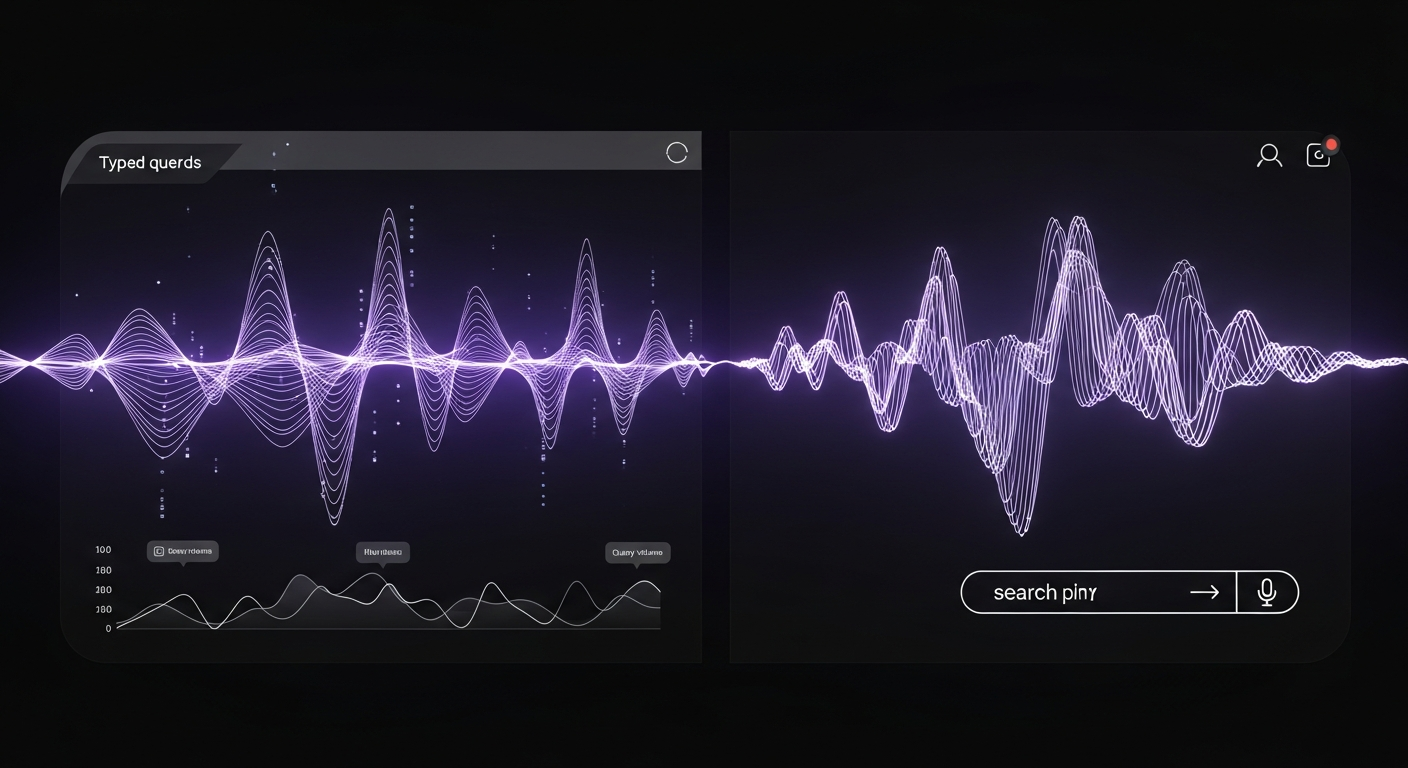
The fundamental difference between typing and speaking directly impacts the language of search queries. This change requires a strategic pivot from traditional keyword targeting to a more nuanced understanding of conversational user intent. When users speak to a device, they use natural, complete sentences that mirror a real-life conversation. This shift from fragmented keywords to fluid questions is the cornerstone of voice search optimization.

Understanding this change is crucial, as it affects every aspect of your SEO strategy, from keyword research to content creation and technical optimization. The goal is to align your website’s content and structure with the way real people ask questions. Doing so not only improves your chances of ranking in voice search but also creates more valuable, user-friendly content for all visitors.

Conversational Queries vs. Typed Keywords

Traditional SEO has long focused on short-tail keywords. A user looking for a plumber might type “plumber emergency los angeles.” The same user employing voice search would likely ask, “Who is the best emergency plumber near me in Los Angeles?” The second query is longer, more specific, and conversational. It contains more context and reveals a clearer user intent—in this case, an urgent need for a local service.

This distinction is critical. Typed keywords are often shorthand, where users sacrifice grammatical correctness for speed. Conversational queries, on the other hand, are fully formed questions. Your content strategy must evolve to match this. Instead of creating pages optimized for “plumber emergency,” you should create content that directly answers the question, “Who is the best emergency plumber…?” This means your headings, subheadings, and opening paragraphs should be framed to mirror and answer these spoken questions.

The Importance of Long-Tail and Question-Based Keywords

Conversational queries are, by their nature, long-tail keywords. These are longer, more specific search phrases that typically have lower search volume but much higher conversion rates. While fewer people may search for “how to fix a leaky faucet under the kitchen sink” compared to “plumber,” the user making the long-tail query has a specific, immediate problem. If your content provides a direct, clear solution, you are far more likely to earn their trust and their business.

Voice search amplifies the importance of long-tail keywords. Nearly every spoken query is a long-tail query. Therefore, your keyword research must shift to focus on identifying the questions your target audience is asking. Brainstorming common problems and phrasing them as natural language questions is the first step toward building a successful voice search content strategy.

Identifying ‘Who, What, Where, When, Why, How’ Queries

A significant portion of voice searches begin with question words: who, what, where, when, why, and how. Each of these signals a different type of user intent:

  • Who: Often seeks a person, brand, or organization (e.g., “Who is the CEO of Tesla?”).
  • What: Typically looks for a definition or explanation (e.g., “What is schema markup?”).
  • Where: Signals local intent, often with a “near me” component (e.g., “Where can I find an Italian restaurant?”).
  • When: Relates to time, events, or business hours (e.g., “When does the new Marvel movie come out?”).
  • Why: Seeks reasons, causes, or justifications (e.g., “Why is the sky blue?”).
  • How: Indicates a need for instructions or a process (e.g., “How do I bake a chocolate cake?”).

By categorizing your audience’s questions using this framework, you can create highly targeted content that directly addresses their needs. A blog post titled “How to Fix a Leaky Faucet in 5 Easy Steps” is perfectly positioned to capture a “how-to” voice query. Similarly, an optimized Google Business Profile can answer “where” and “when” queries for a local business. Systematically identifying and answering these questions is key to aligning your content with the conversational nature of voice search.

Foundational SEO: Core Pillars of Voice Search Readiness

Before you can effectively compete for voice search rankings, your website’s technical foundation must be solid. Voice assistants and search engines prioritize delivering a fast, secure, and seamless user experience. If your site is slow, difficult to use on a mobile device, or insecure, it will be overlooked in favor of competitors who have mastered these fundamentals. These core pillars are not just for voice search; they are essential components of modern SEO that have an outsized impact on your ability to be the chosen answer for a spoken query.

Think of these elements as the price of admission. Without a mobile-friendly design, fast loading times, and proper security, even the best content will struggle to be heard. Search engines are tasked with providing the single best answer, and they will always favor a source that is reliable, accessible, and trustworthy.

Prioritizing Mobile-First Design and Usability

The vast majority of voice searches are conducted on mobile devices, making a mobile-first approach to web design non-negotiable. Google uses mobile-first indexing, meaning it predominantly uses the mobile version of your content for indexing and ranking. A website that is not optimized for mobile screens is at a severe disadvantage.

Mobile-first design goes beyond a responsive layout. It involves ensuring that text is readable without zooming, tap targets like buttons and links are large enough to be easily used, and navigation is simple and intuitive on a small screen. For voice search, this usability is paramount. A positive mobile experience signals to search engines that your site is a quality resource, making it a more likely candidate for a voice search answer.

The Critical Role of Page Speed and Core Web Vitals

Page speed is a critical ranking factor, and its importance is magnified for voice search. A voice assistant needs to pull an answer almost instantaneously and will not wait for a slow-loading page. Research consistently shows that pages ranking in voice search tend to load significantly faster than average.

Google’s Core Web Vitals are specific metrics that measure the real-world user experience of a page, focusing on loading performance, interactivity, and visual stability. These metrics include:

  • Largest Contentful Paint (LCP): Measures how long it takes for the main content of a page to load.
  • First Input Delay (FID): Measures the time it takes for a page to become interactive.
  • Cumulative Layout Shift (CLS): Measures the visual stability of a page as it loads.

Optimizing for these vitals by compressing images, leveraging browser caching, and minimizing code will not only improve your SEO but also ensure your site is fast enough to be considered for a voice search result.

Ensuring Website Security with HTTPS

Website security is a baseline requirement for modern SEO. HTTPS (Hypertext Transfer Protocol Secure) encrypts the data exchanged between a user’s browser and your website, protecting their privacy. Google has confirmed that HTTPS is a ranking signal, and browsers like Chrome actively flag non-HTTPS sites as “Not Secure.”

For voice search, trust is paramount. Search engines will not direct users to a site that could compromise their data. An overwhelming majority of voice search results come from HTTPS-secured URLs. If your website is still on HTTP, migrating to HTTPS should be your top priority. It is a clear signal of credibility and a fundamental prerequisite for being considered a trustworthy source by both users and search engines.
Content Strategy: Creating Content That Answers Questions Directly

In the world of voice search, content is not just king—it’s the entire conversation. Because voice assistants aim to provide a single, direct answer, your content must be structured to deliver that answer clearly and concisely. This requires a strategic shift away from writing for algorithms of the past and toward writing for people asking real questions. A successful voice search content strategy is built on natural language, logical organization, and a deep understanding of user problems.

The goal is to become the most helpful, authoritative, and easily digestible source of information for the questions your audience is asking. This involves adopting a conversational tone, organizing content into logical topic clusters, and formatting it for maximum readability and scannability by both humans and machines.

Adopting a Natural, Conversational Tone

The best way to be selected as the answer for a conversational query is to write in a conversational tone. Your content should read as if a knowledgeable expert is speaking directly to the user. Avoid overly complex jargon, academic language, and keyword-stuffed sentences that sound robotic. Instead, use simple, clear language that is easy to understand when read aloud.

A practical tip is to read your content out loud before publishing. Does it sound natural? Is it easy to follow? If it sounds clunky or confusing when spoken, a voice assistant is unlikely to choose it. Aim for a reading level that is accessible to a broad audience, typically around an 8th or 9th-grade level, to ensure your message is a perfect match for the spoken word.

Building Topic Clusters Around Core Problems

To establish your website as an authority on a subject, you need to cover it comprehensively. The topic cluster model is an ideal framework for this. This strategy involves creating a central “pillar page” that provides a broad overview of a core topic, which then links out to multiple “cluster pages” that explore specific subtopics in greater detail.

For example, a digital marketing agency might create a pillar page on “Local SEO.” This page would link to cluster pages on topics like “How to Optimize Your Google Business Profile,” “What are Local Citations?,” and “Strategies for Getting More Online Reviews.” This structure helps search engines understand the relationship between your pages and recognize your site as a comprehensive resource. For voice search, this means you have a wide array of content ready to answer specific, long-tail questions related to your core expertise.

Structuring Content with Clear Headings and Short Paragraphs

Structure is crucial for both user experience and search engine comprehension. Search engines use headings (H1, H2, H3) to understand the hierarchy and main points of your content. Use your target question-based keywords in your headings to signal what each section is about.

Furthermore, break up your text into short, digestible paragraphs. Large walls of text are intimidating for human readers and difficult for voice assistants to parse. Aim for paragraphs that are two to three sentences long. This makes your content highly scannable and allows a search engine to easily extract a short, concise answer to a user’s query. This formatting is particularly important for winning Featured Snippets, which are a primary source for voice search answers.

Winning the Answer Box: Optimizing for Featured Snippets

In the competitive landscape of voice search, there is often only one winner. When a user asks a question, a voice assistant provides a single, spoken answer, not a list of results. More often than not, this answer is sourced directly from a Featured Snippet, also known as the “Answer Box” or “Position Zero.” Optimizing your content to capture these coveted snippets is one of the most direct and effective ways to win at voice search.

Featured Snippets are short excerpts of text that appear at the top of Google’s search results, designed to quickly answer a user’s question. Capturing this position means your content is deemed the most authoritative and direct answer available. For voice search, being in Position Zero is not just an advantage—it’s often the entire game.

What is Position Zero and Why is it Crucial for Voice Search?

Position Zero is the term for the Featured Snippet that appears above the traditional number one organic search result. It is Google’s attempt to provide an immediate answer without requiring the user to click any further. When a voice assistant like Google Assistant responds to a query, it frequently reads the content from this snippet aloud, often citing the source by saying, “According to [your website name]…”

This makes winning the snippet the primary objective for many voice search queries. It provides unparalleled visibility and establishes your brand as the definitive source of information for that specific question. It bypasses the competition entirely, making your answer the only one the user hears. This direct line to the user makes optimizing for Featured Snippets a critical component of any modern SEO strategy.

How to Structure Content to Win Snippets (Lists, Tables, Paragraphs)

Featured Snippets appear in several common formats. Structuring your content to match them can significantly increase your chances of being featured. The three main types are:


  • Paragraph Snippets: The most common type, these typically answer “what is,” “who is,” or “why is” questions. To win these, provide a concise, direct answer (ideally 40-60 words) in a single paragraph immediately below the heading that asks the question.
  • List Snippets: These answer “how-to” questions or provide lists of items, such as “best of” lists. They can be numbered for sequential steps or bulleted for non-sequential items. Use proper `
      ` (bulleted) or `

        ` (numbered) HTML tags to structure your lists.
      1. Table Snippets: These display data, comparisons, or pricing. Use the `
        ` HTML tag to format your data cleanly. Google can easily pull this structured information to create a snippet that compares features or prices.

        By anticipating the format Google is likely to prefer for a given query and structuring your content accordingly, you are essentially pre-packaging the answer for easy selection.

        Using Q&A Formats and FAQ Pages Effectively

        One of the most powerful strategies for winning snippets is to create content in a direct question-and-answer format. This can be done within a blog post by using a question as a subheading (H2 or H3) and providing the answer immediately below it. An even more effective method is to create a dedicated FAQ (Frequently Asked Questions) page on your website.

        An FAQ page allows you to target many long-tail, question-based keywords in a single place. Each question can be a heading, and each answer can be a concise paragraph optimized for a snippet. This format perfectly mirrors the conversational nature of voice search. When you also add FAQPage schema markup, you explicitly tell search engines that your content is structured to answer specific questions, dramatically increasing your visibility for those queries.

        Leveraging Schema Markup and Structured Data for Clarity

        While well-structured content and a conversational tone are essential for voice search, a powerful technical tool can give you a significant edge: schema markup. Schema markup, or structured data, is a form of microdata added to your website’s HTML. It doesn’t change how your page looks to users, but it provides explicit context to search engines, helping them understand your content on a deeper level. For voice search, this added clarity can be the deciding factor that makes your content the chosen answer.

        Think of schema as a translator for search engines. Instead of just letting them crawl the text on your page, you are labeling key pieces of information—like your business hours, an event date, or the steps in a recipe—in a language they are built to understand. This removes ambiguity and helps them serve your information to users with confidence.

        What is Schema Markup and How Does It Help Search Engines?

        Schema markup is a standardized vocabulary developed by a collaboration of search engines, including Google, Bing, and Yahoo. It allows you to “mark up” elements on your page to define what they are. For example, you can tell a search engine that “4.5 stars” is an aggregate rating, that “Dr. Jane Doe” is a person, and that “2024-12-25” is a date.

        This context is invaluable for voice search. When a user asks, “How long does it take to bake lasagna?” a search engine can use `HowTo` schema on a recipe page to identify the exact cooking time and read it back. Without schema, the search engine has to guess which part of the text contains the answer. By providing structured data, you spoon-feed the precise information to the search engine, making it much easier for them to use your content in rich results and voice answers.

        Essential Schema Types for Voice Search (FAQPage, HowTo, LocalBusiness)

        While hundreds of schema types exist, a few are particularly powerful for voice search optimization:

        • FAQPage Schema: One of the most important types. When applied to an FAQ page, it tells Google your content contains a list of questions and answers. This can result in a rich snippet in search results and makes your content a prime candidate for answering voice queries.
        • HowTo Schema: Perfect for instructional content. It breaks down a process into a series of steps, which a voice assistant can then read aloud sequentially. This is ideal for queries like, “How do I change a tire?”
        • LocalBusiness Schema: Critical for any business with a physical location. It allows you to explicitly state your business name, address, phone number, hours of operation, and business type, making it easier for search engines to answer local queries like, “What are the hours for [Your Business Name]?”
        • Recipe Schema: For food bloggers and restaurants, this allows you to mark up ingredients, cooking times, and nutritional information, which can be read aloud by smart displays and speakers.

        Tools and Plugins for Implementing Structured Data

        You don’t need to be a coding expert to implement schema markup. Many user-friendly tools and plugins are available to help:

        • Google’s Structured Data Markup Helper: This free tool from Google allows you to highlight elements on your webpage and assign them the appropriate data tags. It then generates the HTML code for you to add to your site.
        • Schema.org: The official website for schema provides documentation and examples for all available types.
        • WordPress Plugins: If you use WordPress, plugins like Yoast SEO, Rank Math, and Schema Pro make implementing structured data as easy as filling out a form. They handle the code generation for you, making it accessible to everyone.

        By implementing these key schema types, you provide search engines with the clarity they need to confidently select your content as the single best answer for a relevant voice query.

        Dominating Local Voice Search: ‘Near Me’ Optimization

        For businesses with physical locations, voice search represents a significant opportunity. A large portion of voice queries have local intent, with users asking questions like, “Where is the nearest pharmacy?” or “Find a pizza place near me that delivers.” These “near me” searches are high-intent queries from users who are often ready to make a purchase or visit a store immediately. Dominating local voice search requires a focused strategy centered on your Google Business Profile, local citations, and location-specific content.

        When a user asks a location-based question, the search engine’s primary goal is to provide the most relevant, proximate, and reputable option. Your job is to ensure that all signals related to your business’s location and services are accurate, consistent, and optimized to meet that need.

        Optimizing Your Google Business Profile (GBP)

        Your Google Business Profile (formerly Google My Business) is the single most important tool for local SEO and, by extension, local voice search. It is the primary source of information Google uses to answer queries about your business. A fully optimized GBP is non-negotiable.

        Key optimization steps include:

        • Claim and Verify Your Profile: Ensure you have full control over your listing.
        • Complete Every Section: Fill out every available field, including services, attributes, accessibility information, and a detailed business description.
        • Ensure NAP Consistency: Your Name, Address, and Phone number (NAP) must be perfectly accurate and consistent with your website and other online directories.
        • Choose Precise Categories: Select the primary and secondary categories that best describe your business.
        • Upload High-Quality Photos: Showcase your location, products, and team.
        • Use Google Posts: Regularly share updates, offers, and events to keep your profile active and engaging.

        A well-maintained GBP directly feeds answers to voice queries about your hours, address, phone number, and services.

        Building Local Citations and Managing Reviews

        Local citations are mentions of your business’s NAP on other websites and online directories like Yelp, Tripadvisor, and industry-specific sites. Consistent citations across reputable platforms reinforce the accuracy of your location data for search engines, building trust and authority. Use a service to audit your citations and clean up any inconsistencies.

        Online reviews are another critical factor. Positive reviews serve as powerful social proof and are a known local ranking signal. Encourage satisfied customers to leave reviews on your GBP and other relevant platforms. Crucially, you must also respond to reviews—both positive and negative. This shows Google and potential customers that you are an engaged, customer-focused business, which can directly influence rankings and consumer decisions driven by voice search queries like, “What’s the best-rated plumber near me?”

        Creating Location-Specific Content and Landing Pages

        To capture local voice search traffic, create content explicitly tied to your service area. If you have multiple locations, each one should have its own dedicated landing page. These pages should include:

        • The specific location’s NAP information.
        • Unique store hours.
        • A description of services offered at that location.
        • An embedded Google Map.
        • Customer testimonials from that area.
        • Mentions of local landmarks or neighborhoods to build geographic relevance.

        Additionally, create blog posts and articles that target local keywords. For instance, a roofer in Denver could write a post titled, “How to Prepare Your Roof for a Denver Winter.” This type of content directly answers location-based questions and signals to search engines that you are the local authority on that topic, making you a prime candidate for related voice search results.

        Voice Search for E-commerce: Driving Sales Through Spoken Queries

        The impact of voice search extends deep into e-commerce. As consumers become more comfortable with voice assistants, they increasingly use them for product research, price comparisons, and even direct purchases. This trend, often called “conversational commerce,” presents both challenges and opportunities for online retailers. To succeed, e-commerce businesses must adapt their product pages and content strategies to answer the specific questions that shoppers ask during their voice-activated buying journey.

        From high-level research queries like “What are the best running shoes for flat feet?” to transactional commands like “Reorder my usual coffee beans,” voice is reshaping the e-commerce funnel. Optimizing for these interactions is key to capturing a growing segment of this highly motivated market.

        Optimizing Product Pages for Voice-Based Questions

        Your product pages are a goldmine of information that can be optimized to answer voice queries. Shoppers often ask very specific questions about products they are considering, and your product detail pages (PDPs) should be structured to provide these answers directly.

        Consider the questions a potential customer might ask:

        • “Is the [product name] waterproof?”
        • “Does the [product name] come in blue?”
        • “What is the warranty on the [product name]?”
        • “Is [product name] compatible with an iPhone?”

        To optimize for these queries, ensure your product descriptions are detailed and written in a natural, conversational tone. Use bullet points for key features and specifications, as these are easily parsed by search engines. Most importantly, build a comprehensive Q&A or FAQ section on each product page that directly addresses common customer questions. This not only improves your chances of ranking in voice search but also enhances the user experience for all shoppers.

        Strategies for Capturing ‘Best Product’ and ‘Product Comparison’ Queries

        Many e-commerce voice searches are informational and comparative. Users are looking for recommendations and want to understand the differences between products. To capture this high-intent traffic, you need to create content that goes beyond your standard product pages.

        Effective strategies include:

        • Creating “Best Of” Listicles: Write blog posts like “The 5 Best Laptops for College Students in 2024.” Structure these posts with clear headings and numbered lists, making them perfect candidates for list-based Featured Snippets.
        • Developing Comparison Guides: Create content that directly compares two or more popular products (e.g., “iPhone 15 vs. Samsung Galaxy S24”). Use tables to clearly lay out the differences in features, specs, and price. This structured data is highly valuable for both users and search engines.
        • Writing Detailed Buying Guides: Help consumers make informed decisions with comprehensive guides on “How to Choose the Right [Product Category].” This positions your brand as a helpful expert, building trust and authority.

        The Future of Voice Shopping and Conversational Commerce

        The integration of voice assistants with e-commerce platforms is paving the way for a future where shopping is a seamless, conversational experience. Voice shopping, or “v-commerce,” allows users to make purchases, manage shopping lists, and track orders using only voice commands. While still in its early stages, the infrastructure is being built by giants like Amazon (with Alexa) and Google (with Google Assistant).

        To prepare for this future, businesses should focus on creating a frictionless customer journey. This includes ensuring your product data is structured and easily accessible, enabling simple reordering processes, and exploring integrations with major voice platforms. The brands that start building a foundation for conversational commerce today will be the ones who lead the market tomorrow.

        Tools and Analytics: Measuring Your Voice Search Performance

        Optimizing for voice search is an ongoing process, not a one-time task. To understand what’s working and identify new opportunities, you need a reliable way to measure your performance. While there isn’t a single “voice search” report in most analytics platforms, you can use a combination of existing tools and strategic analysis to gain valuable insights. By tracking the right metrics, you can refine your content, improve your technical SEO, and make data-driven decisions to enhance your voice search strategy.

        The key is to use proxies—metrics that are strongly correlated with voice search success. This involves analyzing question-based keywords, tracking your performance in Featured Snippets, and monitoring user engagement to ensure your content is meeting the needs of voice users.

        Using Google Search Console to Identify Question Keywords

        Google Search Console (GSC) is an invaluable free tool for understanding how your site performs in Google Search. Its Performance report can be filtered to uncover queries that are likely coming from voice search. To do this, use the query filter to look for keywords containing interrogative words such as “who,” “what,” “where,” “when,” “why,” and “how.”

        By analyzing these question-based queries, you can see which questions your site is already getting impressions and clicks for. This data can reveal new content opportunities and show which of your existing pages are resonating with voice search users. Pay close attention to the click-through rate (CTR) and average position for these queries to gauge your performance.

        Tracking Featured Snippet Performance with SEO Tools

        Since Featured Snippets are the primary source for many voice search answers, tracking your success in winning them is a direct proxy for measuring voice search performance. While Google Search Console doesn’t isolate snippet rankings, many third-party SEO platforms do.

        Tools like Ahrefs, Semrush, and Moz have features that allow you to track which of your target keywords are ranking in Position Zero. You can monitor your current snippet inventory, discover new snippet opportunities held by your competitors, and track your progress over time as you optimize your content. A rising number of owned Featured Snippets is a strong indicator that your voice search optimization efforts are paying off.

        Analyzing User Behavior and Engagement Metrics

        Finally, analyze how users interact with the pages you have optimized for voice search. Using Google Analytics or a similar platform, look at engagement metrics for your FAQ pages, “how-to” guides, and other question-answering content.

        Key metrics to watch include:

        • Time on Page: Are users spending enough time on the page to get their answer? A very low time on page could indicate the answer is not clear or helpful.
        • Bounce Rate: A high bounce rate isn’t always bad for answer-focused pages. If a user gets their answer quickly and leaves, the page has served its purpose. However, you should analyze this in context.
        • Scroll Depth: Are users scrolling through your content, or are they finding the answer right at the top?

        By combining keyword data from GSC, snippet tracking from SEO tools, and user behavior analysis from analytics, you can build a comprehensive picture of your voice search performance and continuously refine your strategy for better results.

        The Future of Search: What’s Next for Voice Technology?

        The rise of voice search is not the end of the evolution of search; it is a stepping stone toward a more intuitive, intelligent, and integrated future. The technologies underpinning voice—Artificial Intelligence (AI), Natural Language Processing (NLP), and machine learning—are advancing at an exponential rate. As these technologies mature, search will become even more conversational, contextual, and multimodal. Staying ahead of the curve means understanding these future trends and building a flexible SEO strategy that can adapt to the next generation of search.

        The principles of voice search optimization—creating helpful, well-structured content that directly answers user questions—are foundational. They will remain relevant as we move into an era where the lines between typing, speaking, and seeing blur into a single, seamless search experience.

        The Role of AI and Natural Language Processing (NLP)

        At the heart of voice technology is Natural Language Processing (NLP), a field of AI that enables computers to understand, interpret, and generate human language. Google’s continuous updates, such as sophisticated models like BERT and MUM (Multitask Unified Model), are making search engines incredibly adept at understanding the nuances and intent behind complex, conversational queries.

        In the future, search engines will be able to answer multi-part, comparative questions (e.g., “What’s the weather like in Hawaii, and what kind of clothes should I pack for a trip next week?”) in a single, comprehensive response. For content creators, this means a continued emphasis on creating in-depth, authoritative content that covers a topic from multiple angles. Your goal will be to provide the best, most complete answer, anticipating follow-up questions and providing holistic solutions.

        Multimodal Search: Combining Voice, Text, and Visuals

        The future of search is not just about voice; it’s multimodal. This means users will interact with search engines using a combination of inputs. Google Lens is a prime example. A user can point their phone’s camera at a plant and ask, “What is this and how do I take care of it?” The search engine processes the visual information (the image) and the voice query together to provide a relevant answer.

        This integration of voice, text, and visuals will require a more holistic approach to SEO. Optimizing images with descriptive alt text, using video content to demonstrate processes, and ensuring your website is visually appealing and functional will become even more critical. Content will need to be rich and varied to satisfy queries that come from multiple input types.

        Preparing for the Continued Growth of Smart Devices

        Voice assistants are no longer confined to smartphones and smart speakers. They are being integrated into cars, televisions, wearables, and even kitchen appliances. This proliferation of smart, voice-enabled devices means search is becoming an ambient, ever-present utility. Users will be able to ask questions and get information from anywhere, at any time.

        Preparing for this future means doubling down on the fundamentals of voice search optimization today. Focus on building a fast, secure, and mobile-friendly website. Create high-quality, structured content that directly answers your audience’s questions. Leverage schema markup to provide clarity to search engines. By building this strong foundation, you will be well-positioned to thrive not only in the current voice search landscape but also in the more intelligent and integrated search ecosystem of tomorrow.

        Frequently Asked Questions

        How is voice search SEO different from traditional SEO?

        Voice search SEO is an evolution of traditional SEO, not a replacement. While they share core principles like site speed and security, voice search places a much stronger emphasis on conversational, long-tail keywords, question-based queries, and winning Featured Snippets (Position Zero). The tone of content for voice search should be more natural and conversational, and structured data like FAQPage and HowTo schema becomes significantly more important.

        What is the most important factor for voice search optimization?

        While no single factor is “most important,” creating content that directly and concisely answers a user’s question is arguably the most crucial. Because voice assistants aim to provide one definitive answer, your content must be structured to be that answer. This involves identifying the specific questions your audience asks and formatting your content in short paragraphs, lists, or tables so it can be easily extracted by a search engine and read aloud.

        How do you find keywords for voice search?

        To find keywords for voice search, you need to think in terms of full questions. Start by brainstorming the problems your customers face. Use tools like AnswerThePublic or the “People Also Ask” section of Google search results to see what questions people are asking related to your topics. You can also use Google Search Console to filter your existing queries for interrogative words like “who,” “what,” “how,” and “where” to find conversational keywords you already rank for.

        Does my website need a blog to rank in voice search?

        While not strictly necessary, a blog is one of the most effective tools for ranking in voice search. A blog allows you to consistently create fresh content that targets the long-tail, question-based keywords common in voice queries. It is the perfect platform for publishing “how-to” guides, answering common industry questions, and building out topic clusters that establish your site’s authority—all of which are critical for voice search success.

        How does schema markup help with voice search results?

        Schema markup (structured data) helps by providing explicit context to search engines, translating your content into a language that machines can easily understand. For example, by using `HowTo` schema, you tell Google the exact steps of a process. By using `FAQPage` schema, you clearly identify questions and their corresponding answers. This clarity removes ambiguity and makes it much easier for a search engine to confidently pull your information to use as a spoken voice search result.

        Will voice search replace text-based search completely?

        It is highly unlikely that voice search will completely replace text-based search. They serve different purposes and are suited to different environments. Text search is still superior for complex research, browsing multiple results, and in situations where speaking aloud is inappropriate, like in a quiet office or on public transport. Instead of a replacement, voice search should be seen as a powerful and growing complement to text search, representing a new and important way users interact with information online.

        Danish Khan

        About the author:

        Danish Khan

        Digital Marketing Strategist

        Danish is the founder of Traffixa and a digital marketing expert who takes pride in sharing practical, real-world insights on SEO, AI, and business growth. He focuses on simplifying complex strategies into actionable knowledge that helps businesses scale effectively in today’s competitive digital landscape.