






For decades, marketers have used customer segmentation to understand their audience by dividing a broad market into smaller groups based on shared characteristics. This traditional approach typically relies on demographic data (age, gender, income), geographic location (country, city), and basic psychographics (lifestyle, values). As a significant improvement over mass marketing, this method enabled more targeted messaging and product offerings, proving effective for many years.
However, the modern digital landscape has exposed the profound limitations of this static model. The contemporary customer journey is a complex, multi-channel, and highly individualized path. Consumers interact with brands across websites, mobile apps, social media, and physical stores, generating vast amounts of behavioral data with every click, swipe, and purchase. Traditional segmentation cannot process this volume and velocity of information, resulting in overly broad categories that group diverse individuals based on superficial traits. For instance, two 35-year-old men in the same city may share a demographic segment, but one might be a new parent researching family products while the other is a frequent traveler planning an adventure. Their needs and purchase intents are vastly different, yet traditional methods would treat them as nearly identical.
This oversimplification leads to generic marketing, missed opportunities, and wasted resources. Campaigns built on outdated or incomplete profiles often result in low engagement, poor conversion rates, and a disconnect between the brand and its customers. In an era where consumers expect personalization, a “one-size-fits-most” strategy is no longer viable. Businesses that rely solely on traditional methods risk becoming irrelevant as more agile, data-driven competitors capture customer loyalty with highly contextual and personalized experiences.

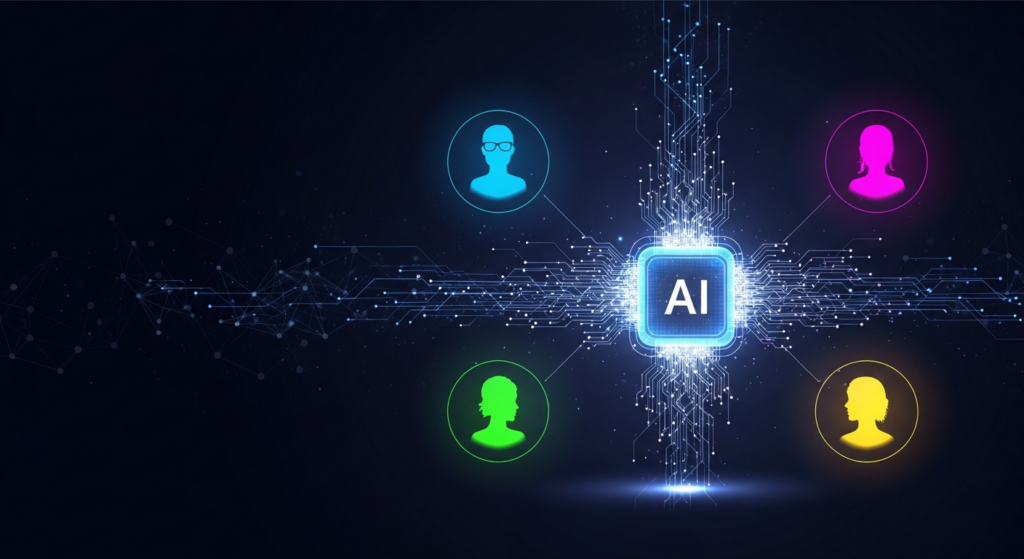
AI-powered customer segmentation marks a fundamental evolution from the rigid, manual methods of the past. It leverages Artificial Intelligence (AI) and Machine Learning (ML) to analyze vast, complex customer datasets, identifying intricate patterns and relationships that are often impossible for humans to detect. Rather than relying on a few predefined attributes, AI creates dynamic, multi-dimensional customer groups that evolve in real-time as behavior changes. This approach yields a deeply nuanced and accurate understanding of who customers are, what they need, and what they are likely to do next.
The core difference between traditional and AI-driven segmentation lies in the data they use. While traditional methods are largely confined to static demographic and geographic information, AI thrives on dynamic data streams. It integrates and analyzes a rich array of customer information, including:
By processing these diverse datasets, AI moves beyond describing *who* the customer is to understanding *why* they behave a certain way. It creates fluid segments that reflect the true customer journey, allowing marketers to engage with individuals based on their current context and intent, not just a fixed profile created months ago.
Machine Learning (ML) is the engine that drives AI segmentation. ML algorithms are trained on historical customer data to recognize patterns associated with specific outcomes. For example, an algorithm can learn the sequence of actions that typically precedes a large purchase or identify the subtle signs of declining engagement that signal a customer is at risk of churning. Once trained, these models can analyze new data to make highly accurate predictions about future behavior.
This is where predictive analytics comes into play, applying these ML models to forecast future events. Instead of only grouping customers based on past purchases, AI can create predictive segments such as “Likely to Buy in the Next 7 Days,” “High Potential to Upgrade,” or “High Churn Risk.” This forward-looking capability transforms marketing from a reactive to a proactive discipline. Marketers can anticipate customer needs and intervene at the ideal moment with the right message or offer, dramatically improving effectiveness and building stronger customer relationships.

At the heart of AI-powered segmentation are sophisticated algorithms capable of sifting through massive datasets to find meaningful structures. These algorithms fall into several categories, each suited for a different task. By combining these techniques, businesses can build a multi-layered and insightful view of their customer base.
Clustering is a type of unsupervised machine learning, meaning the algorithm does not require predefined labels. Instead, it processes raw customer data and independently identifies natural groupings, or “clusters,” of customers based on their similarities. Algorithms like K-Means or DBSCAN analyze dozens or even hundreds of attributes simultaneously—from browsing behavior to purchase frequency—to discover segments that may have otherwise gone unnoticed.
For example, a retail company using clustering might discover a segment of “Weekend Wish-Listers”—customers who browse and add items to their cart on Saturdays and Sundays but only complete the purchase after receiving a promotional email on a weekday. Without AI, this subtle behavioral pattern would likely be missed. With this insight, the marketing team can create a targeted campaign that sends a reminder or a small discount to this specific cluster on Tuesday mornings, significantly boosting conversions.
Classification is a form of supervised machine learning where a model is trained on historical data that has been labeled with a desired outcome. For instance, you could use data from the past year to label customers as either “churned” or “retained.” A classification algorithm, such as a Logistic Regression or Random Forest model, then learns the characteristics and behaviors that differentiate these two groups.
Once trained, the model can classify current customers, assigning each a probability score for a specific outcome. This allows for the creation of powerful predictive segments, such as a group of customers with a greater than 80% probability of churning in the next 30 days. This enables a customer success team to launch a proactive retention campaign targeted at these high-risk individuals. Similarly, you can classify leads as “high-value” or “low-value” upon signup, allowing your sales team to prioritize their efforts effectively.
A significant amount of valuable customer data exists as unstructured text, such as in reviews, support emails, survey responses, and social media posts. Traditional analytics struggles to process this information. Natural Language Processing (NLP), a branch of AI, is invaluable here, as its algorithms can understand, interpret, and extract insights from human language at scale.
Using NLP techniques like sentiment analysis and topic modeling, you can automatically analyze thousands of customer comments to understand their feelings and key concerns. You could create a segment of “Frustrated New Users” by identifying customers who mention terms like “confusing” or “difficult to set up” in their first support tickets, allowing you to provide them with targeted tutorials. Another segment could be “Feature Enthusiasts,” composed of customers who positively mention specific advanced features in reviews, making them ideal candidates for beta testing new functionality.

Adopting AI for customer segmentation is a strategic business decision that can unlock significant, measurable benefits. By moving from broad assumptions to data-driven, predictive insights, companies can fundamentally transform their customer interactions, leading to improved loyalty, efficiency, and profitability.
Hyper-personalization—delivering a unique, one-to-one experience for every customer—is a primary goal of modern marketing. While manually impossible, AI makes it achievable. By creating hundreds or thousands of dynamic micro-segments, AI allows you to tailor every touchpoint, from website product recommendations to email content, to the specific needs and real-time context of each individual. This level of relevance makes customers feel understood and valued, fostering a deeper connection with your brand.
Customer Lifetime Value (CLV) is a critical metric for long-term business health, and AI-powered segmentation directly impacts it. By understanding which products a specific segment is likely to be interested in next, you can create effective cross-sell and upsell campaigns. By identifying the behaviors of your most valuable customers, you can develop loyalty programs to nurture and retain them. Predictive models can also calculate a predicted CLV for new customers, allowing you to focus your acquisition budget on attracting lookalike audiences with the highest potential value.
Traditional marketing often involves a “spray and pray” approach, spending a significant portion of the budget on audiences who will never convert. AI segmentation brings surgical precision to marketing efforts. By targeting only the most relevant audiences with messages crafted for them, you drastically reduce wasted ad spend and increase engagement. Because the communication is timely and relevant, conversion rates rise, meaning every marketing dollar works harder and leads to a demonstrably higher Return on Investment (ROI).
Acquiring a new customer is significantly more expensive than retaining an existing one. AI-powered churn prediction is one of the most powerful applications of this technology. Machine learning models can analyze subtle shifts in customer behavior—such as decreased login frequency, shorter session durations, or negative sentiment in support interactions—to identify customers at risk of leaving. This provides a crucial window of opportunity to intervene with automated retention workflows, such as a personalized email with a special offer or a direct outreach from a customer success manager, which can significantly lower your churn rate.

Artificial Intelligence does not just refine existing segments; it creates entirely new categories that are dynamic, predictive, and more actionable than their traditional counterparts. These segments allow marketers to act on customer intent, context, and predicted future behavior.
These segments group customers based on how they interact with your brand across digital platforms, focusing on what customers *do*, not just who they *are*. AI can identify complex patterns in these actions to create highly specific groups. Examples include:
This is where AI’s forward-looking power shines. These segments are based not on past behavior alone but on a calculated probability of a future action. This allows for proactive marketing that can feel almost prescient to the customer.
Traditionally, psychographic data was difficult and expensive to obtain. AI can infer these attributes at scale by analyzing behavioral and unstructured data. By examining browsing history, social media activity, and language used in reviews, AI can build a picture of a customer’s interests, values, and lifestyle.
Perhaps the most advanced form of AI segmentation involves grouping users based on what they are doing *right now*. This enables in-the-moment personalization that can dramatically influence an immediate decision.
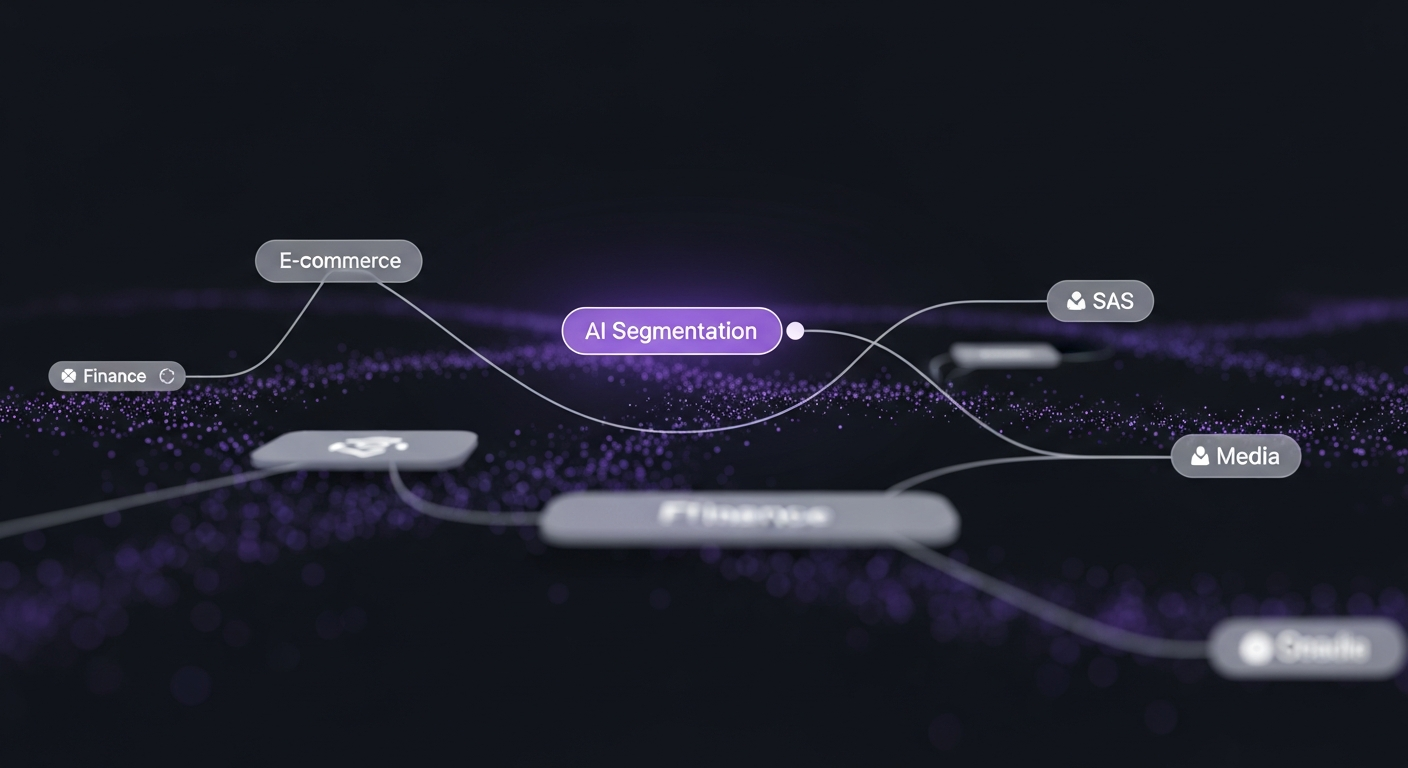
The theoretical benefits of AI segmentation come to life when applied to real business challenges. Leading companies across various industries are already using these techniques to create superior customer experiences and drive growth.
Companies like Amazon and Netflix are pioneers in using AI for personalization. Their recommendation engines are a classic example of AI-powered behavioral segmentation. They analyze viewing or purchase history, what similar users have bought, items clicked on but not purchased, and even how long a user hovers over a product image. This data feeds machine learning models that create dynamic segments of users with similar tastes, resulting in a highly personalized homepage that drives engagement and increases average order value.
For Software-as-a-Service (SaaS) companies, user activation and long-term engagement are critical. A generic onboarding process can overwhelm new users. AI segmentation helps by analyzing a user’s role (e.g., marketer, developer) and their initial actions within the app to place them into a behavioral segment. The onboarding flow can then be customized to highlight the most relevant features. For example, a marketer might see a tutorial on campaign tracking, while a developer is guided toward API documentation. This tailored experience accelerates time-to-value, increasing feature adoption and reducing early-stage churn.
Financial institutions possess a wealth of transactional data. By applying AI, they can segment customers with incredible precision. A bank could identify a segment of customers whose spending patterns suggest they are planning a major home renovation (e.g., large purchases at hardware stores) and proactively offer them a home equity line of credit. Another model could identify customers saving for retirement, allowing the bank to provide personalized investment advice. This approach transforms the bank from a passive service provider into a proactive financial partner.
Streaming services and online publications use AI to combat content fatigue and increase subscriber retention. By analyzing what articles you read, what shows you watch, and how long you engage with content, these platforms place you into dynamic content-preference segments. This powers the “For You” feeds that keep users engaged by constantly serving relevant content. Furthermore, they can use AI to identify users on a free tier who consistently hit their content limit, marking them as having a high propensity to subscribe and triggering a targeted offer.

Implementing an AI-powered segmentation strategy can be broken down into a logical, phased approach. Following these steps can help ensure a successful transition from traditional methods to a more dynamic, intelligent system.
AI models are only as good as the data they are trained on. The first and most critical step is to break down data silos and create a unified customer view. This involves gathering data from all touchpoints, including your CRM, e-commerce platform, web analytics tools, and marketing automation system. A Customer Data Platform (CDP) is often ideal for this task, as it is designed to ingest, clean, and unify customer data into a single profile. Ensure the data is clean and standardized before proceeding.
Before selecting algorithms, you must define what you want to achieve. AI is a tool, not a strategy. Are you trying to reduce churn, increase CLV, or improve conversion rates for a specific product? Define clear, measurable Key Performance Indicators (KPIs) for each objective. For example, a goal might be to “reduce churn among first-year customers by 15% within six months.” This clarity will guide your entire strategy, from model selection to campaign execution.
You don’t necessarily need a team of data scientists to begin. The market for AI tools has matured, offering a range of options for different needs and budgets. You can choose from CDPs with built-in AI features, integrated marketing suites with predictive capabilities, or standalone machine learning platforms for custom solutions. Evaluate vendors based on ease of use, integration capabilities with your existing tech stack, scalability, and support. The key is to choose a tool that aligns with your technical resources and business goals.
This is where the machine learning happens. Using your chosen platform, you will select a model and train it on your prepared historical data. It is crucial to split your data into training and testing sets. The model learns from the training set, and its performance is then validated on the unseen testing set to ensure its predictions are accurate. Once you are confident in the model’s performance, you can deploy it to begin segmenting customers in real-time.
An AI-generated segment is useless if it is not activated. The final step is to push these dynamic segments into your marketing execution channels. This could mean syncing a “High Churn Risk” segment to your email platform to trigger a retention campaign or sending a “Likely to Buy” segment to your advertising platform as a custom audience. The process is continuous. Monitor campaign performance against your KPIs and use the results to refine your models, test new hypotheses, and iterate on your strategy. AI segmentation is a constant loop of learning and optimization.

The technology landscape for AI marketing is diverse, offering solutions for businesses of all sizes and technical capabilities. The right choice depends on your existing infrastructure, in-house expertise, and strategic goals.
CDPs are designed to be the central hub for customer data. Many modern CDPs now include powerful, user-friendly AI and machine learning layers. They can automatically perform tasks like predictive scoring (e.g., churn probability, likelihood to purchase) and identify hidden behavioral clusters. Because the AI is integrated with the unified customer profile, activating these segments across marketing channels is often seamless. This is an excellent option for companies wanting an all-in-one solution without a dedicated data science team.
For organizations with in-house data science and engineering talent, standalone ML platforms like Google AI Platform, Amazon SageMaker, or Microsoft Azure Machine Learning offer maximum flexibility. These platforms provide the tools to build, train, and deploy completely custom segmentation models from scratch. This path allows for highly specialized models tailored to unique business needs but requires significant technical expertise and resources to manage. It is best suited for large enterprises with mature data practices.
Many leading marketing automation and CRM platforms (such as Salesforce, HubSpot, and Adobe) are increasingly embedding AI features into their core offerings. These tools might offer predictive lead scoring, AI-powered content recommendations, or basic segmentation capabilities. The primary advantage is ease of use and tight integration with the platform’s execution tools. While they may not offer the same depth as a dedicated CDP or ML platform, they are a great starting point for businesses looking to explore AI without a major new technology investment.
| Tool Category | Best For | Pros | Cons |
|---|---|---|---|
| CDPs with AI | Marketing teams wanting a unified data and segmentation solution. |
|
|
| Standalone ML Platforms | Companies with dedicated data science teams. |
|
|
| Integrated Marketing Suites | Small to medium businesses already using the platform. |
|
|

While the potential of AI in customer segmentation is immense, its implementation comes with significant responsibilities. Successfully navigating these challenges is crucial for building a sustainable and trustworthy personalization strategy.
AI models require large amounts of data, which raises immediate privacy concerns. Regulations like the General Data Protection Regulation (GDPR) in Europe and the California Consumer Privacy Act (CCPA) grant consumers rights over their data. Businesses must ensure their data collection, storage, and processing practices are fully compliant. This means being transparent with customers about how their data is used for personalization, obtaining proper consent, and having robust systems to manage data privacy requests. Anonymization and data minimization are key principles.
An AI model reflects the data it was trained on. If historical data contains biases, the model will learn and amplify them. For example, if a model is trained on historical data reflecting past societal biases, it might unfairly make decisions for certain demographic groups. In segmentation, this could lead to discriminatory practices, such as showing higher-priced products to one segment or excluding another from beneficial offers. It is essential to audit training data for bias, regularly test model outputs for fairness, and implement “explainable AI” techniques to understand why models make certain decisions.
Although tools are becoming more accessible, realizing the full value of AI segmentation still requires human expertise. Organizations need people who can formulate the right business questions, interpret the output of complex models, and translate those insights into effective marketing strategies. This role is often a hybrid of data analyst, data scientist, and marketing strategist. Finding and retaining talent with this unique blend of skills can be a challenge, making it important to invest in upskilling existing teams or partnering with specialized consultants.

AI-powered segmentation is the foundation for the next generation of marketing personalization. The field is evolving rapidly, with key trends shaping the future. We are moving beyond targeting large segments to creating true “segments of one,” where every individual’s experience is uniquely crafted in real-time.
Generative AI, the technology behind tools like ChatGPT, is poised to revolutionize marketing content. In the near future, AI will not only define the segment but also generate personalized email copy, ad creatives, and landing page headlines tailored to that segment’s specific motivations. Imagine an email where the subject line, body content, and call-to-action are all dynamically generated for each recipient to maximize resonance.
Furthermore, AI will enable predictive journey orchestration. Instead of just reacting to a customer’s last action, systems will predict their entire path and proactively guide them with the right sequence of messages and experiences across all channels. If a model predicts a customer is likely to need support after purchasing a complex product, it could automatically trigger a follow-up email with a helpful tutorial three days after delivery. This shift from reactive personalization to predictive journey management will create a seamless, context-aware customer experience that builds loyalty and drives growth.
Traditional segmentation relies on broad, static categories like demographics. AI-powered segmentation is dynamic, using machine learning to analyze vast amounts of behavioral, transactional, and real-time data to create nuanced, predictive segments that evolve with the customer.
AI models thrive on diverse data sources. This includes transactional data (purchase history), behavioral data (website clicks, app usage), demographic data, and unstructured data like customer support tickets, product reviews, and social media comments.
Small businesses can start by leveraging AI features built into their existing CRM or marketing automation platforms. Many Customer Data Platforms (CDPs) also offer user-friendly AI segmentation tools that do not require a dedicated data science team.
Yes, this is a key application. AI models can analyze patterns in customer behavior—such as decreased engagement or negative feedback—to identify customers at high risk of churning, allowing businesses to intervene proactively before they are lost.
The cost varies. While building a custom in-house solution can be expensive, many SaaS platforms offer affordable, tiered pricing for AI segmentation, making it accessible to smaller companies. The ROI from improved marketing efficiency and retention often justifies the cost.
By creating highly specific customer segments, AI allows marketers to move beyond generic messages. You can tailor email content, product recommendations, and ad creatives to the unique needs, preferences, and predicted behavior of each micro-segment, leading to higher engagement and conversion rates.