







In the competitive landscape of modern business, success is no longer measured solely by acquiring new customers. The true metric of sustainable growth lies in understanding and cultivating the value of existing customer relationships. This is the principle behind Customer Lifetime Value (CLV), a powerful metric that shifts focus from short-term transactions to long-term value. By calculating and maximizing CLV, businesses can gain deeper insights into customer behavior, optimize marketing spend, and build a resilient foundation for future growth.
Customer Lifetime Value (CLV or LTV) is a predictive metric representing the total net profit a company can expect from a single customer throughout their entire relationship with the brand. Rather than focusing on a single transaction, CLV encompasses the sum of all past, present, and future purchases. This comprehensive view considers how much a customer spends, how often they buy, and how long they remain a customer. For example, a customer who buys a $50 product every month for three years is significantly more valuable than one who makes a one-time purchase of $300, even though the initial revenue is higher from the second customer. CLV quantifies this long-term worth, enabling businesses to identify and prioritize their most valuable customer segments.
For decades, the primary focus for many marketing teams was customer acquisition. While attracting new customers is essential, it is often an expensive endeavor. Research suggests that acquiring a new customer can cost five times more than retaining an existing one. A CLV-centric strategy prompts a fundamental shift in this mindset. Instead of pouring all resources into attracting one-time buyers, businesses invest in strategies that foster loyalty and encourage repeat purchases. By focusing on retention, companies can build a stable base of brand advocates who not only continue to spend but also refer new customers, effectively lowering the overall Customer Acquisition Cost (CAC) and creating a virtuous cycle of growth.
Understanding CLV is fundamental to building a profitable and sustainable business model. Knowing what a customer is worth over their lifetime enables more informed decisions about acquisition spending. This relationship, often expressed as the CLV:CAC ratio, is a critical health indicator for a business. A higher CLV allows for a greater marketing budget, better product development, and superior customer service, contributing to a stronger competitive advantage. Furthermore, a business with a high average CLV has more predictable revenue streams, making financial forecasting more accurate and providing stability in fluctuating market conditions. It helps transform growth from a series of unpredictable sprints into a sustainable, long-term marathon.

To accurately calculate and improve Customer Lifetime Value, you must first understand its foundational components. These metrics are the building blocks that, when combined, paint a complete picture of a customer’s value over time. Each component offers a unique lens through which to view customer behavior, and improving any one of them can significantly impact your overall CLV. By breaking down the calculation into these core elements, the concept of CLV becomes less abstract and more actionable.
Average Purchase Value (APV), often used interchangeably with Average Order Value (AOV), measures the average dollar amount a customer spends in a single transaction. It is a straightforward yet powerful metric that provides insight into the purchasing habits of your customer base. To calculate it, you divide your total revenue over a specific period by the total number of orders during that same period.
Formula: APV = Total Revenue / Number of Orders
For example, if an e-commerce store generated $100,000 in revenue from 2,000 orders in a month, its APV would be $50. A higher APV indicates that customers are, on average, spending more each time they buy, which directly contributes to a higher CLV.
Purchase Frequency (PF) measures how many times an average customer makes a purchase within a specific time frame. This component is crucial for understanding customer loyalty and engagement. A customer who buys a $20 product every week is more valuable in the long run than one who buys a $100 product once a year. To calculate PF, you divide the total number of orders by the number of unique customers over a given period.
Formula: PF = Total Number of Orders / Number of Unique Customers
If the same e-commerce store with 2,000 orders had 500 unique customers in that month, its Purchase Frequency would be 4, meaning the average customer made four purchases that month. Increasing this number is a key lever for boosting CLV.
Customer Value (CV) combines the previous two metrics to determine the average monetary worth of a customer over a specific period, such as a year. It provides a snapshot of a customer’s spending power by considering both how much they spend and how often they do it. The calculation is a simple multiplication of Average Purchase Value and Purchase Frequency.
Formula: CV = Average Purchase Value x Purchase Frequency
Using our example, the Customer Value would be $50 (APV) x 4 (PF) = $200. This means the average customer is worth $200 per month to the business. This figure is a vital intermediate step in calculating the full lifetime value.
The final core component is the Average Customer Lifespan, which represents the length of time a person remains an active customer before they churn, or stop buying. Calculating this directly can be complex, so businesses often use the Customer Churn Rate as a proxy. The churn rate is the percentage of customers who stop doing business with a company over a given period. The customer lifespan can then be estimated as the inverse of the churn rate.
Formula: Average Customer Lifespan = 1 / Churn Rate
If a subscription business has a monthly churn rate of 5% (0.05), its average customer lifespan would be 1 / 0.05 = 20 months. A lower churn rate leads to a longer lifespan, dramatically increasing the overall Customer Lifetime Value.

Once you understand the core components, you can begin to calculate CLV. There is no single, one-size-fits-all formula; instead, several models range from simple historical snapshots to complex predictive forecasts. The model you choose will depend on your business type, available data, and the level of accuracy you require. Starting with a basic calculation is often the best approach, allowing you to establish a baseline before moving on to more sophisticated methods.
This is the most straightforward way to calculate CLV. It multiplies the Customer Value (how much a customer is worth in a period) by the Average Customer Lifespan. This method provides a historical look at what an average customer has been worth to your business.
Formula: CLV = Customer Value (CV) x Average Customer Lifespan
Continuing our e-commerce example, if the average customer is worth $200 per month and the average lifespan is 20 months, the simple CLV would be $200 x 20 = $4,000. While easy to calculate, this model is based purely on past data and does not account for profit margins or changes in customer behavior.
A more accurate and strategically useful calculation incorporates profit margins, as revenue is not the same as profit. This traditional formula adjusts the simple calculation to reflect the actual profit generated from a customer, providing a clearer picture of a customer’s true financial impact.
Formula: CLV = (Average Purchase Value x Purchase Frequency x Average Customer Lifespan) x Gross Margin
If our example store has a gross margin of 25% (0.25), the traditional CLV calculation would be: ($50 x 4 x 20) x 0.25 = $1,000. This $1,000 figure is far more realistic for making decisions about marketing spend and resource allocation than the $4,000 revenue-based figure.
Predictive CLV models represent the most advanced approach. Instead of relying solely on historical averages, these models use machine learning algorithms and statistical techniques to forecast future customer behavior. They analyze individual customer transaction histories, browsing patterns, and demographic data to predict future purchases and potential churn. While significantly more complex to implement, predictive models are far more accurate, especially for businesses with non-contractual relationships (like e-commerce) where customer lifespan is not fixed. They allow for more granular customer segmentation and proactive marketing interventions.
The best model for your business depends on your specific needs and capabilities. A small startup might begin with the simple formula to get a basic understanding, while a large enterprise with a dedicated data science team may invest in a predictive model for precise forecasting.
| Model Type | Complexity | Data Required | Best For |
|---|---|---|---|
| Simple CLV | Low | Basic sales data (revenue, orders, customers) | Startups, initial analysis, establishing a baseline |
| Traditional CLV | Medium | Sales data plus profit margin information | Businesses focused on profitability, strategic planning |
| Predictive CLV | High | Granular customer-level transaction and behavioral data | Large e-commerce, subscription services, data-driven companies |

Customer Lifetime Value is more than just a metric to track on a dashboard; it is a strategic compass that can guide critical business decisions across multiple departments. When integrated into your operational framework, CLV provides the clarity needed to allocate resources effectively, personalize customer experiences, and drive sustainable growth. It helps answer fundamental questions like how much to spend to acquire a customer, which customers to focus on, and what product features will drive the most long-term value.
One of the most powerful applications of CLV is its relationship with Customer Acquisition Cost (CAC), which is the total cost of sales and marketing efforts required to acquire a new customer. By comparing CLV to CAC, you can determine the profitability of your acquisition strategies. The CLV:CAC ratio is a key performance indicator of business health.
Knowing your CLV allows you to set a ceiling for your CAC. If an average customer is worth $1,000 in profit, you can confidently spend up to $333 to acquire them, knowing you will achieve a positive return on investment (ROI) over their lifetime.
Not all customers provide the same value. Some make a few small purchases and disappear, while others become loyal, high-spending brand advocates. CLV allows you to segment your customer base based on value. You can identify your VIPs—the top 20% of customers who might generate 80% of your profit—and tailor your marketing efforts accordingly. High-CLV customers might receive exclusive offers, early access to new products, or personalized customer support. Conversely, you can develop targeted campaigns to nurture mid-tier customers and increase their value over time, transforming them into future VIPs.
Your most valuable customers are often your best source of feedback. By analyzing the behavior and preferences of your high-CLV segment, you can gain invaluable insights to guide your product roadmap. What features do they use most? What are their pain points? Investing in product developments that cater to the needs of these loyal customers is a strategic way to increase retention and satisfaction. Similarly, if you notice that customers who interact with your premium support team have a significantly higher CLV, it provides a strong business case for investing further in world-class customer service.

One of the most direct ways to boost Customer Lifetime Value is to encourage customers to spend more during each transaction. Increasing your Average Order Value (AOV) provides an immediate lift to your revenue and profitability without needing to acquire new customers. These strategies focus on enhancing the shopping experience and presenting customers with relevant, valuable additions to their purchase. When executed thoughtfully, they not only increase cart size but also improve customer satisfaction by helping users discover products that better meet their needs.
Upselling and cross-selling are classic techniques for increasing AOV. Upselling involves encouraging a customer to purchase a more expensive version of a product or an upgrade. For example, a software company might prompt a user to upgrade from a basic to a premium plan with more features. Cross-selling involves recommending complementary products. An e-commerce site selling a digital camera might suggest a memory card, a camera bag, and a tripod at checkout. The key to success is relevance; suggestions must be genuinely helpful and aligned with the customer’s original intent.
Product bundling is the practice of offering several products together as a single package, often for a lower price than if they were purchased individually. This increases the perceived value for the customer while also increasing the total transaction value for the business. A skincare brand might bundle a cleanser, toner, and moisturizer into a “Complete Morning Routine” kit. Tiered pricing works similarly, especially for services or software, by creating distinct packages (e.g., Bronze, Silver, Gold) that encourage customers to select a higher-value option to gain more benefits.
In an age of abundant data, personalization is a key differentiator. By using algorithms to analyze a customer’s browsing history, past purchases, and even items added to their cart, you can present highly relevant product recommendations. Engines that power sections like “Customers who bought this also bought” or “You might also like” are incredibly effective at driving impulse buys and increasing AOV. This data-driven approach feels less like a sales pitch and more like a helpful service, guiding customers to products they will love and strengthening their relationship with the brand.

Getting customers to buy more often is another powerful lever for increasing CLV. A loyal customer who makes consistent, repeat purchases is the bedrock of a sustainable business. Strategies to boost purchase frequency are centered on building relationships, staying top-of-mind, and creating compelling reasons for customers to return. This involves moving beyond the transactional and focusing on continuous engagement and value delivery throughout the customer journey.
Email marketing remains one of the most effective channels for encouraging repeat business. A well-structured email strategy goes far beyond simple promotions. It includes post-purchase follow-ups to ensure satisfaction, replenishment campaigns that remind customers to reorder consumable products, and newsletters that provide valuable content related to your industry. By nurturing the relationship between purchases, you build trust and ensure your brand is the first one customers think of when they need to buy again.
Loyalty programs are a proven method for incentivizing repeat purchases. By offering points, discounts, or exclusive rewards for continued business, you give customers a tangible reason to choose you over a competitor. A tiered program, where customers unlock greater benefits as they spend more, can be particularly effective. It gamifies the shopping experience and fosters a sense of achievement and exclusivity. Whether it’s a simple coffee shop punch card or a sophisticated airline miles program, the underlying principle is the same: reward loyalty to create more of it.
While building relationships is key, a well-timed promotion can be the perfect catalyst to drive an immediate purchase. Limited-time offers, flash sales, and seasonal promotions create a sense of urgency that can convert a customer who is on the fence. These tactics are most effective when personalized. For example, sending a special birthday discount or an offer based on a customer’s past purchase category shows that you understand their preferences and value their business, making the promotion feel less generic and more like a personal invitation to shop.

The final and perhaps most impactful way to increase CLV is to extend the duration of your relationship with each customer. The longer a customer stays with you, the more opportunities they have to make purchases, refer others, and provide valuable feedback. Reducing customer churn by even a small percentage can have an exponential effect on overall CLV and long-term profitability. This requires a proactive focus on customer satisfaction, support, and community building from the very first interaction.
The first few days and weeks after a purchase are critical. This is the onboarding phase, where a customer’s initial impression of your product and brand is formed. A confusing or frustrating onboarding process is a primary driver of early churn. A seamless experience, on the other hand, helps customers achieve their first “win” quickly, demonstrating the value of your product and reinforcing their purchase decision. This can include welcome emails, interactive tutorials, setup guides, and proactive check-ins to ensure they are getting the most out of their purchase.
Exceptional customer support is a powerful retention tool. When customers encounter a problem, a fast, empathetic, and effective resolution can turn a negative experience into a positive one, strengthening their loyalty. World-class support goes beyond simply reacting to issues; it is proactive. This might involve monitoring product usage to identify customers who are struggling and reaching out to help before they complain, or creating a comprehensive knowledge base and community forum so customers can find answers themselves. Investing in your support team is investing directly in your customer lifespan.
Customers who feel a sense of belonging are less likely to leave. Building a community around your brand creates an ecosystem that adds value beyond the product itself. This can take many forms: an active user forum where customers can share tips, a private social media group for your most engaged users, local meetups, or annual user conferences. A strong community fosters emotional connections, turning customers into advocates and creating a powerful moat around your business that competitors will find difficult to penetrate.

In today’s data-rich environment, technology is an indispensable partner in the quest to understand and maximize Customer Lifetime Value. Manually tracking every interaction and calculating CLV across thousands of customers is an impossible task. Modern software platforms provide the tools needed to collect, unify, and analyze customer data at scale, transforming raw numbers into actionable insights that can fuel your CLV-boosting strategies.
Customer Relationship Management (CRM) platforms are the central nervous system for customer data. A CRM system (like Salesforce, HubSpot, or Zoho) consolidates every touchpoint a customer has with your company—from sales calls and support tickets to email interactions and purchase history—into a single, unified record. This 360-degree view is essential for calculating the components of CLV, such as purchase frequency and lifespan. Furthermore, CRMs enable personalized communication at scale, allowing you to segment your audience based on CLV and deliver targeted campaigns to the right people at the right time.
While a CRM is excellent for managing direct interactions, a Customer Data Platform (CDP) takes data unification a step further. A CDP is designed to ingest data from a multitude of sources—including your website, mobile app, social media channels, and third-party tools—and stitch it together to create a persistent, unified customer profile. This provides a much richer dataset for building advanced predictive CLV models. By understanding the entire customer journey across all channels, you can identify the key behaviors that correlate with high lifetime value and optimize your marketing mix accordingly.
Once your data is collected and unified, Analytics and Business Intelligence (BI) tools are used to make sense of it all. Platforms like Tableau, Google Data Studio, or Microsoft Power BI allow you to create dynamic dashboards and visualizations that bring your CLV data to life. With these tools, you can easily track CLV trends over time, compare the lifetime value of customers acquired from different marketing channels, and drill down into specific customer segments to uncover hidden opportunities. They empower your team to move beyond simple calculations and engage in sophisticated analysis that drives strategic decision-making.
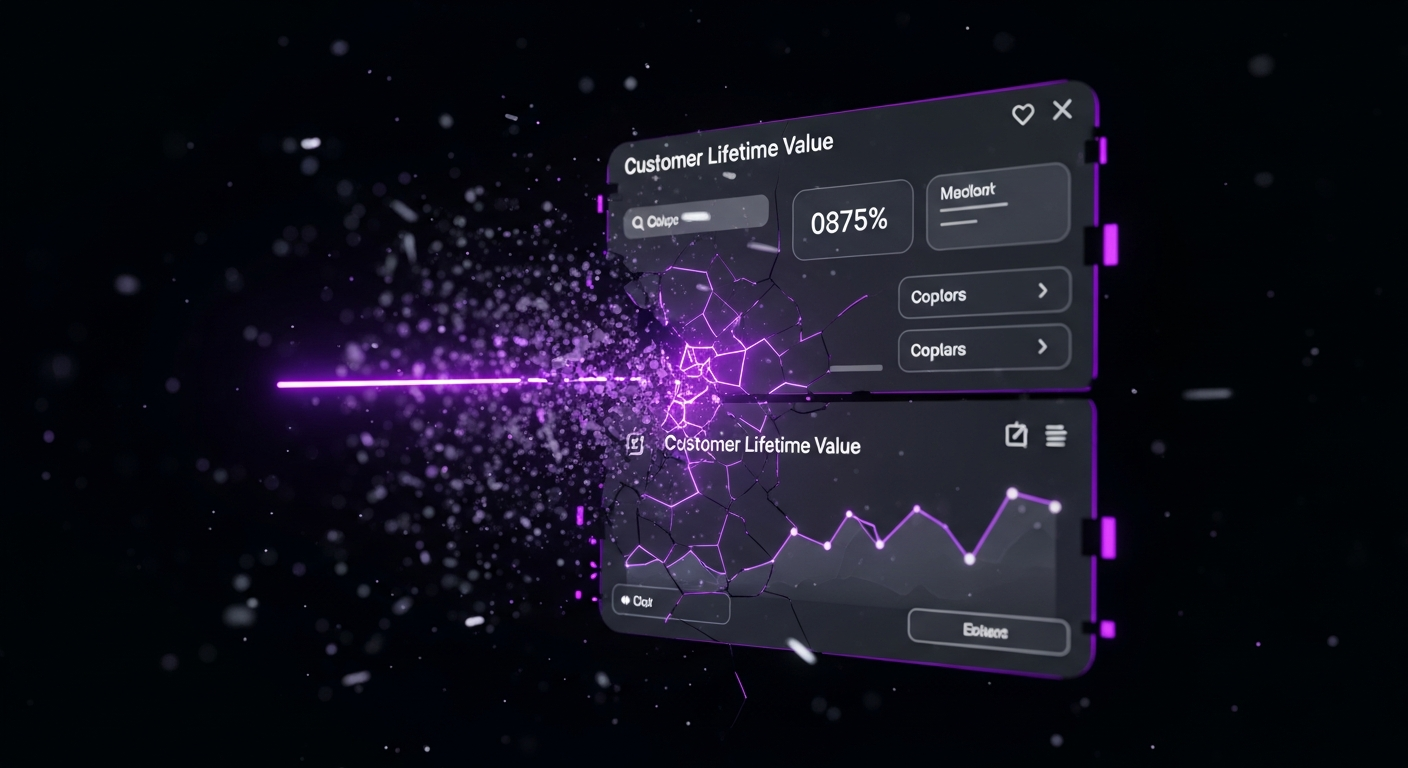
While implementing a CLV-focused strategy is transformative, it is not without challenges. Businesses can fall into common traps that lead to inaccurate calculations and misguided decisions. Being aware of these pitfalls is the first step toward avoiding them and ensuring your CLV initiatives are built on a solid foundation. A successful CLV strategy requires diligence, nuance, and a commitment to continuous improvement.
One of the biggest mistakes is calculating a single, blended CLV for your entire customer base. This average figure can be dangerously misleading because it masks the vast differences between your best and worst customers. A segment of loyal advocates acquired through organic search may have a CLV ten times higher than a segment of one-time buyers acquired through a deep-discount promotion. It is essential to calculate CLV for different segments based on acquisition channel, demographics, first product purchased, or other relevant criteria. This granular approach provides the actionable insights needed for effective personalization and resource allocation.
Historical CLV models are a great starting point, but they have a significant limitation: they assume the future will look exactly like the past. They cannot account for market shifts, changes in your business strategy, or evolving customer behavior. For example, a historical model would not anticipate how a new product launch might dramatically increase the future spending of existing customers. While valuable for benchmarking, relying exclusively on past data can lead to underestimating the potential value of new customer cohorts. This is why supplementing historical analysis with predictive modeling is crucial for forward-looking businesses.
A revenue-based CLV calculation can inflate the perceived value of a customer. True CLV should be based on net profit. This means you must diligently subtract all associated variable costs, including the cost of goods sold (COGS), shipping and handling, transaction fees, and customer support costs. Forgetting to factor in these expenses will give you an inaccurate picture of profitability and could lead you to overspend on customer acquisition, ultimately harming your bottom line.
Customer Lifetime Value is not a static metric. It is a dynamic number that evolves as your business, your customers, and the market change. Your pricing might change, your customer retention efforts might improve, or a new competitor might enter the market, all of which will impact your CLV. Therefore, it is critical to treat CLV as a living metric that needs to be recalculated and re-evaluated on a regular basis—at least quarterly, if not monthly. Continuous monitoring allows you to measure the impact of your strategies and adapt your approach in real time.

Customer Lifetime Value is far more than an isolated marketing metric; it is a guiding philosophy for building a customer-centric and resilient business. By shifting the organizational mindset from short-term acquisition to long-term value creation, you align every department—from marketing and sales to product and support—around a common goal: creating and retaining valuable customers. This journey begins with understanding the core components of CLV, choosing an appropriate calculation model, and systematically implementing strategies to improve each one.
The path to CLV mastery is an iterative process. Start with simple calculations to establish a baseline. Use that data to launch targeted initiatives aimed at increasing average order value, boosting purchase frequency, and extending the customer lifespan. As your capabilities grow, leverage technology like CRMs and CDPs to gain deeper insights and deploy more sophisticated, predictive models. By avoiding common pitfalls and committing to regular analysis, you can embed CLV into the DNA of your business. This strategic focus on long-term relationships will not only drive profitability but also build a loyal customer base that serves as your most durable competitive advantage.

A “good” CLV is relative and depends entirely on your industry and, most importantly, your Customer Acquisition Cost (CAC). The key is the CLV:CAC ratio. A healthy ratio is widely considered to be 3:1 or higher, meaning a customer’s lifetime value is at least three times the cost to acquire them. A CLV of $500 is excellent if your CAC is $100, but poor if your CAC is $600.
CLV and CAC are two sides of the same coin that determine the viability of a business model. CLV represents the value you get from a customer, while CAC represents the cost to get that customer. If your CAC is higher than your CLV, your business is unsustainable. By understanding your CLV, you can set a maximum budget for your CAC, ensuring that your marketing efforts are profitable over the long term.
Historic CLV models calculate value based on past data. They average the past purchase behavior of existing customers to determine a value. They are simpler to calculate but less accurate for forecasting. Predictive CLV models use statistical algorithms and machine learning to forecast a customer’s future spending behavior based on their past actions and other characteristics. They are more complex but provide a more accurate, forward-looking measure of value.
CLV should be reviewed regularly as it is a dynamic metric. For most businesses, a quarterly review is a good cadence. This allows enough time to see the impact of strategic initiatives while being frequent enough to adapt to market changes. Businesses in fast-moving industries or those running many simultaneous experiments may benefit from monthly reviews.
Absolutely. The principles of CLV are universal. For B2B businesses, especially those with subscription or retainer models, CLV is incredibly powerful. The components are slightly different—for example, Average Purchase Value might be replaced with Average Contract Value, and Purchase Frequency might relate to contract renewals or expansion revenue—but the strategic importance of understanding long-term customer value remains the same.
A small business should start with the basics. First, calculate a simple, historical CLV to establish a baseline. Then, focus on low-cost, high-impact strategies. This could include setting up a simple email marketing campaign to encourage repeat purchases, starting a basic loyalty program (e.g., “buy 10, get one free”), and focusing intensely on providing excellent, personalized customer service to reduce churn.