Danish Khan is a digital marketing strategist and founder of Traffixa who takes pride in sharing actionable insights on SEO, AI, and business growth.
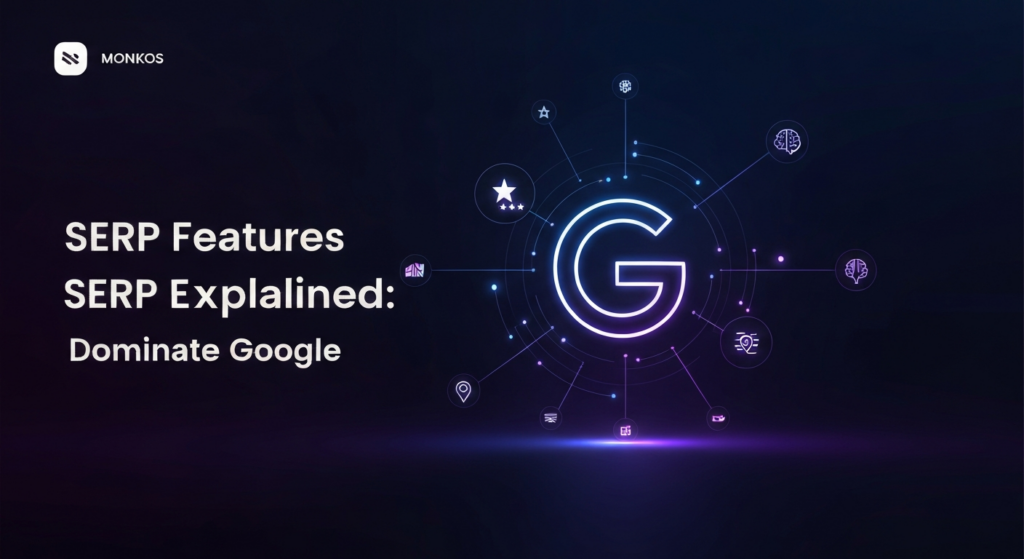
SERP Features Explained: A Complete Guide to Dominating Google’s Search Results
What Are SERP Features? (And Why They Matter More Than Ever)
For decades, the landscape of Google’s Search Engine Results Page (SERP) was predictable: a simple list of ten blue links. Today, that landscape has been transformed. A modern SERP is a dynamic, interactive page featuring information boxes, carousels, maps, and direct answers. These elements, which extend beyond the traditional organic link, are known as SERP features. They represent Google’s ongoing effort to answer user queries as quickly and comprehensively as possible, often without requiring a single click.
Understanding and optimizing for these features is no longer optional for a successful SEO strategy; it’s essential. They occupy valuable real estate on the page, command user attention, and fundamentally change how users interact with search results. Ignoring them means ceding visibility, traffic, and authority to competitors who have adapted to this new reality. As Google continues to innovate, mastering SERP features is key to not just ranking, but also achieving dominant visibility in the search results.
The Evolution from ’10 Blue Links’ to a Dynamic Information Hub
The journey from a static list to a rich information hub reflects Google’s core mission: to organize the world’s information and make it universally accessible and useful. The original ’10 blue links’ model required users to click through to various websites and sift through information to find an answer. This process was often inefficient and time-consuming.
Over time, Google began introducing new elements to streamline this process. It started with simple additions like ads and maps, but the pace of innovation accelerated dramatically. We saw the introduction of Knowledge Panels, providing encyclopedic summaries of entities; Featured Snippets, offering direct answers at the top of the page; and Image Packs, catering to visual queries. Each new feature was a step toward transforming the SERP from a simple directory into a destination in its own right—an answer engine. This evolution is driven by user behavior, machine learning, and a focus on providing immediate value.
How SERP Features Impact Click-Through Rate (CTR) and User Trust
SERP features have a profound impact on user behavior, most notably on click-through rate (CTR). By occupying the most prominent positions on the page, often above the #1 organic result (a position known as ‘Position Zero’), features like Featured Snippets can either significantly boost your CTR or siphon it away to a competitor. Earning a Featured Snippet can result in a significant increase in clicks compared to a standard #1 ranking.
Beyond clicks, earning a SERP feature acts as a powerful signal of trust and authority. When Google chooses your content to provide a direct answer, it serves as a strong endorsement. Users often perceive the content in a Featured Snippet or Knowledge Panel as vetted and authoritative, which enhances brand credibility before they even visit your website. Conversely, if your competitors consistently own these features for your target keywords, users may begin to see them as the go-to experts in your field, diminishing your brand’s perceived authority.
Understanding Zero-Click Searches and Their Importance
One of the most significant consequences of the rise of SERP features is the phenomenon of the ‘zero-click search.’ This occurs when a user’s query is fully answered on the SERP itself, eliminating the need to click on any of the results. Features like answer boxes, calculators, dictionary definitions, and Knowledge Panels are primary drivers of this trend.
While the term ‘zero-click’ might sound alarming to marketers, it represents a fundamental shift in the goals of SEO. In a zero-click world, success is measured not just by traffic, but also by visibility and brand presence. If your brand is the source of the information in a Featured Snippet, you have successfully answered the user’s question and achieved a valuable brand impression, even without a click. The strategy, therefore, must evolve from solely driving clicks to also establishing brand presence and being the authoritative answer wherever it appears on the SERP.
The Core Four: Foundational SERP Features to Target First
While the number of SERP features is constantly growing, a few foundational elements offer the greatest opportunity for most businesses. Focusing your initial efforts on these ‘Core Four’ can provide a significant return on investment by boosting visibility, driving qualified traffic, and establishing your brand as an authority in your niche. These are the building blocks of a robust SERP feature strategy.
Featured Snippets: Becoming the ‘Answer Box’
Often called ‘Position Zero,’ the Featured Snippet is a block at the top of the SERP that provides a direct, concise answer to a user’s query. Google programmatically pulls this information from a webpage it deems to be the best answer. Winning a Featured Snippet can significantly increase your visibility and CTR.
There are several common formats:
Paragraph Snippets: The most common type, typically providing a 40-60 word text definition or answer.
List Snippets: Answers formatted as a numbered (ordered) or bulleted (unordered) list, perfect for step-by-step instructions or lists of items.
Table Snippets: Google pulls data from a table on your page and formats it directly in the SERP, ideal for comparisons and data-rich queries.
To optimize for Featured Snippets, focus on question-based keywords. Provide a clear, concise answer directly below the relevant heading on your page. Use HTML formatting like lists (
,
) and tables (
) to structure your data in a way that is easy for Google to parse.
People Also Ask (PAA): Answering the Next Question
The ‘People Also Ask’ (PAA) box is an interactive SERP feature that displays a list of questions related to the user’s original query. When a user clicks on a question, it expands to reveal a short answer, often with a link to the source page. The PAA box is a valuable source of insight for content strategy because it provides direct insight into what other questions your audience is asking.
To appear in PAA boxes, integrate these related questions directly into your content. Structure your articles with clear headings (H2s, H3s) that match the PAA questions, and provide direct, well-written answers immediately following them. By creating comprehensive content that anticipates and answers the user’s next question, you increase your chances of being featured and can capture traffic from users seeking more detailed information.
The Knowledge Graph is Google’s vast database of entities—people, places, organizations, things—and the relationships between them. A Knowledge Panel is its visible manifestation, appearing as a large box on the right-hand side of desktop SERPs (or near the top on mobile) for searches about a specific entity.
For businesses, especially local ones, the Knowledge Panel is primarily populated by information from your Google Business Profile. For larger brands, public figures, or concepts, the information is often sourced from authoritative sites like Wikipedia and other trusted data sources. To secure and influence your Knowledge Panel, you must establish your brand as a clear entity. This involves maintaining a complete and active Google Business Profile, ensuring consistency in your business information across the web, and earning mentions on authoritative third-party sites.
Sitelinks: Enhancing Your Brand’s SERP Real Estate
Sitelinks are additional links that appear below the main URL in a search result, directing users to other important pages on your website. They typically appear for branded searches when a user is clearly looking for your specific website. Sitelinks are highly valuable because they allow you to occupy more space on the results page, improve CTR, and help users navigate directly to the most relevant sections of your site, such as ‘About Us,’ ‘Contact,’ ‘Products,’ or popular blog posts.
Google generates sitelinks automatically based on its understanding of your site’s structure. You cannot directly control them, but you can influence them by having a logical site architecture, using clear and descriptive anchor text for your internal links, and submitting a useful XML sitemap through Google Search Console. A well-organized website is more likely to be rewarded with helpful sitelinks.
Unlocking Rich Results and Snippets with Schema Markup
While some SERP features are won through content quality and formatting alone, another powerful class of enhancements, known as rich results or rich snippets, requires a more technical approach. These visually appealing results—think star ratings, event dates, and recipe cooking times—are unlocked by implementing structured data. By using schema markup, you can provide search engines with explicit context, transforming your standard blue links into eye-catching, informative listings that stand out on a crowded SERP.
What is Structured Data (Schema)? A Plain English Explanation
Imagine giving a search engine a detailed instruction manual for your website’s content. That’s essentially what structured data is. It’s a standardized vocabulary (most commonly from Schema.org) that you add to your website’s HTML code. This code doesn’t change how the page looks to a human visitor, but it provides explicit context for search engine crawlers.
For example, instead of letting Google guess that ‘4.5/5’ on your page is a review score, you can use schema markup to explicitly label it as such. You can tell Google, ‘This string of text is a recipe name,’ ‘this number is the calorie count,’ and ‘this list of steps is the cooking instructions.’ This removes ambiguity and makes it much easier for Google to understand and display your information in useful, rich formats on the SERP.
Essential Schema Types: Reviews, FAQs, How-To, and More
There are hundreds of schema types available, but a few are particularly valuable for generating powerful rich snippets:
Review Schema: Adds the familiar gold star ratings and review counts directly under your search result. This is valuable for products, services, and recipes, as it provides immediate social proof and can significantly boost CTR.
FAQ Schema: Allows you to mark up a list of questions and answers on your page. In the SERP, this can generate a dropdown accordion of your FAQs directly below your main result, expanding your footprint and answering user questions instantly.
How-To Schema: Used for content that provides step-by-step instructions. This can enable a rich result that outlines the steps, sometimes with images for each, creating a highly visible and actionable listing.
Event Schema: Crucial for any business that hosts events. It allows Google to display key details like the date, time, location, and ticket information in a structured format, making it easy for users to find and engage with your events.
Product Schema: A necessity for e-commerce sites, this schema communicates details like price, stock availability, and brand, which can be displayed directly in the search results.
Tools for Implementing and Testing Your Schema Markup
Implementing schema markup may sound daunting, but numerous tools are available to simplify the process. For those using a Content Management System (CMS) like WordPress, plugins such as Yoast SEO or Rank Math have built-in functionalities to add common schema types without touching a line of code.
For manual implementation or generation, tools like Merkle’s Schema Markup Generator provide a user-friendly interface to create the necessary JSON-LD code, which you can then copy and paste into your page’s HTML. Once you’ve implemented your markup, it’s critical to test it. Google provides two key tools for this: the Rich Results Test, which shows you which rich results your page is eligible for, and the Schema Markup Validator, which helps you debug the structured data itself. Regular testing ensures your markup is correct and gives you the best chance of earning those rich snippets.
Winning Local Search: Dominating the Local Pack
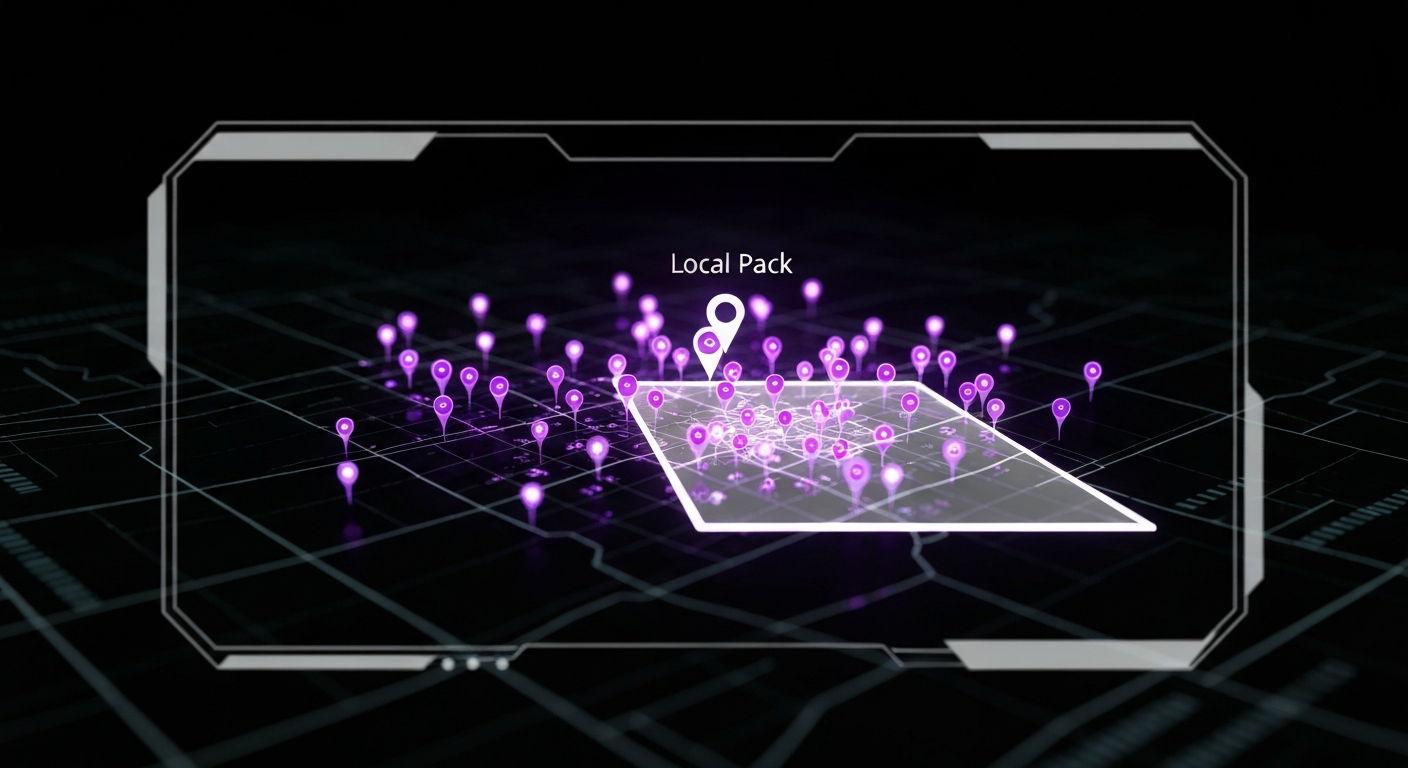
For any business with a physical location or a defined service area, local SERP features are a critical area of focus. When users search with local intent (e.g., ‘pizza near me’ or ‘plumbers in brooklyn’), Google’s top results are often dominated by the Local Pack—a map and a list of three businesses. Securing a spot in this highly visible feature is critical for driving foot traffic, phone calls, and local customers.
Optimizing Your Google Business Profile for Local Pack Visibility
Your Google Business Profile (GBP) is the cornerstone of local SEO. It is the primary source of information Google uses to populate the Local Pack and Knowledge Panels for local searches. A poorly optimized profile is a missed opportunity, while a complete and active profile is essential for achieving top placement.
Essential GBP optimizations include:
Complete and Accurate Information: Ensure your business name, address, and phone number (NAP) are exactly correct and consistent everywhere online.
Primary and Secondary Categories: Choose the most accurate primary category for your business and add all relevant secondary categories to describe your services.
High-Quality Photos and Videos: Regularly upload clear photos of your storefront, products, team, and work. This shows users what to expect and signals to Google that your business is active.
Google Posts: Use Posts to share updates, offers, events, and news. This keeps your profile fresh and engaging.
Services and Products: Fill out these sections with detailed descriptions and pricing to give potential customers all the information they need upfront.
The Role of Reviews and Citations in Local SERP Features
Beyond your GBP profile, two external factors heavily influence your Local Pack ranking: reviews and citations. Google uses reviews as a strong indicator of a business’s quality and trustworthiness. A strategy to consistently generate new, positive reviews is crucial. Encourage satisfied customers to leave feedback and make sure to respond to all reviews—both positive and negative—to show that you are an engaged business owner.
Citations are mentions of your business’s NAP information on other websites, such as Yelp, Yellow Pages, and industry-specific directories. Consistency is key. Google cross-references this information across the web, and if it finds conflicting details, it can hurt your ranking. A consistent citation profile builds Google’s confidence in your business’s location and legitimacy.
Understanding the Local Pack vs. the Local Finder
It’s important to distinguish between the Local Pack and the Local Finder. The Local Pack is the prominent box with three business listings and a map that appears on the main SERP, offering the highest visibility. The Local Finder is the expanded view a user sees after clicking ‘View all’ at the bottom of the Local Pack, which displays a longer list of businesses alongside a larger map.
While the goal is to get into the coveted 3-pack, optimizing for the Local Finder is still vital as a secondary opportunity to be discovered. The ranking factors are largely the same, but the Local Finder provides more space for details from your GBP to be featured, such as your full description, Q&As, and a wider array of photos. A fully built-out profile gives you a competitive edge in both environments.
Capturing Visual Searchers with Image and Video Features
Search is no longer a text-only medium. A growing number of users turn to Google for visual information, and Google has responded with a variety of image and video-based SERP features. Optimizing your visual content is crucial for capturing the attention of these users, whether they are looking for product ideas, learning a new skill, or simply browsing. Appearing in these visual features can drive significant traffic and build brand awareness in a highly engaging way.
How to Optimize for Image Packs and Google Images
Image Packs are rows or blocks of images that appear within the standard organic search results, usually for queries where a visual is highly relevant (e.g., ‘modern kitchen ideas’). To increase your chances of appearing in an Image Pack or ranking high in a dedicated Google Images search, you need to apply SEO best practices to your visual assets.
Key image optimization tactics include:
Descriptive File Names: Name your image files with relevant keywords before uploading them (e.g., `luxury-leather-sofa-brown.jpg` instead of `IMG_8472.jpg`).
Informative Alt Text: Alt text is an HTML attribute that describes the image. It’s crucial for accessibility and helps search engines understand the image’s content. Be descriptive and include your target keyword where it makes sense.
Optimized Image Size: Large images slow down your page speed, which is a negative ranking factor. Compress your images to ensure they load quickly without sacrificing too much quality.
Contextual Relevance: Place your images near relevant text on the page. The surrounding content helps Google understand what the image is about.
Securing a Spot in Video Carousels and Key Moments
Video carousels are a common SERP feature for ‘how-to,’ review, and educational queries. While videos from various platforms can appear, Google often gives preference to its own platform, YouTube. Therefore, a strong YouTube presence is the most effective way to secure a spot in these carousels.
To optimize your videos, focus on creating high-quality content that directly addresses the search query. Optimize your video’s title and description with relevant keywords, just as you would for a blog post. A particularly powerful feature is ‘Key Moments.’ By adding timestamps to your YouTube video description (e.g., 0:00 Intro, 1:15 Step 1), you can enable Google to display these chapters directly in the SERP. This allows users to jump to the most relevant part of your video, significantly improving user experience and CTR.
The Importance of Thumbnails in Search Results
Your thumbnail is the first visual impression a user has of your content in the SERP. For both videos and standard web pages (which can sometimes display a thumbnail image), a compelling thumbnail can be the deciding factor in whether a user clicks your result or a competitor’s. A great thumbnail is high-quality, eye-catching, and accurately represents the content. For videos, consider using bold text overlays, clear images of a person’s face making eye contact, or vibrant colors to stand out. A/B testing different thumbnail styles on platforms like YouTube can provide valuable insights into what resonates with your audience and drives the most clicks from search.
Driving Sales: Commercial and E-commerce SERP Features
For e-commerce businesses, SERP features are not just about visibility; they are powerful tools for driving direct sales. Google has developed a rich ecosystem of commercial SERP features designed to help users research, compare, and purchase products directly from the search results page. Leveraging these features is essential for attracting high-intent buyers and converting them into customers.
Product Carousels and Google Shopping Ads
When a user performs a search with commercial intent, such as ‘men’s running shoes,’ the SERP is often dominated by visually-rich product carousels. These carousels can contain both paid and unpaid listings. Paid listings, known as Google Shopping ads, are managed through Google Ads and are a primary way to get your products featured prominently. However, Google also includes free organic listings in these carousels and on the Shopping tab.
To be eligible for either, you must have a Google Merchant Center account and submit a detailed product feed. This feed contains all your product information—titles, descriptions, prices, images, and more. A well-structured and frequently updated feed is the foundation for success in all of Google’s shopping-related SERP features.
Leveraging Product Schema for Rich Snippets (Price, Stock, Ratings)
Beyond the Shopping carousels, you can enhance your standard organic listings for product pages with powerful rich snippets. This is achieved by implementing Product schema markup on your product pages. This structured data allows Google to pull key commercial information and display it directly in the search results.
Valuable product rich snippets include:
Price: Displays the current price of the product, and can even show sale prices or price ranges.
Availability: Shows whether the product is ‘In stock’ or ‘Out of stock,’ helping users avoid clicking on a link for a product they can’t buy.
Review Ratings: Displays the aggregate star rating and the number of reviews, providing instant social proof.
These snippets make your listing far more compelling than a standard blue link. They pre-qualify clicks by providing essential information upfront, leading to more engaged and higher-converting traffic.
The Impact of the Google Shopping Graph
Underpinning Google’s entire e-commerce ecosystem is the Shopping Graph. This is a vast, AI-powered dataset that understands the relationships between products, brands, sellers, reviews, and inventory information from across the web. It’s what allows Google to know that the ‘Nike Air Zoom Pegasus 40’ sold on your site is the same product sold on Nike’s site and other retailers.
Every piece of accurate data you provide—through your Google Merchant Center feed and your on-page Product schema—feeds into this graph. By contributing high-quality, detailed, and accurate information, you increase your product’s visibility across all of Google’s platforms, including standard search, the Shopping tab, Google Images, and Google Lens. A strong presence in the Shopping Graph ensures that your products are discoverable however a customer chooses to search.
A Strategic Approach to Winning SERP Features
Winning individual SERP features is a good start, but a dominant SEO strategy involves a systematic and repeatable process. Instead of chasing features randomly, you need a strategic approach to identify opportunities, create and format content purposefully, and build the underlying authority that Google rewards. This involves integrating SERP feature optimization into every stage of your SEO workflow, from keyword research to content creation.
How to Identify SERP Feature Opportunities for Your Keywords
The first step is to understand the SERP landscape for your target topics. You can do this manually by searching for your most important keywords and noting which SERP features appear. Are there Featured Snippets? PAA boxes? Video carousels? This gives you a clear picture of what types of content Google prefers for that query.
For a more scalable approach, use SEO tools like Ahrefs, Semrush, or Moz. These platforms have keyword research tools that can filter keywords based on the SERP features they trigger. You can quickly generate lists of keywords that have Featured Snippet opportunities or find questions your audience is asking for PAA optimization. Prioritize keywords where a competitor holds a feature with content that you know you can improve upon.
Content Formatting and On-Page SEO Tactics for Different Features
Once you’ve identified an opportunity, you need to tailor your content and formatting to match the specific feature you’re targeting. A one-size-fits-all approach doesn’t work, as different features require different on-page tactics.
SERP Feature
Content & Formatting Tactic
Featured Snippet
Provide a direct, concise answer (40-50 words) immediately following a heading that asks the question. Use ordered or unordered lists for processes and steps. Use tables for data comparisons.
People Also Ask (PAA)
Structure your article with H2s and H3s that match the questions in the PAA box. Write in a clear question-and-answer format to make it easy for Google to pull your content.
Rich Snippets (FAQ)
Create a dedicated FAQ section on your page. Mark up the questions and answers with valid FAQPage schema markup.
Video Carousel
Host your video on YouTube. Optimize the video title and description with target keywords. Create a compelling, high-CTR thumbnail. Add timestamps to the description to enable Key Moments.
Local Pack
Completely fill out every section of your Google Business Profile. Actively solicit customer reviews and respond to them. Build consistent local citations.
Why E-E-A-T is Critical for Earning Prominent Placements
E-E-A-T—which stands for Experience, Expertise, Authoritativeness, and Trustworthiness—is a core concept from Google’s Search Quality Rater Guidelines. While not a direct ranking factor, it is a framework that describes the kind of content Google wants to reward. For prominent SERP features, E-E-A-T is especially critical. Google is unlikely to feature content in a ‘Position Zero’ snippet unless it comes from a source it deems trustworthy and authoritative.
You can build E-E-A-T by:
Demonstrating first-hand experience with the topic.
Citing credible sources and data.
Featuring clear author bios with credentials.
Earning backlinks and mentions from other reputable websites in your industry.
Showcasing positive reviews and testimonials.
A long-term commitment to building E-E-A-T is the foundation upon which all your SERP feature wins will be built and sustained.
How to Track and Measure Your SERP Feature Performance
Optimizing for SERP features is only half the battle. To understand what’s working and justify your SEO efforts, you need a robust system for tracking your performance and measuring its impact on your business goals. By combining data from various tools, you can get a clear picture of which features you’re winning, how they affect your visibility, and whether they are driving meaningful traffic and conversions.
Using Google Search Console for Performance Insights
Google Search Console (GSC) is an indispensable—and free—tool for this task. The ‘Performance’ report in GSC allows you to see how your site is performing in search, and you can filter this data by ‘Search Appearance.’ This filter shows you impressions and clicks specifically for pages that appeared with a SERP feature or rich result, such as ‘How-to rich results,’ ‘Review snippets,’ or ‘Video.’
By analyzing this data, you can answer critical questions like, ‘Is our FAQ schema actually driving more clicks?’ or ‘How much visibility are we getting from our How-to content?’ This helps you see which of your optimization efforts are paying off directly within Google’s own data.
Advanced Rank Tracking Tools for Monitoring Feature Ownership
While GSC is great for analyzing performance on your own site, it doesn’t tell you much about the competitive landscape. For this, you need a dedicated rank tracking tool. Modern SEO platforms like Semrush, Ahrefs, and Moz Pro have evolved beyond simply tracking blue link rankings. Their rank trackers monitor the entire SERP, identifying which features are present for your target keywords and, most importantly, who owns them.
You can set up tracking to monitor your progress in winning specific features like Featured Snippets or Local Pack listings. These tools allow you to see your ‘share of voice’ not just in organic rankings, but across all SERP features, providing a much more holistic view of your true search visibility compared to your competitors.
Analyzing the Impact on Your Traffic and Conversions
Ultimately, the goal of winning SERP features is to drive business results. The final step is to connect your SERP feature data to your website’s traffic and conversion data. By using your rank tracker to identify when you won a key SERP feature, you can then look at your Google Search Console and Google Analytics data for the corresponding timeframe.
Did you see a spike in impressions and clicks to that page after winning the Featured Snippet? Did the traffic coming from that rich result have a higher conversion rate? For example, you might find that while your FAQ rich results increase clicks, traffic from pages with Product review snippets leads to significantly more sales. This level of analysis allows you to prioritize your SEO efforts on the SERP features that have the greatest impact on your bottom line.
The Future of the SERP: AI, SGE, and What’s Next
Just as the industry adapted to the shift from ’10 blue links’ to a feature-rich SERP, we are now on the cusp of another monumental transformation. The integration of powerful generative AI into search engines is set to fundamentally reshape how users find information. Understanding this next wave, led by Google’s Search Generative Experience (SGE), is crucial for future-proofing your SEO strategy.
An Introduction to Google’s Search Generative Experience (SGE)
Search Generative Experience (SGE) is Google’s vision for an AI-powered search engine. Instead of just providing a list of links, SGE generates a comprehensive ‘AI Snapshot’ at the very top of the SERP. This snapshot synthesizes information from multiple web pages to provide a direct, conversational answer to the user’s query. It can summarize complex topics, compare products, or build itineraries. On the right side of the snapshot, it often includes links to the sources it used to generate the response, creating a new kind of featured placement.
How AI-Powered Snapshots Will Change SEO
The introduction of AI Snapshots will have a significant impact on user behavior and SEO. By providing a comprehensive answer at the top of the page, SGE could further increase the number of zero-click searches, as users may not need to scroll down to the traditional organic results. The primary goal for SEO will shift from simply ranking #1 to becoming a trusted, cited source within the AI-powered snapshot.
This change will also likely elevate the importance of conversational and long-tail keywords, as users begin to interact with search in a more natural, question-based way. The focus will be less on a single keyword and more on demonstrating comprehensive expertise around a topic, making your content a go-to resource for the AI to learn from.
Preparing Your Content Strategy for an AI-Driven Search Landscape
While the search landscape is changing, the core principles of good SEO are becoming more important than ever. To prepare for an AI-driven future, your content strategy should reinforce the very things that help you win today’s SERP features:
Emphasize E-E-A-T: AI models will be trained to rely on sources that are experienced, expert, authoritative, and trustworthy. Building your brand’s E-E-A-T is one of the most important things you can do to become a preferred source for AI snapshots.
Create Unique, Insightful Content: Focus on providing unique perspectives, original research, and first-hand experiences that cannot be easily replicated or synthesized from existing content. This is your competitive advantage over AI-generated summaries.
Continue Using Structured Data: Schema markup makes your content more machine-readable. This will be critical for helping AI models quickly understand the key information and data on your pages.
Answer Questions Clearly: Continue to structure your content to answer questions directly and comprehensively. The tactics used to win Featured Snippets and PAA boxes are the same tactics that will help you get cited in an AI Snapshot.
The future of search is about providing value, demonstrating true expertise, and structuring your content in a way that both humans and AI can easily understand. By embracing these principles, you can ensure your brand remains visible and authoritative in the evolving world of search.
Frequently Asked Questions
What is the most common SERP feature?
While it varies by query type, some of the most common SERP features include Sitelinks (especially for branded searches), People Also Ask (PAA) boxes, Image Packs, and Video Carousels. For local queries, the Local Pack is nearly ubiquitous.
How do you optimize for SERP features?
Optimization tactics vary by feature. Key strategies include using structured data (schema markup) for rich snippets like FAQs and Reviews, formatting content clearly with Q&A sections for Featured Snippets and PAA, fully optimizing your Google Business Profile for the Local Pack, and following image/video SEO best practices for visual features.
Are SERP features the same as rich snippets?
Not exactly. ‘SERP feature’ is the broad term for any result on Google that is not a traditional organic link. ‘Rich snippets’ (or rich results) are a specific type of SERP feature that enhances a standard organic link with additional visual information, such as star ratings, prices, or FAQ dropdowns. These are almost always enabled by implementing schema markup.
Can you appear in multiple SERP features for the same search query?
Yes, it’s possible and increasingly common. A single brand could potentially have a standard organic result with sitelinks, a video in the video carousel, and an image in the image pack, all on the same SERP for a single query. This highlights the importance of a holistic content strategy that targets multiple formats.
How do I track if my site is winning SERP features?
You can use a combination of tools. Google Search Console’s ‘Search Appearance’ filter shows you performance data for pages that appeared with rich results. For a more comprehensive view and competitive analysis, third-party SEO tools like Semrush, Ahrefs, or Moz have rank tracking features specifically designed to monitor your ownership of various SERP features.
How will Google’s SGE (Search Generative Experience) affect existing SERP features?
The exact relationship is still evolving. In many cases, the AI-powered SGE snapshot appears at the very top, potentially pushing other SERP features and organic results further down the page. However, the principles of optimizing for current features—providing clear answers, using structured data, and building E-E-A-T—are the same principles that will help your content get cited as a source within the SGE snapshot. Existing features will likely co-exist with SGE, but their position and impact may change.
About the author:
Danish Khan
Digital Marketing Strategist
Danish is the founder of Traffixa and a digital marketing expert who takes pride in sharing practical, real-world insights on SEO, AI, and business growth. He focuses on simplifying complex strategies into actionable knowledge that helps businesses scale effectively in today’s competitive digital landscape.