





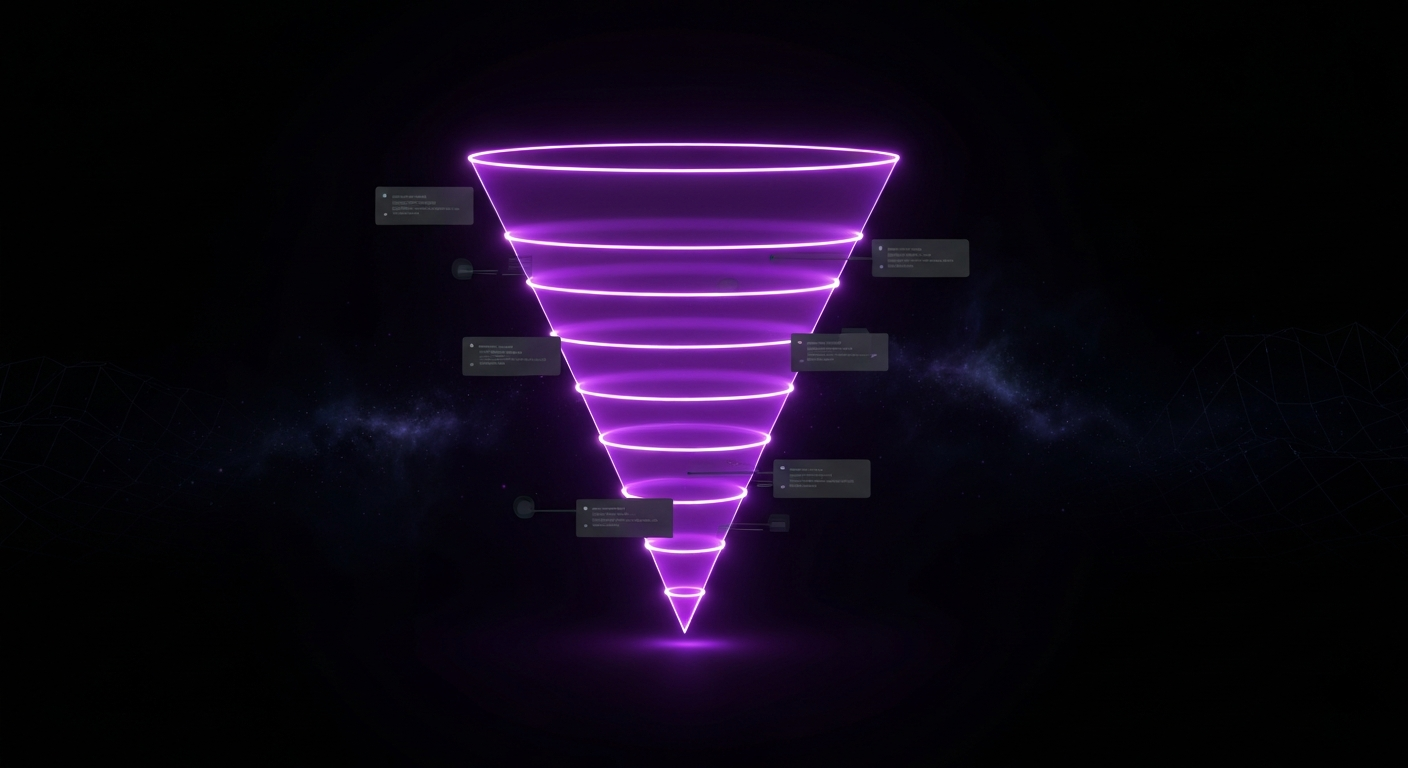
In the complex landscape of digital marketing, a marketing funnel provides structure, predictability, and a clear path to growth. At its core, a marketing funnel is a strategic model that visualizes the journey a potential customer takes from their first interaction with your brand to becoming a loyal, paying customer. Similar to a physical funnel, it is wide at the top to capture a broad audience and gradually narrows to guide qualified prospects toward a specific action.
The primary purpose of a marketing funnel is not just to secure a single sale, but to build a lasting relationship. It allows businesses to understand and optimize the customer’s decision-making process at each stage. By mapping out this journey, you can deliver the right message through the right channel at the right time. This tailored approach effectively moves an individual from being a stranger to an interested lead, a convinced buyer, and ultimately, a vocal brand advocate.
This framework is crucial because it provides clarity and focus, replacing random tactics with a coherent structure. It also improves efficiency and return on investment (ROI). By identifying where potential customers drop off, you can address weaknesses, optimize your messaging, and allocate your marketing budget more effectively. This process of continuous improvement, known as Conversion Rate Optimization (CRO), transforms customer acquisition from a game of chance into a predictable and scalable engine for business growth.
The marketing funnel is a powerful tool that demystifies the complex process of customer acquisition. It provides a simple yet effective framework for understanding the Customer Journey—the sum of experiences a customer has when interacting with your company. The funnel metaphor is fitting because the number of individuals naturally decreases at each successive stage. You might attract thousands of visitors to your website, but only a fraction will show deeper interest, and a smaller fraction still will ultimately make a purchase.
This journey can be broken down into a series of logical steps that represent a prospect’s evolving mindset. Initially, an individual is a ‘stranger’ to your brand, perhaps with a problem they haven’t yet sought to solve. Through targeted marketing, you capture their attention, turning them into a ‘prospect.’ As they engage with your content, they become a ‘lead’—someone who has shown explicit interest by providing contact information. Through further nurturing, this lead becomes a qualified prospect and then a ‘customer’ upon making a purchase. The journey continues as you aim to delight them into becoming a ‘repeat customer’ and a ‘brand advocate’ who promotes your business to others.
Understanding this progression is fundamental to effective marketing. It allows you to segment your audience based on their current stage and tailor your communication accordingly. A message designed to create initial awareness would be ineffective for someone on the verge of buying, just as a hard sales pitch would likely deter a new visitor. The funnel provides a map to guide your prospects effectively from one stage to the next, building trust and rapport along the way.
One of the most enduring models for understanding the marketing funnel is AIDA, which stands for Awareness, Interest, Decision, and Action. This framework aligns with the phases of a customer’s psychological journey. By breaking the funnel into these distinct stages, marketers can create targeted strategies to meet the specific needs of potential customers at each point. These stages are commonly referred to as Top of the Funnel (TOFU), Middle of the Funnel (MOFU), and Bottom of the Funnel (BOFU).
The Top of the Funnel (TOFU) is focused on reach and attraction. The primary goal is to make your target audience aware that your brand exists and has expertise in an area relevant to their interests or problems. At this stage, the focus is not on selling but on offering value upfront to a broad audience. The content created for this stage should be educational, entertaining, and easily shareable, addressing common pain points and questions without being overtly promotional.
Once you have captured someone’s attention, they move into the Middle of the Funnel (MOFU). In this consideration stage, prospects have identified their problem and are actively researching potential solutions. Your goal is to transition from a general expert to a viable solution provider. This is the critical Lead Generation phase, where you offer more in-depth content in exchange for contact information, typically an email address. MOFU content is designed to build trust and demonstrate how your specific product or service can help them.
The Bottom of the Funnel (BOFU) is where conversion occurs. Prospects at this stage are highly qualified and close to making a purchasing decision. They understand their problem and see you as a credible solution provider. Your objective is to give them the final encouragement they need to take action. Content and offers at this stage are product-focused and designed to overcome any final hesitations. The messaging should be direct, highlight value, build confidence, and create a sense of urgency. A clear Call to Action (CTA) is paramount.
The traditional funnel model often stops at the point of sale, but modern marketing recognizes that the journey is far from over. The post-purchase stage is critical for long-term business success, focusing on two key goals: retention and advocacy. Retention involves keeping existing customers satisfied to encourage repeat business. Advocacy is the process of turning those happy customers into brand evangelists who actively promote your business to their network. An advocate effectively re-enters the funnel at the top, bringing new prospects through word-of-mouth marketing—one of the most powerful forms of advertising.
The terms “marketing funnel” and “sales funnel” are often used interchangeably, but they represent distinct, albeit connected, parts of the customer acquisition process. Understanding the difference is crucial for creating a cohesive strategy where marketing and sales teams work in harmony. In simple terms, the marketing funnel’s job is to create and nurture leads, while the Sales Funnel‘s job is to convert those leads into customers.
The marketing funnel is responsible for the entire top portion of the journey. It focuses on broad, top-of-funnel activities designed to generate awareness and capture interest from a large pool of potential customers. These activities include content creation, SEO, social media, and paid advertising. The primary goal is to generate as many qualified leads as possible for the sales team. A lead generated by marketing is often called a Marketing Qualified Lead (MQL)—someone who has shown interest but may not be ready for a direct sales conversation. The marketing team nurtures these MQLs until they show signs of purchase intent.
Once a lead is deemed ready for a sales conversation—becoming a Sales Qualified Lead (SQL)—they are handed off from the marketing funnel to the sales funnel. The sales funnel is typically narrower and involves more direct, one-on-one interactions. Here, sales representatives take over to conduct demos, send proposals, handle objections, and ultimately close the deal. While the marketing funnel is about a one-to-many relationship, the sales funnel focuses on a one-to-one relationship. Both funnels must be tightly aligned to ensure a smooth customer transition and to maximize conversion rates.
| Aspect | Marketing Funnel | Sales Funnel |
|---|---|---|
| Primary Goal | Generate awareness and capture qualified leads (MQLs). | Convert qualified leads (SQLs) into paying customers. |
| Scope | Broader; focuses on the entire market and early-stage prospects. | Narrower; focuses on specific, high-intent prospects. |
| Key Activities | Content marketing, SEO, social media, advertising, lead nurturing. | Sales calls, product demos, proposal writing, negotiation. |
| Communication Style | One-to-many (e.g., blog posts, mass emails). | One-to-one (e.g., personal emails, phone calls). |
| Key Metric | Cost Per Lead (CPL), number of MQLs. | Sales Conversion Rate, Deal Size, Sales Cycle Length. |
Building a marketing funnel may seem daunting, but it can be broken down into a series of manageable steps. A well-constructed funnel acts as an automated system that guides potential customers through their buying journey, providing value at every stage. This step-by-step guide will walk you through the foundational process of creating your first effective marketing funnel.
Before creating any content or running any ads, you must know exactly who you are trying to reach. This is the most critical step. A Buyer Persona is a semi-fictional representation of your ideal customer based on market research and data about your existing customers. A detailed persona goes beyond basic demographics to include goals, challenges, pain points, motivations, and online behavior. When you understand what drives your audience, you can create messaging and content that resonates deeply, making every subsequent step of the funnel more effective.
With your buyer persona in mind, map out a content strategy for each stage of the funnel (TOFU, MOFU, BOFU). The goal is to create a logical path that moves a prospect from one stage to the next. For example, a person might discover your brand through a TOFU blog post. At the end of that post, you can offer a MOFU lead magnet, like a detailed ebook, in exchange for their email. Once they are on your email list, you can send them nurturing emails that lead to a BOFU offer, such as a free consultation or product demo. Each piece of content should build on the last, guiding the prospect closer to a solution.
A funnel is useless without people entering it. Your next step is to actively drive traffic to your top-of-funnel content. The best strategy often involves a mix of channels, chosen based on where your buyer persona spends their time. Common traffic generation methods include:
Most people who enter your funnel will not be ready to buy immediately. This is where lead nurturing becomes essential. Once you have captured a lead’s contact information, you need a system to build a relationship and maintain top-of-mind awareness. Marketing Automation is a powerful tool for this. You can set up automated email sequences that deliver valuable content over time, educate the lead about your solutions, and address common objections. Personalization is key; segmenting your email list based on behavior or interests allows you to send highly relevant messages that guide leads toward a purchase decision.
The final step is to convert your nurtured leads into customers at the bottom of the funnel. This hinges on a compelling offer that serves as the logical conclusion to the journey you’ve guided them on. Your offer should provide a clear solution to their primary pain point and present an undeniable value proposition. This could be a limited-time discount, a free trial, a complimentary strategy session, or a product bundle. Whatever the offer, it must be accompanied by a strong, clear Call to Action (CTA) that tells the lead exactly what to do next. Make the conversion process as frictionless as possible to maximize your results.
Building a marketing funnel is not a one-time task. To ensure its effectiveness and optimize performance, you must continuously track key metrics at each stage. Data provides the insights needed to identify bottlenecks, understand customer behavior, and make informed decisions to improve your return on investment. Here are the essential metrics to monitor, broken down by funnel stage.
At the top of the funnel, your goal is to attract a wide audience. These metrics measure the overall visibility of your brand and content.
In the middle of the funnel, you’re focused on turning anonymous visitors into identifiable leads and keeping them engaged. These metrics measure how well you’re building relationships.
At the bottom of the funnel, the focus shifts to sales. These metrics directly measure the financial success of your marketing efforts.
Beyond the initial purchase, you need to measure the long-term health and profitability of your customer relationships.
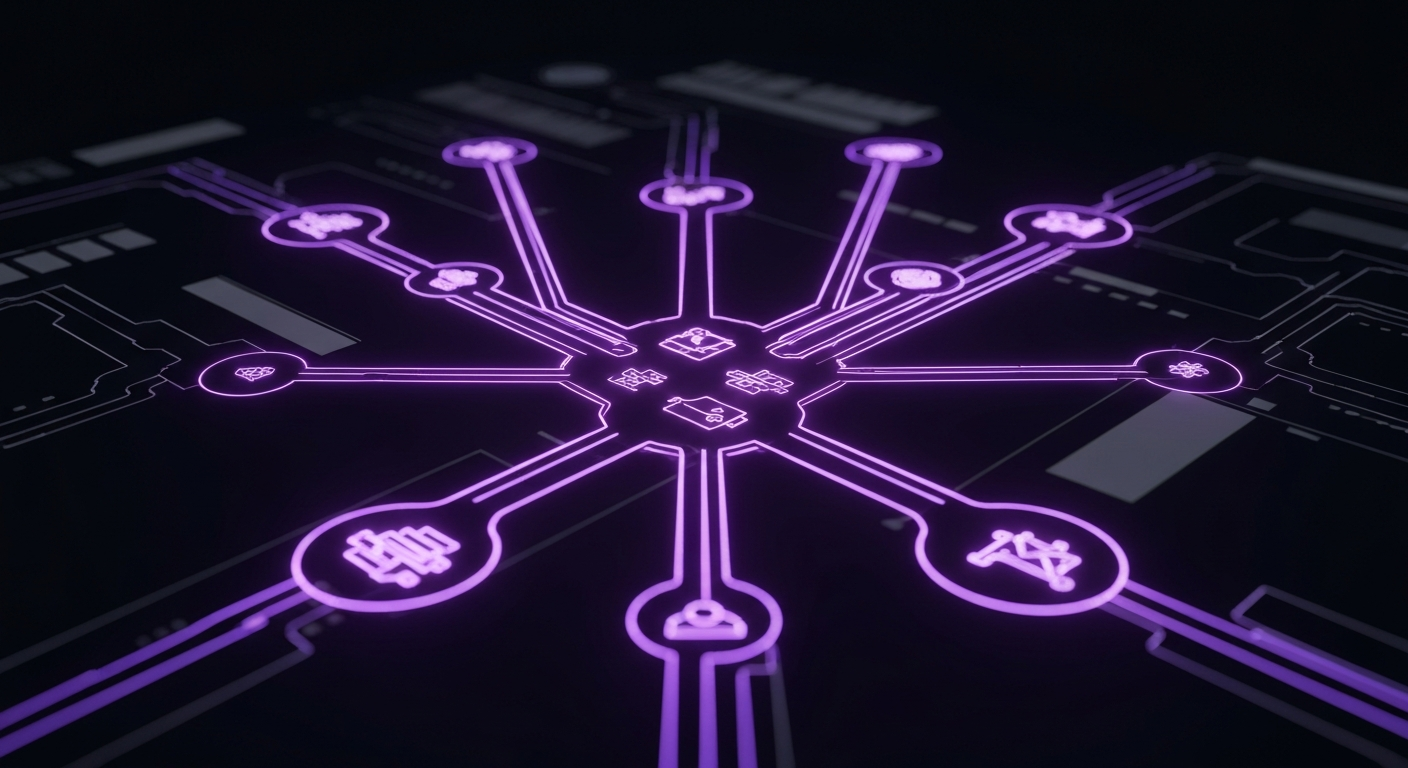
A marketing funnel is not a one-size-fits-all solution. Its structure and components should be tailored to your specific business model, product, and target audience. Understanding different funnel types can help you choose the right framework for your goals. Here are four common examples.
This is a classic and versatile marketing funnel, widely used by consultants, coaches, and B2B businesses. The process is straightforward: you offer a high-value piece of content—the Lead Magnet (like an ebook or checklist)—for free in exchange for a user’s email address. Once subscribed, they enter an automated email sequence designed to build trust, provide further value, and eventually introduce a core product or service. This funnel excels at building an email list and nurturing cold traffic into warm leads.
An e-commerce funnel is designed specifically to guide a visitor to purchase a product. It typically starts with an ad or social media post (TOFU) that drives traffic to a product page (MOFU). The user then adds the item to their cart and proceeds to checkout (BOFU). Key components include optimized product pages, a streamlined checkout process to reduce friction, and cart abandonment email sequences to recover potentially lost sales. Advanced e-commerce funnels also incorporate upsells and cross-sells to increase the Average Order Value.
The webinar funnel is highly effective for selling high-ticket products or services that require more education and trust-building. It begins with promoting a free online training session. Users register for the webinar, which serves as the MOFU content. During the webinar, the host provides significant value and educates the audience on a specific topic. The event culminates in a pitch for a premium product or service at the end (BOFU). This model works well because it allows for a deeper connection with the audience and demonstrates expertise in real-time.
For service-based businesses like marketing agencies or financial advisors, the funnel’s goal is often to generate a consultation or a request for a quote. The funnel starts with TOFU content (blogs, case studies) that showcases expertise. The primary Call to Action in the MOFU and BOFU stages is to book a free discovery call or strategy session. The “sale” then happens during this one-on-one consultation, where a custom proposal is presented. This funnel is built around establishing credibility and building a personal relationship before a high-value service is purchased.

Creating and managing a high-performing marketing funnel requires a suite of tools that work together to attract, engage, and convert customers. Manually handling every step is inefficient and difficult to scale. The right technology stack can automate repetitive tasks, provide crucial data, and create a seamless customer experience. Here are some essential categories of tools.
While the concept of a marketing funnel is straightforward, execution can be challenging. Many businesses build funnels that underperform or fail to produce a positive return on investment. Understanding common pitfalls is the first step toward building a system that consistently generates results. Most failures can be traced back to a few key areas.
One of the most frequent mistakes is a disconnect between stages, often called a “leaky” funnel. This happens when there is no clear, logical path for a user to follow. For example, a visitor reads a blog post, but there is no relevant Call to Action to guide them to the next step. To fix this, you must meticulously map the Customer Journey. Ensure every piece of content has a purpose and leads to the next stage. Use analytics to identify pages with high exit rates, as these are your leaks.
Another major pitfall is ineffective lead nurturing. Capturing an email address is only the beginning; many businesses either immediately hard-sell new leads or let them go cold with no follow-up. The solution is a strategic nurturing sequence using Marketing Automation that provides additional value and builds trust over time. A funnel can also fail when the offer is weak or unclear. Your product must be presented as the undeniable solution to the prospect’s problem. If conversion rates are low, test different offers and refine your value proposition. Finally, many funnels underperform because they ignore the post-purchase experience. The fix is to build out retention and loyalty programs to turn customers into your best marketers.

For decades, the marketing funnel has been the dominant model for visualizing the customer journey. Its linear, top-down approach provides a simple way to understand customer acquisition. However, the traditional funnel has one significant limitation in today’s customer-centric world: it treats customers as an output. The journey ends once a sale is made, and the energy invested in acquiring that customer dissipates. This is where a more modern concept, the Flywheel, offers a compelling alternative.
Popularized by HubSpot, the Flywheel model places the customer at the center of the business, not at the end. A flywheel is a mechanical device that stores rotational energy; once spinning, it requires little effort to maintain its momentum. In this marketing model, happy customers are the source of that energy. The model consists of three phases: Attract, Engage, and Delight. Unlike the funnel, which loses momentum at the bottom, the flywheel uses the force of delighted customers to fuel its own growth. Happy customers become advocates and referrals, which in turn attracts new prospects, creating a self-sustaining loop.
The key difference is the shift in focus from a linear acquisition process to a cyclical customer lifecycle. In the Flywheel model, marketing, sales, and service are not siloed stages but interconnected forces responsible for keeping the wheel spinning by reducing friction at every point. While the funnel remains a useful tool for optimizing specific parts of the acquisition process (like Lead Generation or Conversion Rate Optimization), the Flywheel provides a more holistic view of how a modern business should grow. By focusing relentlessly on delighting customers, you turn them into your most powerful growth engine—a concept the traditional funnel fails to fully capture.