




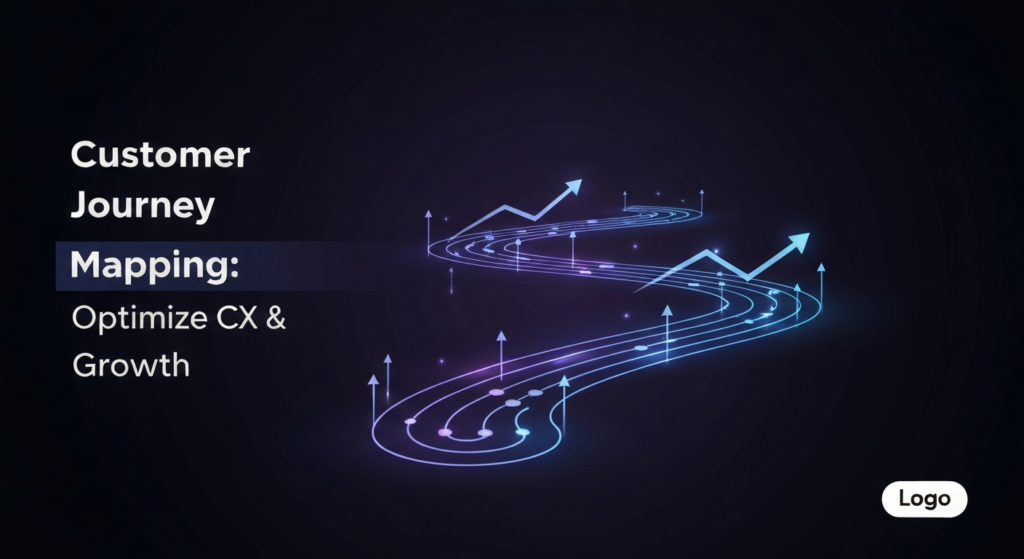

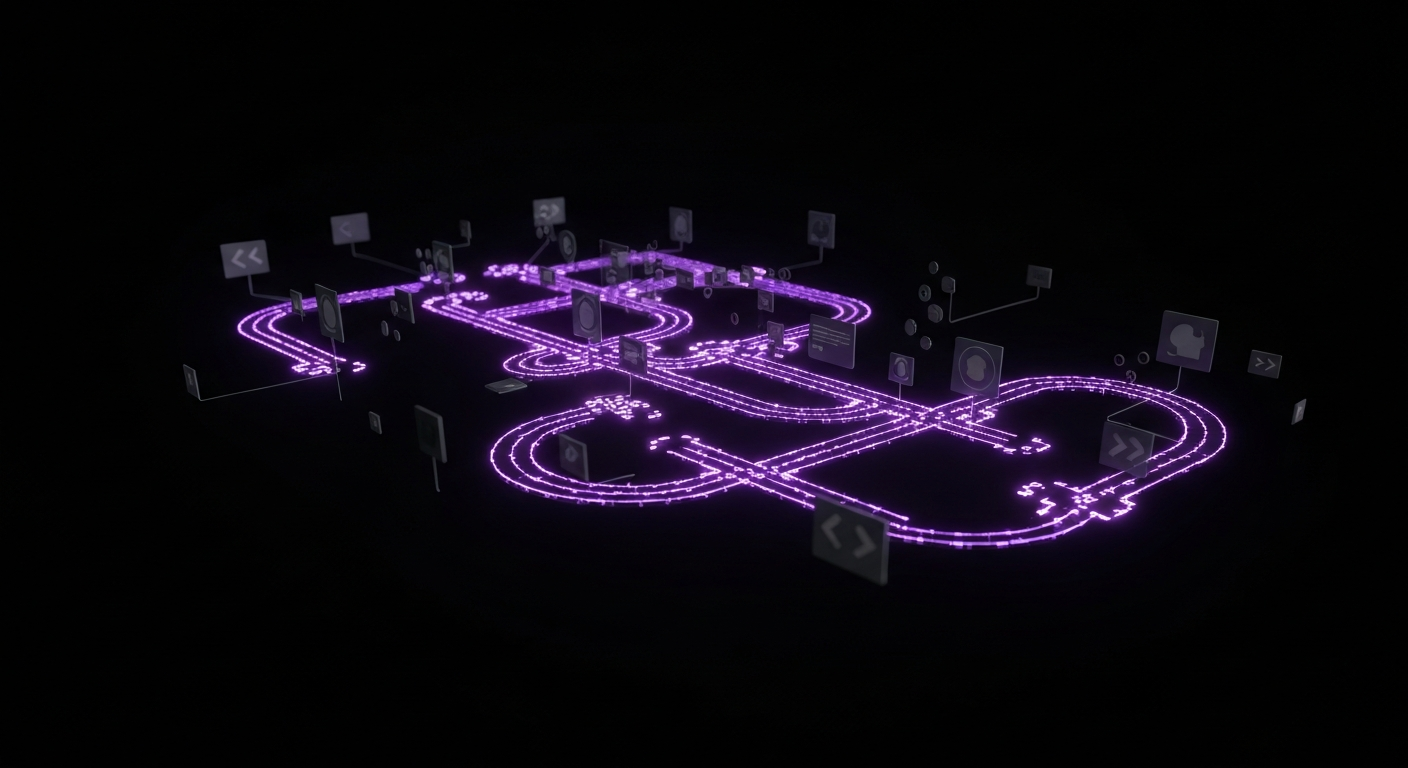
A customer journey map is a strategic visualization that tells the story of a customer’s experience with your organization. It illustrates every interaction a customer has, from initial brand awareness to becoming a long-term, loyal advocate. This narrative is told from the customer’s perspective, providing deep insights into their actions, thoughts, feelings, and motivations at every stage. This visual representation allows a business to move beyond its internal perspective and see its operations through the customer’s eyes.
This tool is not merely a diagram; it’s a powerful instrument for strategic planning, product development, and customer experience (CX) optimization. It helps teams understand the complete lifecycle of a customer, identifying moments of delight as well as points of friction. The map consolidates research and data into an accessible, shareable format that fosters a customer-centric culture across all departments. Ultimately, it serves as a roadmap for improving interactions, personalizing experiences, and building stronger, more profitable customer relationships.
The customer journey is the complete series of experiences a customer has when interacting with a company and its brand. Rather than focusing on a single transaction or experience, it documents the entire relationship from the customer’s perspective. It encompasses every touchpoint, from the moment a person first hears about your brand—perhaps through a social media ad or a friend’s recommendation—to the process of evaluation, the moment of purchase, post-purchase support, and their eventual loyalty and advocacy.
This journey is rarely linear. A modern customer might see an ad on Instagram, visit your website on their laptop, add an item to their cart, abandon it, receive a reminder email on their phone, and finally complete the purchase in-store. A comprehensive understanding of this complex, multi-channel path is what journey mapping aims to capture.
A primary goal of customer journey mapping is to foster organizational empathy. It forces a business to look beyond spreadsheets and analytics to understand the human experience behind the data. By visualizing the customer’s emotional state—their joys, frustrations, and moments of confusion—organizations can pinpoint exactly where their experience is falling short and where it is succeeding. This visualization serves as a powerful catalyst for change, aligning disparate teams around a shared understanding of the customer’s reality.
This shared vision helps break down internal silos. When marketing, sales, product, and support teams all see the same journey, they can better understand how their individual roles contribute to the overall customer experience. It highlights dependencies and reveals gaps in service, leading to more cohesive and collaborative efforts to create a seamless journey for the customer.
While often used interchangeably, these three tools serve distinct purposes. A customer journey map is a high-level, strategic tool focused on the customer’s emotional and experiential path across all channels over time. A user flow is a tactical tool focused on the specific steps to complete a task within a single product or channel. A service blueprint connects the customer journey to the internal processes required to deliver that experience.
| Tool | Focus | Scope | Primary Use Case |
|---|---|---|---|
| Customer Journey Map | The holistic customer experience (actions, thoughts, emotions) | Across all channels and the entire customer lifecycle | Building empathy, identifying strategic opportunities, and aligning teams around the CX. |
| User Flow | The specific steps and decisions a user makes to complete a task | Typically within a single digital product (website or app) | Optimizing task completion, improving usability, and designing efficient interfaces (UX). |
| Service Blueprint | The connection between customer actions and internal processes | Includes both customer-facing (frontstage) and internal (backstage) actions | Diagnosing operational inefficiencies and designing or improving service delivery processes. |
[[INNER_IMAGE]]
In today’s competitive landscape, businesses no longer compete solely on price or product features; they compete on experience. Customer journey mapping is not just a UX exercise; it is a fundamental business strategy that directly impacts growth, retention, and profitability. It provides the clarity needed to make smarter decisions, allocate resources effectively, and build a brand that resonates with customers. By systematically analyzing and improving the customer path, companies can unlock significant competitive advantages.
Investing the time and resources into creating and maintaining a customer journey map pays dividends across the entire organization. It moves a company from a reactive, problem-fixing mode to a proactive, experience-designing mindset. This shift is essential for sustainable growth, as it focuses the entire business on its most valuable asset: its customers. From increasing conversion rates to fostering brand loyalty, the benefits of journey mapping are both tangible and far-reaching.
Empathy is the bedrock of a great customer experience. A journey map serves as an empathy-building tool, translating data points into a human story. When a developer sees that a confusing checkout process causes a customer to feel ‘anxious’ and ‘frustrated’, they are more motivated to fix it than if they were simply told the ‘page has a 60% exit rate’. This emotional context makes the customer’s problems real and relatable for everyone in the company, from the C-suite to the front-line support agent. This shared empathy ensures that decisions are made with the customer’s best interest at heart.
Every customer journey has highs and lows. A journey map excels at pinpointing the exact moments where customers struggle, become frustrated, or abandon their goals. These are the critical ‘pain points’ that cost businesses revenue and customer loyalty. For example, a map might reveal that customers are excited during the product discovery phase but become confused by complex pricing plans during consideration. Furthermore, it highlights ‘moments of truth’—key interactions that have a disproportionate impact on a customer’s perception of the brand. By identifying and optimizing these moments, you can turn potential frustrations into opportunities for delight.
Pain points directly correlate with lost conversions. A customer who can’t find shipping information is likely to abandon their cart. A user frustrated by a lengthy onboarding process may never fully adopt a new software product. By using a journey map to identify and eliminate these friction points, you directly support conversion rate optimization (CRO). The benefits extend far beyond the initial purchase. A smooth, positive experience during the service and support stages, as visualized on a map, is critical for boosting customer retention. Happy customers are more likely to make repeat purchases and less likely to churn, significantly increasing their lifetime value.
In many organizations, marketing, sales, and customer service operate in silos, each with its own goals and view of the customer. Marketing focuses on generating leads, sales on closing deals, and service on resolving issues. This can lead to a disjointed and jarring customer experience. A customer journey map acts as a single source of truth, creating a shared language and understanding of the entire customer lifecycle. It shows the sales team the promises marketing made and reveals to the marketing team the common issues service teams handle. This alignment ensures a seamless handover between stages and a consistent brand experience at every touchpoint.
[[INNER_IMAGE]]
An effective customer journey map is more than just a timeline of events. It’s a rich, multi-layered document that captures the complexity of the customer experience. To build a map that provides actionable insights, it must include several core components that work together to tell a complete story. These elements transform a simple flowchart into a powerful strategic tool, providing the depth needed to understand not just *what* customers are doing, but *why* they are doing it and *how* it makes them feel.
Your map should focus on the journey of a specific customer segment, represented by a buyer persona. A persona is a composite archetype, based on user research, that represents a key customer segment. It includes demographic information, goals, motivations, and pain points. For example, you might create ‘Marketing Mary’, a 35-year-old marketing manager at a mid-sized tech company. Each journey map should be dedicated to a single persona, as different customer types will have vastly different experiences, goals, and emotional responses. This focus ensures the map is specific and actionable rather than generic and vague.
The journey should be broken down into distinct, high-level stages that the customer moves through. These stages represent major milestones in their relationship with your brand. While the specific names may vary, they typically follow a logical progression:
Touchpoints are any point in the journey where the customer interacts with your brand. This component lists every point of interaction between the customer and the brand at each stage. These can be digital, physical, or human interactions. Examples include seeing a social media ad, reading a blog post, visiting a product page, using a live chat feature, speaking with a sales representative, receiving a confirmation email, unboxing a product, or calling customer support. Mapping these touchpoints helps you understand which channels are most important at each stage and ensures a consistent omnichannel experience.
This section is the narrative core of the map, where you capture the customer’s experience from their perspective. For each stage, you should document:
This final component transforms insights into a strategic action plan. Based on the pain points, frustrations, and questions identified in the previous section, this part of the map outlines opportunities for improvement. For each friction point, brainstorm potential solutions. If customers are confused about pricing, an opportunity might be to ‘Create a clear comparison table’ or ‘Add an interactive pricing calculator’. Assigning ownership to these opportunities is the first step toward turning insights into action.
[[INNER_IMAGE]]
Not all customer journey maps are created equal. Depending on your business objectives, you might choose from several different types, each offering a unique perspective on the customer experience. Understanding the distinction between these map types allows you to select the right tool for the job, whether you’re trying to fix an existing problem, design a new service, or simply understand your customer’s world better. The most common types are current state, future state, day in the life, and service blueprints.
This is the most common type of journey map. It visualizes the customer experience as it exists *today*. The primary goal of a current state map is to identify existing pain points, friction, and gaps in the customer journey. It’s a diagnostic tool built on extensive research into how customers currently interact with your company. You would use this map to find and fix problems, improve underperforming parts of the journey, and establish a baseline against which you can measure future improvements. It’s the essential first step for any organization looking to optimize its current CX.
Where a current state map focuses on ‘what is’, a future state map focuses on ‘what could be’. This type of map visualizes the ideal experience you want to provide for your customers in the future. It’s a strategic and visionary tool used for product innovation and service design. You would create a future state map after analyzing your current state map and identifying key opportunities. It helps align teams around a shared vision for the ideal customer experience and serves as a guide for implementing changes and new initiatives. It’s perfect for projects involving a new product launch or a significant overhaul of an existing service.
A day in the life map takes a much broader view. Instead of focusing only on the interactions a customer has with your brand, it examines everything the customer does, thinks, and feels within a specific part of their life. For example, a company selling project management software might create a ‘Day in the Life of a Project Manager’ map. This map would detail their entire workday, including meetings, emails, and other tasks not directly related to the software. The purpose is to understand the customer’s broader context, needs, and pain points, which can reveal unmet needs and opportunities for new products or features that go beyond your current offerings.
A service blueprint is a specialized map that connects the customer journey to the internal processes, systems, and people responsible for delivering that experience. It’s an operational tool that extends the customer journey map by adding layers for ‘frontstage’ actions (what the customer sees) and ‘backstage’ actions (what happens behind the scenes). For example, when a customer clicks ‘Buy Now’ (frontstage), the blueprint would show the backstage actions like ‘payment gateway processes transaction’, ‘inventory system updates stock’, and ‘warehouse team receives pick order’. This map is invaluable for identifying internal bottlenecks, improving operational efficiency, and ensuring the organization can reliably deliver the experience designed in the customer journey map.
[[INNER_IMAGE]]
Creating a customer journey map can seem daunting, but by breaking it down into a series of manageable steps, any organization can develop a powerful tool for understanding and improving its customer experience. The process is a collaborative effort that combines research, brainstorming, and strategic thinking. Following a structured approach ensures that your final map is based on real data, not assumptions, and is geared toward actionable outcomes.
Before you begin, define what you want to achieve with your map. A clear objective will guide the entire process. Are you trying to increase conversions for a specific product? Reduce customer churn during onboarding? Or improve the post-purchase support experience? Your objective will also help you define the scope. You might choose to map the entire customer lifecycle or focus on a specific, high-impact part of the journey. Be specific. A goal like “Map the journey for new B2B software subscribers from sign-up to first value realization” is much more effective than “Understand our customers better.”
Your map must be grounded in real data, not internal opinions. This requires both quantitative and qualitative research. Analyze web analytics, CRM data, and support tickets to understand *what* customers are doing. Then, conduct customer interviews, send out surveys, and read online reviews to understand the *why* behind their actions. Use this research to create a detailed buyer persona for the map. This persona should represent the target customer for the journey you are mapping and will be the protagonist of your map’s story.
With your persona and scope defined, hold a cross-functional brainstorming session with representatives from marketing, sales, product, and customer service. The goal is to list every single touchpoint where this persona might interact with your company throughout the journey. Think broadly across all channels: digital (website, social media, email), physical (in-store, events), and human (sales calls, support chats). Group these touchpoints under the relevant journey stages you defined earlier (e.g., Awareness, Consideration, Purchase).
Now, begin to structure your map. Create a grid or timeline with the journey stages along the top axis. For each stage, fill in the details from your research. Document the persona’s actions, thoughts, and emotions. What are they doing? What questions do they have? What are their motivations? Most importantly, how are they feeling? Use quotes from customer interviews to make the experience more tangible. This is where you identify the emotional highs and lows that define the customer experience.
Organize all the information into a clear visual format. This could be a digital whiteboard, a spreadsheet, or a dedicated mapping software. The key is to make it easy to understand at a glance. Plot the customer’s emotional journey as a line graph across the stages. The dips in this line are your critical pain points and friction areas. In a separate row on your map, explicitly call out these pain points and brainstorm the root causes. This is the moment where raw data transforms into actionable insights.
Your first draft is complete, but the process isn’t over. Validate the map by sharing it with actual customers to see if it resonates with their experience. Once validated, share the map widely across your organization to build empathy and alignment. Most critically, make it actionable. For each opportunity for improvement you identified, assign an owner or a team responsible for exploring and implementing a solution. The map should be a living document that guides ongoing optimization efforts, not a static artifact that gathers dust.
[[INNER_IMAGE]]
The accuracy and impact of your customer journey map are directly dependent on the quality of the data you use to build it. A map based on internal assumptions and anecdotes is a work of fiction. A map built on a solid foundation of both quantitative and qualitative data becomes a reliable strategic tool. To gain a truly holistic view of the customer experience, you must combine data that tells you *what* is happening with insights that explain *why* it is happening.
Quantitative data provides the objective, measurable facts about customer behavior. It’s the skeleton of your journey map, showing you the scale and frequency of actions at different stages. This data helps you identify significant drop-off points, common paths, and performance metrics.
Qualitative data adds the flesh and blood to your map—the context, emotions, and motivations behind the numbers. It answers the crucial ‘why’ questions that quantitative data cannot. This is where you build genuine empathy for the customer.
Neither data type is sufficient on its own. The real power comes from combining them. For example, your web analytics (quantitative) might show a high drop-off rate on your pricing page. This tells you *what* is happening. Customer interviews (qualitative) might then reveal that users are dropping off because the pricing tiers are confusing and they can’t figure out which plan they need. This tells you *why* it’s happening. By weaving together both types of data, you create a comprehensive, evidence-based narrative of the customer journey, enabling you to identify the right problems and develop effective solutions.
[[INNER_IMAGE]]
While you can certainly start mapping with a physical whiteboard or a simple spreadsheet, dedicated software can streamline the process, facilitate collaboration, and help you create professional, shareable artifacts. The right tool depends on your team’s needs, budget, and the complexity of the journey you’re mapping. Tools generally fall into three categories: collaborative whiteboards, dedicated mapping platforms, and the analytics tools that feed them.
These tools are like infinite digital canvases, perfect for the brainstorming and collaborative stages of journey mapping. They offer extreme flexibility, allowing you to create custom maps from scratch or use pre-built templates. Their strength lies in real-time collaboration, making them ideal for remote or hybrid teams working together to gather ideas, arrange sticky notes, and build the initial structure of the map. They are excellent for creating visually rich, free-form maps that can be easily shared and discussed.
For those seeking a more structured approach, dedicated journey mapping platforms offer specialized features and templates designed specifically for creating personas and journey maps. These tools provide pre-defined sections for components like journey stages, touchpoints, emotional graphs, and opportunities. This structure ensures you don’t miss key elements and can help standardize the mapping process across your organization. They often include features for persona creation, impact scoring, and presentation-ready exports, making them a powerful choice for teams that create maps regularly.
These tools don’t create the map itself, but they provide the essential data that makes your map accurate and credible. They are the research foundation of your project. Google Analytics provides the quantitative data on user behavior, while tools like Hotjar offer heatmaps, session recordings, and on-site surveys to gather qualitative feedback directly from your users. Integrating data from these platforms into your journey map ensures that your insights are grounded in real-world behavior and feedback, not just internal assumptions.
| Tool Category | Key Strengths | Best For | Examples |
|---|---|---|---|
| Collaborative Whiteboards | Flexibility, real-time collaboration, ideal for brainstorming. | Teams that want a creative, free-form approach and workshops. | Miro, Mural, FigJam |
| Dedicated Mapping Platforms | Structured templates, specialized features, standardization. | Organizations that need a repeatable, professional mapping process. | UXPressia, Smaply, Custellence |
| Analytics & Feedback Tools | Provide the raw quantitative and qualitative data for the map. | Grounding the map in real user behavior and feedback. | Google Analytics, Hotjar, FullStory, SurveyMonkey |
[[INNER_IMAGE]]
Creating a customer journey map is not the end goal; it’s the beginning. The true value of the map is realized when it’s used as a strategic tool to drive meaningful improvements to the customer experience. An actionable map should serve as a blueprint for change, guiding prioritization, informing strategy, and aligning teams toward a common goal of customer-centricity. Without a clear plan for implementation, even the most insightful map is just a pretty picture.
Your journey map will likely uncover numerous opportunities for improvement. You can’t tackle them all at once. Use a simple prioritization framework, like an Impact/Effort matrix, to decide where to start. Plot each opportunity on a 2×2 grid:
This approach ensures you focus your resources on the changes that will make the biggest difference to your customers and your business.
The map reveals what customers are thinking and feeling at each stage, providing a perfect guide for personalizing your marketing and communication. If you know customers in the ‘Consideration’ stage are often worried about implementation, you can proactively send them a case study or an email with a link to a ‘Getting Started’ guide. If you know customers are excited right after purchase, you can send a celebratory welcome email that reinforces their decision. Using the map’s insights allows you to deliver the right message at the right time, making the customer feel understood and valued.
A journey map highlights how customers move between different channels—from a social media ad to your website to a physical store. It often reveals gaps and inconsistencies in this omnichannel experience. For example, a promotion seen online might not be recognized by in-store staff, causing customer frustration. Use the map to identify these disconnects and design a more integrated experience. Ensure that customer data and context are passed smoothly between channels, so the journey feels like a single, cohesive conversation, not a series of disjointed interactions.
The questions and pain points identified on your map are a goldmine for your content and product teams. If the map shows customers are confused about a certain feature, your content team can create a tutorial video or a detailed blog post to address that specific issue. This is the foundation of a needs-based content strategy. Similarly, if the map reveals a recurring pain point that the current product doesn’t solve well, this provides a clear, customer-validated mandate for your product development team to prioritize a new feature or an improvement in their roadmap.
[[INNER_IMAGE]]
While customer journey mapping is a powerful process, it’s also prone to several common pitfalls that can undermine its effectiveness. Being aware of these mistakes from the outset can help you steer your project toward a successful and actionable outcome. Avoiding these errors ensures that your map becomes a dynamic tool for change rather than a static document based on flawed assumptions.
The single biggest mistake is creating an ‘ivory tower’ map based solely on internal beliefs about what the customer journey *should* be. This results in a fictional narrative that doesn’t reflect reality. Every single element on your map—from the actions customers take to the emotions they feel—must be backed by either qualitative or quantitative research. Without real data from customer interviews, surveys, and analytics, your map will misidentify problems and lead to misguided solutions.
A journey map created exclusively by the marketing team will look very different from one created only by the customer support team. A siloed approach leads to a biased and incomplete picture of the customer experience. It’s essential to make journey mapping a cross-functional exercise. Involving stakeholders from marketing, sales, product, design, and service ensures that all touchpoints and perspectives are represented, resulting in a holistic and accurate map that the entire organization can rally behind.
Customer behaviors, expectations, and your own products are constantly evolving. A journey map created today may be irrelevant next year. A common mistake is to treat the map as a one-and-done project. Instead, it should be a living document that is reviewed and updated regularly—at least annually, or whenever there’s a significant change in your business. Continuously feeding new data and insights into the map keeps it relevant and ensures it remains a useful guide for your strategic decisions.
Some teams focus too much on the logistical aspects of the journey—the actions, touchpoints, and processes—while neglecting the emotional component. However, customer decisions are heavily influenced by emotion. A journey map that only lists actions without plotting the corresponding emotional highs and lows misses the most critical insights. Pinpointing the moments of frustration, anxiety, or delight is what allows you to identify the most severe pain points and the most powerful ‘moments of truth’. The emotional line is often the most important part of the entire map.
[[INNER_IMAGE]]
Customer journey mapping is a strategic investment, and like any investment, its return should be measured. Demonstrating the ROI of your mapping efforts is crucial for securing ongoing buy-in and resources. By connecting the improvements inspired by your map to key business metrics, you can prove its value and foster a culture of continuous, customer-centric optimization. The goal is to show a clear line from a journey map insight to a business outcome.
The improvements you make based on your journey map should move the needle on key customer experience metrics. Track these metrics over time to measure the impact of your changes:
Beyond CX metrics, you must connect your efforts to core business Key Performance Indicators (KPIs). This is how you demonstrate financial ROI. For example:
Measuring ROI is not a one-time report; it’s an ongoing cycle. The process is iterative: map the journey, identify opportunities, implement changes, measure the impact on your metrics, and then feed those new learnings back into your map. This continuous loop of action and analysis ensures that your understanding of the customer is always current and that your optimization efforts are always guided by performance data. This transforms journey mapping from a project into a sustainable business process that drives long-term growth.