





In today’s digital world, customers constantly share their opinions across social media, e-commerce sites, surveys, and support channels. This stream of feedback is a goldmine of insight, but its sheer volume makes manual analysis impossible. Artificial Intelligence (AI) transforms this data challenge into a strategic advantage. AI-powered customer sentiment analysis enables marketers to understand the emotions and opinions within customer feedback at scale, empowering them to make smarter decisions, enhance the customer experience, and drive business growth.
This guide provides a comprehensive overview of AI-powered sentiment analysis. We will explore the core technologies, tangible benefits for marketing, practical applications, and a step-by-step implementation process. By the end, you will have the knowledge to harness customer feedback, choose the right tools, and build a more responsive, customer-centric brand.

The voice of the customer has never been louder or more fragmented. Feedback arrives from dozens of channels, each with its own format and context. Consider the daily influx of data a typical brand receives: tweets, Instagram comments, Facebook posts, TikTok videos, product reviews on Amazon, App Store ratings, live chat transcripts, helpdesk tickets, and open-ended survey responses. Each piece of this unstructured data contains valuable information about customer needs, pain points, and overall satisfaction.
This presents a significant paradox for modern marketers. On one hand, they have unprecedented access to honest, unfiltered customer opinions—the raw material needed to refine products, improve services, and create resonant marketing campaigns. On the other hand, the sheer volume makes manual processing impossible. A marketing team could spend its entire day reading comments and only scratch the surface. This approach is not only inefficient but also prone to bias and error, as a few loud, negative voices can easily overshadow the quiet satisfaction of the majority.
Without a scalable system to analyze this feedback, critical insights get lost in the noise. A brewing PR crisis on Twitter might go unnoticed until it escalates. A recurring product flaw mentioned in reviews could be missed, leading to customer churn. A brilliant suggestion for a new feature might never reach the product team. The inability to listen effectively at scale results in missed opportunities to innovate, mitigate risks, and build stronger customer relationships. The challenge isn’t a lack of feedback; it’s the lack of an efficient mechanism to understand it.

Customer sentiment analysis, also known as opinion mining, is the process of using technology to identify, extract, and categorize the emotional tone within text. At its core, it determines whether a customer’s opinion is positive, negative, or neutral. By automating this process, businesses can move beyond simple metrics like star ratings and comprehend the underlying feelings of their audience at a massive scale.
The foundation of sentiment analysis lies in classifying text into basic polarity categories, which provide a high-level overview of customer opinion:
Before the widespread adoption of AI, businesses relied on rudimentary methods to gauge customer sentiment. These traditional approaches were often slow, inaccurate, and incapable of handling modern volumes of digital feedback. Manual analysis, which involves employees reading comments and reviews, is the most basic form. While it can provide deep qualitative insights on a small scale, it is prohibitively expensive, time-consuming, and highly subjective, as interpretations can vary significantly between individuals.
Slightly more advanced were early rule-based systems, which used predefined lexicons (lists of positive and negative words) to score text. For example, the word “good” might receive a +1 score and “bad” a -1. However, these systems are rigid and struggle with the complexity of human language. They often fail to understand context, sarcasm (“Great, another bug.”), or negation (“The service wasn’t bad”), leading to frequent misclassifications and unreliable data.
Artificial Intelligence, particularly its subfields of Natural Language Processing and Machine Learning, revolutionizes sentiment analysis. Instead of relying on fixed rules, AI models learn from vast amounts of text data to understand the nuances of language. This allows them to interpret context, identify subtle emotional cues, and adapt to evolving slang. An AI-powered system can analyze millions of comments in the time it takes a human to read a few hundred, providing near real-time insights across all customer touchpoints. This scalability and accuracy empower marketers to track sentiment trends, detect emerging issues, and understand customers with previously unimaginable depth and breadth.

The power of AI-driven sentiment analysis isn’t magic; it’s the result of sophisticated computational technologies designed to process and understand human language. These systems go far beyond simple keyword matching to interpret context, nuance, and intent. Understanding these core technologies helps marketers appreciate the potential of these tools.
Natural Language Processing (NLP) is a branch of AI that enables computers to read, understand, and derive meaning from human language. It serves as the foundation for sentiment analysis by breaking down unstructured text into a machine-readable format. Key NLP tasks in this process include:
By performing these tasks, NLP structures the language, allowing machine learning models to effectively analyze its meaning and emotional content.
If NLP is the brain that understands language structure, Machine Learning (ML) is the engine that learns to predict sentiment. ML models are trained on massive datasets of text that have been labeled by humans as positive, negative, or neutral. By processing this data, the model learns the complex patterns, word combinations, and contextual cues associated with each sentiment category. Once trained, the model can predict the sentiment of new, unseen text. For example, it can infer that a review containing “disappointed,” “frustrating,” and “waste of money” is likely negative, even if it has never seen that exact phrase. Modern sentiment analysis tools often use advanced deep learning models, which can capture even more subtle linguistic nuances for remarkably high accuracy.
Sophisticated AI tools are moving beyond basic positive-negative-neutral classification to provide a richer understanding of customer feedback, which is where the true strategic value lies for marketers.

Integrating AI-powered sentiment analysis into your marketing toolkit is not just about collecting data; it’s about unlocking actionable insights that drive strategic decisions. By systematically understanding customer emotion, you can enhance nearly every aspect of your marketing efforts.
The most fundamental benefit is the ability to understand your customers more deeply and comprehensively. Sentiment analysis allows you to quantify public opinion and track its evolution over time, answering critical questions like: How do customers feel about our new marketing campaign? Is sentiment higher among a specific demographic? Did our recent app update improve or harm user satisfaction? By aggregating and analyzing sentiment data from millions of conversations, you can identify broad trends and patterns that would be invisible through manual review. This macro-level view of customer opinion is a powerful complement to traditional market research.
A great Customer Experience (CX) is a key differentiator in a competitive landscape. Sentiment analysis provides the tools to move from a reactive to a proactive CX strategy. By setting up real-time alerts for negative sentiment, support teams can identify and engage with unhappy customers before their problems escalate. For example, a customer tweeting about a frustrating experience can be contacted by a support agent within minutes. Furthermore, analyzing sentiment in support transcripts and chat logs can identify common friction points in the customer journey. If many customers express frustration about a particular step in the checkout process, you have clear, data-backed justification to prioritize a fix.
In the age of social media, brand reputation can be built or damaged in hours. AI-powered sentiment analysis is an essential tool for Brand Reputation Management. By continuously monitoring brand mentions across the web, you can establish a baseline for your brand’s sentiment. A sudden, sharp decline in this score can serve as an early warning for a potential PR crisis, allowing your communications team to respond proactively. You can also track sentiment around specific campaigns or product launches to gauge public reception in real time and make necessary adjustments. This constant vigilance helps protect one of your company’s most valuable assets: its reputation.
Customer feedback is a direct line to your product development team. Sentiment analysis helps mine this feedback for concrete, actionable insights. Using a technique called aspect-based sentiment analysis, you can pinpoint how customers feel about specific features of your product or service. For instance, an analysis of phone reviews might reveal positive sentiment for the camera but strong negative sentiment for battery life, telling your product team exactly where to focus their efforts. By identifying what customers love, what they dislike, and what features they request, you can create a product roadmap that is truly customer-driven, leading to higher satisfaction and retention.
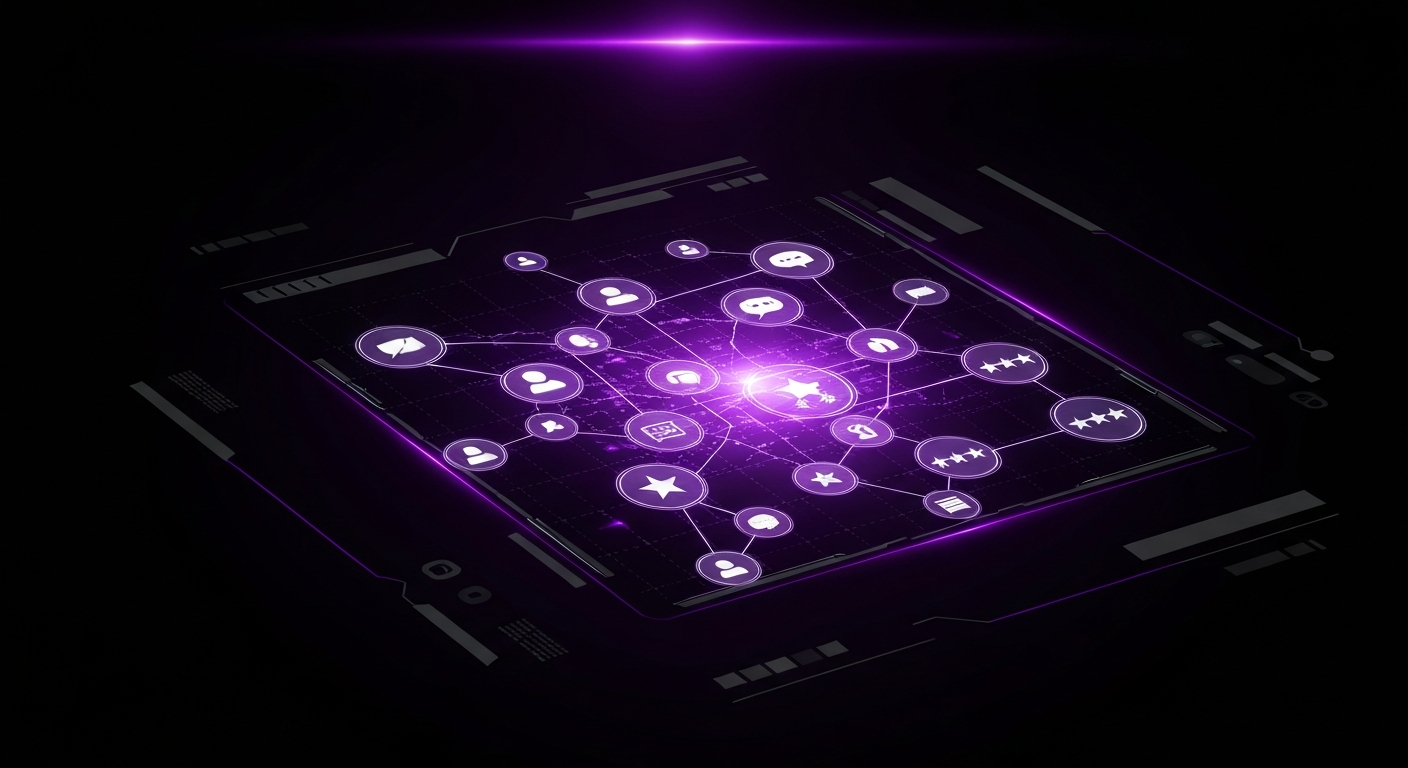
The true power of sentiment analysis is realized when it is applied to diverse data sources across the customer journey. By integrating this technology into various business functions, marketers can create a holistic and unified understanding of customer opinion. Here are some of the most impactful applications.
Social media is the world’s largest focus group, and sentiment analysis is the key to unlocking its insights. By analyzing mentions of your brand, products, and competitors on platforms like Twitter, Facebook, and Instagram, you can get a real-time pulse on public perception. This is invaluable for tracking campaign success, understanding reactions to brand announcements, and identifying influencers or advocates. For example, a spike in positive sentiment tied to a specific hashtag can validate a campaign’s messaging, while a sudden increase in negative comments can alert you to a service outage or a poorly received advertisement.
Your customer support interactions are a rich source of detailed feedback. Every helpdesk ticket, email, and live chat transcript contains information about customer pain points and satisfaction. Applying sentiment analysis to this data helps gauge the effectiveness of your support team by correlating agent interactions with changes in customer sentiment. It can also automatically categorize and prioritize issues. For example, tickets with strong negative sentiment and keywords like “frustrated” or “unacceptable” can be automatically escalated to a senior manager for immediate attention, helping resolve critical issues faster and prevent churn.
Star ratings and quantitative survey scores tell only part of the story; the real insights are often in the open-ended comments. While manually reading thousands of reviews or survey answers is impractical, AI can analyze them in seconds. You can quickly understand the primary drivers behind your Net Promoter Score (NPS) by analyzing the sentiment of comments from Promoters, Passives, and Detractors. Similarly, analyzing product reviews on your website or third-party sites can reveal common themes, such as customers loving your product’s design but being consistently frustrated by its software, providing clear direction for your development team.
Sentiment analysis is not just for looking inward; it’s also a powerful tool for understanding the competitive landscape. By monitoring sentiment around your competitors, you can identify their strengths and weaknesses from the customer’s point of view. Are customers praising a competitor’s new feature or complaining about a recent price increase? This intelligence can inform your own product strategy, pricing, and marketing messages. You can also use sentiment analysis to track broader market trends and shifts in consumer preferences, allowing you to adapt your strategy and stay ahead of the curve.

Adopting AI sentiment analysis can seem daunting, but a structured approach makes the process manageable and ensures you derive maximum value. A clear plan will help you move from concept to actionable insights effectively.
Before evaluating tools or data, start with your business goals. What specific problem are you trying to solve or what opportunity are you trying to seize? A vague goal like “understanding our customers better” is insufficient. Your objectives should be specific, measurable, achievable, relevant, and time-bound (SMART). Examples of strong objectives include:
Once your objectives are set, define the Key Performance Indicators (KPIs) you will use to measure success, such as the percentage of negative mentions, average sentiment score, or time to resolution for issues flagged by the analysis.
With clear objectives, the next step is to determine where the relevant feedback resides. Create an inventory of all customer data sources, which could include:
Often, this data is siloed in different platforms. You will need a plan for consolidation. Many sentiment analysis tools have built-in integrations to pull data from these sources automatically. For more complex setups, you may need to use APIs to funnel data into a central repository for analysis.
The final step is selecting the technology to power your program. The market for sentiment analysis tools is diverse, ranging from user-friendly, all-in-one platforms to highly technical APIs for developers. The right choice depends on your objectives, budget, technical expertise, and data sources. When evaluating options, consider factors like accuracy, ease of use, integration capabilities, and scalability. This decision is critical, as the right tool will serve as the engine for your entire sentiment analysis program.
Choosing the right tool is crucial for the success of your sentiment analysis initiative. The market offers a wide spectrum of solutions, each with its own strengths. Understanding the key features to look for and the different types of tools available will help you make an informed decision that aligns with your marketing goals.
When comparing Software as a Service (SaaS) platforms, prioritize tools that offer a comprehensive feature set designed for marketers. Key features include:
Sentiment analysis solutions generally fall into two categories: comprehensive suites and developer-focused APIs. Understanding the difference is key to choosing the right path for your team.
| Feature | All-in-One Suites (e.g., Brandwatch, Talkwalker) | Specialized APIs (e.g., Google NLP, Amazon Comprehend) |
|---|---|---|
| Target User | Marketers, brand managers, CX professionals | Developers, data scientists |
| Functionality | Includes data collection, analysis, dashboards, reporting, and alerts in one platform. | Provides raw sentiment analysis processing. You must provide the data and build your own application around it. |
| Ease of Use | User-friendly, no-code/low-code interface. | Requires significant programming knowledge to implement. |
| Cost Structure | Typically a monthly or annual subscription fee, often higher. | Pay-as-you-go based on the volume of text processed, generally lower for raw processing. |
| Best For | Teams that need a ready-to-use solution for social listening, brand management, and CX analytics. | Companies with development resources that want to embed sentiment analysis into their own custom applications or products. |
The market is constantly evolving, but several tools are consistently recognized as leaders:

While AI-powered sentiment analysis is a transformative technology, it is not infallible. Marketers must understand its limitations to interpret results correctly and avoid making decisions based on flawed data. Acknowledging these challenges is the first step toward mitigating them.
Human language is complex and often ambiguous. Sarcasm is a prime example of a challenge for AI. A comment like, “I just love waiting on hold for an hour. Best part of my day,” expresses strong negative sentiment, but a basic AI model might misinterpret the positive words “love” and “best.” Similarly, irony and evolving slang can confuse models that haven’t been trained on contemporary, context-rich data. While advanced deep learning models are improving at detecting these nuances, it remains an area where human oversight is valuable.
The meaning of words can change dramatically by industry. In a general context, the word “sick” might be negative, but in streetwear culture, it’s high praise. In healthcare, a term like “negative” can be positive (e.g., “the test results were negative”). A generic, pre-trained sentiment analysis model may struggle with this specialized vocabulary, leading to inaccurate classifications. The solution is to use tools that allow for model customization. By training the AI on a dataset from your own industry, you can teach it the specific meanings and sentiment associated with your jargon.
The principle of “garbage in, garbage out” applies directly to AI. The accuracy of a sentiment analysis model depends entirely on the quality and nature of its training data. If the training data is biased, the model’s predictions will reflect and amplify that bias. For example, if a model was trained primarily on data from one demographic, it may perform poorly when analyzing text from another. It is crucial to ensure your data sources are clean, relevant, and representative of the audience you want to understand. Regular audits of the model’s performance and a commitment to using diverse training data are essential for maintaining fairness and accuracy.

Gathering sentiment data is only half the equation. True value is unlocked when you use those insights to take meaningful action. A well-defined response strategy ensures that you not only listen to your customers but also demonstrate that you’ve heard them, which fosters loyalty and improves business processes.
Not all feedback is equal, and a one-size-fits-all response is rarely effective. Use the granularity of AI analysis to segment feedback and tailor your actions. You can create workflows based on several factors:
This segmentation ensures the right person addresses the right issue in the right way, improving both efficiency and customer satisfaction.
Responding to negative feedback is a powerful opportunity to turn a detractor into a loyal advocate. A structured process for “closing the loop” is essential. This typically involves several key steps: Acknowledge the customer’s frustration promptly, empathize with their situation, take ownership to resolve the issue, and follow up afterward to ensure satisfaction. AI can automate the initial stages by identifying and routing negative comments in real time, dramatically reducing response times and ensuring no unhappy customer is overlooked.
An effective strategy not only focuses on damage control but also capitalizes on positive feedback. Use sentiment analysis to systematically identify your happiest customers and most vocal supporters—your brand advocates. Once identified, you can engage with them to amplify their positive message. Simple actions can have a big impact:
Nurturing these relationships helps build a powerful community of advocates who will promote your brand organically.

The field of AI and sentiment analysis is advancing at a breathtaking pace. As the technology becomes more sophisticated, marketers can look forward to even more powerful tools for understanding and engaging with customers. The future lies in moving beyond text to create a truly holistic and predictive view of customer emotion.
The next frontier is multimodal analysis, which involves extracting sentiment from multiple data types simultaneously. The focus will expand beyond the words customers use (text) to include *how* they say them. AI models are being developed to analyze the tone, pitch, and pace of a customer’s voice on a support call to detect frustration or satisfaction, even if their words are neutral. Similarly, video analysis will allow brands to gauge sentiment from facial expressions in video testimonials or user research sessions. This will provide a richer, more human layer of understanding.
As sentiment analysis matures, its focus is shifting from descriptive (what happened) to predictive (what will happen). By tracking a customer’s sentiment score over time, businesses can identify trends. A gradual but steady decline in a customer’s sentiment can be a powerful leading indicator of churn risk. This allows marketing and customer success teams to intervene proactively with targeted retention campaigns or personal outreach *before* the customer decides to leave. This predictive capability transforms sentiment data into a strategic tool for revenue protection.
In the future, sentiment data will be deeply integrated into marketing automation and personalization engines, enabling a level of personalization that goes far beyond purchase history. Imagine a system that automatically avoids sending a cheerful, promotional email to a customer who just had a negative support interaction. Instead, it might trigger a follow-up message from a manager asking if their issue was resolved. This sentiment-aware communication ensures your marketing messages are always timely, relevant, and empathetic to the customer’s current emotional state, building deeper, more authentic relationships.
The primary goal is to automatically identify and categorize opinions expressed in customer feedback to understand their attitudes and emotions towards a brand, product, or service, enabling businesses to make data-driven decisions.
AI, through machine learning and NLP, improves accuracy by learning from vast amounts of data to understand context, slang, sarcasm, and industry-specific nuances that rule-based systems often miss, leading to more reliable insights.
Yes, most modern AI sentiment analysis tools offer APIs and pre-built integrations to connect with CRMs, social media management platforms, and helpdesk software, allowing for a unified view of the customer.
Common data sources include social media mentions, online reviews, customer support tickets, live chat transcripts, survey responses, and emails.
A business can start by defining a clear objective, such as improving customer service. Then, identify a key data source like support tickets and choose a suitable AI tool that fits their budget and technical capabilities to begin analyzing the data.
Sentiment analysis typically categorizes text as positive, negative, or neutral. Emotion detection is more granular, aiming to identify specific emotions like joy, anger, sadness, or surprise within the text.