






In an increasingly competitive marketplace, businesses constantly search for a sustainable advantage. While products can be copied and prices matched, a deep, authentic relationship with customers creates a competitive moat that is difficult to replicate. This is the power of a customer-centric strategy—a profound shift from a business model revolving around products or sales targets to one that places the customer at the core of every decision, process, and cultural value. More than just a new name for good customer service, it is a comprehensive framework designed for long-term growth.
Adopting this approach means reorienting your organization to see the world through your customers’ eyes. It involves anticipating their needs, understanding their challenges, and designing experiences that are not just satisfactory but genuinely valuable and effortless. The goal is to move beyond transactional encounters to build lasting loyalty, turning passive buyers into passionate brand advocates. This guide provides a comprehensive roadmap for understanding, building, and measuring a customer-centric strategy, equipping you to drive meaningful and sustainable growth.

At its heart, customer centricity is a business strategy that aligns the development and delivery of a company’s products and services with the current and future needs of its most valuable customers. The primary goal is to maximize their long-term financial value, also known as Customer Lifetime Value (CLV). This approach requires a deep understanding of your customers, not just as data points, but as individuals with specific goals and challenges. A truly customer-centric organization doesn’t just ask, “What can we sell them?” Instead, it asks, “What problem are they trying to solve, and how can we be the best possible solution?”
This philosophy permeates every facet of the business. Product teams create features based on direct customer feedback, not just internal brainstorming. Marketing teams craft messages that resonate with customer pain points rather than simply broadcasting product specifications. Sales teams act as trusted advisors, helping customers find the right solution, even if it’s not the most expensive one. Customer support is viewed not as a cost center, but as a crucial opportunity to strengthen relationships and gather insights. Every decision is filtered through the lens of its impact on the customer.
It is equally important to understand what customer centricity is not. It is not simply being “customer-focused” or providing friendly service. A customer-focused approach is often reactive, dealing with issues as they arise. Customer centricity is proactive, seeking to anticipate needs and design experiences that prevent problems from occurring. Furthermore, it is not synonymous with the adage, “the customer is always right.” A customer-centric company uses data and empathy to understand that not all customers are equally valuable and that what a customer asks for may not be what they truly need. Finally, it is not the sole responsibility of a single department. It is a company-wide culture that must be embraced by everyone, from the CEO to the newest hire.

In today’s market, where customers have more choices and information than ever, a customer-centric strategy is a fundamental requirement for growth. The economic benefits are tangible and measurable. Companies that successfully implement this strategy create a virtuous cycle: satisfied customers become loyal, loyal customers spend more and advocate for the brand, which in turn drives sustainable revenue and profitability. This approach builds a resilient business that can weather market fluctuations and stand out from the competition.
Customer Lifetime Value (CLV) represents the total net profit a company can expect from a single customer over their entire relationship. Customer-centric businesses excel at maximizing CLV. By consistently delivering value, they encourage repeat purchases and increase average order value. A customer who feels understood is far more likely to explore other products, upgrade their subscription, or add premium features. For example, a software company providing exceptional onboarding and proactive support will see higher adoption rates and be more successful in upselling new modules because it has built a foundation of trust. Focusing on CLV shifts the business mindset from short-term transactions to long-term relationships, which is a far more profitable endeavor.
It is a well-established business principle that acquiring a new customer costs significantly more than retaining an existing one. Customer centricity directly addresses this economic reality by focusing on building lasting loyalty. When a company consistently meets and exceeds expectations, it builds an emotional connection that transcends simple transactions. This loyalty acts as a powerful defense against competitors. Loyal customers are less sensitive to price changes, more forgiving of occasional missteps, and less likely to be swayed by a competitor’s offer. This stable base of repeat customers creates a predictable revenue stream, which is the bedrock of a healthy business.
One of the most powerful outcomes of a customer-centric strategy is the creation of a volunteer marketing force. Customers who have exceptional experiences do more than just stay loyal; they become active brand advocates. They share positive stories with their networks and post glowing reviews online. This word-of-mouth marketing is highly effective because it is authentic and trusted far more than traditional advertising. A recommendation from a peer carries significant weight and can dramatically lower customer acquisition costs. This is the principle behind metrics like the Net Promoter Score (NPS). By creating more “Promoters,” customer-centric companies fuel a powerful and cost-efficient organic growth engine.

A customer-centric strategy cannot be implemented through a memo or a software installation alone; it must be woven into the fabric of the company’s culture. This cultural foundation rests on three essential pillars: empathy to provide understanding, data to provide evidence, and action to provide results. Without all three, even the best-laid plans will fail to deliver a genuinely customer-centric experience. Building this culture requires conscious effort, consistent reinforcement, and commitment from every level of the organization.
Empathy is the ability to see the world from your customer’s perspective—to understand their goals, motivations, and frustrations. It’s about moving beyond demographic data to grasp the human element of their experience. Building organizational empathy involves practices like developing detailed customer personas, which are realistic representations of key customer segments. However, true empathy comes from direct exposure, such as customer interviews, usability testing, and research where employees observe customers using products in their natural environments. A powerful cultural practice is ensuring that everyone, including engineers and executives, spends time interacting with customers, whether by listening to support calls or reading feedback tickets.
While empathy provides qualitative understanding, data provides quantitative proof and scale. A systematic Voice of the Customer (VoC) program is essential for listening to customers across their entire journey. This involves collecting and analyzing both direct and indirect feedback. Direct feedback includes surveys like Net Promoter Score (NPS), Customer Satisfaction (CSAT), and Customer Effort Score (CES), as well as reviews and feature requests. Indirect feedback comes from analyzing behavior, such as website navigation patterns, product usage analytics, and support ticket trends. The key is to synthesize these data streams to identify patterns, pinpoint friction, and uncover unmet needs, ensuring decisions are based on evidence.
Collecting data and fostering empathy are meaningless without tangible action. Closing the feedback loop means acting on gathered insights and communicating those actions back to customers. This operates on two levels. At the individual level, it means responding directly to a customer who provided feedback. If a customer reports a bug, you not only fix it but also notify them when the fix is live. At the strategic level, it means using aggregated feedback to drive systemic improvements. If multiple customers struggle with a confusing checkout process, you redesign it. Closing the loop transforms feedback from a data collection exercise into a dynamic conversation that builds trust and demonstrates a genuine commitment to the customer experience.

The transition to a customer-centric model represents a significant mindset shift. For decades, many companies operated under a product-centric model, focusing on building a superior product with the belief that customers would naturally flock to it. This “if you build it, they will come” philosophy prioritizes internal innovation and engineering prowess. The business conversation revolves around the product’s capabilities, and marketing’s job is to explain why the product is the best on the market.
A customer-centric model flips this paradigm. It starts not with the product, but with the customer. The organization first seeks to deeply understand a specific customer segment’s needs and desired outcomes. The central question is not “What can we build?” but “What problem can we solve?” The product is then developed as the solution to that problem. This approach prioritizes customer value and the overall experience over isolated features. Innovation is driven by customer insights, not just internal R&D, and marketing focuses on communicating empathy and demonstrating how the solution fits into the customer’s life.
To illustrate this difference, consider the following comparison across key business areas:
| Aspect | Product-Centric Approach | Customer-Centric Approach |
|---|---|---|
| Primary Focus | Developing superior products and features. | Solving customer problems and creating value. |
| Business Goal | Gain market share by selling the most units. | Increase share of customer wallet and lifetime value. |
| Source of Innovation | Internal R&D, engineering capabilities. | Customer feedback, behavioral data, and unmet needs. |
| Marketing Message | “Our product has these great features.” | “We understand your challenge, and here’s how we help.” |
| Key Metrics | Sales volume, profit margins, number of units sold. | Customer Lifetime Value (CLV), retention rate, Net Promoter Score (NPS). |
| Organizational Structure | Siloed departments based on function (e.g., engineering, marketing). | Cross-functional teams organized around customer segments or journeys. |
Transitioning to a customer-centric model is a significant undertaking that requires a clear plan and unwavering commitment. It is a marathon, not a sprint, involving changes to culture, processes, and technology. By following a structured framework, you can navigate this transformation effectively and build a solid foundation for lasting success.
The journey to customer centricity must begin at the top. Without genuine and consistent support from the executive team, any large-scale initiative is unlikely to succeed. Leadership must champion the vision, model the desired behaviors, and align company-wide incentives with customer-centric goals. The first task is to define a clear customer experience vision—a simple, memorable statement that articulates the experience you want to deliver. Amazon’s vision “to be Earth’s most customer-centric company” is a powerful example. This vision becomes the North Star that guides every subsequent decision.
To understand your customers, you need data. The goal is to create a single, unified view of each customer by breaking down data silos between departments like marketing, sales, and service. A robust Customer Relationship Management (CRM) system is indispensable for this, serving as the central repository for all customer information, including purchase history, service interactions, and feedback. In addition, a Voice of the Customer (VoC) program should be implemented to systematically gather qualitative and quantitative feedback. Centralizing this data allows you to see the full picture of the customer relationship and derive meaningful insights.
Customer Journey Mapping is a powerful exercise for visualizing the experience from the customer’s perspective. It involves charting every touchpoint a customer has with your company, from initial awareness through purchase, onboarding, support, and advocacy. For each stage, you should identify the customer’s actions, goals, and emotions. The most critical part of this exercise is identifying the “moments of truth”—key interactions with a disproportionate impact on their perception—and pinpointing areas of friction. This map becomes a strategic tool, revealing where to focus your efforts to improve the experience.
A customer-centric strategy is only as strong as the employees who deliver it. True empowerment means giving your frontline staff the authority, training, and tools to solve customer problems efficiently, without navigating layers of bureaucracy. This requires trusting employees and shifting from a culture of rigid scripts to one guided by principles. When an employee is empowered to make a decision on the spot—whether offering a refund or simply spending extra time to resolve a complex issue—it creates a memorable, positive experience. This autonomy improves customer outcomes and increases employee engagement.
While customer centricity is a strategy and a cultural mindset, technology is the critical enabler that allows businesses to execute this strategy at scale. The right technology stack can break down internal silos, automate personalized interactions, and provide the deep analytical insights needed to understand and anticipate customer needs. It transforms abstract goals into concrete actions, enabling consistent, high-quality experiences across countless customers and touchpoints.
A Customer Relationship Management (CRM) system is the technological backbone of any customer-centric organization. Its primary role is to serve as the single source of truth for all customer data. By consolidating information from sales, marketing, and customer service into one database, a CRM provides a 360-degree view of every customer. When a support agent can see a customer’s entire purchase history, they can provide more contextual help. When a marketing team can segment audiences based on past service issues, they can send more relevant communications. This unified view is essential for creating the seamless experience modern customers expect.
Artificial Intelligence (AI) and machine learning are revolutionizing the ability to deliver personalized experiences. These technologies can analyze enormous datasets of customer behavior to identify patterns and predict future needs with an accuracy impossible to achieve manually. A common example is the recommendation engine used by companies like Netflix and Amazon. But the applications go further: AI can power dynamic website content, personalize marketing offers, and even predict which customers are at risk of churning, allowing for proactive intervention. AI makes it possible to treat every customer as an individual, even at a massive scale.
Listening to the Voice of the Customer (VoC) requires more than an annual survey. Modern customer feedback platforms automate the process of collecting, analyzing, and acting on customer sentiment. These tools can trigger surveys (like NPS, CSAT, or CES) at key moments, such as after a purchase or a support interaction. More advanced platforms use natural language processing (NLP) to scan thousands of open-text comments, support tickets, and social media mentions to identify key themes and emerging issues in real time. This allows companies to quickly spot problems and make data-driven decisions about experience improvements.

To justify the investment in a customer-centric transformation and guide ongoing improvements, it is essential to measure its impact. A robust measurement framework should include a mix of metrics that capture customer perception, behavior, and resulting business outcomes. These key performance indicators (KPIs) provide a clear, quantitative view of your strategy’s effectiveness and help demonstrate its return on investment (ROI).
NPS is a widely used metric that measures customer loyalty. It is based on a single question: “On a scale of 0-10, how likely are you to recommend our company to a friend or colleague?” Customers are categorized as Promoters (9-10), Passives (7-8), or Detractors (0-6). The NPS score is calculated by subtracting the percentage of Detractors from the percentage of Promoters. Its strength lies in its simplicity and its proven correlation with business growth.
CSAT is a transactional metric used to gauge customer satisfaction with a specific interaction. It is typically measured by asking a question like, “How satisfied were you with your recent support call?” with responses on a scale (e.g., 1 to 5). CSAT is excellent for pinpointing strengths and weaknesses at specific touchpoints. For example, a low CSAT score for the onboarding process indicates a clear area for improvement, providing immediate, actionable feedback.
CES measures how much effort a customer had to exert to get an issue resolved. The question is typically framed as, “The company made it easy for me to handle my issue,” with an agree/disagree scale. Research has shown that reducing customer effort is a strong predictor of loyalty. A high-effort experience, such as being transferred between multiple agents, is a major driver of disloyalty. Tracking CES helps companies identify and eliminate friction in their processes.
Customer Churn Rate is a critical outcome-based metric that measures the percentage of customers who stop doing business with you over a specific period. For a subscription-based business, this is the rate of cancellations; for others, it might be the percentage of customers who have not made a repeat purchase. A high churn rate is a clear sign of failure to deliver value. A primary goal of any customer-centric strategy is to reduce churn, and a declining churn rate is a strong indicator of success.

While theory is useful, seeing customer centricity in action provides the clearest picture of its power. Some of the world’s most successful companies have built their empires not just on innovative products, but on a relentless, organization-wide commitment to the customer experience. These examples demonstrate how focusing on the customer can become the ultimate competitive advantage.
Amazon is arguably the quintessential example of a customer-centric company. Its mission “to be Earth’s most customer-centric company” is the guiding principle behind every decision. This is famously symbolized by the practice of leaving an empty chair in meetings to represent the customer, ensuring their voice is always present. This obsession manifests in features like one-click ordering to reduce friction, a famously liberal return policy to remove risk, and the Amazon Prime program. Amazon relentlessly uses data to personalize the shopping experience, but its core success comes from a cultural commitment to starting with the customer and working backward.
The online retailer Zappos built its brand almost entirely on legendary customer service. The company’s core purpose is “to live and deliver WOW.” Zappos empowers its representatives to do whatever it takes to make a customer happy, without being constrained by scripts or call-time limits. There are famous stories of reps spending hours on the phone with a customer or sending flowers after a personal tragedy. Policies like a 365-day return window and free two-way shipping are designed to create trust and a risk-free experience. Zappos understands that each interaction is an opportunity to build an emotional connection.
Netflix demonstrates a modern, data-driven form of customer centricity. The company’s success is built on a sophisticated personalization engine that analyzes vast amounts of viewing data to understand individual preferences. This allows Netflix to recommend content with uncanny accuracy, keeping subscribers engaged and reducing churn. But the strategy goes deeper. Netflix uses this same data to inform its content acquisition and production decisions. By understanding what resonates with specific audience segments, it can create original programming with a high degree of confidence, proactively creating the product the customer wants.

Embarking on a customer-centric transformation is a journey with potential obstacles. It requires a fundamental rewiring of a company’s culture and priorities, which can be met with resistance. Acknowledging these challenges upfront and planning for them is crucial for a successful transition. The most common hurdles are not technological, but human and organizational.
One of the biggest challenges is internal resistance to change. Employees and managers may be comfortable with existing, product-focused processes. Overcoming this requires clear communication from leadership about the “why” behind the change, coupled with training and celebrating small wins to build momentum. Another major hurdle is organizational silos. When departments operate independently, they create a fragmented customer experience. Breaking down these silos requires creating cross-functional teams, implementing shared goals, and using centralized technology like a CRM to ensure everyone works from the same customer data.
Furthermore, many organizations are constrained by a short-term financial focus. The pressure to meet quarterly targets can conflict with the long-term investment required to build customer relationships. For instance, cutting support staff might boost short-term profits but will damage long-term loyalty. Leadership must be prepared to defend customer-centric investments against short-term pressures. Finally, a lack of actionable insights can derail efforts. Companies may collect vast amounts of data but lack the tools or skills to turn it into concrete improvements. Investing in analytics and training is essential to move from simply listening to customers to actively improving their experience.
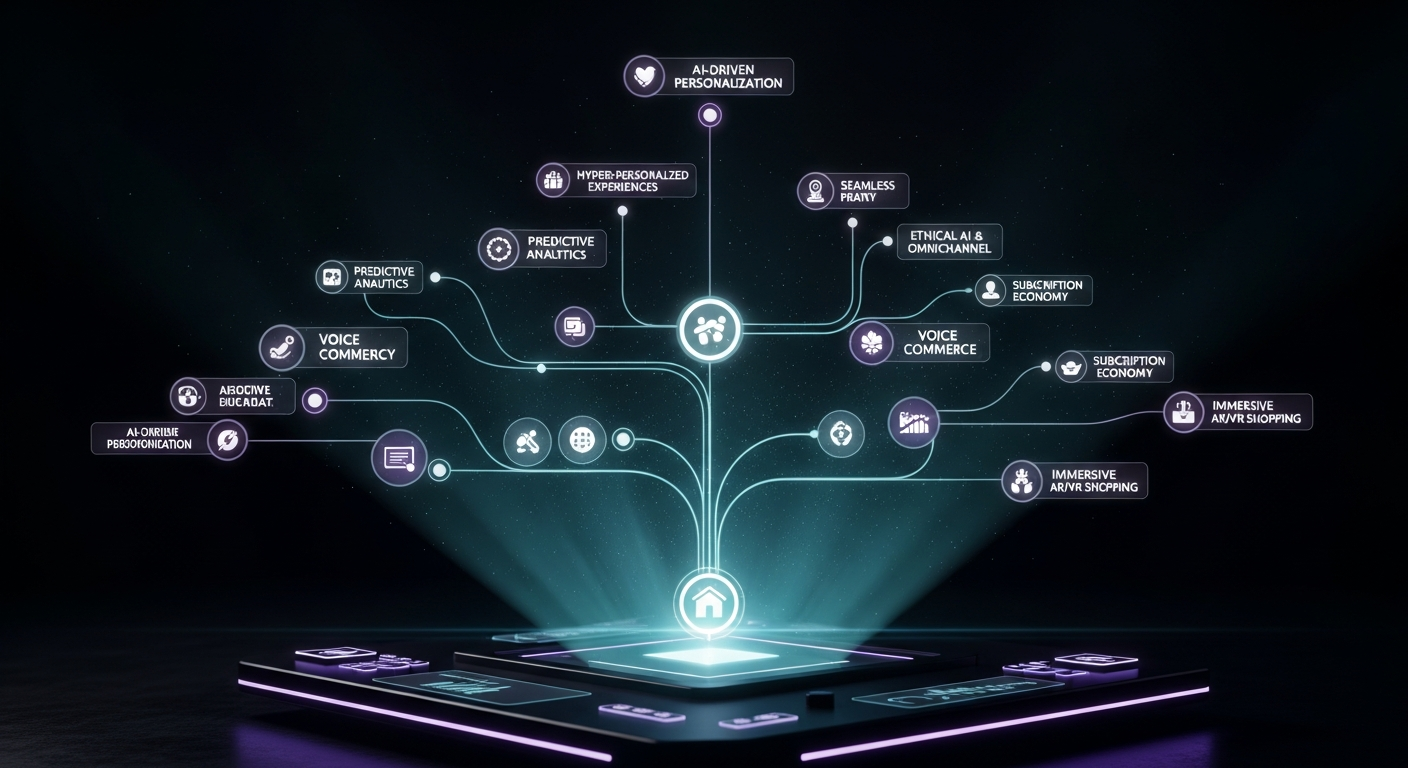
As technology evolves and customer expectations continue to rise, the practice of customer centricity will also advance. The foundational principles will remain, but the tools and tactics will become more sophisticated and proactive. Looking ahead, several key trends are set to shape the future of the customer experience.
First, the market is moving from personalization to hyper-personalization. This involves leveraging AI and real-time data to create unique, one-to-one interactions for every customer at scale. This could mean a website that dynamically reconfigures its layout for each visitor or a mobile app that provides context-aware suggestions. A second major shift will be towards proactive and predictive service. Instead of waiting for a customer to report a problem, companies will use data from IoT devices and predictive analytics to identify and resolve issues before the customer is even aware of them.
The demand for a seamless omnichannel experience will also intensify. Customers will expect to start a conversation on a chatbot, continue it on a mobile app, and finish it with a human agent, all without losing context. This requires deep integration between all customer-facing systems. Finally, the ethical use of data will become a critical differentiator. As customers grow more concerned about privacy, the companies that thrive will be those that are transparent about the data they collect and how they use it to deliver tangible value, building a foundation of trust essential for any long-term customer relationship.