





In the competitive landscape of modern business, the efficiency of a sales team is a critical determinant of success. Every minute a sales representative spends on a low-potential lead is a minute lost on a future customer. For years, businesses have relied on traditional lead scoring methods to separate promising leads from the rest, but these systems are often rigid, subjective, and slow to adapt. Today, a paradigm shift is underway, powered by Artificial Intelligence (AI) and Machine Learning (ML). AI-powered predictive lead scoring is transforming how companies prioritize their sales funnel, enabling teams to work smarter, close deals faster, and drive significant revenue growth. This guide explores the mechanics, benefits, and practical implementation of AI in predictive lead scoring, providing a comprehensive roadmap for leveraging this technology to unlock your sales team’s full potential.

Before diving into the complexities of AI, it’s essential to understand the foundation it improves upon. Lead scoring has always been about prioritization, but the methodology has evolved dramatically. The move from manual, rule-based systems to dynamic, predictive models represents a fundamental leap from educated guesswork to data-driven precision. This evolution empowers sales and marketing teams to operate with a level of accuracy and efficiency that was previously unattainable.
Traditional lead scoring systems operate on a set of explicit rules defined by marketing and sales teams. In this model, points are assigned to leads based on specific attributes and actions. For example:
While better than no system at all, this approach has significant drawbacks. It is inherently subjective, relying on human assumptions about what signals intent. The values assigned are often arbitrary and rarely updated, causing the model to become stale and misaligned with market realities. Furthermore, it fails to capture the complex interplay between different attributes. A manager at a small startup who visits the pricing page five times might be a more qualified lead than a VP at a Fortune 500 company who only downloaded a top-of-funnel ebook, but a rigid rule-based system would likely score the VP higher. This disconnect often leads to friction between sales and marketing, with sales teams questioning the quality of Marketing Qualified Leads (MQLs).
Predictive lead scoring flips the traditional model on its head. Instead of humans creating the rules, a machine learning algorithm builds the model. It works by analyzing historical data from your Customer Relationship Management (CRM) and marketing automation platforms. The model examines all previous leads—both those that became customers and those that did not—to identify the patterns, attributes, and behaviors that correlate most strongly with a successful conversion.
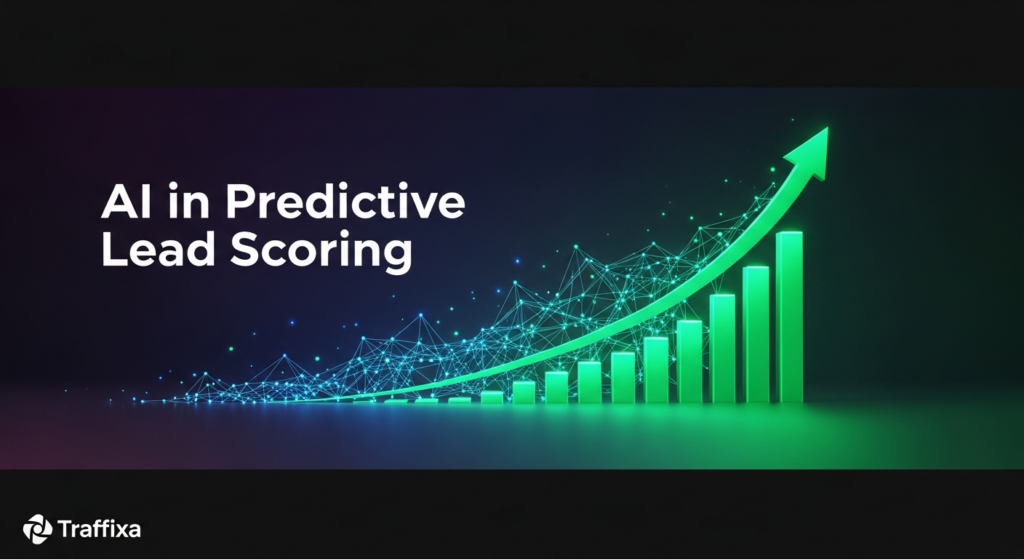
By learning from past outcomes, the AI builds a complex, nuanced model that can accurately predict the likelihood of a new lead converting into a customer. The output is typically a simple score, often on a scale of 0 to 100, representing that probability. A lead with a score of 95 is far more likely to close than one with a score of 20. This approach is dynamic, objective, and self-improving. As more data flows into the system, the model can be retrained to become even more accurate over time, adapting to changes in your market, product, and customer base.

The power of predictive lead scoring lies in the sophisticated capabilities of Artificial Intelligence and Machine Learning. These technologies go beyond simple point attribution to uncover deep, underlying patterns within your data. They act as a powerful analytical engine, processing vast amounts of information to deliver clear, actionable insights that guide your sales team’s efforts with unparalleled precision.
Machine learning models excel at identifying complex, non-linear relationships that are often invisible to human analysis. A traditional system might see a job title and company size as two separate data points. An ML model, however, can analyze the interaction between dozens or even hundreds of variables simultaneously. It might discover, for instance, that a “Director of Operations” from a mid-sized manufacturing company in the Midwest who visited your integrations page and watched a specific webinar has a 92% probability of becoming a customer. This level of granularity is impossible to achieve with manual rules.
The model effectively builds a multi-dimensional profile of your Ideal Customer Profile (ICP), weighing each factor based on its proven impact on conversion. It learns which behavioral signals are truly indicative of buying intent and which are just noise. This allows it to distinguish between a student doing research and a serious buyer on the verge of a decision, even if their surface-level actions appear similar.
Several types of machine learning algorithms can be used for predictive lead scoring, each with its own strengths. The most common fall into a few key categories:
The process of building a predictive model begins with training it on your historical data. You feed the algorithm thousands of past lead records, complete with all their demographic, firmographic, and behavioral data, and most importantly, the final outcome (e.g., ‘Closed-Won’ or ‘Closed-Lost’). The model analyzes this data to learn the statistical relationships between the inputs and successful outcomes.
Once trained, the model is validated using a separate set of historical data it has not seen before to ensure its predictions are accurate. After validation, the model is deployed. Now, when a new lead enters your system, the model applies its learned patterns to the new data and generates a predictive score in real-time. This score represents the model’s best estimate of that lead’s potential, allowing your sales team to act with data-driven foresight rather than hindsight.

Adopting AI-powered predictive lead scoring is not just a technological upgrade; it’s a strategic business decision that delivers tangible, far-reaching benefits. By optimizing the most critical part of the sales funnel—prioritization—AI creates a ripple effect that boosts efficiency, revenue, and organizational alignment.
The most immediate impact of AI lead scoring is on sales productivity. Instead of working through a long, undifferentiated list of leads, sales representatives can instantly identify and focus on the leads with the highest probability of closing. This eliminates time wasted on unqualified prospects. A sales rep can start their day with a CRM view automatically sorted by predictive score, allowing them to spend their prime hours engaging the top leads with personalized, high-touch outreach. This focus enables them to handle a larger pipeline more effectively and significantly increases their chances of meeting and exceeding quotas.
When sales reps consistently engage the best leads first, conversion rates naturally climb. High-intent leads often have a short window of opportunity before they choose a competitor or lose interest. AI scoring ensures these hot leads receive prompt attention, dramatically increasing the likelihood of a positive outcome. A study by the Aberdeen Group found that companies using predictive analytics see significantly higher lead acceptance rates from sales. Over time, this sustained increase in conversion rates translates directly into higher revenue and faster business growth. The model doesn’t just find more leads; it finds the *right* leads, which is the key to a more profitable sales funnel.
Tension between sales and marketing teams often stems from disagreement over lead quality. Marketing may celebrate hitting MQL targets, while sales complains that the leads are not ready for a conversation. AI-powered lead scoring provides a single, objective source of truth. The definition of a “good lead” is no longer based on subjective opinions but on a data-driven model that both teams can trust. This shared understanding fosters collaboration. Marketing can use the model’s insights to refine campaigns and attract more high-scoring leads, while sales provides feedback to help retrain and improve the model, creating a virtuous cycle of continuous improvement.
The most advanced predictive models can be configured to optimize for more than just the initial conversion. By training the model on historical data that includes customer lifetime value, renewal rates, and upsell opportunities, you can build a system that predicts not just who will buy, but who will become your most valuable customers. This allows your sales team to prioritize leads with the highest long-term potential, even if their initial deal size is smaller. Focusing on high-CLV prospects from the beginning is a powerful strategy for building a sustainable, profitable customer base.
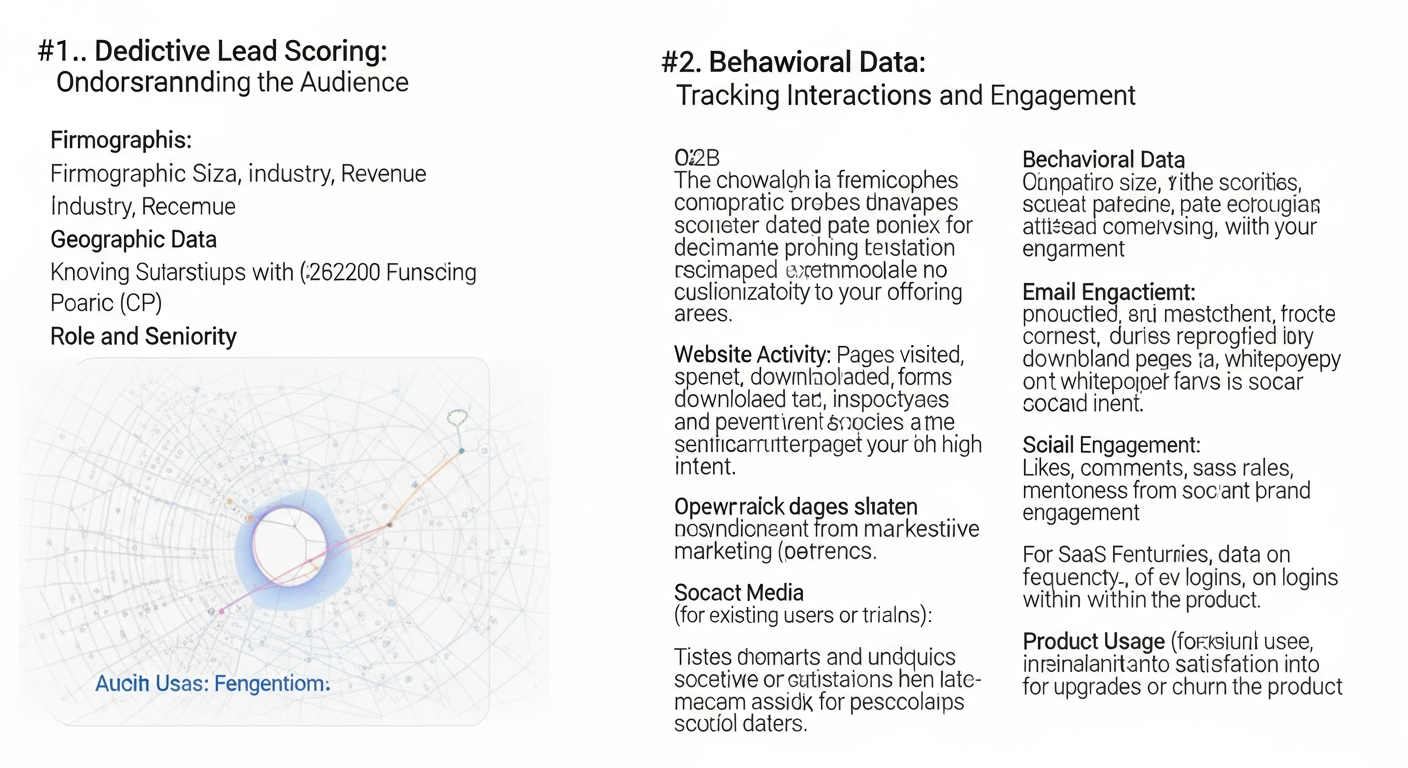
The adage “garbage in, garbage out” is especially true for machine learning. The accuracy and reliability of your predictive lead scoring model depend entirely on the quality and comprehensiveness of the data you use. A successful model requires a rich blend of data types that together paint a complete picture of a potential customer.
This data describes the lead as an individual and the company they work for. It provides the fundamental context for who you are selling to and helps determine if they fit your Ideal Customer Profile (ICP). Key data points include:
This information is often collected through web forms or enriched using third-party data providers. It helps the model understand the structural characteristics of companies that become your best customers.
Behavioral data tracks how a lead interacts with your brand across digital touchpoints, which is where you uncover buying intent. While demographic data tells you if a lead is a good fit on paper, behavioral data tells you if they are actively interested right now. Important signals include:
This data is typically captured by marketing automation platforms, website analytics tools, and your CRM. It provides the dynamic signals that indicate a lead is moving through the buying journey.
This is the ground truth from which your model learns. It is the dataset of past outcomes that teaches the algorithm what success looks like. This data must be clean, comprehensive, and clearly labeled. It should include:
This data resides in your CRM and is the most critical component for training an effective predictive model. Without a clean and robust historical dataset, the model’s predictions will be unreliable.

Implementing an AI-powered lead scoring system can be broken down into a logical, manageable process. Following a structured approach ensures that your final model is accurate, integrated, and, most importantly, adopted by your team.
Before you touch any data, you must define your goal. What does a “good lead” mean for your business? A successful outcome is not always just a closed-won deal. You might want to optimize for deal size, sales velocity, or long-term customer value. Work with sales, marketing, and leadership stakeholders to clearly define your ICP and the key performance indicators (KPIs) you want the model to predict. This initial alignment is crucial for building a model that serves your business strategy.
This is often the most labor-intensive part of the process. You need to consolidate data from various sources, including your CRM (like Salesforce), marketing automation platform (like HubSpot or Marketo), and other relevant databases. The primary task here is data hygiene. This involves:
Once your data is clean, you can proceed with building the model. If you are using a third-party platform, this step is largely automated. If you are building a model in-house, your data science team will:
A predictive score is useless if it lives in a spreadsheet. The final step is to operationalize the model’s output by pushing the scores directly into a custom field on the lead or contact record in your CRM. From there, you can build a workflow around the scores:

Once you decide to implement predictive lead scoring, a critical choice awaits: should you build your own system from scratch or buy a solution from a specialized vendor? Each path has distinct advantages and is suited to different types of organizations.
The decision to build or buy depends on your company’s resources, expertise, and strategic priorities. A custom-built solution offers ultimate flexibility, but a commercial platform provides speed and proven technology.
| Factor | Build (In-House) | Buy (Third-Party Platform) |
|---|---|---|
| Cost | High upfront and ongoing investment in data science talent, infrastructure, and maintenance. | Predictable subscription fees (SaaS model). Lower total cost of ownership for most companies. |
| Time to Value | Slow. Can take 6-12+ months to develop, test, and deploy a reliable model. | Fast. Implementation can be completed in weeks, delivering value much sooner. |
| Expertise Required | Requires a dedicated team of data scientists, data engineers, and ML specialists. | Leverages the vendor’s expertise. The platform handles the complex data science. |
| Customization | Fully customizable. The model can be tailored to your exact business logic and data nuances. | Limited customization. You operate within the framework and features provided by the vendor. |
| Maintenance | Requires continuous monitoring, retraining, and updates by your internal team. | Maintenance, updates, and model improvements are handled by the vendor. |
For most small to medium-sized businesses, and even many large enterprises, buying a dedicated solution is the more practical and cost-effective choice. Building a model is typically advisable only for companies with mature data science teams and unique requirements that cannot be met by off-the-shelf tools.
When evaluating commercial platforms, look for a solution that offers more than just a score. Key features include:
The market for AI-powered sales tools is growing rapidly. Some of the leading players in this space include:

Implementing an AI lead scoring model is the first step. To truly unlock its value and drive lasting change, you must adopt best practices focused on continuous improvement, collaboration, and clear operational processes.
An AI model is not a “set it and forget it” solution. Your market, customers, and product offerings are constantly evolving, and your model must evolve with them. This phenomenon, known as “model drift,” occurs when the patterns the model initially learned no longer represent current reality. To combat this, establish a regular cadence for retraining your model—typically quarterly or semi-annually—using the most recent sales data. Continuous monitoring of the model’s performance against actual conversion rates will help you identify when a retrain is needed and ensure your scores remain accurate.
The best predictive models are built on a foundation of collaboration. Your data science team (or vendor partner) understands the algorithms, but your sales team understands the customer. Create a formal feedback loop where sales reps can share their qualitative insights on lead quality. If reps feel the scores are consistently misaligned with their on-the-ground experience, this feedback is invaluable for diagnosing issues with the data or model. Conversely, the data team should explain the key drivers behind the scores in clear, business-friendly terms to build trust and show the sales team the logic behind the numbers.
Displaying a score in the CRM is not enough; you must define what that score means in practice. Develop a clear, tiered service-level agreement (SLA) that dictates the specific follow-up actions required for different score ranges. For example:
This ensures that your team’s effort is allocated proportionally to a lead’s potential and creates a consistent, scalable process for lead management.
[[INNER_IMAGE]]
While the benefits of AI lead scoring are significant, the path to implementation is not without its challenges. Being aware of these potential hurdles and having a plan to address them is key to a successful deployment.
This is the single most common obstacle. Incomplete, inconsistent, or inaccurate historical data can cripple your model’s effectiveness. Many companies discover their CRM data is not as clean as they thought once they begin a predictive scoring project.
Solution: Start with a data audit before you begin. Invest in data hygiene and cleansing tools. Implement stricter data entry standards for your sales team moving forward. While you may not have perfect data, start with what you have and focus on the most reliable fields. A model built on a smaller set of high-quality data is better than one built on a large set of messy data.
An AI model will learn and potentially amplify any biases present in your historical data. If your sales team has historically neglected leads from a certain region or industry for reasons unrelated to their actual potential, the model will learn to score those leads lower, perpetuating the bias.
Solution: Proactively audit your training data for potential biases. Ensure it is a representative sample of your total addressable market, not just your past successes. Use model explainability features to understand which factors are most influential in determining the score. If you see unexpected patterns, investigate them to ensure they reflect true buying signals and not historical prejudice.
Sales representatives can be skeptical of new technologies, especially a “black box” system that claims to know more than their own intuition. If your team doesn’t trust the scores, they won’t use them, and the entire project will fail.
Solution: Involve the sales team from the beginning. Get their input on what defines a good lead. Start with a pilot program with a small group of champion users to prove the system’s value. Provide thorough training not just on *what* the scores are, but *why* they are calculated. Highlight early wins and showcase how reps using the scores are closing more deals. Tying the tool directly to their success is the fastest way to build trust and drive adoption.
[[INNER_IMAGE]]
The theoretical benefits of AI lead scoring become concrete when viewed through the lens of real-world application. Across industries, companies are leveraging this technology to achieve remarkable results in sales efficiency and growth.
A mid-sized B2B software company faced challenges with a long, 90-day sales cycle. Their sales team treated all inbound demo requests with equal priority, leading to delays in contacting the most urgent buyers. By implementing an AI predictive model that analyzed behavioral data—such as visits to the pricing, integration, and competitor comparison pages—they could instantly identify leads with high commercial intent. These leads were flagged as “sales-ready” and fast-tracked to senior account executives. As a result, the company reduced its average sales cycle to 60 days and increased its lead-to-opportunity conversion rate by 30%.
A large online retailer wanted to move beyond simple promotional blasts to engage customers more personally. They used a predictive model that scored their existing customer base on the likelihood of making a high-value repeat purchase. The model analyzed purchase history, product categories viewed, and email engagement. The marketing team then used these scores to segment their audience, sending exclusive offers to the highest-scoring customers and re-engagement campaigns to those at risk. This strategy led to a 15% increase in customer lifetime value (CLV) and a 25% uplift in sales from targeted email campaigns.
A national mortgage lender faced a deluge of online loan applications that overwhelmed their loan officers. Many applications were from individuals casually browsing rates, not serious about completing the process. They deployed an AI model that scored new applicants based on the completeness of their application, data from credit bureaus, and their on-site behavior. This allowed loan officers to immediately prioritize follow-up with the top 20% of applicants. This focus resulted in a 40% increase in the number of applications processed per officer and a significant improvement in the application-to-funded-loan ratio.
[[INNER_IMAGE]]
Predictive lead scoring is just the beginning. The application of AI and predictive analytics in sales is rapidly expanding, promising a future where sales processes are more intelligent, personalized, and proactive than ever before.
In the near future, lead scores will likely become even more dynamic, updating in real-time based on a prospect’s latest actions. Imagine a lead’s score instantly jumping from 60 to 95 the moment they visit your pricing page for the third time, triggering an immediate alert to the assigned sales rep. This real-time intelligence will enable hyper-personalized outreach at the exact moment of peak interest, creating a truly responsive and effective sales experience.
The rise of generative AI, such as GPT-4, is set to revolutionize how sales teams act on predictive scores. Instead of just providing a number, future systems may also generate a personalized email draft or call script tailored to that specific lead. The AI could analyze the factors contributing to a high score (e.g., “visited case study on X, works in Y industry”) and craft an outreach message that speaks directly to the prospect’s likely pain points and interests, dramatically increasing engagement rates.
The same predictive technology used for lead scoring can be applied to the entire customer lifecycle. By analyzing product usage data, support ticket history, and engagement metrics, AI models can predict which customers are at risk of churning long before they decide to leave. This gives customer success teams a chance to intervene proactively. Similarly, these models can identify which existing accounts are showing signs of growth and are prime for an upsell or cross-sell, turning customer success into a revenue-generating engine.